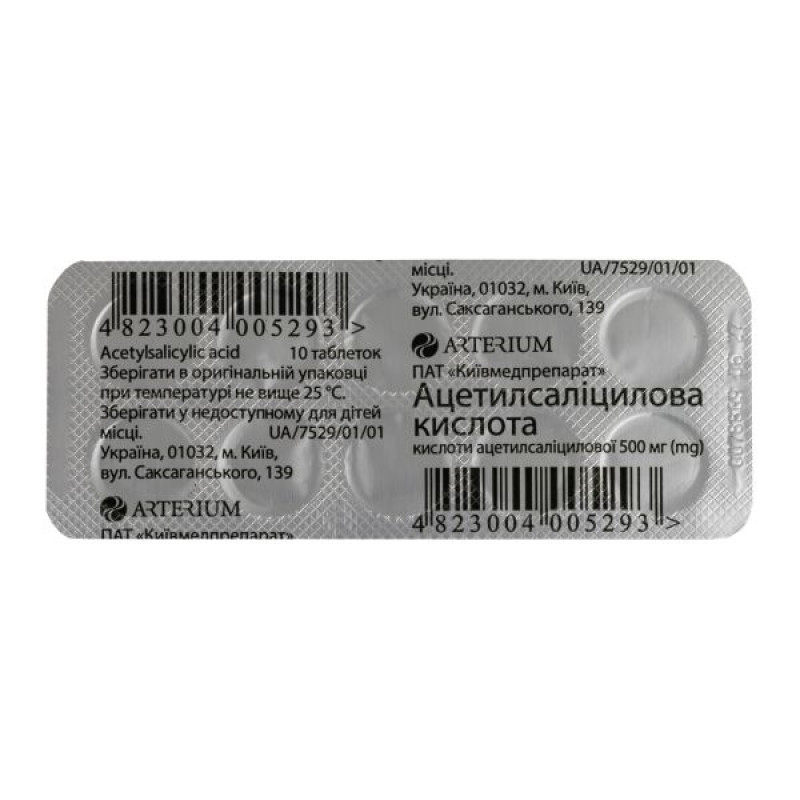
Instructions Acetylsalicylic acid tablets 0.5 g blister No. 10
Composition
active ingredient: acetylsalicylic acid;
1 tablet contains 500 mg of acetylsalicylic acid;
excipients: potato starch, anhydrous citric acid.
Dosage form
Pills.
Main physicochemical properties: white or almost white tablets, round in shape with a flat surface, with a score and a bevel, inclusions from almost white to gray are allowed on the surface of the tablets.
Pharmacotherapeutic group
Analgesics and antipyretics. Acetylsalicylic acid.
ATX code N02B A01.
Pharmacological properties
Pharmacodynamics
Acetylsalicylic acid belongs to the group of nonsteroidal anti-inflammatory drugs (NSAIDs) with analgesic, antipyretic and anti-inflammatory properties. Its mechanism of action is the irreversible inactivation of cyclooxygenase enzymes, which play an important role in the synthesis of prostaglandins.
When taken orally in doses of 0.3 g to 1 g, acetylsalicylic acid is used to relieve pain and conditions accompanied by fever, such as colds, to reduce fever and relieve pain in joints and muscles.
Acetylsalicylic acid inhibits platelet aggregation by blocking the synthesis of thromboxane A2.
Pharmacokinetics
After oral administration, acetylsalicylic acid is rapidly and completely absorbed from the gastrointestinal tract. During and after absorption, it is converted into the main active metabolite, salicylic acid. The maximum concentration of acetylsalicylic acid in the blood plasma is reached after 10–20 minutes, salicylates - after 20–120 minutes.
Acetylsalicylic and salicylic acids are completely bound to blood plasma proteins and are rapidly distributed in the body.
Salicylic acid crosses the placenta and is excreted in breast milk.
Salicylic acid is metabolized in the liver. The metabolites of salicylic acid are salicylicuric acid, salicylphenol glucuronide, salicylacyl glucuronide, gentisic acid, and gentisinuric acid.
The elimination kinetics of salicylic acid are dose-dependent, as metabolism is limited by hepatic enzyme activity. The half-life is dose-dependent and increases from 2–3 hours at low doses to 15 hours at high doses. Salicylic acid and its metabolites are excreted mainly by the kidneys.
Indication
- Treatment of mild to moderately severe acute pain syndrome (headache, toothache, joint and ligament pain, back pain).
- Symptomatic treatment of fever and/or pain syndrome in colds.
Contraindication
- Hypersensitivity to acetylsalicylic acid, other salicylates or to any component of the drug.
- History of bronchial asthma caused by the use of salicylates or other NSAIDs.
- Acute gastrointestinal ulcers.
- Hemorrhagic diathesis, congenital (hemophilia) or acquired hemorrhagic diseases; increased risk of bleeding.
- Severe renal failure.
- Severe liver failure.
- Severe heart failure.
- Combination with methotrexate at a dosage of 20 mg/week or more (see section “Interaction with other medicinal products and other types of interactions”).
- Simultaneous use of high doses of the drug with indirect anticoagulants, especially in the treatment of rheumatic diseases.
- 3rd trimester of pregnancy.
Special safety measures.
Acetylsalicylic acid is used with caution in:
- hypersensitivity to analgesic, anti-inflammatory, antirheumatic drugs, as well as in the presence of allergies to other substances;
- history of gastrointestinal ulcers, including chronic or recurrent peptic ulcer disease or history of gastrointestinal bleeding;
- simultaneous use of anticoagulants;
- impaired renal function or circulatory disorders (such as renal vascular disease, congestive heart failure, dehydration, major surgery, sepsis or significant blood loss), as acetylsalicylic acid may further increase the risk of kidney damage and cause acute renal failure;
- liver dysfunction.
In patients with allergic complications, including bronchial asthma, allergic rhinitis, urticaria, skin itching, swelling of the mucous membrane and nasal polyps, as well as in combination with chronic respiratory tract infections and in patients with hypersensitivity to NSAIDs, bronchospasm, bronchial asthma attacks or other hypersensitivity reactions may develop during treatment with acetylsalicylic acid.
Due to the effect of inhibiting platelet aggregation, which lasts up to several days after use of the drug, acetylsalicylic acid may increase the tendency to bleed during and after surgery (including minor operations, such as tooth extraction).
In patients with glucose-6-phosphate dehydrogenase deficiency, acetylsalicylic acid may cause hemolysis or hemolytic anemia. Factors that increase the risk of hemolysis are, for example, the use of high doses, fever or acute infections.
Prolonged use of analgesics can lead to headaches.
Frequent use of painkillers can cause temporary kidney damage with the risk of developing kidney failure (analgesic nephropathy). The risk is particularly high when several different analgesics are used simultaneously.
Interaction with other medicinal products and other types of interactions
Acetylsalicylic acid increases the plasma concentration of digoxin due to a decrease in renal excretion, the use of high doses of acetylsalicylic acid enhances the effect of hypoglycemic drugs due to its hypoglycemic effect and displacement of sulfonylureas from plasma protein binding, and acetylsalicylic acid enhances the effect of some anticonvulsants, such as valproic acid and phenytoin; enhances the toxicity of valproic acid due to displacement from the protein-bound state, when used simultaneously with alcohol, it increases damage to the gastrointestinal mucosa and increases the duration of bleeding due to an additive effect.
Acetylsalicylic acid, like other nonsteroidal anti-inflammatory drugs, as well as ticlopidine, clopidogrel, trofiban, can have an antiplatelet effect on platelets. The simultaneous use of various drugs that inhibit platelet aggregation may increase the risk of hemorrhagic phenomena.
Concomitant use with heparin or other anticoagulants requires constant monitoring of patients.
When used with selective serotonin reuptake inhibitors, the risk of gastrointestinal bleeding increases due to a possible synergistic effect.
Contraindicated combinations
Oral anticoagulants. In combination with anti-inflammatory (≥ 1 g/dose, or ≥ 3 g/day) or analgesic or antipyretic doses (≥ 500 mg/dose, or < 3 g/day) of acetylsalicylic acid, anticoagulants are displaced from plasma protein binding. The risk of bleeding increases, especially in patients with a history of gastric or duodenal ulcer.
Methotrexate in doses exceeding 20 mg/week. In combination with anti-inflammatory or analgesic or antipyretic doses of acetylsalicylic acid, the hematological toxicity of methotrexate increases (reduction in renal clearance of methotrexate by anti-inflammatory agents and displacement of methotrexate from plasma protein binding by salicylates).
Undesirable combinations.
Acetazolamide. When used in combination with high doses of acetylsalicylic acid, the frequency of side effects increases, especially metabolic acidosis, due to a decrease in the elimination of acetylsalicylic acid due to the interaction with acetazolamide.
Anagrelide: Increased risk of bleeding.
Oral anticoagulants. When used in combination with analgesic or antipyretic or antiplatelet doses (from 50 to 375 mg/day) of acetylsalicylic acid, the risk of bleeding increases, therefore it is necessary to monitor blood coagulation parameters and especially the duration of bleeding.
Other non-steroidal anti-inflammatory drugs: When used in combination with anti-inflammatory or analgesic or antipyretic doses of acetylsalicylic acid, the risk of gastric and duodenal ulcers and gastrointestinal bleeding increases.
Clopidogrel (except for the approved indications for this combination in patients with acute coronary syndrome). Increased risk of bleeding due to antiplatelet effects on platelets.
Glucocorticoids (except for hormone replacement therapy with hydrocortisone). When used in combination with anti-inflammatory doses of acetylsalicylic acid, the risk of bleeding increases.
Heparins. When used in combination with anti-inflammatory or analgesic or antipyretic doses of acetylsalicylic acid, the risk of bleeding increases (inhibition of platelet function and damage to the gastrointestinal mucosa).
Pemetrexed: When used in combination with anti-inflammatory doses of acetylsalicylic acid in patients with mild to moderate renal impairment, the risk of pemetrexed toxicity is increased due to reduced renal clearance.
Ticagrelor (except for the approved indications for this combination in acute coronary syndromes). Increased risk of bleeding due to antiplatelet effects on platelets.
Ticlopidine: Increased risk of bleeding due to antiplatelet effect on platelets.
Uricosuric agents (benzbromarone, probenecid). Reduction of the uricosuric effect due to competition for the excretion of uric acid in the renal tubules.
Combinations requiring caution.
Clopidogrel (except for the approved indications for this combination in patients in the acute phase of coronary syndrome). Increased risk of bleeding due to antiplatelet effects on platelets.
Diuretics and angiotensin-converting enzyme inhibitors. When used in combination with anti-inflammatory or analgesic or antipyretic doses of acetylsalicylic acid, acute renal failure may develop in dehydrated patients (reduced glomerular filtration due to inhibition of prostaglandin synthesis, in addition, the hypotensive effect is reduced).
Systemic glucocorticosteroids (except hydrocortisone), which are used for treatment, including replacement therapy for Addison's disease, reduce the level of salicylates in the blood and increase the risk of overdose after the end of corticosteroid treatment (corticosteroids enhance the excretion of salicylates).
When methotrexate is used in doses ≤ 20 mg/week in combination with anti-inflammatory or analgesic or antipyretic doses of acetylsalicylic acid, the hematological toxicity of methotrexate increases (reduction in renal clearance of methotrexate by anti-inflammatory agents and displacement of methotrexate from plasma protein binding by salicylates).
When methotrexate is used in doses exceeding 20 mg/week in combination with antiplatelet doses of acetylsalicylic acid, the hematological toxicity of methotrexate increases.
Pemetrexed: In patients with normal renal function, there is a risk of increased toxicity of pemetrexed due to reduced renal clearance.
Ticagrelor (for the approved indications for this combination in acute coronary syndromes). Increased risk of bleeding due to antiplatelet effects on platelets.
Drugs acting locally in the gastrointestinal tract, antacids and activated charcoal. The absorption of acetylsalicylic acid in the gastrointestinal tract is reduced. It is recommended to take such drugs separately from acetylsalicylic acid with an interval of at least 2 hours.
Combinations to consider.
Oral anticoagulants. In combination with antiplatelet doses of acetylsalicylic acid, the risk of bleeding increases, especially in patients with a history of gastric or duodenal ulcer.
Other nonsteroidal anti-inflammatory drugs. In combination with antiplatelet doses of acetylsalicylic acid, the risk of gastric and duodenal ulcers increases.
Deferasirox: When used in combination with anti-inflammatory or analgesic or antipyretic doses of acetylsalicylic acid, the risk of gastric ulcers and gastrointestinal bleeding increases.
Glucocorticoids (except for hormone replacement therapy with hydrocortisone). In combination with analgesic or antipyretic doses of acetylsalicylic acid, the risk of bleeding increases.
Heparins in therapeutic doses / elderly patients. When used in combination with anti-inflammatory or analgesic or antipyretic doses of acetylsalicylic acid, the risk of bleeding increases due to inhibition of platelet function and the negative effect of acetylsalicylic acid on the gastrointestinal mucosa.
Heparins when used in prophylactic doses. The simultaneous use of drugs that act on different links of hemostasis increases the risk of bleeding. Therefore, when using a combination of heparins in prophylactic doses with acetylsalicylic acid in patients under 65 years of age, regardless of its dose, the need for clinical and, possibly, biological monitoring should be taken into account.
Selective serotonin reuptake inhibitors (citalopram, escitalopram, fluoxetine, fluvoxamine, paroxetine, sertraline). Increased risk of bleeding.
Thrombolytics. Increased risk of bleeding.
Intrauterine devices. Risk of reduced contraceptive effect.
Gastrointestinal local agents: oxides and hydroxides of magnesium, aluminum, calcium salts. Increased renal excretion of salicylates due to alkalinization of urine.
Use during pregnancy or breastfeeding
Pregnancy.
Acetylsalicylic acid should only be used during pregnancy if other medications are not effective, and only after assessing the risk/benefit ratio.
Inhibition of prostaglandin synthesis may adversely affect pregnancy and/or embryonal/fetal development. Available epidemiological data indicate a risk of miscarriage and foetal malformations after the use of prostaglandin synthesis inhibitors in early pregnancy. The risk increases with increasing dose and duration of therapy. According to the available data, the association between the use of acetylsalicylic acid and an increased risk of miscarriage has not been confirmed.
The available epidemiological data on the occurrence of malformations are not consistent, but an increased risk of gastroschisis cannot be excluded with the use of acetylsalicylic acid. The results of a prospective study of exposure in early pregnancy (1-4 months) involving approximately 14,800 mother-child pairs do not indicate any association with an increased risk of malformations.
During the first and second trimesters of pregnancy, preparations containing acetylsalicylic acid should not be prescribed unless clearly necessary. For women who may be pregnant and for women in the first and second trimesters of pregnancy, the dose of preparations containing acetylsalicylic acid should be as low as possible and the duration of treatment should be as short as possible.
During the third trimester of pregnancy, all prostaglandin synthesis inhibitors may affect the fetus in the following ways:
– cardiopulmonary toxicity (with premature closure of the ductus arteriosus and pulmonary hypertension);
– impaired renal function with possible further development of renal failure with oligohydramnios.
Prostaglandin synthesis inhibitors can affect the woman and fetus at the end of pregnancy in the following ways:
– possibility of prolongation of bleeding time, antiplatelet effect, which may occur even after very low doses;
– inhibition of uterine contractions, which can lead to a delay or prolongation of labor.
Given this, acetylsalicylic acid is contraindicated during the third trimester of pregnancy.
Fertility
There is some evidence that drugs that inhibit prostaglandin synthesis may impair female reproductive function by affecting ovulation. This effect is reversible and disappears after discontinuation of treatment.
Breast-feeding
Salicylates and their metabolites pass into breast milk in small amounts.
Since adverse reactions in infants whose mothers took acetylsalicylic acid have not been observed, it is usually not necessary to interrupt breastfeeding. In case of long-term use of the drug or the use of acetylsalicylic acid in high doses, the question of discontinuing breastfeeding should be considered.
Ability to influence reaction speed when driving vehicles or other mechanisms
No effect on the ability to drive or use other mechanisms was noted.
Method of administration and doses
Acetylsalicylic acid is taken orally after meals, with sufficient fluid.
Acetylsalicylic acid should not be used for longer than 3–5 days without consulting a doctor.
Adults and children aged 15 and over.
1–2 tablets as a single dose. Repeated administration is possible after 4–8 hours. The maximum daily dose should not exceed 3 g (6 tablets).
Warning: For patients with concomitant liver or kidney dysfunction, the dose of the drug should be reduced or the interval between applications should be increased.
Children
The drug is used in children over 15 years of age.
Do not use acetylsalicylic acid-containing drugs in children with acute respiratory viral infections (ARI), with or without fever, without consulting a doctor. With some viral diseases, especially influenza A, influenza B and chickenpox, there is a risk of developing Reye's syndrome, which is a very rare but life-threatening disease that requires immediate medical attention. The risk may be increased if acetylsalicylic acid is used as a concomitant drug, but a causal relationship in this case has not been proven. If these conditions are accompanied by prolonged vomiting, this may be a sign of Reye's syndrome.
Overdose
Salicylate overdose is possible due to chronic intoxication resulting from long-term therapy (administration of more than 100 mg/kg/day for more than 2 days may cause toxic effects), as well as due to acute, potentially life-threatening intoxication (overdose), the causes of which may be, for example, accidental use by children or unintentional overdose.
Chronic salicylate poisoning can be insidious because its signs are nonspecific. Moderate chronic salicylate intoxication, or salicylism, usually occurs only after repeated use of large doses.
Symptoms: balance disorders, dizziness, tinnitus, deafness, increased sweating, tachypnea, nausea, vomiting, headache, confusion. These symptoms can be controlled by reducing the dose. Tinnitus may occur at plasma concentrations of 150 to 300 μg/ml. More serious adverse reactions occur at concentrations above 300 μg/ml.
Moderate to severe intoxication is manifested by respiratory alkalosis, accompanied by compensatory metabolic acidosis, hyperpyrexia. From the respiratory system: from hyperpnea, non-cardiogenic pulmonary edema to respiratory arrest and asphyxia. From the cardiovascular system: from arrhythmia, arterial hypotension to cardiac arrest. Dehydration, oliguria up to renal failure are also observed; impaired glucose metabolism, ketosis; gastrointestinal bleeding; hematological changes - from platelet suppression to coagulopathies. From the nervous system: toxic encephalopathy and CNS depression, manifested as drowsiness, depression of consciousness up to the development of coma and seizures.
Changes in laboratory and other parameters: alkalemia, alkaluria, acidemia, aciduria, changes in blood pressure, changes in ECG, hypokalemia, hypernatremia, hyponatremia, changes in renal function, hyperglycemia, hypoglycemia (especially in children); increased levels of ketone bodies, hypoprothrombinemia.
Treatment of intoxication caused by an overdose of acetylsalicylic acid is determined by the severity, clinical symptoms and is provided by standard methods used in poisoning. All measures taken should be aimed at accelerating the elimination of the drug and restoring electrolyte and acid-base balance. Activated charcoal, forced alkaline diuresis, gastric lavage should be used. Depending on the state of acid-base balance and electrolyte balance, infusion of electrolyte solutions should be carried out. In severe poisoning, hemodialysis is indicated.
Manifestations and symptoms/test results in case of complex pathophysiological effects of salicylate poisoning and necessary therapeutic measures
| Manifestations and symptoms | Test results | Therapeutic measures |
| Mild or moderate intoxication | - | Gastric lavage, administration of activated charcoal, forced alkaline diuresis |
| Tachypnea, hyperventilation, respiratory alkalosis | Alkalemia, alkaluria | Restoration of electrolyte and acid-base balance |
| Diaphoresis (increased sweating) | - | - |
| Nausea, vomiting | - | - |
| Moderate or severe intoxication | - | Gastric lavage, administration of activated charcoal, forced alkaline diuresis, hemodialysis in severe cases |
| Respiratory alkalosis with compensatory metabolic acidosis | Acidemia, aciduria | Restoration of electrolyte and acid-base balance |
| Hyperpyrexia | Restoration of electrolyte and acid-base balance | |
| Respiratory: hyperventilation, noncardiogenic pulmonary edema, respiratory failure, asphyxia | - | - |
Cardiovascular: dysrhythmias, arterial hypotension, cardiovascular failure | Changes in blood pressure, ECG readings | - |
| Fluid and electrolyte loss: dehydration, oliguria, renal failure | Hypokalemia, hypernatremia, hyponatremia, changes in renal function | Restoration of electrolyte and acid-base balance |
| Impaired glucose metabolism, ketoacidosis | Hyperglycemia, hypoglycemia (especially in children); elevated ketone bodies | - |
| Ringing in the ears, deafness | - | - |
Gastrointestinal: gastrointestinal bleeding | - | - |
| Hematologic: platelet inhibition, coagulopathy | Prolonged bleeding time, hypoprothrombinemia | - |
| Neurological: toxic encephalopathy and CNS depression with manifestations such as lethargy, confusion, coma, and seizures | - | - |
Adverse reactions
The list of adverse reactions given below includes all known adverse reactions that have developed in connection with the therapeutic use of acetylsalicylic acid, including those observed in patients with rheumatism who have been treated in high doses for a long time. The data on the frequency of use, with the exception of isolated cases, refer to the short-term use of daily doses of a maximum of 3 g of acetylsalicylic acid.
The following classification was used to determine the frequency of adverse reactions:
Very common: ≥ 1/10
Common: ≥ 1/100 to < 1/10
Uncommon: ≥ 1/1,000 to < 1/100
Rare: ≥ 1/10,000 to < 1/1,000
Very rare: < 1/10,000
Frequency not known: frequency cannot be estimated from the available data.
Blood and lymphatic system disorders: Due to its antiplatelet effect on platelets, acetylsalicylic acid may increase the risk of bleeding. Bleeding such as perioperative bleeding, hematomas, urogenital bleeding, epistaxis, gingival bleeding have been reported rarely; serious bleeding such as gastrointestinal bleeding and cerebral hemorrhage (especially in patients with uncontrolled hypertension and/or concomitant use of antihemostatic agents), which in isolated cases may be life-threatening, has been reported rarely or very rarely. Bleeding tendency may occur within 4-8 days after the use of acetylsalicylic acid.
Very rarely, bleeding can lead to acute and chronic posthemorrhagic anemia/iron deficiency anemia (due to so-called occult microbleeding) with corresponding laboratory manifestations and clinical symptoms such as asthenia, pallor of the skin, hypoperfusion.
Hemolysis and the development of hemolytic anemia have been reported in patients with severe glucose-6-phosphate dehydrogenase deficiency.
On the part of the immune system. Rarely: in patients with individual hypersensitivity to salicylates, allergic reactions may develop, including symptoms such as rhinitis, shortness of breath, nasal congestion, and decreased blood pressure. Severe hypersensitivity reactions, including anaphylactic shock, angioedema, and noncardiogenic pulmonary edema, have been observed rarely. In patients with bronchial asthma, an increased frequency of bronchospasm, allergic reactions of mild to moderate severity, potentially affecting the skin, respiratory system, gastrointestinal tract, and cardiovascular system, may occur.
Skin and subcutaneous tissue disorders: Uncommon: hypersensitivity reactions, including skin reactions (e.g. rash, urticaria, pruritus, eczema). Rare: severe hypersensitivity reactions, e.g. erythema multiforme.
Nervous system: Headache, dizziness, hearing impairment, ringing in the ears and confusion may be signs of overdose.
Urinary system: Renal dysfunction and acute renal failure have been reported.
Expiration date
4 years.
Storage conditions
Store in the original packaging at a temperature not exceeding 25 °C.
Packaging
10 tablets in a blister or 10 tablets in a blister, 2 blisters in a pack.
Vacation category
Without a prescription.
Producer
PJSC "Kyivmedpreparat".
PJSC "Halychpharm".
Location of the manufacturer and address of its place of business
Ukraine, 01032, Kyiv, Saksaganskoho St., 139
Ukraine, 79024, Lviv, Opryshkivska St., 6/8.