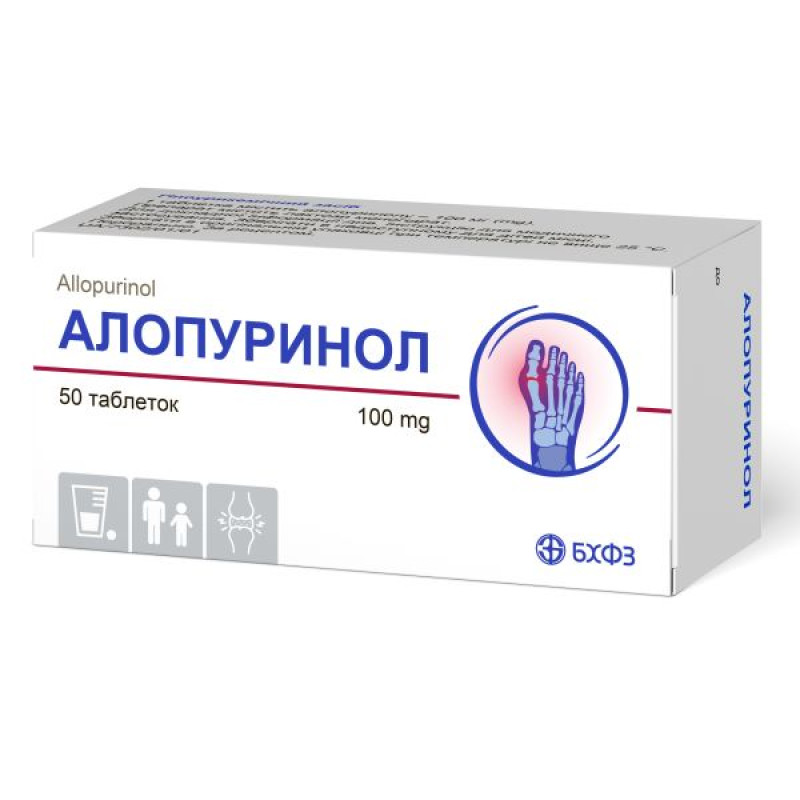
Instructions Allopurinol tablets 100 mg blister No. 50
Composition
active ingredient: allopurinol;
1 tablet contains allopurinol (calculated as 100% dry matter) – 100 mg;
Excipients: lactose monohydrate, microcrystalline cellulose, corn starch, hypromellose, magnesium stearate.
Dosage form
Pills.
Main physicochemical properties: round tablets, white or almost white in color, with a flat surface, with a bevel and a score.
Pharmacotherapeutic group
Drugs used for gout. Drugs that inhibit the formation of uric acid. Allopurinol. ATC code M04A A01.
Pharmacological properties
Pharmacodynamics
Allopurinol is an antigout drug that inhibits the synthesis of uric acid and its salts in the body. The drug has a specific ability to inhibit the enzyme xanthine oxidase, which is involved in the conversion of hypoxanthine to xanthine and xanthine to uric acid. As a result, the content of urates in the blood serum decreases, which prevents their deposition in tissues and kidneys.
Allopurinol in the body is converted to oxypurinol (alloxanthin), which also prevents the formation of uric acid, but is inferior to allopurinol in activity.
Pharmacokinetics
After oral administration, allopurinol is rapidly and completely absorbed. It is practically not absorbed in the stomach, absorption occurs in the duodenum and upper part of the small intestine. As a result of metabolism, the main pharmacologically active metabolite oxypurinol is formed. Maximum levels of oxypurinol are reached after 3-4 hours, the rate of formation depends on the degree and rate of individual presystemic metabolism. Allopurinol and oxypurinol practically do not bind to blood proteins. The half-life of allopurinol from blood plasma is approximately 40 minutes, oxypurinol - 17-21 hours. 80% of allopurinol and oxypurinol are excreted by the kidneys, 20% - through the intestines. In renal failure, the half-life of oxypurinol increases.
Indication
Adult:
hyperuricemia (with serum uric acid level of 500 μmol/l (8.5 mg/100 ml) and above, not controlled by diet); diseases caused by increased uric acid levels in the blood, especially in gout, urate nephropathy and urate urolithiasis; secondary hyperuricemia of various etiologies, including psoriasis; primary and secondary hyperuricemia in various hemoblastoses (acute leukemia, chronic myelogenous leukemia, lymphosarcoma); cytotoxic therapy of neoplastic and myeloproliferative diseases.
For children:
urate nephropathy resulting from leukemia treatment; secondary hyperuricemia of various etiologies; congenital enzymatic deficiency, in particular Lesch-Nyen syndrome (partial or complete deficiency of hypoxanthine-guanine-phosphoribosyltransferase) and congenital deficiency of adenine-phosphoribosyltransferase.
Contraindication
Hypersensitivity to allopurinol or to any of the other ingredients of the drug; severe hepatic or renal impairment (creatinine clearance less than 2 ml/min); acute gout attack.
Interaction with other medicinal products and other types of interactions
Coumarin-type anticoagulants enhance the effect of warfarin and other coumarins, therefore more frequent monitoring of coagulation parameters is required, and a possible reduction in the dose of anticoagulants is also possible.
Azathioprine, mercaptopurine - since allopurinol inhibits xanthine oxidase, the metabolism of these purine derivatives slows down, the effects are prolonged, and toxicity increases, so their usual dose should be reduced by 50-75% (to ¼ of the usual dose).
Vidarabine (adenine arabinoside) - the half-life of the latter is prolonged with the risk of increased toxicity. This combination should be used with caution.
Salicylates (high doses), uricosuric drugs (e.g. sulfinpyrazone, probenecid, benzbromarone) - possible reduction in the therapeutic efficacy of allopurinol due to accelerated elimination of its main metabolite oxypurinol. Allopurinol also slows down the elimination of probenecid. Allopurinol doses should be adjusted.
Chlorpropamide - renal impairment increases the risk of prolonged hypoglycemia, as allopurinol and chlorpropamide may compete for renal tubular excretion, which may require a reduction in the dose of chlorpropamide.
Phenytoin - Allopurinol may inhibit the hepatic metabolism of phenytoin; the clinical significance of this interaction is unknown.
Theophylline, caffeine - allopurinol in high doses inhibits the metabolism and increases the plasma concentration of theophylline, caffeine. Plasma theophylline levels should be monitored at the beginning of treatment with allopurinol or when its dose is increased.
Ampicillin, amoxicillin - the incidence of allergic reactions, including skin rashes, is increased in patients receiving concomitant allopurinol compared to patients not receiving such a combination. Therefore, patients taking allopurinol should use other antibiotics.
Cytostatics (e.g. cyclophosphamide, doxorubicin, bleomycin, procarbazine, mechlorethamine) - there is an increased risk of myelosuppression in patients with neoplastic diseases (except leukemia) when used with allopurinol than when these drugs are used alone, so blood counts should be monitored at short intervals. However, in well-controlled clinical trials in patients receiving these cytostatics, allopurinol has not been shown to increase the toxicity of cytostatics.
Didanosine - allopurinol increases the risk of its toxicity; in healthy volunteers and HIV-infected patients receiving didanosine, didanosine plasma Cmax and AUC values increased approximately twofold during concomitant therapy with allopurinol (300 mg/day), the terminal half-life was not changed. Concomitant use of these drugs is generally not recommended. If concomitant use is unavoidable, a reduction in the dose of didanosine may be necessary, and patients should be closely monitored.
Diuretics, including thiazide diuretics and related drugs - increased risk of hypersensitivity reactions, especially in patients with impaired renal function. Interactions between allopurinol and furosemide have been reported, resulting in increased serum urate and plasma oxypurinol concentrations.
Capecitabine - the manufacturer of capecitabine recommends avoiding its concomitant use with allopurinol.
ACE inhibitors, including captopril - increased risk of hematotoxic reactions, such as leukopenia, and hypersensitivity reactions, including skin reactions, especially in chronic renal failure.
Antacids - allopurinol should preferably be taken 3 hours before taking aluminum hydroxide.
Application features
Hypersensitivity.
Hypersensitivity reactions to allopurinol can manifest in a variety of ways, including maculopapular rash, life-threatening reactions (Stevens-Johnson syndrome (SJS), toxic epidermal necrolysis (TEN), a hypersensitivity syndrome known as DRESS syndrome (Drug rash with eosinophilia and systemic symptoms)). Allopurinol should be discontinued IMMEDIATELY at the first appearance of a skin rash or any other sign of hypersensitivity (involvement of the mucous membranes of the eyes, mouth or genitals, fever, lymphadenopathy, skin erosions) to prevent the development of more serious hypersensitivity reactions. If DRESS syndrome or SJS/TEN develops at any time during treatment, allopurinol should be PERMANENTLY discontinued. Corticosteroids may be used to treat hypersensitivity reactions. The highest risk of SJS/TEN is observed during the first weeks of treatment.
HLA-B*5801 allele.
In retrospective pharmacogenetic case-control studies, the presence of the HLA-B*5801 allele has been identified as a genetic risk factor (genetic marker) for allopurinol-associated SJS/TEN (and possibly other serious hypersensitivity reactions) in Han Chinese, Thai, Korean, Japanese, and patients of European descent. The frequency of this genetic marker in different ethnic groups varies significantly (from 20-30% of allele carriers among Han Chinese, Africans, and Native Americans to 12% in the Korean population and to 1-2% in Caucasians and Japanese).
If the patient is a known carrier of the HLA-B*5801 allele, allopurinol should not be initiated. If there are no other acceptable therapeutic options, allopurinol should only be considered if the expected benefits of treatment outweigh the potential risks.
Patients with chronic renal impairment and concomitant use of diuretics, particularly thiazides, may be at increased risk of developing allopurinol-associated hypersensitivity reactions, including SJS/TEN.
Particular vigilance is required for the appearance of signs of DRESS syndrome or SJS/TEN. The patient should be informed of the need to immediately and permanently discontinue treatment with allopurinol at the first appearance of symptoms of hypersensitivity.
Allopurinol should be used with extreme caution:
in case of impaired renal and hepatic function - constant medical supervision is required, allopurinol doses should be reduced, taking into account relevant recommendations; in case of previously established disorders of hematopoiesis; in patients with arterial hypertension or heart failure who are receiving ACE inhibitors and/or diuretics, due to the possibility of concomitant renal dysfunction.
Asymptomatic hyperuricemia is generally not considered an indication for the use of allopurinol, as adherence to an appropriate diet and adequate fluid intake is usually sufficient.
The drug is not recommended for use in patients with uric acid levels below 500 μmol/l (equivalent to 8.5 mg/100 ml) in compliance with dietary recommendations and in the absence of severe kidney damage. Foods high in purines should not be consumed (e.g. offal: kidneys, brain, liver, heart and tongue; meat broths and alcohol, especially beer).
Acute gout attack: treatment with allopurinol should not be started until it has completely resolved, as further attacks may be triggered.
At the beginning of treatment with allopurinol, as with other uricosuric drugs, acute attacks of gout may occur due to the mobilization of large amounts of uric acid. Therefore, it is advisable to use non-steroidal anti-inflammatory drugs (except aspirin or salicylates) or colchicine concurrently for at least the first 4 weeks to prevent attacks of gout.
If an acute attack of gout occurs in patients already taking allopurinol, treatment with the drug should be continued at the same dose, and the acute attack should be treated with appropriate anti-inflammatory agents.
Serum uric acid levels should be checked at regular intervals.
Xanthine deposits: In conditions where the rate of urate formation is significantly increased (e.g., radiotherapy or chemotherapy for malignant diseases, Lesch-Nyen syndrome), the absolute concentration of xanthine in the urine may in rare cases be significantly increased and cause its deposition in the urinary tract. This risk can be minimized by adequate hydration to maintain sufficient diuresis, to achieve optimal urine dilution, and by alkalinization of the urine.
To prevent hyperuricemia in patients with neoplastic diseases and Lesch-Nyen syndrome, it is recommended to prescribe allopurinol before the start of radiotherapy or chemotherapy. In such cases, the minimum effective dose should be used.
Adequate therapy with allopurinol may cause the dissolution of large urate stones in the kidneys and their passage into the urinary tract (renal colic) with possible obstruction.
Allopurinol tablets contain lactose. Patients with rare hereditary problems of galactose intolerance, the Lapp lactase deficiency or glucose-galactose malabsorption should not take this medicine.
Ability to influence reaction speed when driving vehicles or other mechanisms
Until the individual reaction to the drug is determined, it is necessary to refrain from driving vehicles or other mechanisms due to the possibility of dizziness or drowsiness, ataxia.
Use during pregnancy or breastfeeding
There are insufficient data on the use of allopurinol during pregnancy. Since allopurinol affects purine metabolism and the potential risk to humans is unknown, allopurinol is contraindicated during pregnancy.
Allopurinol passes into breast milk, so the drug should not be taken during breastfeeding. If it is necessary to use the drug, breastfeeding should be discontinued.
Method of administration and doses
Take after meals, without chewing, with plenty of water.
For adults and children over 10 years of age, the daily dose should be determined individually depending on the level of uric acid in the blood serum. Usually the daily dose is 100-300 mg/day. To reduce the risk of adverse reactions, treatment should be started with 100 mg of allopurinol once a day.
If necessary, the initial dose should be gradually increased by 100 mg every 1-3 weeks until the maximum effect is achieved. The maintenance dose is usually 200-600 mg/day. In some cases, the dose of the drug can be increased to 600-800 mg/day.
If the daily dose exceeds 300 mg, it should be divided into 2-4 equal doses.
When increasing the dose, it is necessary to monitor the level of oxypurinol in the blood serum, which should not exceed 15 μg/ml (100 μmol).
The maximum single dose is 300 mg, the maximum daily dose is 800 mg.
Children aged 3 to 6 years should be prescribed a daily dose of 5 mg/kg of body weight, and children aged 6 to 10 years - 10 mg/kg of body weight. The frequency of administration is 3 times a day, the maximum daily dose is 400 mg.
Kidney failure
Treatment should be initiated with a daily dose of 100 mg and increased only in case of insufficient efficacy of the drug. When selecting the dose, one should be guided by the creatinine clearance indicator:
| Creatinine clearance | Daily dose of Allopurinol |
| More than 20 ml/min | The standard dose is 100-300 mg |
| 10-20 ml/min | 100-200 mg |
| Less than 10 ml/min | 100 mg or higher doses with longer intervals between doses (1-2 or more days depending on the patient's condition and renal function) |
Patients on hemodialysis should receive 300-400 mg of Allopurinol after each hemodialysis session (2-3 times a week).
For the prevention of hyperuricemia during cytotoxic therapy of neoplastic and myeloproliferative diseases, allopurinol is prescribed at a dose of 400 mg/day. The drug should be taken 2-3 days before or simultaneously with antiblastoma therapy and continued for several days after the end of specific treatment.
It is important to ensure adequate hydration to maintain optimal diuresis and alkalinize the urine to increase the solubility of urates in the urine.
The duration of treatment depends on the course of the underlying disease.
Elderly patients
In the absence of specific data, the minimum effective dose should be used.
In case of impaired liver function, the dose of the drug should be reduced to the minimum effective dose.
Children
The drug should not be used in children under 3 years of age.
Overdose
22.5 g of allopurinol has been reported to have been taken without further adverse reactions. Another patient experienced symptoms such as nausea, vomiting, diarrhea, and dizziness after taking 20 g of allopurinol. Severe symptoms of intoxication (skin reactions, fever, hepatitis, eosinophilia, and worsening renal failure) have been described after prolonged administration of 200-400 mg of allopurinol per day in patients with impaired renal function.
Absorption of large amounts of allopurinol can lead to significant inhibition of xanthine oxidase activity, which should not cause any undesirable effects. However, in the case of simultaneous use with adenine arabinoside, 6-mercaptopurine or azathioprine, the toxicity of these drugs increases and the use of allopurinol is accompanied by significant side effects.
Symptoms: nausea, vomiting, diarrhea, dizziness, headache, drowsiness, abdominal pain. In some cases, renal failure, hepatitis.
Treatment: symptomatic, supportive measures should be applied. Adequate hydration to maintain optimal diuresis promotes excretion of allopurinol and its metabolites. If necessary, hemodialysis. Specific antidote is unknown.
Adverse reactions
The most common adverse reactions of allopurinol are skin rashes. The frequency of adverse reactions increases with impaired renal and/or hepatic function.
The frequency of adverse reactions may depend on the disease, the dose received, and interactions with other medications.
At the beginning of treatment with allopurinol, reactive gout attacks may occur due to the mobilization of uric acid from gouty nodules and other depots.
Blood and lymphatic system (especially in patients with impaired renal and/or hepatic function).
Severe bone marrow depression (thrombocytopenia, agranulocytosis, aplastic anemia); leukopenia, leukocytosis, granulocytosis, eosinophilia, hemolytic anemia, coagulation disorders. A case of acute pure red cell aplasia associated with allopurinol therapy has been reported.
Immune system.
Hypersensitivity reactions, including skin reactions; lymphadenopathy, including angioimmunoblastic T-cell lymphoma (usually reversible upon discontinuation of the drug); anaphylaxis, including anaphylactic shock; arthralgia.
Serious generalised hypersensitivity reactions, including skin reactions associated with exfoliation, fever, lymphadenopathy, arthralgia and/or eosinophilia, occur rarely. Vasculitis and tissue reactions associated with hypersensitivity reactions may have various manifestations, including hepatitis, kidney damage (interstitial nephritis) and very rarely convulsions. These reactions may occur at any time during treatment and allopurinol should be discontinued immediately if they occur.
Delayed-type hypersensitivity syndrome (DRESS syndrome) with fever, rash, vasculitis, lymphadenopathy, pseudolymphoma, arthralgia, leukopenia, eosinophilia, hepatosplenomegaly, abnormal liver function tests and disappearing bile duct syndrome (destruction and disappearance of the intrahepatic bile ducts) occurring in various combinations has been reported. Other organs may also be affected (e.g. liver, lungs, kidneys, pancreas, myocardium, colon). If such reactions occur (which may occur at any time during treatment), allopurinol should be discontinued immediately and permanently.
Risk factors for serious generalized hypersensitivity reactions include concomitant diuretic therapy, renal failure, and HLA-B*5801 gene carriage.
Skin and subcutaneous tissue.
Pruritus; rash, including bullous, purpuric, maculopapular; exfoliative dermatitis, Stevens-Johnson syndrome, toxic epidermal necrolysis; angioedema (may occur with/without symptoms of generalized hypersensitivity reaction), fixed drug erythema, alopecia, hair discoloration/discoloration; skin reactions associated with eosinophilia, urticaria.
Skin reactions are the most common reactions and can occur at any time during treatment, if they occur, allopurinol should be discontinued immediately. After symptoms have subsided, the drug can be prescribed in low doses (e.g. 50 mg/day), gradually increasing the dose if necessary. If skin rash recurs, the drug should be discontinued permanently, as severe generalized hypersensitivity reactions may develop.
Infections and invasions.
Furunculosis.
Metabolic disorders.
Diabetes mellitus, hyperlipidemia; reactive gout attacks are possible at the beginning of treatment.
Mental disorders.
Depression.
Nervous system.
Headache, ataxia, coma, neuropathy, convulsions, peripheral neuritis, paresthesia, paralysis, drowsiness, taste perversion; dizziness.
Organs of vision.
Cataracts (especially in elderly patients, with prolonged use of high doses), maculopathy, visual impairment.
Hearing organs and vestibular apparatus.
Vertigo.
Cardiovascular system.
Angina pectoris, bradycardia, arterial hypertension; vasculitis.
Digestive tract.
Nausea, vomiting (can be avoided by taking allopurinol after meals); change in bowel habits, stomatitis, steatorrhea, hematemesis; diarrhea, abdominal pain.
Asymptomatic elevations of liver function tests; hepatitis (including hepatonecrosis and granulomatous hepatitis), acute cholangitis.
Liver dysfunction (usually reversible upon discontinuation of the drug) may occur without obvious signs of generalized hypersensitivity reactions.
Urinary system.
Interstitial nephritis, hematuria, uremia; nephrolithiasis.
Disorders of the reproductive system and mammary glands.
Gynecomastia, impotence, male infertility; nocturnal emission.
General violations.
Asthenia, fever, malaise, edema, myopathy/myalgia, xanthine deposits in tissues, including muscles.
Fever may occur with or without symptoms of generalized hypersensitivity reactions.
Expiration date
5 years.
Do not use after the expiry date stated on the packaging.
Storage conditions
In the original packaging at a temperature not exceeding 25 °C.
Keep out of reach of children.
Packaging
10 tablets in a blister, 5 blisters in a pack.
Vacation category
According to the recipe.
Producer
Public Joint Stock Company "Research and Production Center "Borshchagov Chemical and Pharmaceutical Plant".
Limited Liability Company "Agropharm".
Location of the manufacturer and its business address
Ukraine, 03134, Kyiv, Myru St., 17.
Ukraine, 08200, Kyiv region, Irpin city, Centralna st., 113-A.