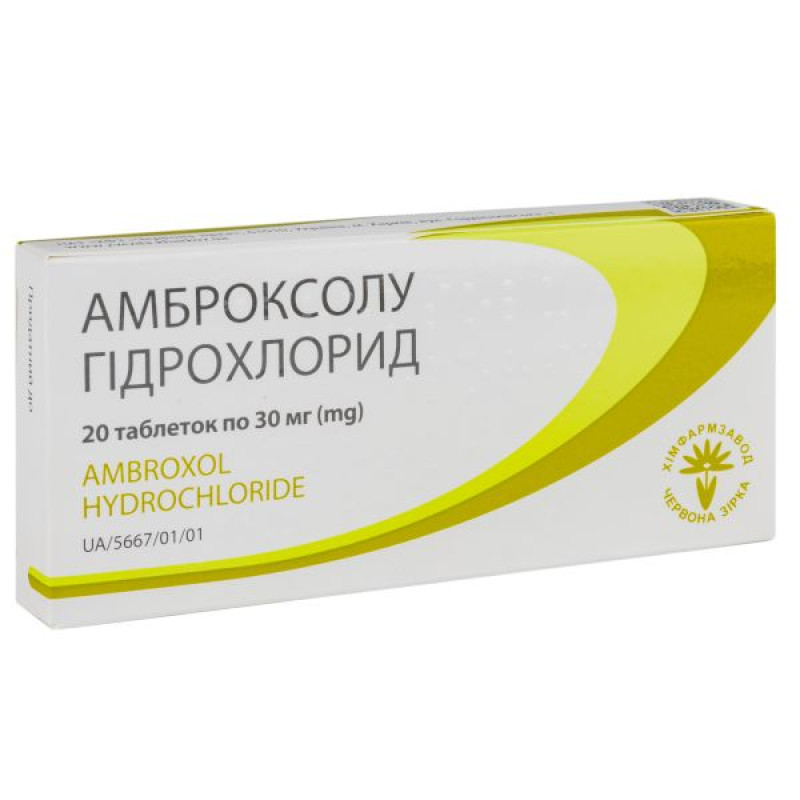
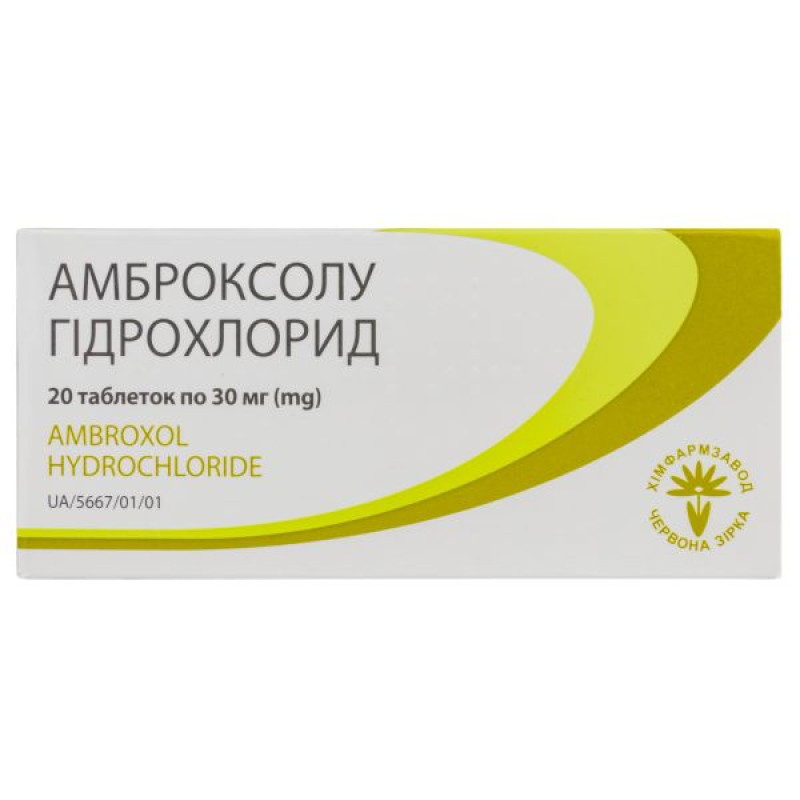
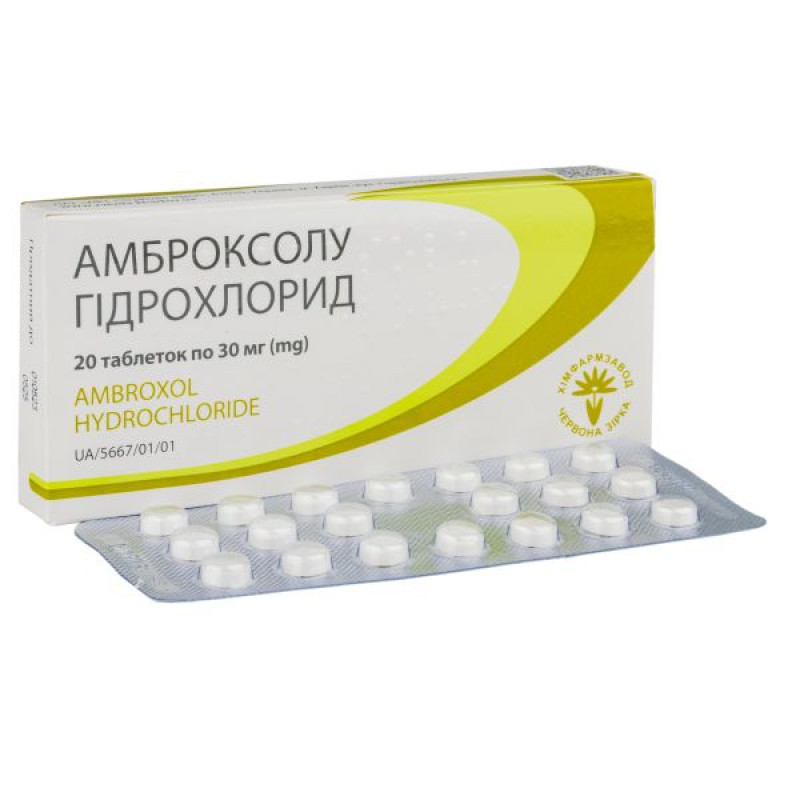
Instructions for Ambroxol hydrochloride tablets 30 mg blister No. 20
Composition
active ingredient: ambroxol hydrochloride;
1 tablet contains ambroxol hydrochloride 30 mg;
Excipients: potato starch, lactose monohydrate, microcrystalline cellulose, colloidal anhydrous silicon dioxide, calcium stearate.
Dosage form
Pills.
Main physicochemical properties: tablets of white or white with a yellowish tint.
Pharmacotherapeutic group
Medicines used for coughs and colds. Mucolytics. ATX code R05C B06.
Pharmacological properties
Pharmacodynamics.
The active substance – ambroxol hydrochloride – increases the secretion of the glands of the respiratory tract. Ambroxol increases the secretion of pulmonary surfactant and stimulates ciliary activity, which facilitates the separation and excretion of mucus (mucociliary clearance). Activation of fluid secretion and increased mucociliary clearance facilitate the excretion of mucus and reduce coughing.
The local anesthetic effect of ambroxol hydrochloride was observed in a rabbit eye model, which may be explained by its sodium channel blocking properties. In vitro studies have shown that ambroxol hydrochloride blocks neuronal sodium channels; binding was reversible and concentration-dependent.
In vitro studies have shown that ambroxol hydrochloride significantly reduces cytokine release from the blood and tissue binding of mononuclear and polymorphonuclear cells.
Patients with pharyngitis experience a significant reduction in pain and redness in the throat when using the drug.
The pharmacological properties of ambroxol hydrochloride, which lead to rapid relief of pain and pain-related discomfort in the nasal cavity, ear and trachea during inhalation, are consistent with the data from ancillary symptom observation in clinical studies of the efficacy of ambroxol in the treatment of upper respiratory tract infections.
After the use of ambroxol hydrochloride, the concentrations of antibiotics (amoxicillin, cefuroxime, erythromycin) in bronchopulmonary secretions and sputum increase.
Pharmacokinetics.
Absorption of ambroxol hydrochloride is rapid and fairly complete, with linearity in the therapeutic range. Peak plasma levels are reached after 1-2.5 hours after oral administration of the immediate-release dosage forms.
When administered orally, the distribution of ambroxol hydrochloride from the blood to the tissues is rapid and pronounced, with the highest concentration of the active substance in the lungs.
The volume of distribution after oral administration was determined to be 552 L. In plasma, approximately 90% of the drug is protein bound in the therapeutic range.
The plasma half-life is about 10 hours. Total clearance is in the range of 660 ml/min with renal clearance accounting for approximately 8% of total clearance.
In patients with impaired liver function, the excretion of ambroxol hydrochloride is reduced, resulting in a 1.3-2-fold higher plasma level.
Since the therapeutic range of ambroxol hydrochloride is quite wide, no dose adjustment is necessary.
Age and gender have no clinically significant effect on the pharmacokinetics of ambroxol hydrochloride, therefore no dose adjustment is required.
Food intake does not affect the bioavailability of ambroxol hydrochloride.
Indication
Secretolytic therapy for acute and chronic bronchopulmonary diseases associated with impaired bronchial secretion and impaired mucus movement.
Contraindication
Ambroxol hydrochloride should not be used in patients with known hypersensitivity to ambroxol hydrochloride or to any of the other ingredients of the drug.
Ambroxol hydrochloride, 30 mg tablets, is not intended for use in children under 12 years of age due to its potency.
Interaction with other medicinal products and other types of interactions
The simultaneous use of Ambroxol hydrochloride, 30 mg tablets, and cough suppressants may lead to excessive mucus accumulation due to suppression of the cough reflex. Therefore, such a combination is possible only after a careful assessment by the doctor of the ratio of the expected benefit and the possible risk of use.
Application features
There have been a few reports of severe skin reactions, Stevens-Johnson syndrome and toxic epidermal necrolysis (Lyell's syndrome), associated with the use of expectorants such as ambroxol hydrochloride. These were mostly explained by the severity of the underlying disease in the patients and the concomitant use of another drug.
Ambroxol hydrochloride tablets contain 270.8 mg of lactose in the maximum recommended daily dose (120 mg).
Patients with rare hereditary forms of galactose intolerance, the Lapp lactase deficiency or glucose-galactose malabsorption should not take this medicine.
Since ambroxol may increase mucus secretion, Ambroxol hydrochloride tablets should be used with caution in cases of impaired bronchial motility and increased mucus secretion (for example, in rare diseases such as primary ciliary dyskinesia).
Patients with impaired renal function or severe hepatic insufficiency should take Ambroxol hydrochloride tablets only after consulting a doctor. When using ambroxol, as with any active substance that is metabolized in the liver and then excreted by the kidneys, there is an accumulation of metabolites that are formed in the liver in patients with severe renal insufficiency.
Use during pregnancy or breastfeeding
Pregnancy: Ambroxol hydrochloride crosses the placental barrier. Animal studies do not indicate direct or indirect harmful effects with respect to pregnancy, embryonal/foetal development, parturition or postnatal development.
Clinical studies of the use of the drug after the 28th week of pregnancy have not revealed any harmful effects on the fetus.
However, the usual precautions regarding the use of medicines during pregnancy should be observed. In particular, Ambroxol hydrochloride tablets are not recommended in the first trimester of pregnancy.
Breastfeeding. Ambroxol hydrochloride passes into breast milk. Ambroxol hydrochloride tablets are not recommended for use during breast-feeding.
Ability to influence reaction speed when driving vehicles or other mechanisms
There is no data on the effect on the reaction rate when driving vehicles or working with other mechanisms. Relevant studies have not been conducted.
Method of administration and doses
Adults and children over 12 years of age should take 1 tablet orally 3 times a day for the first 2-3 days (equivalent to 90 mg ambroxol hydrochloride/day). Continue treatment with 1 tablet 2 times a day (equivalent to 60 mg ambroxol hydrochloride/day).
If necessary, the therapeutic effect for adults and children over 12 years of age can be enhanced by taking 2 tablets 2 times a day (equivalent to 120 mg ambroxol hydrochloride/day).
The tablets should be swallowed whole with sufficient liquid (e.g. water, tea or fruit juice) after meals.
In general, there are no restrictions on the duration of use, but long-term therapy should be carried out under medical supervision.
Ambroxol hydrochloride tablets should not be used for longer than 4-5 days without consulting a doctor.
Children
Use for children over 12 years of age.
Overdose
There are currently no reports of overdose in humans. The symptoms known from isolated reports of overdose and/or cases of misuse correspond to the known side effects of Ambroxol hydrochloride at recommended doses and require symptomatic treatment.
Adverse reactions
The following classification was used to assess the frequency of adverse events:
| very often | >10%; |
| often | >1% and <10%; |
| infrequently | >0.1% and <1%; |
| rarely | >0.01% and <0.1%; |
| very rarely | <0.01%; |
| unknown | cannot be estimated based on available data. |
General disorders:
infrequently - reactions from the mucous membranes, fever.
- On the part of the immune system, skin and subcutaneous tissue:
- rarely - skin rash, urticaria;
- unknown - angioedema, itching, anaphylactic reactions including anaphylactic shock, other allergic reactions, erythema, severe skin lesions: Stevens-Johnson syndrome and toxic epidermal necrolysis (Lyell's syndrome).
From the gastrointestinal tract:
often - nausea;
infrequently - vomiting, dyspepsia, abdominal pain, dry mouth, diarrhea;
very rarely - constipation, drooling;
not known – dry throat.
On the part of the respiratory system:
very rarely - rhinorrhea;
unknown - dyspnea (as a hypersensitivity reaction).
From the urinary system:
very rarely - dysuria.
Expiration date
3 years.
Do not use after the expiry date stated on the packaging.
Storage conditions
Store in the original packaging at a temperature not exceeding 25 °C.
Keep out of reach of children.
Packaging
10 or 20 tablets in a blister. 2 blisters No. 10 or 1 blister No. 20 in a cardboard pack.
Vacation category
Without a prescription.
Producer
PJSC "Chempharmaceutical Plant "Chervona Zirka".
Location of the manufacturer and its business address.
61010, Ukraine, Kharkiv, 1 Hordienkivska St.