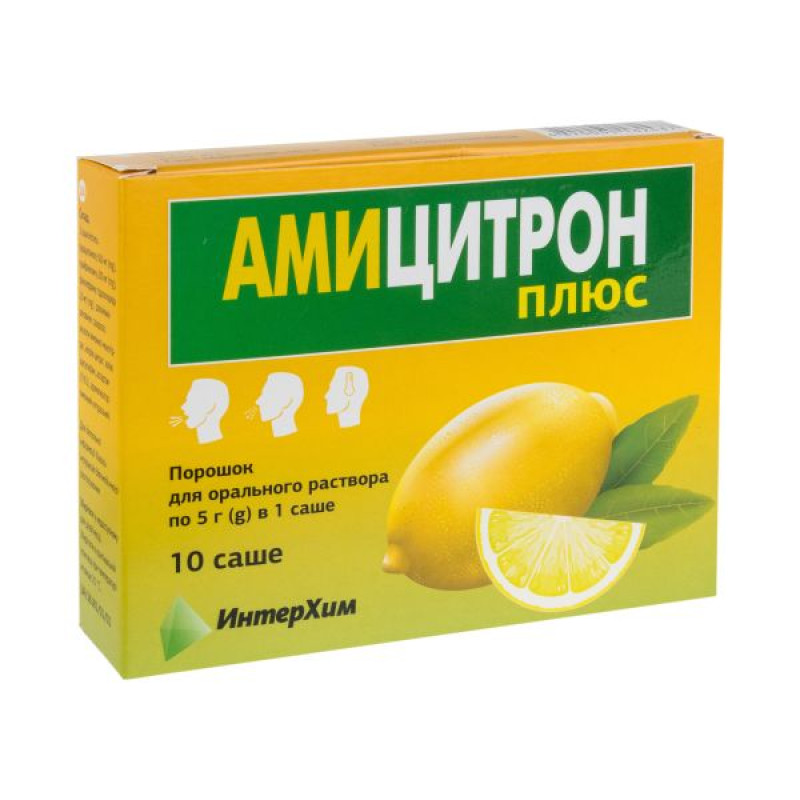
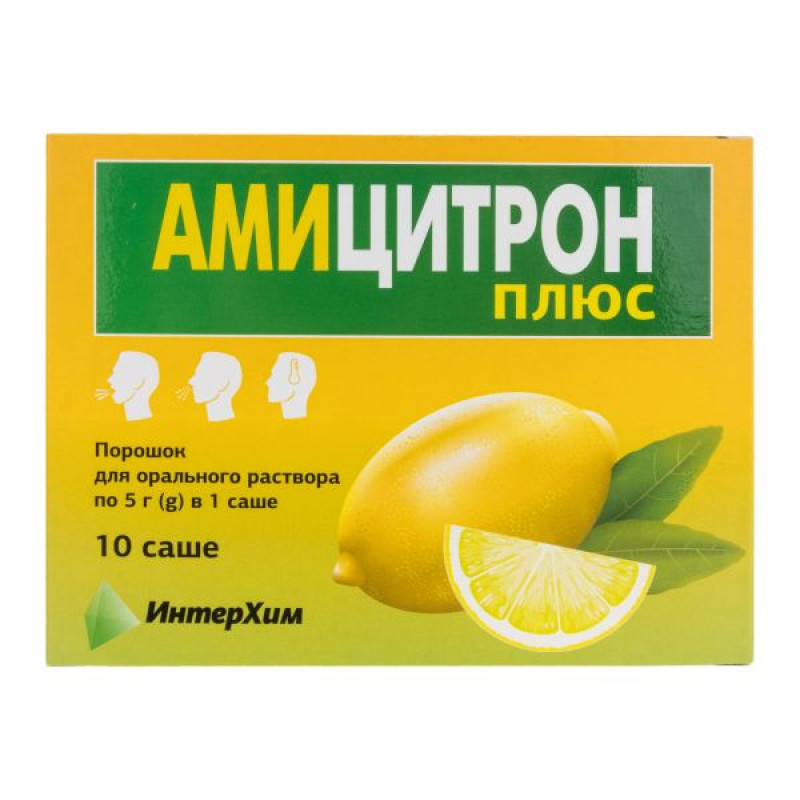
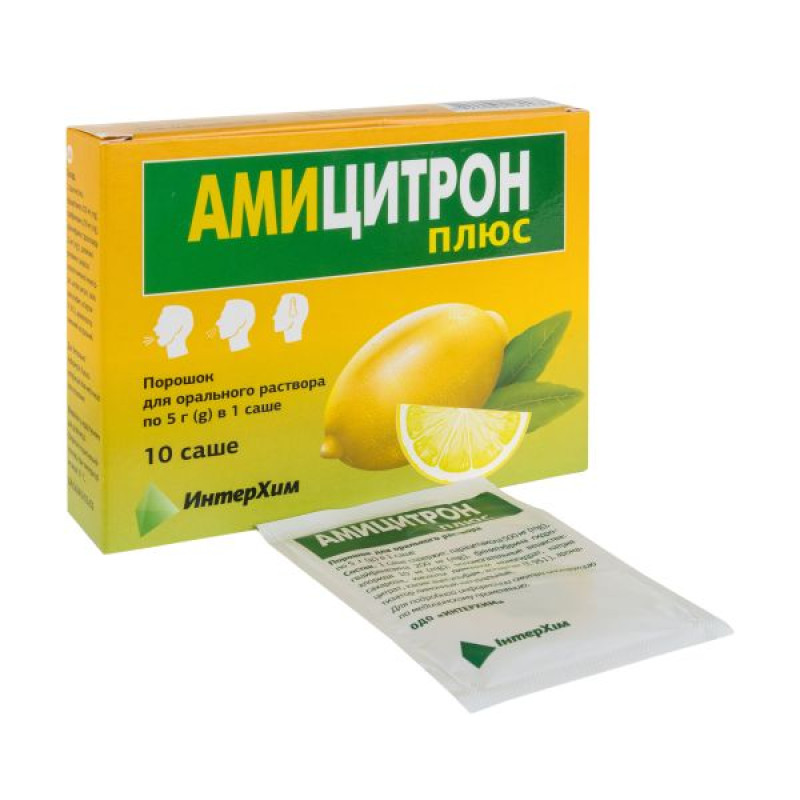
Instructions Amicitron Plus powder for oral solution sachet 5 g No. 10
Composition
active ingredients: paracetamol, guaifenesin, phenylephrine hydrochloride;
1 sachet contains paracetamol 500 mg, guaifenesin 200 mg, phenylephrine hydrochloride 10 mg;
excipients: sucrose, citric acid monohydrate, sodium citrate, acesulfame potassium, aspartame (E 951), natural lemon flavor.
Dosage form
Powder for oral solution.
Main physicochemical properties: white or almost white powder.
Pharmacotherapeutic group
Analgesics and antipyretics. Anilides. Paracetamol, combinations without psycholeptics.
ATX code N02B E51.
Pharmacological properties
Pharmacodynamics.
Paracetamol exerts its analgesic effect mainly through inhibition of prostaglandin synthesis in the central nervous system and to a lesser extent through peripheral action, blocking the conduction of pain impulses. The mechanism of antipyretic action is to influence the thermoregulation center in the hypothalamus.
Guaifenesin is an expectorant. It works by increasing the volume and reducing the viscosity of secretions in the trachea and bronchi, which makes it easier to cough up phlegm.
Phenylephrine hydrochloride is a sympathomimetic that primarily stimulates α-adrenergic receptors, leading to vasoconstriction and reduction of swelling of the nasal mucosa and paranasal sinuses.
The active ingredients do not have a sedative effect.
Pharmacokinetics.
Paracetamol is rapidly and almost completely absorbed from the gastrointestinal tract. When administered orally, the maximum concentration in the blood plasma is reached 10–60 minutes after administration. 95% of paracetamol is metabolized in the liver by sulfo- and glucuronide conjugation, as well as oxidation by the cytochrome P450 system. It is excreted by the kidneys, mainly in the form of metabolites, 3% of paracetamol is excreted unchanged. The half-life is from 1 to 4 hours. Paracetamol crosses the placental barrier, a small part penetrates into breast milk.
Guaifenesin is rapidly absorbed from the gastrointestinal tract. When administered orally, peak plasma concentrations are reached 15 minutes after administration. Guaifenesin is metabolized in the kidneys by oxidation to β-(2-methoxyphenoxy)lactic acid, an inactive metabolite that is excreted in the urine. The half-life is 1 hour.
Phenylephrine hydrochloride is unevenly absorbed from the gastrointestinal tract and undergoes presystemic metabolism by monoamine oxidase in the intestine and liver. Thus, orally administered phenylephrine has a reduced bioavailability. Peak plasma levels are reached within 1–2 hours. The half-life is 2–3 hours. It is excreted in the urine almost entirely as the sulfate conjugate.
Indication
Treatment of cold and flu symptoms: headache, body aches and pains, sore throat, nasal congestion, fever, productive cough with difficulty in expectorating sputum.
Contraindication
Hypersensitivity to the components of the drug. Cardiovascular diseases, arterial hypertension, blood diseases (including severe anemia, leukopenia), angle-closure glaucoma, diabetes mellitus, hyperthyroidism, urinary retention due to prostatic hyperplasia, pheochromocytoma, liver failure, severe renal failure, acute hepatitis, pancreatitis, alcoholism, congenital hyperbilirubinemia (including Gilbert's syndrome), glucose-6-phosphate dehydrogenase deficiency, phenylketonuria; rare hereditary problems associated with fructose intolerance, glucose-galactose malabsorption or sucrase-isomaltase deficiency. Pregnancy or breastfeeding. Children under 12 years of age.
Do not use simultaneously with tricyclic antidepressants, paracetamol-containing drugs, β-blockers, sympathomimetics, monoamine oxidase inhibitors (MAO) and within 2 weeks after discontinuing the use of MAO inhibitors.
Interaction with other medicinal products and other types of interactions
Metoclopramide or domperidone may increase the rate of absorption of paracetamol, and cholestyramine may decrease it. Probenecid inhibits the conjugation of paracetamol with glucuronic acid, which leads to a decrease in paracetamol clearance by almost half. With simultaneous use of probenecid, the dose of paracetamol must be reduced. Salicylates/aspirin may prolong the half-life of paracetamol. Barbiturates reduce the antipyretic effect of paracetamol. Drugs that stimulate the activity of liver microsomal enzymes, such as anticonvulsants (including phenytoin, barbiturates, carbamazepine), monoamine oxidase inhibitors, tricyclic antidepressants, may enhance the toxic effect of paracetamol on the liver due to an increase in the degree of its conversion to hepatotoxic metabolites. With simultaneous use of paracetamol with hepatotoxic drugs, the toxic effect of drugs on the liver increases. Concomitant use of high doses of paracetamol with isoniazid increases the risk of hepatotoxic syndrome. Paracetamol hepatotoxicity may be enhanced by excessive alcohol consumption. Concomitant therapy with paracetamol and NSAIDs (nonsteroidal anti-inflammatory drugs) increases the risk of renal dysfunction. Paracetamol reduces the effectiveness of diuretics. Regular use of paracetamol may reduce the metabolism of zidovudine (increased risk of neutropenia). The anticoagulant effect of warfarin and other coumarins may be enhanced with an increased risk of bleeding with concomitant long-term regular use of paracetamol; intermittent use does not show a significant effect. Pharmacological interactions between paracetamol and other drugs have been reported. The clinical significance of these interactions is considered unlikely when used in recommended doses.
Guaifenesin enhances the effects of sedatives and muscle relaxants.
Phenylephrine hydrochloride should not be used with α-blockers, other antihypertensive agents, phenothiazine derivatives (e.g. promethazine), guanethidine, methyldopa, glucocorticosteroids, tricyclic antidepressants; appetite suppressants, amphetamine-like psychostimulants, ergot alkaloids; other central nervous system stimulants, theophylline. It should not be used with other vasoconstrictors (by any route of administration). Concomitant administration of phenylephrine and other sympathomimetics may lead to additional stimulation of the central nervous system to an extremely high level, accompanied by nervousness, irritability, insomnia. Convulsions are also possible. In addition, the simultaneous use of other sympathomimetics with phenylephrine may lead to an increase in the cardiovascular effects (in particular, the vasoconstrictor effect) of either of these two drugs. Phenylephrine may cause the development of hypertensive crisis or arrhythmia when used simultaneously with other adrenomimetics or MAO inhibitors, and cause severe arterial hypertension when combined with indomethacin and bromocriptine. Simultaneous use of phenylephrine with β-blockers may lead to arterial hypertension and excessive bradycardia with possible heart block. It should be used with caution with thyroid hormones, drugs that affect cardiac conduction (cardiac glycosides, antiarrhythmic drugs). Phenylephrine may increase the likelihood of arrhythmias in patients taking digitalis preparations. Concomitant use with drugs that cause potassium loss, such as some diuretics such as furosemide, may increase hypokalemia and reduce arterial sensitivity to vasopressor drugs. Concomitant use with halogenated anesthetics such as chloroform, cyclopropane, halothane, enflurane or isoflurane may cause or worsen ventricular arrhythmia. A significant increase in blood pressure is possible with simultaneous intravenous administration of ergot alkaloids. The risk of developing ergotism increases with the simultaneous use of phenylephrine and ergot alkaloids. Rauwolfia alkaloids reduce the therapeutic effect of phenylephrine. Atropine sulfate blocks the reflex bradycardia caused by phenylephrine and increases the vasopressor response to phenylephrine.
Application features
The drug should be used with caution in patients taking hepatotoxic drugs, digitalis drugs, methyldopa or other antihypertensive drugs; patients with bronchial asthma, chronic lung diseases, myasthenia gravis, severe gastrointestinal disorders, chronic malnutrition (low glutathione levels). In patients with severe infections such as sepsis, which are accompanied by a decrease in glutathione levels, the risk of metabolic acidosis increases when taking paracetamol. Symptoms of metabolic acidosis are deep, rapid or difficult breathing, nausea, vomiting, loss of appetite. You should immediately consult a doctor if these symptoms occur.
Paracetamol may affect the results of laboratory tests for blood glucose and uric acid. Guaifenesin may affect the results of laboratory tests of urine (determination of 5-hydroxyindoleacetic acid, vanillylmandelic acid) within 24 hours after administration.
Do not use simultaneously with other cold, decongestant and paracetamol-containing drugs. Do not use with cough suppressants. Avoid alcohol.
Long-term use of the drug is not recommended.
If the headache becomes persistent, you should see a doctor.
In case of overdose, you should immediately consult a doctor due to the risk of liver damage, even if the patient feels well.
If you have been told you have an intolerance to some sugars, contact your doctor before taking this medicine. Amicitron® plus contains sucrose, so this medicine should not be taken by patients with rare hereditary problems of fructose intolerance, glucose-galactose malabsorption or sucrase-isomaltase insufficiency. 1 sachet of Amicitron® plus contains 5.81 mmol (or 133.7 mg) sodium, so patients on a controlled sodium diet should take this medicine with caution. The medicine contains aspartame (E 951) - a source of phenylalanine, which is dangerous for patients with phenylketonuria.
Use during pregnancy or breastfeeding
Not used.
Women should stop breastfeeding while using the medicine.
Ability to influence reaction speed when driving vehicles or other mechanisms
The drug may cause dizziness, which should be taken into account when driving or using other mechanisms.
Method of administration and doses
The drug is administered orally in the form of a solution. Dissolve the contents of 1 sachet in 250 ml of hot water, but not boiling water. The prepared solution should be consumed warm.
Adults, elderly patients, children over 12 years of age
1 sachet every 4–6 hours as needed. Maximum daily dose is 4 sachets.
The maximum period of use without consulting a doctor is 3 days. If the symptoms of the disease do not disappear, you should consult a doctor.
Children
The drug is contraindicated for children under 12 years of age.
Overdose
Paracetamol.
If the patient has taken a dose higher than recommended, a doctor should be consulted immediately due to the risk of liver damage. Liver damage is possible in adults who have taken 10 g or more of paracetamol and in children who have taken paracetamol in a dose of more than 150 mg/kg of body weight. Taking 5 g or more of paracetamol can lead to liver damage in patients with risk factors (long-term use of carbamazepine, phenobarbital, phenytoin, primidone, rifampicin, St. John's wort or other drugs that induce liver enzymes; regular use of excessive amounts of alcohol; insufficiency of the glutathione system, e.g. eating disorders, HIV infection, starvation, cystic fibrosis, cachexia).
Symptoms of overdose in the first 24 hours: pallor, nausea, vomiting, loss of appetite and abdominal pain. Liver damage may become apparent 12–48 hours after overdose. Glucose metabolism disorders and metabolic acidosis may occur. In severe poisoning, liver failure may progress to encephalopathy, hemorrhage, hypoglycemia, cerebral edema and death. Acute renal failure with acute tubular necrosis may present with severe lumbar pain, hematuria, proteinuria and may develop even in the absence of severe liver damage. Cardiac arrhythmias and pancreatitis have also been reported.
Treatment: urgent medical attention is required. The patient should be taken to hospital immediately, even if there are no early symptoms of overdose. Symptoms may be limited to nausea or vomiting and may not reflect the severity of the overdose or the risk of organ damage. Treatment with activated charcoal should be considered within 1 hour of taking an excessive dose of paracetamol. The concentration of paracetamol in the blood plasma should be measured 4 hours or later after ingestion (earlier concentrations are unreliable). It is recommended to administer SH-group donors and precursors of glutathione synthesis (such as methionine, N-acetylcysteine) intravenously in doses determined depending on the concentration of paracetamol in the blood, as well as on the time elapsed since its ingestion. Treatment with N-acetylcysteine can be used within 24 hours of paracetamol ingestion, but the maximum protective effect occurs when it is used within 8 hours after ingestion. The effectiveness of the antidote decreases sharply after this time. If necessary, the patient should be given intravenous N-acetylcysteine according to current guidelines. In the absence of vomiting, oral methionine may be used as a suitable alternative in remote areas outside the hospital.
Guaifenesin.
Overdose in small or moderate doses may cause dizziness or vertigo, gastrointestinal disturbances (including nausea, vomiting). Very high doses may cause symptoms such as agitation, confusion, and respiratory depression.
Phenylephrine hydrochloride.
In case of overdose, the manifestation of adverse reactions may be increased, especially with prolonged use. An increase in blood pressure and associated reflex bradycardia and arrhythmia may occur; pain and discomfort in the heart area, palpitations, shortness of breath, non-cardiogenic pulmonary edema, agitation, convulsions, headache, tremor, sleep disorders (including insomnia), anxiety, restlessness, nervousness, irritability, inappropriate behavior, psychosis with hallucinations, confusion, weakness, anorexia, nausea, vomiting, oliguria, urinary retention, painful or difficult urination, hyperpyrexia, facial flushing, feeling of coldness in the extremities, paresthesia, pale skin, piloerection, increased sweating, hyperglycemia, hypokalemia, peripheral vasoconstriction, decreased blood flow to vital organs, which may lead to impaired renal blood supply, metabolic acidosis, increased workload on the heart due to increased total peripheral vascular resistance. Symptoms of severe overdose include severe peripheral and visceral vasoconstriction with cardiovascular collapse. Severe vasoconstriction is more likely to occur in patients with hypovolemia and severe bradycardia.
Treatment: early gastric lavage, as well as symptomatic and supportive measures.
Adverse reactions
Immune system disorders: anaphylaxis, hypersensitivity reactions including pruritus, rash on the skin and mucous membranes (usually generalized rash, erythematous rash, urticaria, allergic dermatitis), angioedema, erythema multiforme exudative (including Stevens-Johnson syndrome), toxic epidermal necrolysis (Lyell's syndrome).
From the nervous system (usually develop when taking high doses): headache, dizziness, disorientation, impaired consciousness, insomnia, psychomotor agitation, nervousness, irritability, anxiety, tremor.
From the organs of vision: mydriasis, acute angle-closure glaucoma.
From the cardiovascular system: tachycardia, increased blood pressure, feeling of palpitations.
From the side of the hematopoietic and lymphatic systems: pancytopenia, anemia (including hemolytic anemia, aplastic anemia), sulfhemoglobinemia and methemoglobinemia (cyanosis, shortness of breath, pain in the heart area), leukopenia, agranulocytosis, neutropenia, thrombocytopenia, which may cause nosebleeds and/or bleeding gums, bruising, bleeding.
On the part of the digestive system: feeling of discomfort in the gastrointestinal tract, loss of appetite, epigastric pain, nausea, vomiting, diarrhea, acute pancreatitis.
On the part of the hepatobiliary system: impaired liver function, increased activity of liver enzymes in the blood serum, usually without the development of jaundice, hepatonecrosis (dose-dependent effect).
On the part of the endocrine system: hypoglycemia, possible development of hypoglycemic coma.
From the urinary system: dysuria, urinary retention or difficulty urinating (with prostate enlargement), renal colic, aseptic pyuria. There are rare reports of bladder or kidney stones in patients who have taken large amounts of guaifenesin for a long time.
Respiratory system: shortness of breath, bronchospasm in patients sensitive to acetylsalicylic acid and other NSAIDs.
Expiration date
2 years.
Storage conditions
Store in the original packaging at a temperature not exceeding 25 °C.
Keep out of reach of children.
Packaging
Powder 5 g in a sachet; 10 sachets in a pack.
Vacation category
Without a prescription.
Producer
Additional Liability Company "INTERCHEM".
Ukraine, 65080, Odesa region, Odessa, Lustdorfska road, building 86.