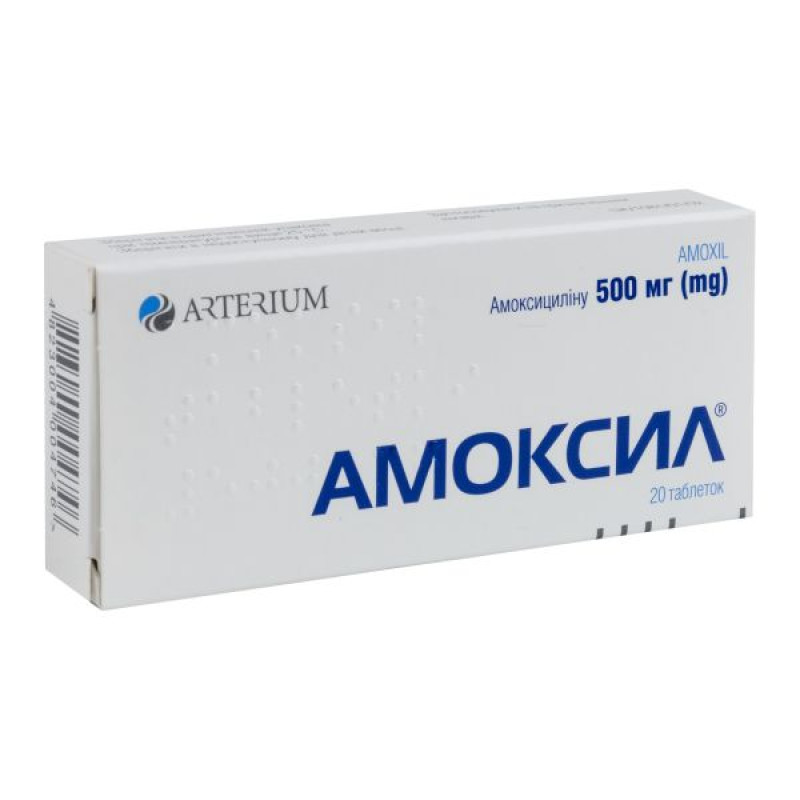
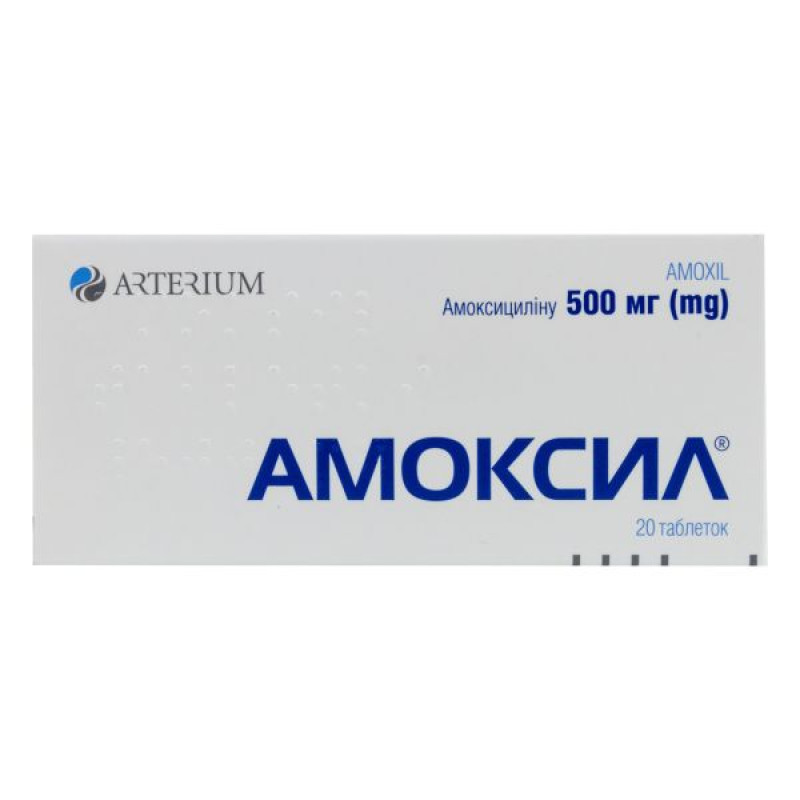
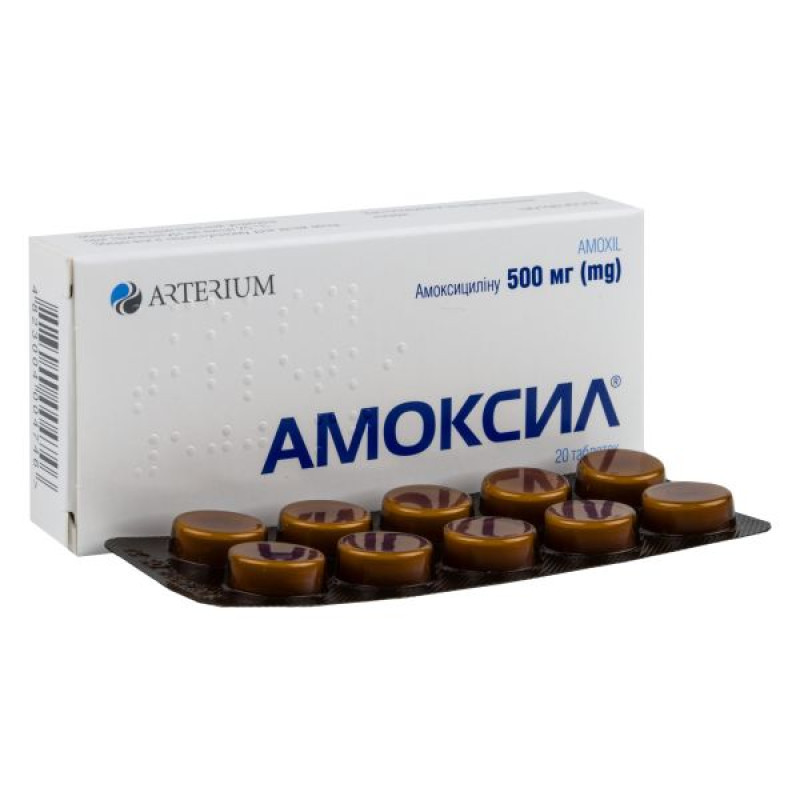
Instructions for Amoxil tablets 500 mg No. 20
Composition
active ingredient: amoxicillin;
1 tablet contains amoxicillin trihydrate, equivalent to amoxicillin – 250 mg or 500 mg;
Excipients: sodium starch glycolate (type A), povidone, calcium stearate.
Dosage form
Pills.
Main physicochemical properties: white tablets with a yellowish tinge, flat-cylindrical with a bevel and a score.
Pharmacotherapeutic group
Antibacterials for systemic use. Beta-lactam antibiotics, penicillins. ATX code J01C A04.
Pharmacological properties
Pharmacodynamics
Amoxicillin is a semi-synthetic aminopenicillin antibiotic of broad spectrum of action for oral use. It inhibits the synthesis of the bacterial cell wall. It has a broad spectrum of antimicrobial action.
The following types of microorganisms are sensitive to the drug:
- gram-positive aerobes: Corinebacterium diphteriae, Enterococcus faecalis, Listeria monocytogenes, Streptococcus agalactiae, Streptococcus bovis, Streptococcus pyogenes;
– gram-negative aerobes: Helicobacter pylori;
– anaerobes: Peptostreptococci;
– others: Borrelia.
Intermittently sensitive (acquired resistance may complicate treatment): Corinebacterium spp., Enterococcus faecium, Streptococcus pneumoniae, Streptococcus viridans, Escherichia coli, Haemophilus influenzae, Haemophilus parainfluenzae, Moraxella catarrhalis, Proteus mirabilis, Prevotella, Fusobacterium spp.
Resistant species such as: Staphylococcus aureus, Acinetobacter, Citrobacter, Enterobacter, Klebsiella, Legionella, Morganella morganii, Proteus vulgaris, Providencia, Pseudomonas, Serratia, Bacteroides fragilis, Chlamidia, Mycoplasma, Rickettsia.
Pharmacokinetics
Absorption.
After oral administration, amoxicillin is absorbed in the small intestine quickly and almost completely (85-90%). Food intake has almost no effect on the absorption of the drug. After taking a single dose of 500 mg, the concentration of amoxicillin in the blood plasma was 6-11 mg/l. The maximum concentration of the active substance in the blood plasma is reached after 1-2 hours.
Distribution.
About 20% of amoxicillin binds to plasma proteins. Amoxicillin penetrates the mucous membranes, bone tissue and intraocular fluid, sputum in therapeutically effective concentrations. The concentration of amoxicillin in bile exceeds its concentration in the blood by 2-4 times. Amoxicillin diffuses poorly into the cerebrospinal fluid; however, in inflammation of the meninges (for example, in meningitis), the concentration in the cerebrospinal fluid is approximately 20% of the concentration in the blood plasma.
Metabolism.
Amoxicillin is partially metabolized, most of its metabolites are inactive.
Breeding.
Amoxicillin is excreted mainly by the kidneys. Approximately 60-80% of the dose is eliminated unchanged within 6 hours. The half-life of amoxicillin is 1-1.5 hours. In case of impaired renal function, the half-life of amoxicillin increases and reaches 8.5 hours in anuria.
The half-life of amoxicillin is not altered by impaired liver function.
Indication
Infections of the respiratory system, genitourinary system, digestive tract (including in combination with metronidazole or clarithromycin used to treat diseases associated with Helicobacter pylori), skin and soft tissues caused by microorganisms sensitive to the drug.
Contraindication
Hypersensitivity to any component of the drug and/or to any antibacterial agents of the penicillin group.
History of severe hypersensitivity reactions (including anaphylaxis) associated with the use of other beta-lactam agents (including cephalosporins, carbapenems or monobactams).
Infectious mononucleosis and leukemoid reactions of the lymphatic type.
Interaction with other medicinal products and other types of interactions
Probenecid, phenylbutazone, oxyphenbutazone, and to a lesser extent, acetylsalicylic acid and sulfinpyrazone inhibit the tubular secretion of penicillin drugs, which leads to an increase in the half-life and concentration of amoxicillin in blood plasma.
Drugs with bacteriostatic action (tetracycline antibiotics, macrolides, chloramphenicol) can neutralize the bactericidal effect of amoxicillin. Parallel use of aminoglycosides is possible (synergistic effect).
Not recommended combinations
Allopurinol. Concomitant use with amoxicillin contributes to the occurrence of allergic skin reactions.
Digoxin. The absorption of digoxin increases, so its dose should be adjusted.
Disulfiram. Concomitant use with amoxicillin is contraindicated.
Anticoagulants. Concomitant use of amoxicillin and coumarin anticoagulants may prolong bleeding time. Dose adjustment of anticoagulants may be necessary. There have been reports of increased activity of oral anticoagulants in patients receiving amoxicillin.
Methotrexate. The use of amoxicillin with methotrexate leads to an increase in the toxic effect of the latter. Amoxicillin reduces the renal clearance of methotrexate, therefore its serum concentration should be monitored.
Simultaneous administration with antacids reduces the absorption of amoxicillin.
Other types of interactions.
Forced diuresis leads to a decrease in the concentration of amoxicillin in the blood by increasing its elimination.
The occurrence of diarrhea may lead to a decrease in the absorption of other drugs and adversely affect their effectiveness.
Impact on diagnostic laboratory test results: When testing for glucose in urine, the enzymatic glucose oxidase method is recommended. False-positive results are commonly observed when chemical methods are used.
Amoxicillin may reduce the amount of estriol in the urine of pregnant women.
At high concentrations, amoxicillin may reduce serum glycemia. Amoxicillin may interfere with colorimetric protein determination.
Application features
Before initiating therapy with amoxicillin, a preliminary test for the possibility of a hypersensitivity reaction to penicillins and cephalosporins should be performed. Cross-hypersensitivity and cross-resistance (10-15%) between penicillins and cephalosporins may exist.
Patients with severe gastrointestinal disorders accompanied by diarrhea and vomiting should not use oral forms of amoxicillin due to the risk of reduced absorption.
In children, amoxicillin can discolor tooth enamel, so the patient must strictly adhere to oral hygiene.
Severe and sometimes fatal cases of hypersensitivity (anaphylactic reaction) have been reported in patients receiving penicillin therapy. Such reactions occur more frequently in patients with a known history of severe allergic reactions. Treatment with the drug should be discontinued and appropriate therapy instituted. Treatment of symptoms of anaphylactic reaction may be necessary, e.g. immediate administration of adrenaline, steroids (intravenously) and emergency treatment for respiratory failure.
In patients with impaired renal function, the excretion of amoxicillin is slowed down and, depending on the degree of impairment, treatment with amoxicillin should either be discontinued or the total daily dose of the drug should be reduced.
Prolonged use of the drug may lead to overgrowth of non-susceptible microorganisms or yeasts. Superinfection may occur, which requires careful monitoring of such patients.
When using high doses of the drug, it is necessary to drink a sufficient amount of fluid to prevent crystalluria, which can be caused by amoxicillin. The presence of high concentrations of amoxicillin in the urine may cause the drug to precipitate in the urinary catheter, so it should be visually checked at certain intervals.
If severe diarrhea occurs, typical of pseudomembranous colitis (most often caused by Clostridium difficile), it is recommended to discontinue use of the drug and take appropriate measures. The use of antiperistaltic agents is contraindicated.
Amoxicillin is not recommended for the treatment of patients with acute lymphoblastic leukemia or infectious mononucleosis due to an increased risk of erythematous skin rashes.
During high-dose therapy, blood counts should be monitored regularly.
High-dose amoxicillin therapy in patients with renal insufficiency or patients with a history of epilepsy and meningitis may, in isolated cases, lead to seizures.
The occurrence of generalized erythema with fever and pustules at the beginning of treatment may indicate the development of acute generalized eczematous pustulosis, which requires discontinuation of amoxicillin therapy.
Use during pregnancy or breastfeeding
The teratogenic effect of amoxicillin has not been identified. However, if it is necessary to prescribe Amoxil® during pregnancy, it is necessary to assess in advance the ratio of the potential risk to the fetus and the expected benefit to the woman. Amoxicillin is excreted in breast milk in small quantities. Use during breastfeeding is possible, however, to prevent possible sensitization of the child, breastfeeding is recommended to be discontinued.
Ability to influence reaction speed when driving vehicles or other mechanisms
Until the individual reaction to the drug is determined (dizziness may occur), it is recommended to exercise caution when driving or working with complex mechanisms.
Method of administration and doses
The dosage range for Amoxil® is very wide. The doctor sets the dose, frequency of administration and duration of treatment individually.
Adults and children weighing more than 40 kg should take 250 mg to 500 mg of Amoxil® three times a day or 500 mg to 1000 mg twice a day. For sinusitis, pneumonia and other severe infections, 500 mg to 1000 mg should be taken three times a day. The daily dose can be increased to a maximum of 6 g.
Children weighing less than 40 kg should generally receive 40-90 mg/kg/day of Amoxil® daily in three divided doses or 25 mg to 45 mg/kg/day in two divided doses. The maximum daily dose for children is 100 mg/kg of body weight.
When treating chronic diseases, local infectious lesions, and severe infections, the dosage of the drug should be determined taking into account the clinical picture of the disease.
The drug should be continued for 48 hours after the symptoms of the disease disappear.
Amoxil® can be used in patients with renal insufficiency. In severe renal insufficiency (creatinine clearance < 10 ml/min, i.e. 0.16 ml/s), the dosing intervals of the drug should be 12-24 hours, and the dose of the drug should be reduced by 15-50%.
In case of impaired liver function, dosage adjustment is not required.
Amoxil® can be taken regardless of meals. The tablet should be swallowed with liquid. During treatment with Amoxil®, the patient is advised to drink more fluids than usual.
Children
Children under 5 years of age are prescribed other dosage forms of amoxicillin.
Overdose
Symptoms: digestive tract dysfunction – nausea, vomiting, diarrhea; vomiting and diarrhea may result in a violation of water and electrolyte balance.
Cases of crystalluria, sometimes leading to renal failure, have been reported.
Treatment: induce vomiting or perform gastric lavage, then take activated charcoal and an osmotic laxative. Maintain water and electrolyte balance.
Adverse reactions
Infections and infestations: candidiasis of the skin and mucous membranes, development of superinfection.
Blood and lymphatic system disorders: haemolytic anaemia, thrombocytopenia, eosinophilia, leukopenia (including severe neutropenia and agranulocytosis), and increased bleeding time and prothrombin time. These events are reversible upon discontinuation of treatment.
On the part of the immune system: as with all antibiotics - severe allergic reactions, including anaphylaxis, angioedema, anaphylactic shock, serum sickness and allergic vasculitis; enanthema, hyperemia, fever.
If an anaphylactic reaction develops, appropriate therapy should be initiated immediately.
Nervous system: insomnia, loss of consciousness, headache, hyperkinesia, confusion, dizziness, convulsions. These effects occur more often in patients taking very high doses.
Gastrointestinal: diarrhea, loss of appetite, dry mouth, taste disturbance, bloating, abdominal discomfort and pain, nausea; itching in the anus; vomiting, intestinal candidiasis, superficial discoloration of teeth, black tongue color, which resolve either during treatment or immediately after completion of therapy, antibiotic-associated colitis (including pseudomembranous colitis and hemorrhagic colitis).
Hepatobiliary disorders: hepatitis, cholestatic jaundice, moderate increase in liver enzyme concentrations (AST, ALT).
Skin and subcutaneous tissue disorders: pruritus, rash, including erythematous and maculopapular; urticaria, erythema multiforme, Stevens-Johnson syndrome, toxic epidermal necrolysis, bullous or exfoliative dermatitis and acute generalized exanthematous pustulosis.
On the part of the kidneys and urinary system: interstitial nephritis, crystalluria. In case of severe side effects, the drug should be discontinued.
Others: general weakness.
Expiration date
4 years.
Storage conditions
Store in original packaging, at a temperature not exceeding 25 ° C. Keep out of the reach of children.
Packaging
10 tablets in a blister, 2 blisters in a pack.
Vacation category
According to the recipe.
Manufacturer/Applicant
PJSC "Kyivmedpreparat".
Location of the manufacturer and its business address/location of the applicant and/or the applicant's representative
Ukraine, 01032, Kyiv, Saksaganskoho St., 139.