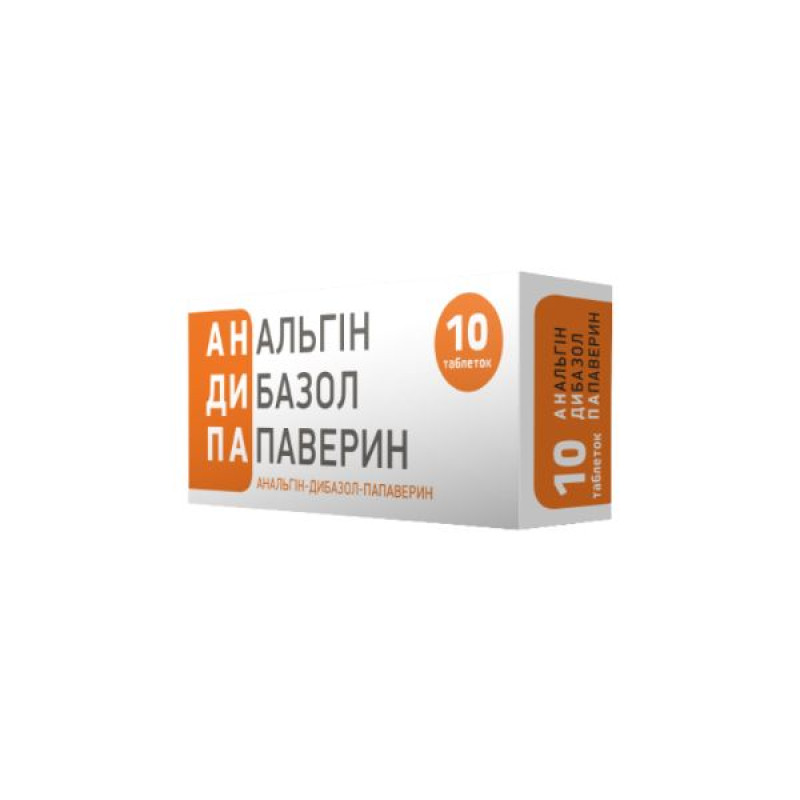
Instructions for Analgin-Dibazol-Papaverine (ANDIPA) tablets blister No. 10
Composition
active ingredients: metamizole sodium monohydrate, bendazole hydrochloride, papaverine hydrochloride;
1 tablet contains metamizole sodium monohydrate 250 mg, bendazole hydrochloride 20 mg, papaverine hydrochloride 20 mg;
excipients: potato starch, talc, povidone, magnesium stearate.
Dosage form
Pills.
Main physicochemical properties: tablets of white or white with a yellowish tint, flat-cylindrical shape with a bevel; on one surface of the tablet there is a trademark of the company, on the other surface of the tablet there is a line.
Pharmacotherapeutic group
Analgesics. Other analgesics and antipyretics. Pyrazolones. Metamizole sodium, combinations without psycholeptics.
ATX code N02B B52.
Pharmacological properties
Pharmacodynamics
A combined drug with analgesic, antispasmodic and vasodilator effects due to the specific action of its components. The drug also has antihypertensive and antipyretic effects.
Metamizole sodium monohydrate is a nonsteroidal anti-inflammatory drug (NSAID) of the pyrazolone derivatives group, which exhibits anti-inflammatory, analgesic and antipyretic effects. The mechanism of action is due to inhibition of cyclooxygenase (COX) and blocking the synthesis of prostaglandins from arachidonic acid, as well as impaired conduction of pain extra- and proprioceptive impulses, an increase in the threshold of excitability of thalamic centers of pain sensitivity, and increased heat dissipation.
Bendazole hydrochloride exhibits antispasmodic, vasodilator, and hypotensive effects, and also has a stimulating effect on the functions of the spinal cord and promotes the restoration of peripheral nerve functions, and has a moderate immunostimulating effect.
Papaverine hydrochloride exhibits myotropic, antispasmodic, and hypotensive effects. Blocks phosphodiesterase, causes the accumulation of cyclic adenosine monophosphate (cAMP) and a decrease in calcium content in the cell, relaxes the smooth muscles of blood vessels and internal organs.
Pharmacokinetics
When taken orally, it is quickly and completely absorbed. It is hydrolyzed in the intestinal walls to form an active metabolite. The effect develops after 20-40 minutes and reaches a maximum after 2 hours. It is metabolized in the liver. It is excreted by the kidneys.
Indication
Pain syndrome associated with spasm of blood vessels or smooth muscles of internal organs.
Contraindication
Known or suspected hypersensitivity to any of the substances included in the preparation, pyrazolone derivatives (butadione, tribuzone, antipyrine); suspected acute surgical pathology; diseases occurring with decreased muscle tone, convulsive syndrome; glaucoma, traumatic brain injury, severe heart failure, AV block, arterial hypotension, diabetes mellitus, hypothyroidism, adrenal insufficiency, prostatic hypertrophy, congenital deficiency of glucose-6-phosphate dehydrogenase, anemia of any etiology, cytostatic or infectious neutropenia, leukopenia, agranulocytosis, thrombocytopenia, hepatoporphyria, severe liver and kidney dysfunction, chronic nephritis with edema and impaired nitrogen-excreting kidney function, bronchial asthma, respiratory depression, broncho-obstructive syndrome, gastric and duodenal ulcer accompanied by bleeding; hypotonic colitis, habitual constipation; simultaneous use of monoamine oxidase inhibitors (MAO). Pregnancy or breastfeeding. Children's age. Age over 75 years (risk of hyperthermia).
Interaction with other medicinal products and other types of interactions
Radiocontrast agents, colloidal blood substitutes, penicillin: should not be used during treatment with metamizole sodium.
Nonsteroidal anti-inflammatory drugs: their analgesic and antipyretic effects are potentiated and the likelihood of additive undesirable side effects increases.
Oral hypoglycemic drugs, indirect anticoagulants, glucocorticosteroids, phenytoin, indomethacin: metamizole sodium increases the activity of these drugs by displacing them from protein binding.
Methotrexate: metamizole sodium in high doses may lead to an increase in the concentration of methotrexate in the blood plasma and an increase in its toxic effects (primarily on the digestive tract and the hematopoietic system).
Diuretics (furosemide): possible reduction of the diuretic effect.
Sulfonamide antidiabetic drugs: increased hypoglycemic effect.
Ethanol: metamizole sodium enhances its sedative effect.
Levodopa, methyldopa: reduction of the hypotensive effect of methyldopa and the antiparkinsonian effect of levodopa.
Cyclosporine: with simultaneous use, the concentration of cyclosporine in the blood decreases.
Nitrofurantoin: there is evidence of the development of hepatitis when used concomitantly with the drug.
Sarcolysin, thiamazole (methimazole), drugs that suppress bone marrow activity, including gold preparations: the likelihood of hematotoxicity, including the development of leukopenia, increases.
Sedatives, tranquilizers (diazepam, trimethoprim, etc.), codeine, anaprilin, H2-histamine receptor blockers, and propranolol enhance the analgesic effect of metamizole sodium.
Tricyclic antidepressants (amitriptyline, doxepin, etc.), hormonal contraceptives and allopurinol: simultaneous use of metamizole sodium with these drugs may lead to increased toxicity.
Antihypertensive drugs (drugs that affect the renin-angiotensin system), antidepressants, antispasmodics, sedatives, diuretics, saluretics, procainamide, reserpine, quinidine, phentolamine: increased hypotensive effect.
Chlorpromazine or other phenothiazine derivatives: severe hypothermia may develop.
Phentolamine: potentiates the effect of papaverine on the corpus cavernosum of the penis.
Cardiac glycosides: pronounced increase in myocardial contractile function due to a decrease in total peripheral vascular resistance.
Morphine: possible reduction of the antispasmodic activity of papaverine.
Adsorbents, astringents and enveloping agents: reduced absorption of the drug from the digestive tract.
The effectiveness of the drug is reduced by smoking.
Caution is required when using the drug simultaneously with salicylates.
Application features
Before starting treatment with the drug, you should consult a doctor.
Do not exceed the recommended doses of the drug. Since metamizole sodium has anti-inflammatory and analgesic properties, it can mask signs of infection, symptoms of non-infectious diseases and complications with pain syndrome, which can make their diagnosis difficult. Do not use the drug to relieve acute abdominal pain until the cause is determined.
When using the drug, you should refrain from drinking alcohol and drugs that depress the central nervous system.
The drug should be used with caution in patients:
with existing allergic diseases (including hay fever) or with a history of such diseases due to an increased risk of allergic reactions; with inflammatory bowel diseases, including ulcerative colitis and Crohn's disease; with cardiovascular failure; with a tendency to arterial hypotension; with supraventricular tachycardia; with a history of kidney disease (pyelonephritis, glomerulonephritis); with impaired liver and/or kidney function.
The drug should be used with caution in patients with a long history of alcohol abuse, debilitated individuals; in elderly people due to the risk of hyperthermia and increased incidence of adverse reactions, especially from the digestive tract; with simultaneous use of cytostatic drugs (only under the supervision of a physician). The drug should be used with caution in cases of reduced intestinal peristalsis.
The drug should be discontinued immediately and a doctor should be consulted immediately if unexplained chills, fever, sore throat, difficulty swallowing, bleeding gums, pale skin, skin and mucous membrane rashes, asthenia, vaginitis or proctitis develop. If symptoms of liver dysfunction appear, including gastrointestinal disorders, jaundice and increased liver enzymes, the drug should be discontinued. The doctor should be informed of the following symptoms: hot flashes, sweating, headache, fatigue, jaundice, nausea, stomach discomfort, constipation.
When using the drug, urine may turn red due to the excretion of the metabolite of metamizole sodium, which has no clinical significance. When taking the drug, the development of orthostatic hypotension is possible.
When using the drug, it is necessary to monitor the composition of peripheral blood (leukocyte formula).
Do not use the drug for longer than the prescribed period without consulting a doctor. Regular long-term use of the drug is not recommended due to the myelotoxicity of metamizole sodium. With prolonged use of the drug (more than 7 days), it is necessary to monitor the composition of peripheral blood (due to the myelotoxicity of metamizole), kidney and liver function.
When used in children, constant medical supervision is required.
Smoking impairs the effectiveness of the drug.
If the signs of the disease do not disappear or, on the contrary, the state of health worsens, or undesirable phenomena appear, it is necessary to suspend the use of the drug and consult a doctor regarding further use.
Ability to influence reaction speed when driving vehicles or other mechanisms
During treatment with the drug, driving and working with complex mechanisms should be avoided.
Use during pregnancy or breastfeeding
Not recommended for use during pregnancy and breastfeeding.
Method of administration and doses
Take orally after meals, with a small amount of water.
Adults are prescribed 1-2 tablets 1-2 times a day.
The maximum daily dose is 4 tablets.
The course of treatment depends on the nature and course of the disease, the achieved effect, the nature of the complex pharmacotherapy used, but the duration of treatment should not exceed 3 days.
Children
Do not use (see section "Contraindications").
Overdose
Symptoms: hypothermia, pronounced decrease in blood pressure, arrhythmia, tachycardia, partial or complete atrioventricular block, acute agranulocytosis, neutropenia, hemorrhagic syndrome, paralysis of respiratory muscles, hyperventilation, decreased tissue perfusion, headache, anxiety, lethargy, drowsiness, dizziness, delirium, impaired consciousness, visual impairment, ataxia, nystagmus, diplopia, tinnitus, central nervous system depression, convulsive syndrome, collapse, coma, cyanosis, metabolic acidosis, hyperglycemia, hyperkalemia, oliguria, anuria, dysphagia, nausea, vomiting, diarrhea, constipation, gastrointestinal disorders, gastralgia, gastritis, liver dysfunction, acute renal and/or hepatic failure, skin rash, shortness of breath, moderate dyspnea, skin flushing, general weakness, palpitations, feeling hot, increased sweating.
Treatment: drug withdrawal, induction of vomiting, gastric lavage, maintenance of blood pressure, administration of enterosorbents, saline laxatives, forced diuresis, symptomatic therapy aimed at maintaining vital functions. In severe cases, hemodialysis, hemoperfusion, peritoneal dialysis are possible.
At the first symptoms of overdose, you should seek medical help immediately.
Adverse reactions
On the part of the immune system: possible manifestations of hypersensitivity reactions, including rashes on the skin and mucous membranes, itching, facial flushing, skin hyperemia, urticaria, conjunctivitis, burning in the throat, dry cough, runny nose, difficulty breathing, angioedema, bronchospastic syndrome, anaphylactic shock, Stevens-Johnson syndrome, Lyell syndrome.
From the side of the central nervous system: drowsiness, increased sweating, dizziness, headache, anorexia.
From the cardiovascular system: AV block, arrhythmias, ventricular extrasystole, decreased cardiac output, decreased blood pressure, pain in the heart area, hot flashes, palpitations, feeling of heat, hyperthermia, weakness, numbness, tremor, loss of consciousness; with prolonged use - deterioration of ECG parameters, ventricular fibrillation, asystole, ventricular flutter, orthostatic hypotension, collapse, apnea.
From the blood and lymphatic system: with prolonged use, leukopenia, granulocytopenia, agranulocytosis, anemia, thrombocytopenia; eosinophilia are possible.
On the part of the digestive tract: dry mouth, nausea, discomfort in the stomach area, constipation, increased activity of hepatic transaminases, jaundice, hepatitis.
From the hepatobiliary system: hepatitis.
On the part of the urinary system: usually in patients with impaired renal function and/or when using excessive doses - transient oliguria, anuria, proteinuria, interstitial nephritis, red urine color.
If any adverse reactions occur, you should stop using the drug and consult a doctor.
Expiration date
2 years.
Storage conditions
Store in the original packaging at a temperature not exceeding 25 °C.
Keep out of reach of children.
Packaging
10 tablets in a blister.
Vacation category
Without a prescription.
Producer
Additional Liability Company "INTERCHEM".
Location of the manufacturer and its business address
Ukraine, 65025, Odessa, 21st km. Starokyivska Road, 40-A.