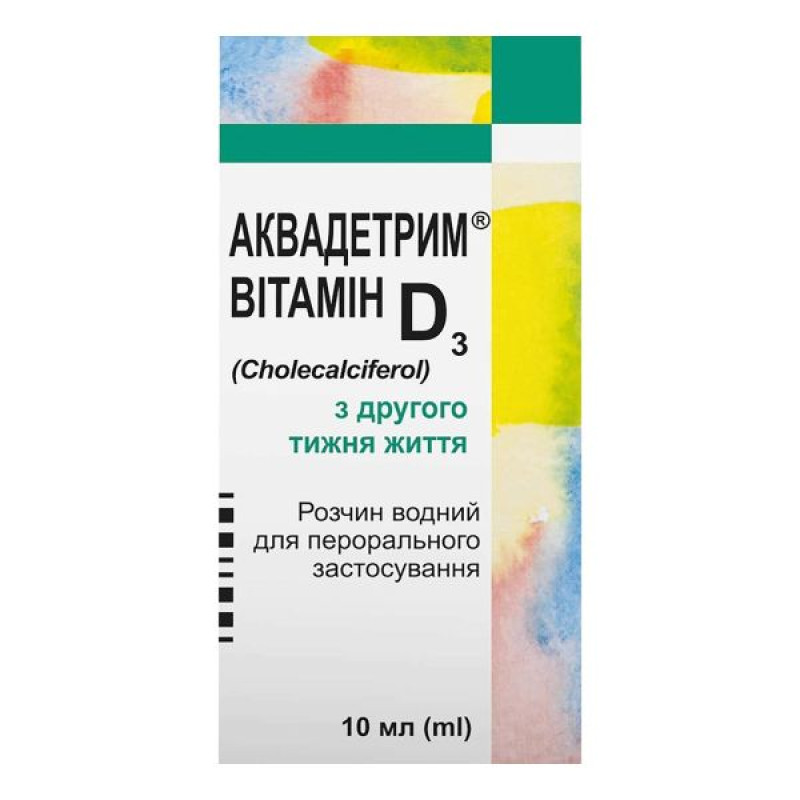
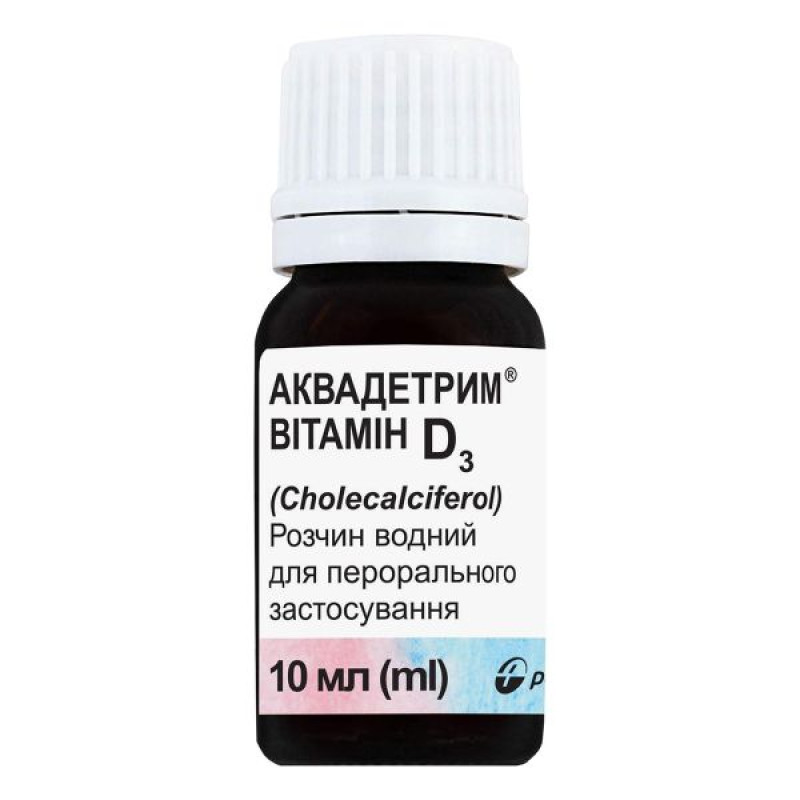
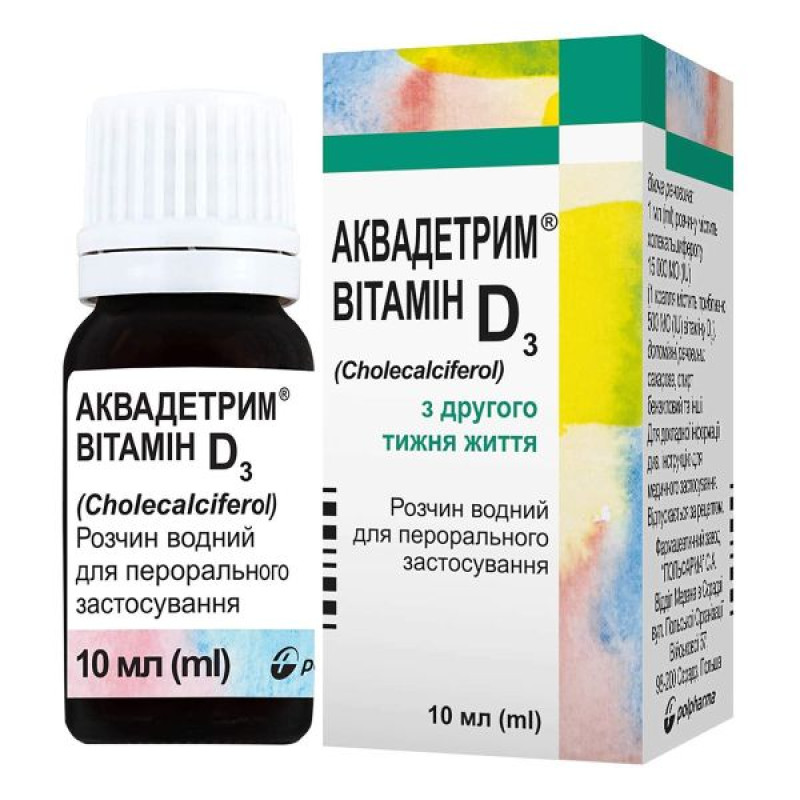
Instructions for use Aquadetrim Vitamin D3 solution for oral administration aqueous 15000 IU/ml bottle 30 ml
Composition
active ingredient: cholecalciferol;
1 ml (approximately 30 drops) of solution contains 15,000 IU of cholecalciferol (1 drop contains approximately 500 IU of vitamin D3);
Excipients: macrogolglycerol ricinoleate; sucrose; sodium hydrogen phosphate dodecahydrate; citric acid, monohydrate; anise flavor; benzyl alcohol; purified water.
Dosage form
Aqueous solution for oral use.
Main physicochemical properties: colorless transparent liquid with aniseed odor and taste. The presence of opalescence in the preparation is allowed.
Pharmacotherapeutic group
Vitamins. Vitamin D preparations and its analogues.
ATX code A11C C05.
Pharmacological properties
Pharmacodynamics
Vitamin D3 is an active anti-rachitic factor. The most important function of vitamin D is to regulate calcium and phosphate metabolism, which contributes to proper mineralization and skeletal growth.
Vitamin D3 is the natural form of vitamin D produced in animals and humans. It is 25% more active than vitamin D2.
It is necessary for the functioning of the parathyroid glands, intestines, kidneys and bone system. It plays a significant role in the absorption of calcium and phosphates from the intestines, in the transport of mineral salts and in the process of bone calcification, regulates the excretion of calcium and phosphates by the kidneys. The concentration of calcium ions affects a number of important biochemical processes that maintain skeletal muscle tone, participate in the conduction of nervous excitation and affect blood clotting. Vitamin D3 is also involved in the functioning of the immune system, affecting the production of lymphokines.
Lack of vitamin D3 in food, impaired absorption, calcium deficiency, and lack of exposure to sunlight during the period of rapid growth of a child lead to rickets, and in adults - to osteomalacia, in pregnant women - to the appearance of symptoms of tetany and malformation of tooth enamel in infants.
Women in menopause, who often suffer from osteoporosis, need to increase their dose of vitamin D3 due to hormonal imbalances.
Pharmacokinetics
Absorption. An aqueous solution of vitamin D3 is better absorbed than an oil solution. Premature babies have insufficient bile production and flow to the intestines, which impairs the absorption of vitamins in the form of oil solutions.
After oral administration, cholecalciferol is absorbed in the small intestine.
Distribution: Penetrates the placental barrier and into breast milk.
Metabolism. Metabolized in the liver and kidneys, turning into an active metabolite - calcitriol, which combines with a carrier protein and is transported to target organs (intestine, bones, kidneys). The half-life in the blood is several days and may be prolonged in case of kidney disease.
Excretion: Excreted in urine and feces.
Vitamin D3 is involved in the regulation of phosphorus and calcium metabolism in the body 6 hours after taking the drug.
After taking vitamin D3, a significant increase in the level of cholecalciferol in the blood serum is observed within 48 hours.
Indication
– Prevention of rickets;
– prevention of vitamin D3 deficiency in high-risk groups who do not have absorption disorders;
– prevention of rickets in premature newborns;
– prevention of vitamin D3 deficiency in malabsorption;
– treatment of rickets and osteomalacia;
– supportive treatment of osteoporosis;
– treatment of hypoparathyroidism.
Contraindication
Hypersensitivity to the components of the drug, hypercalcemia and/or hypercalciuria, hypervitaminosis D, sarcoidosis, renal failure, nephrolithiasis, tuberculosis. Pseudohypoparathyroidism (the need for vitamin D may be lower than during the period of normal sensitivity to the vitamin). Taking vitamin D can lead to overdose. In such situations, vitamin D should be used in other dosage forms to make it easier to control the concentration. The drug is contraindicated in patients with rare hereditary fructose intolerance, glucose-galactose malabsorption or sucrase-isomaltase insufficiency.
Interaction with other medicinal products and other types of interactions
Antiepileptic drugs such as phenytoin and phenobarbital, as well as rifampicin, reduce the absorption of Aquadetrim® Vitamin D3.
Concomitant use of Aquadetrim® Vitamin D3 with thiazides increases the risk of hypercalcemia.
Simultaneous use with cardiac glycosides may enhance their toxic effect (increased risk of cardiac arrhythmias).
Simultaneous use of Aquadetrim® Vitamin D3 with antacids containing aluminum or magnesium may provoke aluminum toxicity on bones and hypermagnesemia in patients with renal failure.
Ketoconazole may reduce the biosynthesis and catabolism of 1,25(OH)2-cholecalciferol.
Glucocorticoids increase vitamin D metabolism, which may lead to decreased vitamin D effectiveness.
Concomitant use with drugs containing high doses of calcium or phosphorus increases the risk of hyperphosphatemia.
Vitamin D may antagonize drugs prescribed for hypercalcemia, such as calcitonin, etidronate, pamidronate.
Concomitant use with weight loss drugs (orlistat) and cholesterol-lowering drugs may reduce the absorption of vitamin D and other fat-soluble vitamins.
Application features
The drug should be used with caution in immobilized patients, patients taking thiazides, cardiac glycosides, and patients with cardiovascular diseases.
When using the drug Aquadetrim® Vitamin D3, it is necessary to take into account the additional intake of vitamin D3 (simultaneous administration of other drugs containing vitamin D). Combination therapy with vitamin D or calcium should be carried out only under the supervision of a physician and with monitoring of calcium levels in blood serum and urine.
Individual provision of a specific need must take into account all possible sources of this vitamin.
Excessively high doses of Aquadetrim® Vitamin D3, used for a long time, or shock doses may cause chronic hypervitaminosis D3.
A child's daily need for vitamin D and the method of its administration should be determined individually and reviewed each time during periodic examinations, especially in the first months of life.
The drug should be used with particular caution in infants born with a small anterior fontanelle.
Do not take Aquadetrim® Vitamin D3 simultaneously with high doses of calcium.
During treatment with the drug, monitoring of calcium, phosphate, and sugar levels in blood serum and urine is recommended.
The drug should be used with caution in patients with impaired renal function. Long-term use of the drug requires monitoring of renal function by serum creatinine levels.
The drug should be used with caution in pregnant and breastfeeding women.
Benzyl alcohol
Benzyl alcohol is associated with an increased risk of serious side effects, including breathing problems (called "shortness of breath syndrome") in young children. Children under 4 weeks of age should only use the medicine as directed by a doctor.
Should not be used for longer than a week in children under 3 years of age, unless recommended by a doctor.
You should additionally consult your doctor if you are pregnant or breastfeeding, or have established liver or kidney disease, due to the possibility of large amounts of benzyl alcohol accumulating in the body, which may cause adverse reactions (so-called "metabolic acidosis").
Due to the sucrose content of the medicinal product, patients with rare hereditary problems of fructose intolerance, glucose-galactose malabsorption or sucrase-isomaltase deficiency should not take this medicinal product.
Long-term use (more than 2 weeks) may be harmful to teeth.
Use during pregnancy or breastfeeding
During pregnancy or breastfeeding, vitamin D must enter the body in the required amount. It is necessary to monitor the intake of vitamin D into the body.
Daily doses up to 500 IU of vitamin D. The risks of using vitamin D in this dose range are unknown. Long-term overdose of vitamin D should be avoided due to the possible development of hypercalcemia.
Daily doses of more than 500 IU of vitamin D. Aquadetrim® Vitamin D3 should be used during pregnancy only in case of urgent need in strictly recommended dosage. Long-term overdose of vitamin D should be avoided due to the possible development of hypercalcemia, which leads to defects in physical and mental development of the fetus, aortic stenosis and retinopathy in children.
Vitamin D and its metabolites pass into breast milk. There is no data on possible overdose.
Ability to influence reaction speed when driving vehicles or other mechanisms
There are no reports that the drug affects the ability to drive or use other mechanisms. However, it is recommended to exercise special caution when driving or operating other mechanisms, given the possibility of developing adverse reactions from the nervous system.
Method of administration and doses
Apply orally.
Prevention of rickets: the recommended dose is 1 drop (about 500 IU of vitamin D3) per day.
Prevention of vitamin D3 deficiency in high-risk patients who do not have malabsorption disorders: the recommended dose is 1 drop (approximately 500 IU of vitamin D3) per day.
Maintenance treatment of osteoporosis: the recommended dose is 2 drops (approximately 1000 IU of vitamin D3) per day.
Prevention of rickets in premature newborns: the dose is determined by the doctor. The total recommended dose is 2 drops (about 1000 IU of vitamin D3) per day.
Treatment of rickets and osteomalacia: the dose is determined individually by the doctor depending on the course and severity of the disease. The total recommended dose for the treatment of vitamin D3 deficiency for infants and children is 2-10 drops (about 1000-5000 IU of vitamin D3) per day. The dose for the treatment of vitamin D3 deficiency is determined individually by the doctor, depending on the course and severity of the disease.
Treatment of hypoparathyroidism: the recommended dose depends on the serum calcium level and is 20–40 drops (approximately 10,000–20,000 IU of vitamin D3) per day. If higher doses of cholecalciferol are required, higher doses of the drug should be used.
During long-term treatment with Aquadetrim® Vitamin D3, it is necessary to regularly monitor the level of creatinine in the blood and the level of calcium in the blood serum and urine. If necessary, the dose should be adjusted depending on the concentration of calcium in the blood serum.
Duration and method of application.
Children are prescribed Aquadetrim® Vitamin D3 for the prevention of rickets, starting from the second week of life until the end of the first year of life. During the second year of life, it may be necessary to continue using the drug Aquadetrim® Vitamin D3, especially in winter.
For young children, give the drops in a teaspoon of water, milk or baby food. If the drops are added to a feeding bottle or plate, it is necessary to ensure that the food is completely consumed, otherwise it is not possible to guarantee that the entire dose of the drug is taken. Add the drug to the food immediately before eating.
Adults and older children should take the drug in a spoonful with liquid.
The duration of treatment depends on the course and severity of the disease and is determined by the doctor individually. Treatment of rickets and osteomalacia caused by vitamin D3 deficiency lasts for 1 year.
1 drop contains 500 IU of vitamin D3. To accurately measure the dose of the drug, you need to hold the bottle at a 45° angle while instilling.
When using doses of more than 1000 IU of vitamin D3 per day, as well as with continuous use of the drug, serum calcium levels should be monitored.
Children.
It is used for children from the second week of life.
Overdose
Vitamin D3 regulates calcium and phosphate metabolism, and overdose can cause hypercalcemia, hypercalciuria, renal calcifications, and bone damage, as well as cardiovascular changes. Hypercalcemia occurs after administration of 50,000–100,000 IU of vitamin D3 per day.
Overdose may cause the following effects: muscle weakness, loss of appetite, nausea, vomiting, constipation, polydipsia, polyuria, drowsiness, photosensitivity, pancreatitis, rhinorrhea, hyperthermia, decreased libido, conjunctivitis, hypercholesterolemia, increased transaminase activity, arterial hypertension, cardiac arrhythmia and uremia. Common symptoms are: muscle and joint pain, headache, weight loss. Renal dysfunction develops with albuminuria, erythrocyturia and polyuria, increased potassium loss, hyposthenuria, nocturia and moderate increase in blood pressure.
In severe cases, corneal clouding is possible, less often - swelling of the optic nerve papilla, inflammation of the iris, up to the development of cataracts.
Kidney stones and calcifications in soft tissues such as blood vessels, heart, lungs, and skin may form.
Cholestatic jaundice rarely develops.
Treatment. Overdose requires treatment of hypercalcemia. The drug should be discontinued. Depending on the degree of hypercalcemia, a low-calcium or calcium-free diet, plenty of fluids, forced diuresis induced by the administration of furosemide, and the administration of glucocorticoids and calcitonin are recommended.
With normal renal function, calcium levels are significantly reduced by intravenous sodium chloride (3–6 liters over 24 hours) with the addition of furosemide; in some cases, 15 mg/kg/h of sodium edetate should also be used, with constant monitoring of calcium levels and ECG. In oligoanuria, on the contrary, hemodialysis is necessary. There is no specific antidote.
Adverse reactions
As a rule, they are not observed when taken in recommended doses.
In case of individual hypersensitivity to the drug Aquadetrim® Vitamin D3, which is rarely observed, or as a result of using too high doses for a long period, hypervitaminosis D may occur.
Cardiovascular system: Arrhythmia, hypertension.
On the part of the digestive tract: Loss of appetite, nausea, vomiting, constipation, dry mouth, flatulence, abdominal pain, diarrhea, dyspepsia.
Nervous system: Headache, drowsiness, mental disorders, depression.
From the urinary system: Increased calcium levels in the blood and/or urine, urolithiasis and tissue calcification, uremia, polyuria.
Skin disorders: Hypersensitivity reactions including urticaria, rash, pruritus.
Musculoskeletal system: Myalgia, arthralgia, muscular weakness.
From the organs of vision: Conjunctivitis, photosensitivity.
Metabolic: Hypercholesterolemia, weight loss, polydipsia, increased sweating, pancreatitis.
On the part of the hepatobiliary system: increased activity of aminotransferases.
On the part of the psyche: decreased libido.
Due to the content of benzyl alcohol (15 mg/ml), the drug may cause anaphylactoid reactions.
Expiration date
3 years.
Do not use after the expiry date stated on the packaging.
After opening the bottle, store with the lid tightly closed for 6 months.
Storage conditions
Store at a temperature not exceeding 25 °C in the original packaging in order to protect from light.
Keep out of reach of children.
Packaging
10 ml or 15 ml or 30 ml in bottles with a dropper. 1 bottle in a cardboard pack.
Vacation category
According to the recipe.
Producer
Medana Pharma Joint Stock Company/
Medana Pharma Joint Stock Company.
Address
57 Polish Military Organization Street, 98-200 Sieradz, Poland /
57, Polskiej Organizacji Wojskowej Str., 98-200 Sieradz, Poland.