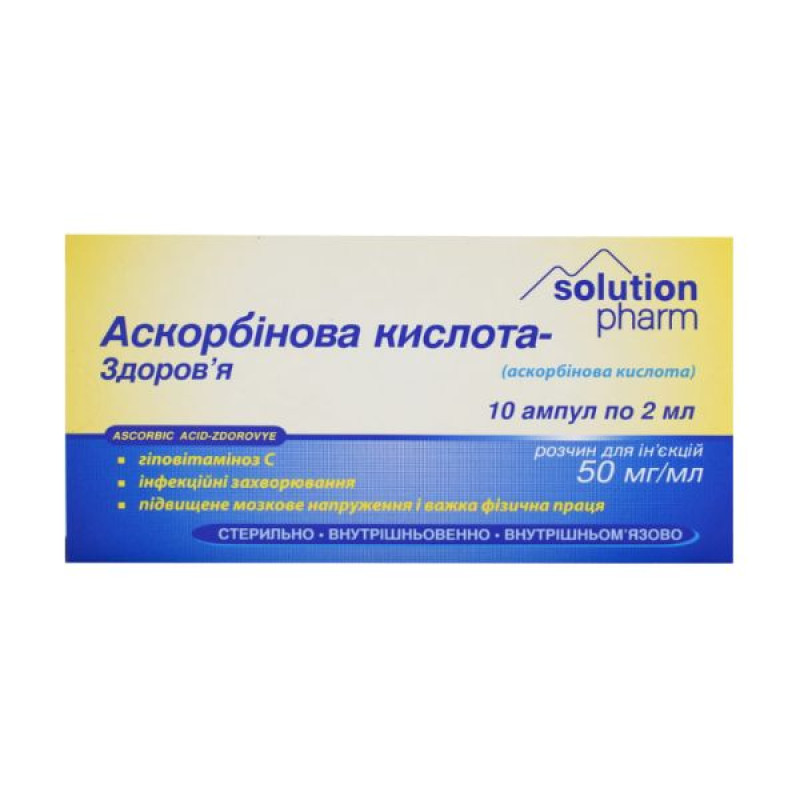
Ascorbic acid injection solution is indicated for hypovitaminosis C, bleeding (uterine, pulmonary, nasal, hepatic), hemorrhagic diathesis, bleeding as radiation sickness syndrome, intoxication and infectious diseases, nephropathy of pregnant women, Addisonian crisis, overdose of anticoagulants, bone fractures and slow-granulating wounds, pregnancy and during breastfeeding.
Composition
Active ingredient: ascorbic acid (vitamin C);
1 ml of ascorbic acid - 50 mg;
Excipients: sodium bicarbonate, sodium sulfite anhydrous (E 221), water for injections.
Contraindication
Hypersensitivity to the components of the drug, diabetes mellitus, increased blood clotting, tendency to thrombosis, thrombophlebitis, urolithiasis (including hyperoxaluria) when using more than 1 g, severe renal failure, progressive malignant diseases, hemochromatosis, thalassemia, polycythemia, leukemia, sideroblastic anemia, glucose-6-phosphate dehydrogenase deficiency, sickle cell anemia.
Method of application
The drug is administered intramuscularly and intravenously by jet or drip.
Intravenously, inject by jet over 1-3 minutes. For intravenous drip administration, dissolve a single dose in 50-100 ml of 0.9% sodium chloride solution and administer by slow intravenous infusion at a rate of 30-40 drops per minute.
Intramuscularly, deep into the muscle. Doses should be set individually, taking into account the nature and severity of the disease.
Application features
Pregnant women
Ascorbic acid should be prescribed only when the expected benefit to the mother outweighs the potential risk to the fetus.
Children
The medicine can be used in children.
Drivers
The effect of the drug in recommended doses on the reaction rate when driving or working with other mechanisms is unlikely.
Overdose
Symptoms. Large doses of ascorbic acid can cause gastrointestinal disorders, including diarrhea, and also lead to hyperoxaluria and the formation of oxalate stones. With a single use of excessive doses of the drug, nausea, vomiting, bloating, abdominal pain, itching, skin rashes, increased excitability may occur. With intravenous administration of the drug in high doses, there may be a threat of abortion. Doses above 600 mg per day have a diuretic effect.
Treatment. It is necessary to stop using the drug, rinse the stomach, give the patient an alkaline drink, activated charcoal or other adsorbents, and conduct symptomatic therapy.
Side effects
Ascorbic acid is generally well tolerated, but adverse reactions may occur.
From the gastrointestinal tract: stomach cramps, sometimes nausea, diarrhea. From the kidneys and urinary system: hyperoxaluria is possible; with prolonged use in high doses - damage to the glomerular apparatus of the kidneys, the formation of oxalate kidney stones. From the metabolism, metabolism: hypervitaminosis C, with prolonged use in high doses - suppression of the function of the insular apparatus of the pancreas (hyperglycemia, glucosuria) and glycogen synthesis, sodium and fluid retention, impaired zinc and copper metabolism. From the nervous system: headache, feeling of increased fatigue, with prolonged use in high doses - sleep disturbances, increased excitability of the central nervous system. From the cardiovascular system: decreased capillary permeability, deterioration of tissue trophism; with prolonged use in high doses - myocardial dystrophy, increased blood pressure, development of microangiopathies. Blood and lymphatic system disorders: with prolonged use in high doses - thrombocytosis, hyperprothrombinemia, thrombocytopenia, erythrocytopenia, neutrophilic leukocytosis. Immune system disorders: hypersensitivity reactions, including bronchospasm, anaphylactic shock. Skin and subcutaneous tissue disorders: very rarely - skin rashes, skin hyperemia, itching, urticaria, fever.
Interaction
With simultaneous use with salicylates, short-acting sulfonamides, the risk of urinary calculi formation increases. With simultaneous use of ascorbic acid with salicylates, ethinylestradiol, benzylpenicillin and tetracyclines, the concentration of these drugs in the blood increases. With simultaneous use with ascorbic acid, coumarin and heparin derivatives, antibiotics, the effectiveness of these drugs decreases. High doses of ascorbic acid can reduce the pH of urine, resulting in reduced tubular reabsorption of amphetamine and tricyclic antidepressants used simultaneously. With simultaneous use, ascorbic acid reduces the effectiveness of oral contraceptives. With the use of large doses of ascorbic acid and simultaneous use of alcohol, disulfiram-like reactions may develop.
Storage conditions
Storage conditions: Store in original packaging at a temperature not exceeding 25 °C.
Keep out of reach of children.
Shelf life - 2 years.