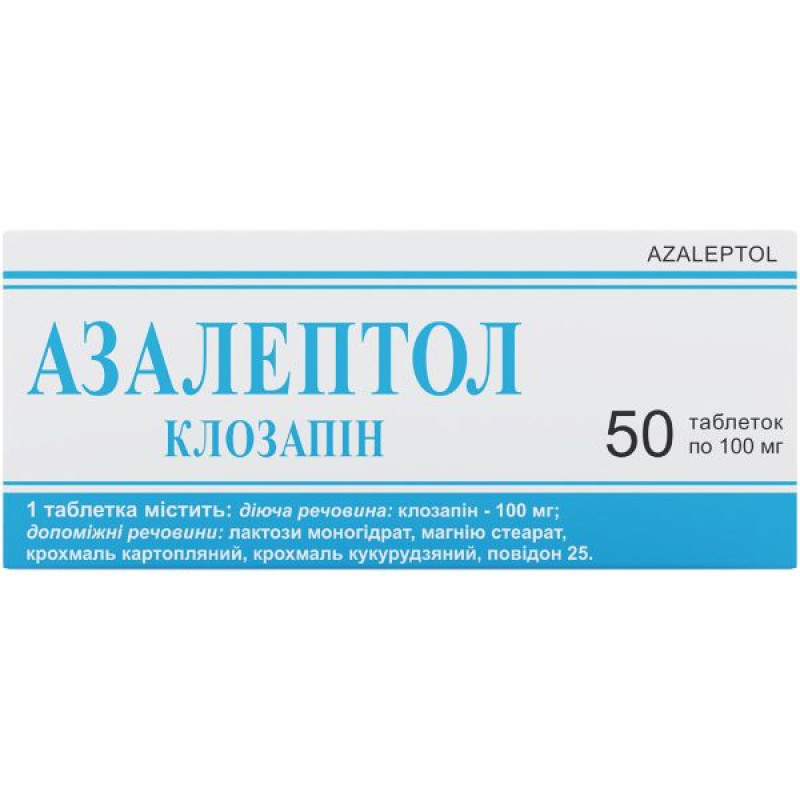
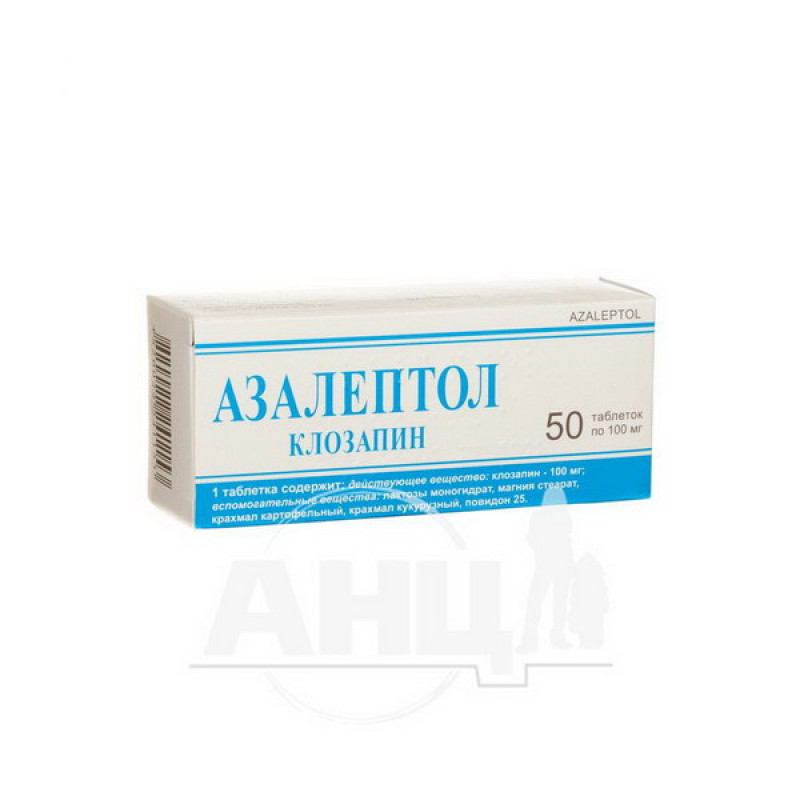
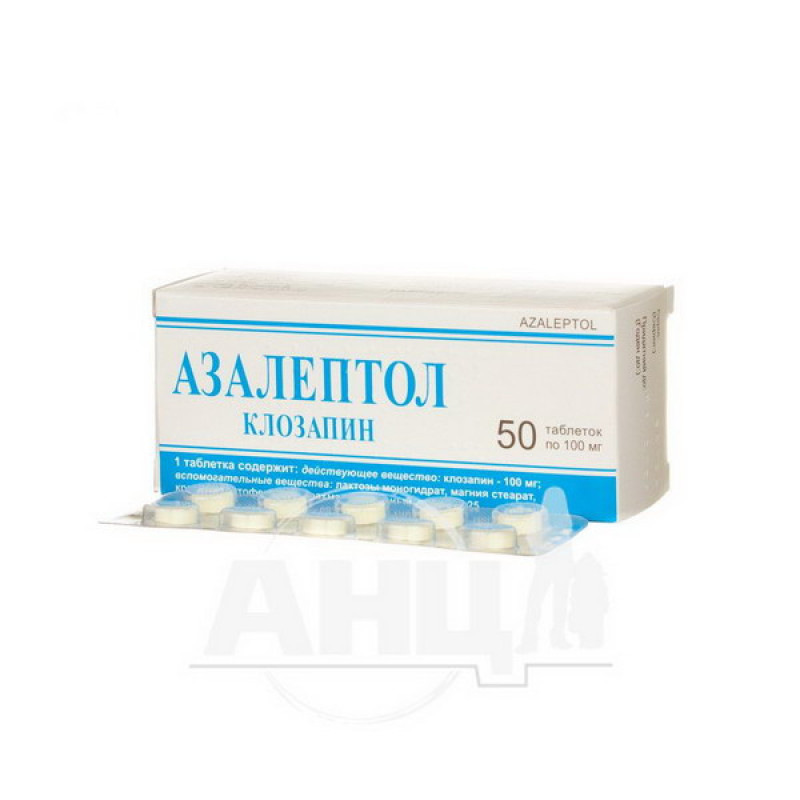
Instructions for use Azaleptol tablets 100 mg blister No. 50
Composition
active ingredient: clozapine;
1 tablet contains clozapine 25 mg or 100 mg;
Excipients: lactose monohydrate, magnesium stearate, potato starch, corn starch, povidone 25.
Dosage form
Pills.
Main physicochemical properties:
25 mg tablets – single-layer tablets of round shape, with flat upper and lower surfaces, beveled edges, light yellow or light yellow with a greenish tint. Marbling is allowed on the surface of the tablets. A relatively homogeneous structure is visible on the break under a magnifying glass;
100 mg tablets – single-layer tablets of round shape, with flat upper and lower surfaces, beveled edges, with a score, light yellow or light yellow with a greenish tint. Marbling is allowed on the surface of the tablets. A relatively homogeneous structure is visible on the break under a magnifying glass.
Pharmacotherapeutic group
Antipsychotic drugs. ATX code N05A H02.
Pharmacological properties
Pharmacodynamics.
Azaleptol is an antipsychotic that is different from classic antipsychotic drugs.
Pharmacological experiments have shown that clozapine does not induce catalepsy and does not suppress stereotypic behavior induced by the administration of apomorphine or amphetamine. The drug has only a weak blocking effect on dopamine D1-, D2-, D3- and D5-receptors, but is highly effective at D4-receptors, and also has anti-alpha-adrenergic, anticholinergic, antihistamine effects and inhibits the activation response. It also exhibits antiserotonergic properties. Clinically, Azaleptol exhibits a rapid and pronounced sedative effect and has a strong antipsychotic effect, in particular in patients with schizophrenia resistant to treatment with other drugs. In such cases, Azaleptol is effective against both the productive symptoms of schizophrenia and the negative ones. In the first 6 weeks after the start of treatment, clinically significant improvement was observed in approximately one third of patients, and when therapy was continued for up to 12 months, in approximately 60% of patients.
In addition, improvements in some aspects of cognitive dysfunction were noted. Compared with standard neuroleptics, the risk of suicidal behavior in patients with schizophrenia or schizoaffective disorders was significantly reduced with clozapine. Severe extrapyramidal reactions such as acute dystonia, parkinsonian-like side effects and akathisia are rare. Unlike standard neuroleptics, Azaleptol does not increase or hardly increases prolactin levels, which makes it possible to avoid such undesirable effects as gynecomastia, amenorrhea, galactorrhea and impotence.
Pharmacokinetics.
Absorption
Absorption of Azaleptol after oral administration is 90-95%. Neither the rate nor the extent of absorption is dependent on food intake. Azaleptol undergoes moderate first-pass metabolism; bioavailability is 50-60%.
Distribution
At steady state, peak blood levels are reached on average after 2.1 hours (range 0.4 to 4.2 hours) following a double dose. The volume of distribution is 1.6 liters/kg. Clozapine is approximately 95% bound to plasma proteins.
Biotransformation/metabolism
Clozapine is almost completely biotransformed before excretion. Only one of its main metabolites, desmethyl-clozapine, has pharmacological activity. Its action resembles that of clozapine, but is much weaker and of shorter duration.
Breeding
Clozapine is eliminated in a biphasic manner with a mean half-life of 12 hours (range 6-26 hours). After single doses of 75 mg, the mean half-life was 7.9 hours. This increased to 14.2 hours when steady state was reached with daily doses of 75 mg for at least 7 days. Only minor amounts of unchanged drug were recovered in urine and feces. Approximately 50% of the administered dose is excreted as metabolites in the urine and 30% in the feces.
Linearity/nonlinearity
It was noted that during the period of equilibrium, when the dose of the drug was increased from 37.5 mg to 75 mg and 150 mg twice a day, a linear dose-dependent increase in the area under the plasma concentration/time curve (AUC) was observed, as well as an increase in maximum and minimum plasma concentrations.
Pharmacokinetics of certain patient groups
Despite the fact that there are no pharmacokinetic and biotransformation studies, the drug should be used with extreme caution in patients with impaired liver function, biliary tract and kidney diseases. In severe cases, the use of the drug is contraindicated.
Indication
Treatment-resistant schizophrenia
Azaleptol should only be prescribed to patients with schizophrenia who are treatment-resistant or tolerant to standard neuroleptics according to the definitions below.
Intolerance to standard neuroleptics is a condition in which severe unmanageable undesirable effects of a neurological nature occur (extrapyramidal symptoms or tardive dyskinesia) that make effective neuroleptic therapy with standard neuroleptics impossible.
Risk of recurrence of suicide attempts
Azaleptol is indicated for the long-term reduction of the risk of relapse of suicidal behavior in patients with schizophrenia or schizoaffective disorder who are assessed for such risk based on their medical history and current clinical presentation.
Psychotic disorders during Parkinson's disease therapy
Azaleptol is indicated for the treatment of psychotic disorders that develop during Parkinson's disease, if standard therapy has been ineffective.
Failure of standard therapy is defined as lack of control of psychotic symptoms and/or the appearance of a functionally unacceptable increase in motor symptoms after the following measures:
withdrawal of anticholinergic drugs, including tricyclic antidepressants;
an attempt to reduce the dose of dopaminergic antiparkinsonian drugs.
Contraindication
Hypersensitivity to clozapine or to any other component of the drug;
inability to regularly monitor the patient's blood parameters;
history of toxic or idiosyncratic granulocytopenia/agranulocytosis (except for the development of granulocytopenia or agranulocytosis due to previous chemotherapy);
history of clozapine-induced agranulocytosis;
bone marrow dysfunction;
uncontrolled epilepsy;
alcoholic or other toxic psychoses, drug intoxications, comatose states;
vascular collapse and/or CNS depression of any etiology;
severe kidney or heart disorders (e.g. myocarditis);
acute liver disease accompanied by nausea, loss of appetite or jaundice; progressive liver disease, liver failure;
paralytic intestinal obstruction;
Concomitant use with drugs known to cause agranulocytosis; depot neuroleptics should also not be used concurrently.
Interaction with other medicinal products and other types of interactions
Pharmacodynamic interactions
Azaleptol should not be used simultaneously with drugs that have a significant suppressive effect on bone marrow function. The drug should not be used simultaneously with long-acting depot neuroleptics (which have myelosuppressive potential), since these substances cannot be quickly eliminated from the body when necessary, for example in the case of neutropenia.
Azaleptol may enhance the CNS effects of alcohol and monoamine oxidase inhibitors (MAOIs), as well as the CNS depressant effects of narcotics, antihistamines, and benzodiazepines. Fatalities have been reported following the combination of clozapine and these agents (including methadone). Particular caution is required when Azaleptol is administered in combination with benzodiazepines or other psychotropic drugs, as in such cases the risk of vascular collapse, which may sometimes be severe and lead to cardiac or respiratory arrest, is increased. It is not known whether cardiac or respiratory collapse can be prevented by dose adjustment.
Concomitant use of lithium or other CNS-acting drugs increases the risk of neuroleptic malignant syndrome.
Due to the possibility of additive effects, special caution should be exercised when using concomitant medications that have anticholinergic, antihypertensive, or respiratory depressant effects.
Due to its anti-alpha-adrenergic properties, Azaleptol can weaken the pressor effect of noradrenaline or other drugs with a predominant alpha-adrenergic effect and eliminate the pressor effect of adrenaline.
The drug may lower the seizure threshold, which necessitates the need for dosage adjustment of antiepileptic drugs. There have been rare reports of severe epileptic seizures, including first episodes of seizures and isolated cases of delirium after concomitant use of Azaleptol and valproic acid. These effects may be due to a pharmacodynamic interaction, the mechanism of which has not been established to date.
The drug may increase plasma concentrations of substances that are highly bound to plasma proteins (e.g., warfarin and digoxin) by displacing them from plasma protein complexes. Dosage adjustments of protein-bound substances should be made if necessary.
It is recommended to use caution when prescribing the drug simultaneously with drugs that increase the QTc interval or lead to the development of electrolyte imbalance.
Pharmacokinetic interactions
Clozapine is a substrate for many CYP450 isoenzymes, including 3A4, 1A2, and 2D6. This minimizes the risk of metabolic interactions due to effects on a single isoform. However, careful monitoring of clozapine plasma levels is necessary in patients taking concomitant medications that have affinity for one or more of these enzymes.
Theoretically, clozapine may increase plasma levels of tricyclic antidepressants, phenothiazines, and class 1c antiarrhythmics known to bind to cytochrome P450 2D6. Lower doses of these drugs may be necessary. However, no clinically significant interactions have been reported to date.
The combination of the drug Azaleptol with substances that affect the activity of CYP450 isoenzymes may lead to a decrease or increase in clozapine levels in the blood plasma:
Inhibitors
Concomitant use of enzyme inhibitors such as cimetidine (CYP1A2, 3A4 and 2D6 inhibitor) or erythromycin (CYP3A4 inhibitor), clarithromycin, azithromycin, fluvoxamine (1A2), perazine (1A2), ciprofloxacin (1A2) or oral contraceptives (1A2, 3A4, 2C19) with high doses of Azaleptol is associated with increased plasma levels of clozapine and an increased incidence of adverse effects.
There have been reports of increased plasma levels of clozapine in patients taking the drug in combination with fluvoxamine (CYP3A4 and CYP1A2 inhibitor; increase up to 10-fold) or with other selective serotonin reuptake inhibitors (SSRIs) such as paroxetine (CYP1A2, 2D6 inhibitor), sertraline (CYP2C8/9, 2D6 inhibitor), fluoxetine (CYP2D6 inhibitor, increase up to 2-fold) or citalopram (possibly a weak CYP1A2 inhibitor with perhaps the lowest potential for clinically significant interactions among all SSRIs). However, clinically significant interactions have been reported after concomitant use of citalopram and clozapine. Increased clozapine concentrations have also been observed in patients taking this drug in combination with venlafaxine.
Azole antifungals and protease inhibitors are potent inhibitors/inducers of CYP3A4. These drugs can also be expected to cause clinically significant interactions with clozapine. However, no such interactions have been reported to date.
Substrates
Caffeine (CYP1A2 substrate) may increase clozapine plasma levels. Clozapine plasma levels decrease by approximately 50% after five days without caffeine. This should be borne in mind when changing the number of cups of coffee or tea consumed daily. Significant increases in clozapine and N-desmethylclozapine levels have been observed after concomitant administration of 2x250 mg ciprofloxacin. Interactions with norfloxacin and enoxacin have also been reported.
Inductors
Drugs that induce P450 CYP3A4 (e.g. carbamazepine and rifampicin) may decrease clozapine plasma levels. Discontinuation of concomitant carbamazepine resulted in increased clozapine plasma levels.
It has been established that the simultaneous use of phenytoin causes a decrease in clozapine levels in the blood plasma, which leads to a decrease in the effectiveness of the previously effective dose of the drug Azaleptol.
Smoking induces CYP1A2. Abrupt cessation of smoking in heavy smokers may therefore lead to increased plasma levels of clozapine and an increased incidence of adverse effects.
Omeprazole is an inducer of CYP1A2 and CYP3A4 and an inhibitor of CYP2C19. There have been isolated reports of interactions with proton pump inhibitors (increased clozapine concentrations after administration of omeprazole and pantoprazole or the combination of lansoprazole and paroxetine).
Application features
Potentially serious adverse effects of Azaleptol treatment are granulocytopenia and agranulocytosis, which occur with a frequency of 3% and 0.7%, respectively. Agranulocytosis can be life-threatening.
The incidence of agranulocytosis and the mortality rate in patients who develop agranulocytosis have decreased significantly since the introduction of monitoring of white blood cell count and absolute neutrophil count. Therefore, the following precautions are mandatory.
Therefore, Azaleptol should only be used in patients with schizophrenia or in patients with psychotic disorders that develop during Parkinson's disease, in patients who have demonstrated a lack of response or an inadequate response to other neuroleptics, or in patients who develop severe extrapyramidal side effects (including tardive dyskinesia) when taking other neuroleptics.
Azaleptol can also be used in patients with schizophrenia and schizoaffective disorder who, based on their medical history or current clinical picture, are at long-term risk of relapse into suicidal behavior.
Due to the risks associated with the use of the drug Azaleptol, its prescription is possible if:
patients have a normal white blood cell count at baseline (total white blood cell count ≥ 3500/mm3 (3.5x10⁹/L) and a normal differential white blood cell count and
Patients should have their total white blood cell count and, if possible, absolute neutrophil count (ANC) measured weekly for the first 18 weeks of treatment and at least every 4 weeks thereafter. Monitoring should continue throughout treatment and for 4 weeks after complete discontinuation of Azaleptol.
Patients with a history of drug-induced blood dyscrasia should never be prescribed Azaleptol (see "Contraindications").
During each consultation, the patient receiving Azaleptol should be reminded to contact the doctor immediately if the patient develops any infectious disease. Particular attention should be paid to complaints related to a flu-like condition, such as fever or sore throat, as well as other signs of infection, which may indicate the development of neutropenia. Patients and their caregivers should be informed that if any of these symptoms occur, patients should immediately undergo a blood test with a cell count.
Monitoring of white blood cell count and absolute neutrophil count
A complete white blood cell count and differential should be performed 10 days before starting treatment with Azaleptol to ensure that only patients with normal white blood cell counts (≥ 3.5x10⁹/L [3500/mm3] and absolute neutrophil counts (≥ 2.0x10⁹/L [2000/mm3]) are receiving the drug. The white blood cell count and, if possible, the absolute neutrophil count should be monitored weekly for the first 18 weeks, and then at least monthly throughout the treatment period. Monitoring should continue throughout the treatment period and for four weeks after complete discontinuation of Azaleptol. At each visit, the patient should be reminded to seek immediate medical attention at the first sign of infection, fever, sore throat, or other flu-like symptoms. In such cases, a complete white blood cell count should be performed immediately.
Interruption of therapy for reasons unrelated to hematological parameters
For patients whose Azaleptol therapy has been interrupted for more than 18 weeks for more than 3 days but less than 4 weeks, weekly monitoring of the leukocyte count is indicated for an additional 6 weeks. Provided that there are no deviations from the norm, further monitoring can be carried out no more often than once every 4 weeks. If Azaleptol therapy has been interrupted for 4 weeks or more, weekly monitoring is required for the next 18 weeks of treatment, and the dose of the drug should be re-titrated.
Decreased white blood cell count and absolute neutrophil count
If, during the first 18 weeks of treatment with Azaleptol, the leukocyte count decreases to 3.5x10⁹/l (3500/mm3) and 3.0x10⁹/l (3000/mm3) or the absolute neutrophil count decreases to 2.0x10⁹/l (2000/mm3) and 1.5x10⁹/l (1500/mm3), hematological tests should be performed at least twice a week. The same scheme applies if, after 18 weeks of therapy, the leukocyte count decreases to 3.0x10⁹/l (3000/mm3) and 2.5x10⁹/l (2500/mm3), the absolute neutrophil count decreases to 1.5x10⁹/l (1500/mm3) and 1.0x10⁹/l (1000/mm3).
In addition, if there is a significant decrease in the white blood cell count from baseline, the white blood cell count and differential should be re-evaluated. A “significant decrease” is defined as a single decrease in the white blood cell count to 3.0x10⁹/liter (3000/mm3) or more, or an overall decrease to 3.0x10⁹/liter (3000/mm3) or more over a three-week period.
Immediate discontinuation of Azaleptol treatment is mandatory if the white blood cell count is less than 3000/mm3 (3.0x10⁹/l) or the ANC is less than 1500/mm3 (1.5x10⁹/l) after 18 weeks. Thereafter, the white blood cell count and differential should be counted daily, and patients should be closely monitored for the development of flu-like symptoms or other symptoms suggestive of infection. After discontinuation of Azaleptol, haematological parameters should be monitored until they recover.
If, after discontinuation of Azaleptol, a further decrease in the number of leukocytes to a level below 2000/mm3 (2.0x10⁹/l) or an absolute neutrophil count below 1000/mm3 (1.0x10⁹/l) is observed, treatment should be carried out under the guidance of an experienced hematologist.
If possible, the patient should be admitted to a specialized hematology department; protective isolation and administration of GM-CSF (granulocyte-macrophage colony-stimulating factor) or G-CSF (granulocyte colony-stimulating factor) may be indicated. It is recommended that colony-stimulating factor treatment be discontinued after the neutrophil count increases to a level greater than 1.0 x 10⁹/L (1000/mm3).
In the event of infection, antibacterial therapy must be initiated immediately due to the risk of septic shock.
Patients who have had Azaleptol discontinued due to a decrease in white blood cell count or AKI (see above) should not be re-administered. It is recommended to confirm the results of a complete blood count by performing this examination on two consecutive days. However, Azaleptol should be discontinued after the results of the first blood test are available.
Prescriptions for Azaleptol should be marked as “CBC” (complete blood count).
Azaleptol should be discontinued if the eosinophil count exceeds 3.0x10⁹/l (3000/mm3; see "Adverse Reactions"); therapy can be resumed only after the eosinophil count decreases to below 1.0x10⁹/l (1000/mm3).
In case of thrombocytopenia (see "Adverse reactions"), Azaleptol should be discontinued if the platelet count falls below 50 × 109/l (50,000/mm3).
The initial dose for patients with heart disease should be low (12.5 mg once on the first day). The dose should be increased slowly and gradually (see "Method of administration and dosage"). The drug is contraindicated in patients with severe cardiovascular disease (see "Contraindications"). Patients with a history of heart disease or with abnormalities in the cardiovascular system detected during a medical examination should be referred to a specialist for further examination, which should include an ECG (see "Contraindications"). Such patients should take Azaleptol only if the expected benefit significantly outweighs the risks. The doctor should consider the need for an ECG before treatment.
Orthostatic hypotension with/without syncope may occur during treatment with Azaleptol. In rare cases (approximately 1 in 3000 patients), collapse may be severe and may be accompanied by cardiac and/or respiratory arrest with possible fatal outcome. Such reactions are most likely to develop with concomitant use of a benzodiazepine or any other psychotropic agent and at the initial dose titration stage due to rapid dose increases; in very rare cases, such reactions have been observed even after the first dose of the drug. Therefore, patients should be closely monitored at the beginning of treatment with Azaleptol. Monitoring of blood pressure in the supine and standing positions should be carried out during the first weeks of treatment in patients with Parkinson's disease.
Resting tachycardia with arrhythmia, dyspnoea or symptoms of heart failure may occur occasionally during the first two months of treatment and very rarely thereafter (see Adverse Reactions). If these symptoms occur, particularly during dose escalation, prompt diagnosis should be made to exclude myocarditis. Other symptoms that may occur in addition to those listed above include symptoms of myocardial infarction or influenza. Myocardial infarction has occasionally been fatal.
However, the patient's pre-existing severe heart disease makes it much more difficult to assess causality.
If myocarditis or cardiomyopathy is suspected, Azaleptol should be discontinued immediately and the patient should immediately consult a cardiologist.
Similar signs and symptoms may also develop later in therapy and may be associated with cardiomyopathy. In such cases, further investigation is indicated. If a diagnosis of cardiomyopathy is confirmed, Azaleptol should be discontinued. Patients who have had clozapine-induced myocarditis or cardiomyopathy should not resume taking this drug.
Eosinophilia has also been reported in some cases of myocarditis (approximately 14%) and pericarditis/pericardial effusion; however, it is unknown whether eosinophilia is a reliable predictor of the development of carditis.
Mitral valve insufficiency may develop in patients with cardiomyopathy treated with clozapine. There are reports of mitral valve insufficiency in patients with cardiomyopathy treated with clozapine. In these cases, mild to moderate regurgitation was observed on two-dimensional echocardiography.
QT prolongation
As with other antipsychotic drugs, caution is recommended when using the drug in patients with known cardiovascular disease or a family history of QT prolongation.
As with other antipsychotics, caution is advised when prescribing clozapine with drugs known to increase the QTc interval.
Cerebrovascular adverse events
An almost 3-fold increase in the risk of cerebrovascular adverse events has been observed with the use of some atypical neuroleptics in patients with dementia. The mechanism of these events is unknown. An increased risk cannot be excluded with other neuroleptics and for other patient categories. Azaleptol should be used with caution in patients with risk factors for stroke.
Epilepsy
Azaleptol may lower the seizure threshold. Patients with a history of epilepsy require careful monitoring of their condition during therapy with Azaleptol, given reports of seizures associated with the drug (see "Interaction with other medicinal products and other types of interactions"). In such cases, the dose should be reduced and, if necessary, treatment with antiepileptic drugs should be initiated.
In patients with a history of seizures, treatment should be initiated with a single dose of 12.5 mg on the first day, and dose increases should be slow and gradual (see "Method of administration and dosage").
During treatment with Azaleptol, patients may develop a transient increase in body temperature above 38°C with a peak incidence in the first three weeks of treatment. This increase in body temperature is in most cases benign. In some cases, it may be associated with an increase or decrease in the number of leukocytes. Patients with an increased body temperature should be carefully examined to exclude the possibility of infection or the development of agranulocytosis. The cause of the high temperature may be the development of neuroleptic malignant syndrome (NMS). If NMS is diagnosed, treatment with Azaleptol should be stopped immediately and appropriate therapeutic measures should be initiated.
Azaleptol may cause sedation and weight gain, which increases the risk of thromboembolism; therefore, such patients should avoid reduced physical activity.
Anticholinergic effects
Azaleptol has anticholinergic properties that may cause undesirable effects on the whole body. Careful monitoring of the patient's condition is necessary in case of prostate enlargement and angle-closure glaucoma. Probably, due to its anticholinergic properties, Azaleptol can cause intestinal motility disorders of varying severity: from constipation to fecal impaction, intestinal obstruction, paralytic ileus, intestinal ischemia, necrotizing colitis, intestinal necrosis. Rarely, these cases can be fatal (see "Adverse reactions").
Particular attention should be paid to patients with a history of colon disease or lower abdominal surgery who are receiving concomitant medications that may cause constipation (especially drugs with anticholinergic properties, such as various neuroleptics, antidepressants, antiparkinsonian drugs and opioids), as these patients may experience worsening of their condition. It is extremely important to identify and treat constipation, and prophylactic laxative therapy should be administered to patients with a history of constipation or intestinal obstruction.
Special caution should be exercised when prescribing the drug simultaneously with other benzodiazepines (or other centrally acting drugs; see "Interaction with other medicinal products and other types of interactions").
Metabolic disorders
Atypical antipsychotics, including Azaleptol, are associated with metabolic disturbances that may increase the risk of cardiovascular/cerebrovascular events. These events may include hyperglycemia, dyslipidemia, and weight gain.
Hyperglycemia
There have been reports of diabetes mellitus and severe hyperglycemia, sometimes leading to ketoacidosis or hyperosmolar coma, even in patients with no history of hyperglycemia or diabetes. A causal relationship to Azaleptol has not been established, although in most patients blood glucose levels returned to normal after discontinuation of Azaleptol. Occasionally, re-administration of the drug was accompanied by a recurrence of hyperglycemia. The effect of Azaleptol on glucose metabolism in patients with pre-existing diabetes mellitus has not been studied. Patients with a diagnosis of diabetes mellitus who are taking atypical antipsychotics should have their glucose levels closely monitored. Patients with risk factors for diabetes mellitus (such as obesity, family history) who are starting treatment with antipsychotics should have fasting blood glucose levels tested at the start of treatment and periodically during treatment. Patients taking Azaleptol and developing hyperglycemia with symptoms such as polydipsia, polyuria, polyphagia, or weakness may have impaired glucose tolerance. Patients with symptoms of hyperglycemia should have fasting blood glucose testing. In some cases, blood glucose levels can be normalized after discontinuation of atypical neuroleptics; in other cases, hyperglycemia requires continued treatment even after discontinuation of neuroleptics.
For patients with severe treatment-related hyperglycemia, discontinuation of Azaleptol should be considered.
Dyslipidemia
Adverse events related to weight change have been observed in patients treated with atypical antipsychotics, including Azaleptol. Clinical monitoring, including lipid evaluation, is recommended at the start of treatment and periodically during treatment.
Weight gain
Weight gain has been observed with the use of Azaleptol. Clinical monitoring of body weight is recommended.
Patients with stable liver disease may receive Azaleptol, but should have liver function tests monitored regularly during therapy. Patients who develop symptoms of possible liver dysfunction, such as nausea, vomiting and/or anorexia, should have liver function tests performed during treatment with Azaleptol. If the increase in values is clinically significant or if symptoms of jaundice develop, Azaleptol should be discontinued. Treatment should only be resumed when liver function tests return to normal. In such cases, liver function should be closely monitored after re-administration of Azaleptol.
Kidney disorders
The starting dose for patients with mild to moderate renal impairment should be low (12.5 mg once daily on the first day of treatment) (see Dosage and Administration).
Use in patients over 60 years of age
It is recommended to start treatment in elderly patients with the lowest dose of the drug (see "Method of administration and dosage").
Treatment with Azaleptol may be accompanied by the appearance of orthostatic hypotension; cases of tachycardia, which may be persistent, have also been reported. Patients over 60 years of age, especially those with a weakened cardiovascular system, may be more susceptible to these effects.
Elderly patients may also be more susceptible to the anticholinergic effects of Azaleptol, such as urinary retention and constipation.
Patients aged 60 and over with dementia
Data from two large observational studies have shown that elderly patients with dementia who are treated with antipsychotic drugs have a small increased risk of death compared with those who are not treated. Risk factors in the literature include cardiac arrhythmias and pulmonary disease (e.g., pneumonia, with or without aspiration). The available data are insufficient to accurately estimate the magnitude of the risk; the reason for the increased risk remains unknown.
An increased risk of death has been observed in elderly patients (≥60 years) with dementia-related psychotic/behavioral disorders treated with atypical antipsychotics compared with those treated with placebo. An analysis of 17 placebo-controlled trials showed that the risk of death in this patient population was 1.6-1.7 times higher than that in those treated with placebo. Risk factors for increased mortality with antipsychotics include: sedation, cardiovascular disease (e.g., arrhythmia, sudden cardiac death), or pulmonary disease (e.g., pneumonia with or without aspiration).
Azaleptol is not approved for the treatment of behavioral disorders associated with dementia in patients aged 60 years and older.
Rebound/withdrawal symptoms
If there is a need to abruptly discontinue the drug (e.g., due to the development of leukopenia), the patient should be carefully observed for the recurrence of psychotic symptoms and symptoms associated with the resumption of cholinergic activity, such as profuse sweating, headache, nausea, vomiting, and diarrhea.
Azaleptol contains lactose monohydrate. Patients with rare hereditary forms of galactose intolerance, the Lapp lactase deficiency or glucose-galactose malabsorption should not take this medicine.
Use during pregnancy or breastfeeding
Pregnancy
Toxic effects have been observed in animal studies. There are no clinical data on the use of the drug in pregnant women. Controlled studies in humans have not been conducted, therefore the safety of the drug in pregnant women has not been established.
Caution should be exercised when using the drug in pregnant women and it should only be prescribed if the expected benefit of treatment outweighs the potential risk to the fetus.
Women of reproductive age
As a result of switching from another neuroleptic to Azaleptol, restoration of normal menstrual function is possible. Therefore, women of reproductive age should use appropriate contraceptive measures.
Nonteratogenic effects
Neonatal exposure to antipsychotic drugs (including Azaleptol) during the third trimester of pregnancy