Pharmacological properties
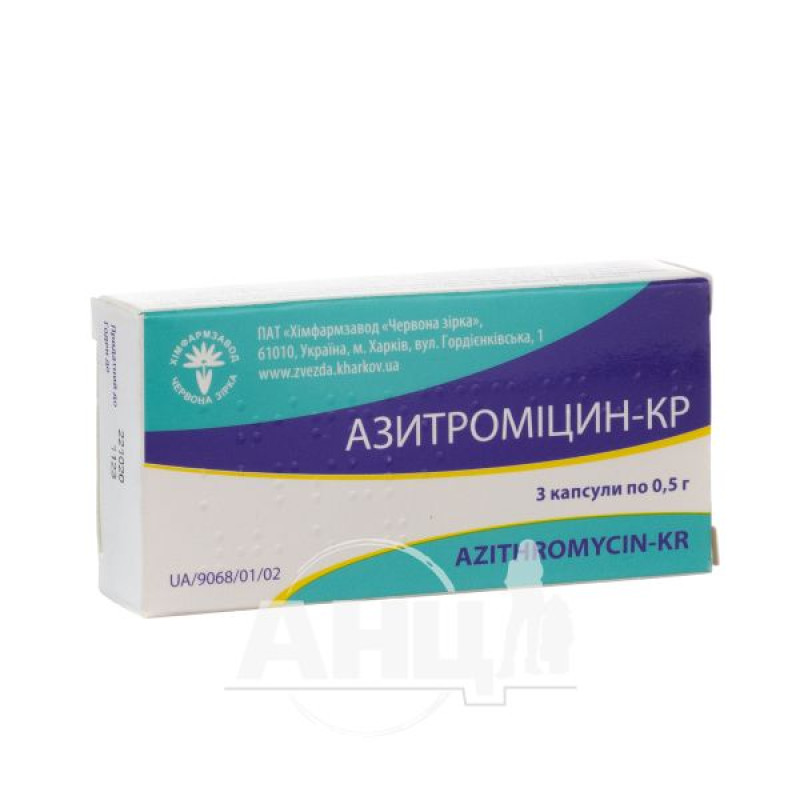
Azithromycin (9-deoxy-9a-aza-9a-methyl-9a-homoerythromycin a) in the form of dihydrate is a representative of a new group of macrolide antibiotics - azalides. It has a wide spectrum of antimicrobial action: active against a number of both gram-positive (staphylococci) and gram-negative (Escherichia coli and hemophilic rods, shigella, salmonella) microorganisms, as well as mycoplasmas, legionella, bacteroids.
Compared to erythromycin, it is more effective against gram-negative microorganisms, more stable in the acidic environment of the stomach, is excreted from the body more slowly, acts for a longer time and is better tolerated. In high concentrations, it provides a bactericidal effect. Inhibits protein synthesis by the ribosomes of microorganisms, inhibiting peptide translocases at the translation stage.
Azithromycin is stable in an acidic environment, has lipophilic properties, is rapidly absorbed from the digestive tract. After a single oral administration, the bioavailability is about 37%. It is retained in bactericidal concentrations in the focus of infectious inflammation for 5-7 days after taking the last dose, which allows the use of short (3-5 days) courses of treatment. It does not bind to enzymes of the cytochrome P450 complex. The maximum concentration (0.4 mg/l) is reached 2-3 hours after oral administration at a dose of 0.5 g. It easily penetrates histohematological barriers and cell membranes. The concentration of the drug in tissues is 10-15 times higher than in blood plasma, and in the focus of infection - 24-34% higher than in intact tissues, and correlates with the degree of activity of the inflammatory process. Azithromycin is effective in infections caused by intracellular pathogens. Despite the high concentration in phagocytes, azithromycin does not significantly affect their function. Simultaneous food intake reduces the absorption of azithromycin. Approximately 35% of azithromycin is metabolized in the liver. Elimination from blood plasma is biphasic: the half-life in the first phase is 14-24 hours, in the second phase - about 41 hours. It is excreted from the body unchanged with bile (about 60%) and urine (about 5%).
Indication
Infections of the upper (bacterial pharyngitis, tonsillitis, scarlet fever) and lower (bacterial bronchitis, interstitial and alveolar pneumonia) respiratory tract, ENT organs (otitis media, laryngitis, sinusitis), genitourinary system (uncomplicated urethritis and cervicitis), skin and soft tissues (erysipelas, impetigo, secondary infected dermatoses), chronic stage of erythema migrans (Lyme disease), diseases of the stomach and duodenum associated with Helicobacter pylori.
Application
Inside 1 time per day 1 hour before or 2 hours after meals.
Adults with infections of the upper and lower respiratory tract, skin and soft tissues (except chronic migratory erythema) are prescribed 500 mg once a day for 3 days.
For chronic erythema migrans, it is prescribed once a day for 5 days (1st day - 1 g, from the 2nd to the 5th day - 0.5 g).
For sexually transmitted diseases, it is prescribed in a dose of 1 g once.
For diseases of the stomach and duodenum associated with Helicobacter pylori, it is prescribed at a dose of 1 g per day for 3 days together with an antisecretory drug and other drugs included in the complex eradication regimen.
Children over 3 years of age are prescribed the drug based on body weight: 10 mg/kg once a day for 3 days.
Contraindication
Hypersensitivity to macrolides, impaired liver function, pregnancy and breastfeeding, age up to 3 years inclusive.
Side effects
Usually well tolerated. Sometimes nausea, vomiting, abdominal pain, weakness, headache, dizziness, drowsiness, skin rash, tachycardia, angioedema, eosinophilia, in children - hyperkinesia, increased excitability, insomnia, conjunctivitis are possible.
Special instructions
Use with caution in case of impaired liver and kidney function, arrhythmias (prolongation of the QT interval and ventricular arrhythmias are possible). If hypersensitivity reactions develop, the drug is canceled and appropriate therapy is prescribed. If one dose of the drug is missed, the missed dose should be taken as soon as possible, and subsequent doses should be taken with an interval of 24 hours. There is no need to adjust the dose of the drug in the elderly and patients with impaired renal function.
Interactions
Antacids containing aluminum or magnesium hydroxide reduce the absorption of azithromycin in the digestive tract and its concentration in the blood serum, so the interval between their administration should be at least 2 hours. No interaction of the drug with theophylline, indirect anticoagulants, carbamazepine, phenytoin, digoxin, cyclosporine and ergotamine has been noted.
Overdose
Not described.
Storage conditions
In a dry place, protected from light, at a temperature not exceeding 25 °C.
Translation of the instructions can be