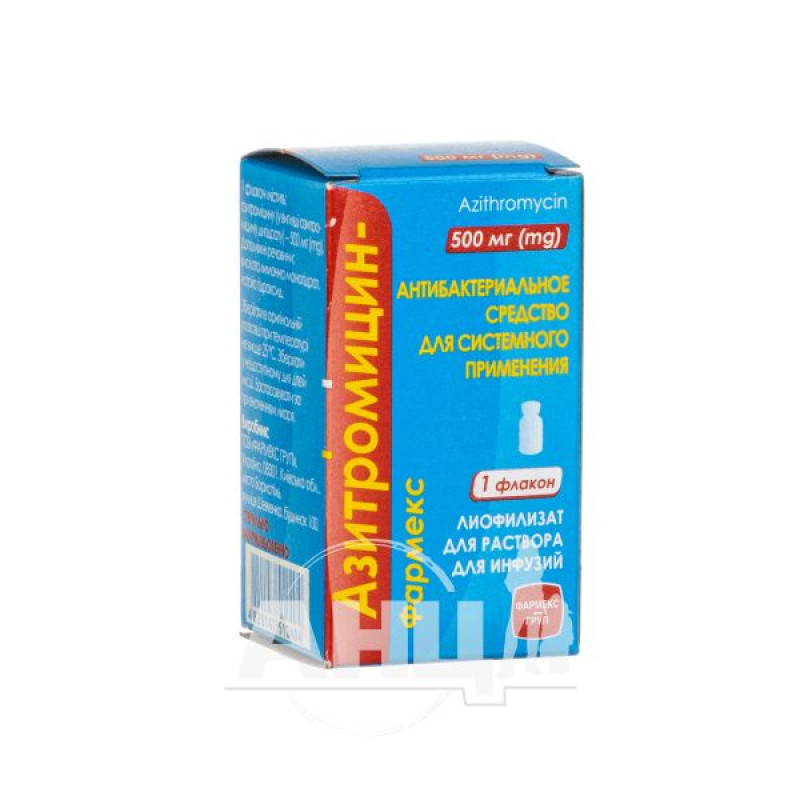
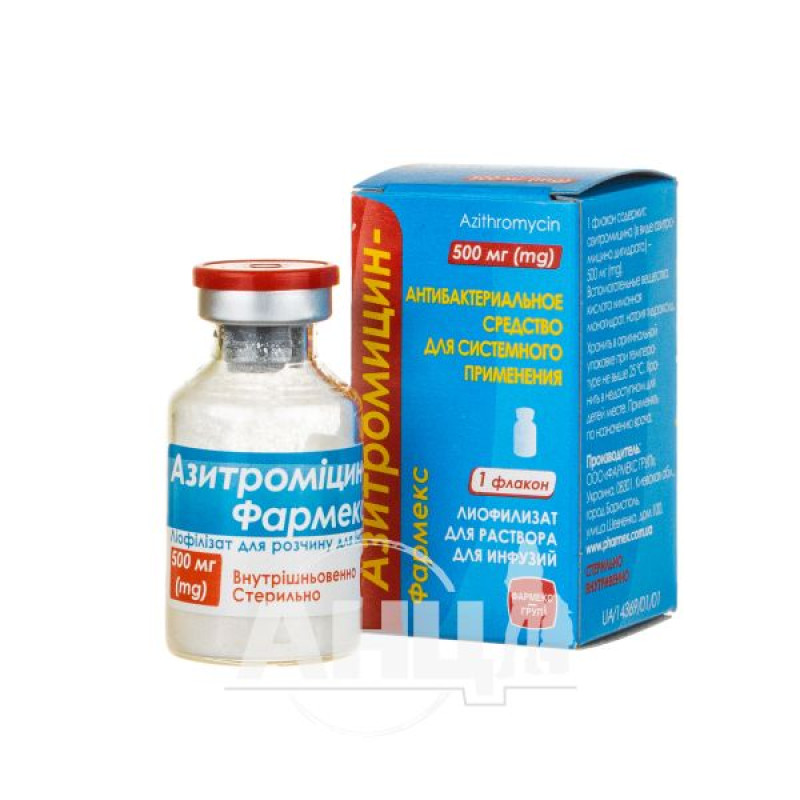
Azithromycin-Pharmex lyophilized powder for solution for infusion 500 mg bottle No. 1
Lyophilisate for solution Azithromycin is indicated for infections requiring initial infusion therapy caused by microorganisms sensitive to azithromycin:
community-acquired pneumonia; pelvic inflammatory disease.Composition
Active ingredient: azithromycin;
1 vial contains 500 mg of azithromycin (as azithromycin dihydrate);
Excipients: citric acid monohydrate, sodium hydroxide.
Contraindication
Hypersensitivity to azithromycin, erythromycin or any macrolide or ketolide antibiotic, or to any other component of the drug.
Due to the theoretical possibility of ergotism, azithromycin should not be administered concomitantly with ergot derivatives.
Method of application
The drug should be administered as an infusion over 3 hours at a concentration of 1 mg/ml and over 1 hour at a concentration of 2 mg/ml. High concentrations should be avoided, as infusion site reactions have been observed in volunteers in studies receiving infusions at concentrations higher than 2 mg/ml.
The duration of azithromycin infusion should be at least 60 minutes.
Azithromycin should not be administered bolus or intramuscularly.
Application features
Pregnant women
Given the lack of data on the safety of azithromycin, it is not recommended to prescribe the drug during pregnancy and breastfeeding, except in cases where the expected positive effect for the mother outweighs the possible risk of using the drug for the fetus or child, in the absence of adequate alternative drugs.
Children
The safety and effectiveness of intravenous azithromycin for the treatment of infections in children have not been established.
Drivers
There is no evidence that azithromycin can impair the ability to drive or use other mechanisms, but the possibility of developing adverse reactions such as dizziness, drowsiness, and visual disturbances should be taken into account.
Overdose
Typical symptoms of overdose: nausea, vomiting, diarrhea, abdominal pain, and reversible hearing loss.
In case of overdose, if necessary, it is recommended to take activated charcoal and conduct symptomatic therapy aimed at supporting the body's vital functions.
Side effects
When azithromycin was administered intravenously or orally for the treatment of pneumonia, the most commonly reported adverse reactions were diarrhea/loose stools, nausea, abdominal pain, and vomiting. Local inflammation/pain at the infusion site was reported with azithromycin. The frequency and severity of these reactions were similar to those observed with a 500 mg azithromycin infusion over 1 hour (2 mg/mL as a 250 mL infusion) or 3 hours (1 mg/mL as a 500 mL infusion).
In adult women, when azithromycin was used intravenously or orally for the treatment of pelvic inflammatory disease, the most commonly reported adverse events were diarrhea, nausea, vaginitis, abdominal pain, anorexia, rash, and pruritus. When azithromycin and metronidazole were used concomitantly, the majority of women experienced adverse events such as nausea, abdominal pain, vomiting, infusion site irritation, stomatitis, dizziness, or dyspnea.
Interaction
Azithromycin should be administered with caution to patients taking other drugs that may prolong the QT interval.
Storage conditions
Store in the original packaging at a temperature not exceeding 25 °C.
Keep out of reach of children.
Shelf life - 3 years.
There are no reviews for this product.
There are no reviews for this product, be the first to leave your review.
No questions about this product, be the first and ask your question.