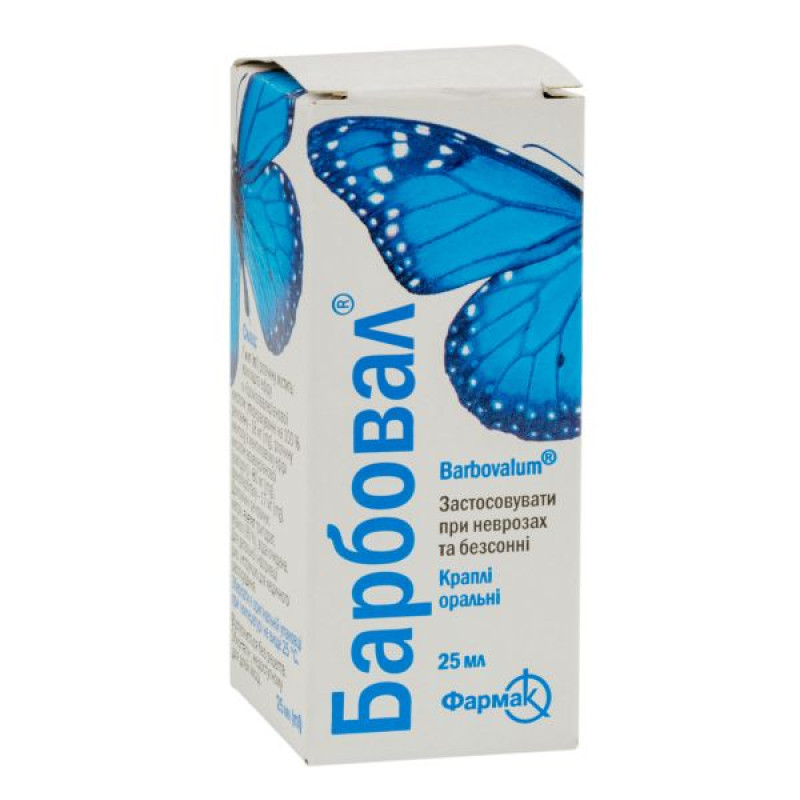
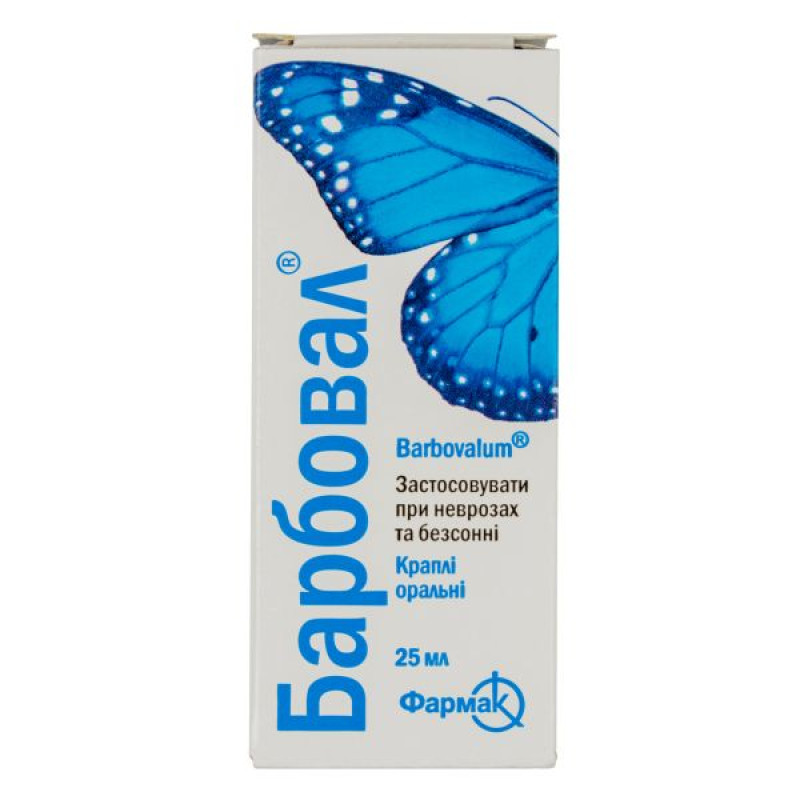
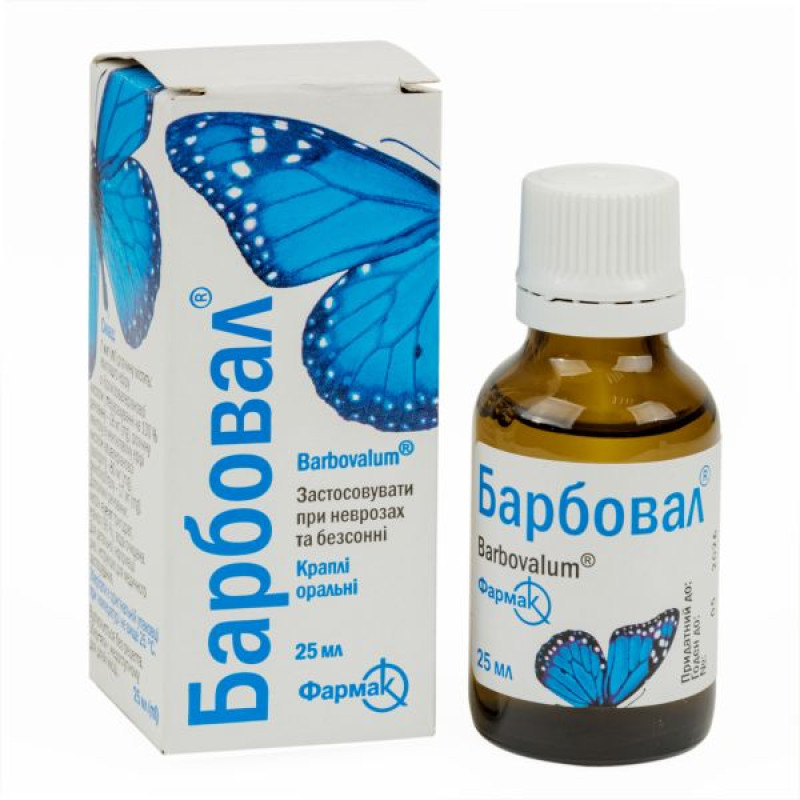
Instructions Barboval oral drops bottle 25 ml
Composition
active ingredients: ethyl ester of α-bromoisovaleric acid, menthol in menthyl ester of isovaleric acid, phenobarbital;
1 ml of solution contains 18 mg of α-bromoisovaleric acid ethyl ester, calculated as 100% substance, 80 mg of menthol solution in menthyl ester of isovaleric acid (validol), 17 mg of phenobarbital;
excipients: sodium acetate trihydrate, ethanol (96%), purified water.
Dosage form
Oral drops.
Main physicochemical properties: clear colorless liquid with a specific aromatic odor.
Pharmacotherapeutic group
Sleeping pills and sedatives. Barbiturates, combinations.
ATX code N05C B02.
Pharmacological properties
Pharmacodynamics
Barboval is a combined drug, the therapeutic effect of which is due to the pharmacological properties of the components that make up its composition.
Ethyl ester of α-bromizovaleric acid has a reflex sedative and antispasmodic effect, which is caused by irritation mainly of the receptors of the oral cavity and nasopharynx, a decrease in reflex excitability in the central nervous system and an increase in inhibition processes in the neurons of the cortex and subcortical structures of the brain, as well as a decrease in the activity of central vasomotor centers and a local direct antispasmodic effect on smooth muscles.
Phenobarbital inhibits the activating effect of the centers of the reticular formation of the medulla oblongata on the cerebral cortex, thereby reducing the flow of excitatory effects on the cerebral cortex and subcortical structures. The reduction of activating effects causes, depending on the dose, sedative, tranquilizing and hypnotic effects. Barboval® reduces the excitatory effect on vasomotor centers, coronary and peripheral vessels, reducing overall blood pressure, eliminating and preventing vascular spasm, especially cardiac.
Menthol in the menthyl ester of isovaleric acid has a calming effect on the central nervous system, slows down the peristalsis of the stomach and intestines, reduces flatulence, and also has a moderate reflex vasodilator and antispasmodic effect.
Pharmacokinetics
Not studied.
Indication
Neuroses accompanied by increased excitability, insomnia; hysteria; as part of the complex treatment of mild attacks of angina pectoris, arterial hypertension in the initial stage, tachycardia of functional genesis, with stomach and intestinal spasms, and flatulence.
Contraindication
Hypersensitivity to any component of the drug, hepatic and renal failure, hepatic porphyria, severe heart failure, severe arterial hypotension, acute myocardial infarction, diabetes mellitus, depression, myasthenia gravis, alcoholism, drug and medication addiction, respiratory diseases with shortness of breath, obstructive syndrome.
Interaction with other medicinal products and other types of interactions
Simultaneous use with neuroleptics and tranquilizers potentiates, and with central nervous system stimulants weakens the effect of each component of the drug. Barboval, which contains barbituric acid derivatives, enhances the effect of local anesthetics, analgesics and hypnotics. Alcohol enhances the effects of the drug and may increase its toxicity. The effect of the drug is enhanced against the background of the use of valproic acid preparations. The presence of phenobarbital in Barboval can induce liver enzymes, which makes its simultaneous use with medications that are metabolized in the liver undesirable (coumarin derivatives, griseofulvin, glucocorticoids, oral contraceptives, cardiac glycosides, antimicrobial, antiviral, antifungal, antiepileptic, anticonvulsant, psychotropic, oral hypoglycemic, hormonal, immunosuppressive, cytostatic, antiarrhythmic, antihypertensive drugs, etc.) will be reduced as a result of a higher level of metabolism.
MAO inhibitors prolong the effect of phenobarbital. Rifampicin may reduce the effect of phenobarbital.
The risk of kidney damage increases with the simultaneous use of phenobarbital with gold preparations.
With prolonged simultaneous use of phenobarbital with nonsteroidal anti-inflammatory drugs, there is a risk of stomach ulcers and bleeding.
Concomitant use of phenobarbital with zidovudine increases the toxicity of both drugs.
The drug increases the toxicity of methotrexate.
While taking the drug, you should avoid drinking alcoholic beverages.
Application features
The presence of phenobarbital in the composition of the drug may lead to the risk of developing Stevens-Johnson and Lyell syndrome, which is most likely in the first weeks of treatment. Long-term use is not recommended due to the risk of developing drug dependence, possible accumulation of bromine in the body and the development of bromine poisoning. In cases where pain in the heart area does not go away after taking the drug, you should consult a doctor to exclude acute coronary syndrome. The drug should be prescribed with caution in cases of arterial hypotension, hyperkinesia, hyperthyroidism, adrenal hypofunction, acute and constant pain, acute drug intoxication.
Ability to influence reaction speed when driving vehicles or other mechanisms
The drug may cause drowsiness and dizziness, therefore, during treatment, patients are not recommended to work with dangerous mechanisms and drive vehicles.
Use during pregnancy or breastfeeding
The drug should not be used by women during pregnancy or breastfeeding.
Method of administration and doses
Barboval should be taken orally with a small amount of liquid or on a piece of sugar under the tongue.
The dosage and duration of treatment are determined by the doctor individually. Usually, adults take 10–15 drops 2–3 times a day for 10–15 days.
It is best to take the drug 20–30 minutes before meals.
After a break of 10–15 days, the course of treatment can be repeated.
Children
There is no experience with the use of the drug in the treatment of children, therefore the drug is not used in pediatric practice.
Overdose
With prolonged or frequent use, cumulation of the drug is possible, leading to clinical manifestations of overdose, namely:
Central nervous system depression, which is eliminated by the use of CNS stimulants (caffeine, cordiamine, etc.); nystagmus, ataxia, decreased blood pressure, abnormalities in the blood formula.
Manifestations of chronic bromine poisoning include: depression, apathy, rhinitis, conjunctivitis, hemorrhagic diathesis, and impaired coordination of movements. Symptomatic therapy is prescribed to eliminate these manifestations.
Continuous long-term use of the drug may cause addiction, drug dependence, withdrawal syndrome, and sudden cessation of use - withdrawal syndrome. Long-term use of the drug is sometimes accompanied by increased psychodynamic activity instead of the expected sedation.
Symptoms of overdose: respiratory depression, up to its cessation; central nervous system depression, up to coma; cardiovascular depression, including rhythm disturbances, decreased blood pressure, up to a collapse-like state; nausea, weakness, decreased body temperature, decreased diuresis.
Treatment is symptomatic.
Adverse reactions
The drug is usually well tolerated. The following side effects may occur:
from the digestive system: constipation, feeling of heaviness in the epigastric region, with prolonged use - impaired liver function, nausea, vomiting; from the nervous system: weakness, ataxia, impaired coordination of movements, nystagmus, hallucinations, paradoxical excitation, decreased concentration of attention, fatigue, slowed reactions, headache, cognitive disorders, confusion, drowsiness, mild dizziness; from the blood-forming organs: anemia, thrombocytopenia, agranulocytosis; from the cardiovascular system: arterial hypotension, bradycardia; from the immune system: hypersensitivity reactions, including angioedema, allergic reactions, including skin rash, itching, urticaria); from the skin and mucous membranes: Stevens-Johnson syndrome, toxic epidermal necrolysis; Musculoskeletal system: with prolonged use of drugs containing phenobarbital, there is a risk of osteogenesis disorders; other: difficulty breathing.
Prolonged use of bromine-containing drugs can lead to bromine poisoning, which is characterized by the following symptoms: central nervous system depression, depressed mood, confusion, ataxia, apathy, conjunctivitis, rhinitis, lacrimation, acne, or purpura.
Expiration date
3 years.
Do not use the drug after the expiration date indicated on the package.
Storage conditions
Store in the original packaging at a temperature not exceeding 25 °C.
Keep out of reach of children.
Packaging
25 ml in a bottle. 1 bottle in a pack.
Vacation category
Without a prescription.
Producer
PJSC "Farmak".
Location of the manufacturer and its business address
Ukraine, 04080, Kyiv, Frunze St., 74.