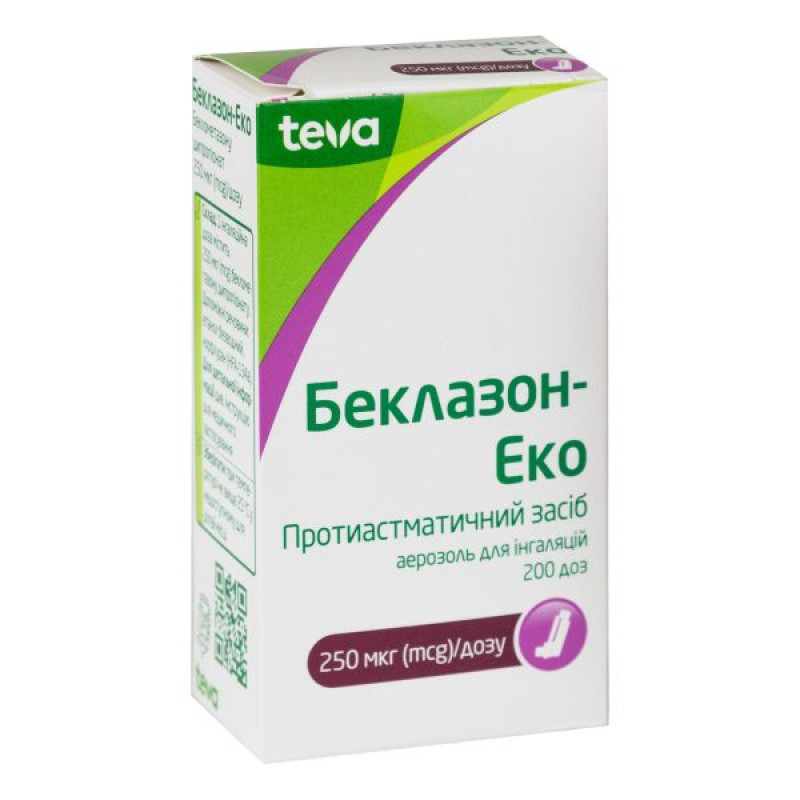
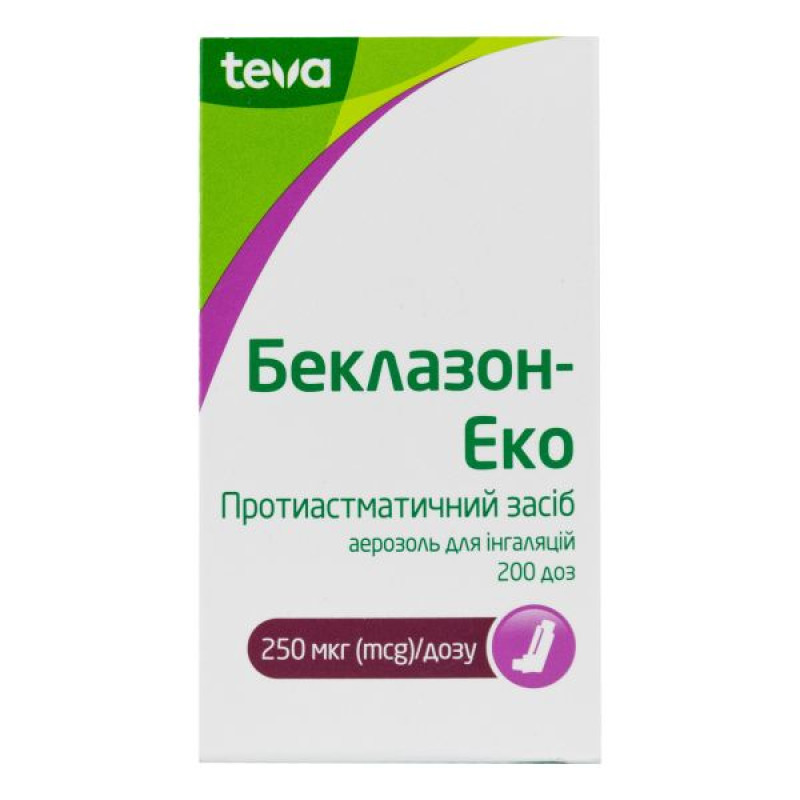
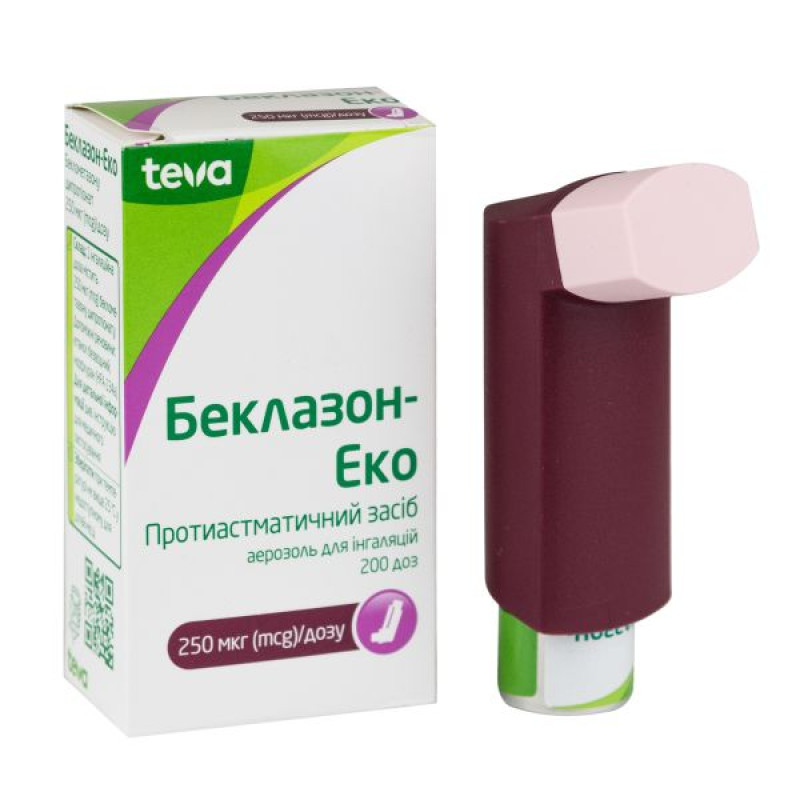
Instructions for Beklazon-Eco inhalation aerosol 250 mcg/dose canister 200 doses with inhalation device
Composition
active ingredient: beclomethasone;
1 inhalation dose contains 250 mcg of beclomethasone dipropionate;
excipients: anhydrous ethanol, norflurane (HFA-134a).
The medicine does not contain freons.
Dosage form
Aerosol for inhalation.
Main physicochemical properties: aerosol for inhalation in a pressurized aluminum container. No external damage, corrosion or leakage.
Pharmacotherapeutic group
Inhaled preparations for the treatment of obstructive airway diseases. Glucocorticoids. ATX code R03B A01.
Pharmacological properties
Pharmacodynamics.
Beclomethasone dipropionate is a precursor of the active substance with weak affinity for glucocorticoid receptors. It is hydrolyzed by esterases to form the active metabolite beclomethasone-17-monopropionate, which has high local anti-inflammatory activity.
Pharmacokinetics.
When inhaled, systemic absorption of unchanged beclomethasone dipropionate occurs via the lungs with little oral absorption of the dose delivered to the gastrointestinal tract. Prior to absorption, beclomethasone dipropionate is extensively converted to its active metabolite, beclomethasone-17-monopropionate. Systemic absorption of beclomethasone-17-monopropionate consists of absorption in the lungs and in the gastrointestinal tract. Absolute bioavailability when inhaled is approximately 60% of the administered dose for beclomethasone-17-monopropionate.
Beclomethasone dipropionate is rapidly eliminated from the systemic circulation by esterase-mediated metabolism. The main metabolic product is the active metabolite beclomethasone-17-monopropionate.
The volume of distribution of beclomethasone dipropionate in the plateau phase is moderate (20 L), but that of beclomethasone-17-monopropionate is greater (424 L). Plasma protein binding is moderately high (87%).
Beclomethasone dipropionate and beclomethasone-17-monopropionate have high plasma clearance (150 and 120 l/h), with half-lives of 0.5 hours and 2.7 hours. Approximately 60% of the dose is excreted in the feces, 12% in the urine as free and conjugated polar metabolites. Renal clearance of beclomethasone dipropionate and its metabolites is negligible.
Indication
Treatment of severe asthma in adults, as well as the treatment of patients who require the use of systemic steroids for adequate control of bronchial asthma symptoms.
Contraindication
Hypersensitivity to beclomethasone dipropionate or to any of the excipients.
Special safety precautions
The aerosol can contains a liquid under pressure from compressed gas and must not be exposed to temperatures above 50°C, punctured or broken, even when it is likely to be empty. Do not refrigerate or freeze.
Medicines that are no longer needed should be disposed of in accordance with the internal rules for the disposal of this type of product. These measures will help protect the environment.
Interaction with other medicinal products and other types of interactions
Concomitant use of barbiturates, phenytoin or rifampicin may increase the metabolism and reduce the effectiveness of oral corticosteroids. The response to anticoagulants may be reduced and in some cases increased due to the action of oral corticosteroids. Concomitant use of oral corticosteroids or non-potassium-sparing diuretics such as thiazides or furosemide may cause excessive potassium loss. No interactions have been reported with Beclazon-Eco.
Beclazon-Eco contains a very small amount of ethanol, so theoretically, in patients with hypersensitivity, an interaction is possible when taken simultaneously with disulfiram or metronidazole.
Application features
Treatment of bronchial asthma should be carried out according to a phased program, the patient's condition should be regularly monitored both clinically and by determining indicators of external respiratory function.
Increasing the frequency/dose of bronchodilators (particularly rapid-acting inhaled β2-agonists) to relieve asthma symptoms indicates worsening asthma control. In these circumstances, therapy should be reviewed. Sudden and progressive deterioration in asthma control is potentially life-threatening, and the dose of corticosteroids should be increased. Peak flowmetry should be performed in patients at risk.
Beclazon-Eco is not intended for the relief of acute asthma attacks, but for long-term preventive treatment. For the relief of acute asthma attacks, fast- and short-acting inhaled bronchodilators should be used.
Systemic effects may occur with inhaled corticosteroids, especially at high doses and for long periods, but are much less severe than with oral steroids. Systemic effects may include Cushing's syndrome, Cushingoid features, adrenal suppression, growth retardation in children and adolescents, decreased bone mineralization, cataracts and glaucoma, and, less commonly, mental and behavioral disorders, including psychomotor hyperactivity, sleep disturbances, anxiety, depression, or aggression (especially in children). It is therefore important that the dose of inhaled corticosteroids be reduced to the lowest dose at which effective control of asthma symptoms is maintained. Adrenal function should be monitored regularly in such patients and the dose of systemic steroid should be reduced with caution. Some patients experience malaise (i.e. headache, nausea, joint or muscle discomfort) during the withdrawal phase, despite maintained or even improved respiratory function. They should be encouraged to continue inhalations and to discontinue systemic steroid, except in cases where there are objective signs of adrenal insufficiency.
It is recommended that the growth of children receiving long-term treatment with inhaled corticosteroids be monitored regularly. If growth is slowed, therapy should be reviewed with the aim of reducing the dose of inhaled corticosteroid, if possible, at which effective asthma control is maintained. In addition, the patient should be referred for consultation with a pediatric pulmonologist.
There is individual hypersensitivity to inhaled corticosteroids.
Transferring patients from oral corticosteroids to Beclazon-Eco requires special attention and constant monitoring of adrenal function, mainly because the recovery of adrenal cortical dysfunction caused by prolonged systemic steroid treatment is slow. The patient's condition should be moderately stable before starting Beclazon-Eco inhalation in addition to the usual maintenance dose of systemic steroid. After about a week, gradual withdrawal of the systemic steroid should be initiated, reducing the daily dose by 1 mg prednisolone or its equivalent for other corticosteroids, at intervals of at least one week.
Spirometric and clinical assessment should be used when tapering oral corticosteroids. Most patients can be successfully transferred to Beclazone-Eco with maintenance of adequate respiratory function, but special caution is required during the first months after the switch until HPA function has recovered sufficiently to allow the patient to cope with emergencies such as trauma, surgery or infections.
Due to the possibility of adrenal suppression, transferring patients from oral corticosteroids to Beclazon-Eco requires special attention and constant monitoring of adrenal function.
The process of switching to Beclazon-Eco and stopping systemic therapy should be gradual and patients should carry a special card with a warning about the need for additional administration of systemic steroid during stressful periods, for example, during a severe asthma attack, severe intercurrent diseases, surgical interventions, injuries. They should also be given a supply of oral steroids for use in an unforeseen event, for example, when worsening asthma symptoms as a result of a localized infection in the chest area. The dosage of Beclazon-Eco should be increased at this time, and after stopping systemic steroid intake, it should be reduced to a maintenance level.
Similarly, switching from systemic steroid therapy to inhaled steroid therapy can sometimes unmask allergic conditions, such as allergic rhinitis or eczema, that were previously controlled by systemic steroids. These allergic manifestations should be treated with antihistamines and/or topical medications, including topical steroids.
Visual impairment may occur during systemic or topical corticosteroids. If a patient reports blurred vision or other visual disturbances, they should be referred to an ophthalmologist for evaluation of the possible cause, which may include cataracts, glaucoma, or a rare condition such as central serous chorioretinopathy, which has also been reported with systemic or topical hormone therapy.
Treatment with Beclazon-Eco should not be stopped suddenly.
Patients with high levels of Candida precipitins in the blood, indicating a history of infection, are more likely to develop candidiasis of the mouth and throat (candidiasis stomatitis). All patients may find it helpful to rinse their mouth with water after using the inhaler.
As with other inhaled medications, paradoxical bronchospasm with rapidly increasing dyspnea after inhalation may occur. In such cases, rapid-acting inhaled bronchodilators should be used immediately, Beclazon-Eco inhalation should be discontinued immediately, the patient should be examined and, if necessary, alternative therapy should be prescribed.
Patients treated with Beclomethasone dipropionate 100 mcg/dose may be switched directly to Beclomethasone dipropionate 250 mcg/dose (at the same total daily dose, increasing the dose to a maximum daily dose of 1000 mcg if necessary). In most patients, there is no significant effect on plasma or urinary free cortisol levels until a dose of 1000 mcg/day is exceeded. In some patients treated with 2000 mcg/day of beclomethasone dipropionate, a decrease in plasma or urinary free cortisol levels has been observed, although short-term adrenal reserve remains unchanged. In any patient, the risk of adrenal suppression should be weighed against the therapeutic benefits, and precautions should be taken to ensure that systemic steroid support is provided in situations of prolonged stress.
As with other inhaled corticosteroids, Beclazon-Eco should be administered with caution to patients with active or latent pulmonary tuberculosis. Corticosteroid treatment may mask the symptoms of pulmonary tuberculosis and other bacterial, viral and fungal infections of the respiratory tract. Reactivation of pulmonary tuberculosis is possible. If the drug is prescribed to patients with concomitant respiratory tract infections, the latter should be treated appropriately. The drug should be used with caution in patients with lung abnormalities such as bronchiectasis and pneumoconiosis due to the possibility of fungal infection. After using the drug, the mouth should be rinsed with water.
The drug should not be prescribed to patients with herpes simplex and asthmatic status.
Special care should be taken to minimize the use of topical corticosteroids in immunosuppressed patients.
The drug should be used with special caution in patients with viral, bacterial and fungal infections of the eye or mouth, as well as the respiratory tract. In the case of a bacterial infection of the respiratory tract, the use of an appropriate antibiotic may be necessary.
Prolonged treatment with inhaled corticosteroids, particularly at doses higher than recommended, may result in clinically significant adrenal suppression. Additional systemic steroid administration should be considered during times of stress or elective surgery.
Patients should be warned that the drug contains a small amount of ethanol. In therapeutic doses, the amount of ethanol is extremely small and does not pose a risk to patients.
Use during pregnancy or breastfeeding
The safety of Beclomethasone-Eco during pregnancy has not been definitively established. Inhalation of beclomethasone may be associated with intrauterine growth retardation. When deciding whether to use beclomethasone during pregnancy, the expected benefit to the mother should be weighed against the potential risk to the fetus.
Beclomethasone passes into breast milk, but in very small amounts. The use of the drug in breastfeeding women should be considered carefully, taking into account that the therapeutic benefit of the drug should outweigh the possible risk to the child.
Ability to influence reaction speed when driving vehicles or other mechanisms
Does not affect.
Method of administration and doses
The drug is intended for oral inhalation only. Patients should be aware that Beclazon-Eco should be used for the prevention of the disease and therefore it should be taken regularly, even in the absence of asthma attacks.
Adjust the dose of the drug depending on the individual response.
If improvement after using short-acting bronchodilators becomes less effective or more inhalations are required than usual, treatment should be reviewed.
Patients who find it difficult to synchronize breathing with the use of an inhaler are recommended to additionally use a spacer - a device to facilitate inhalation of inhaled medications.
The initial dose of the drug should be appropriate for the severity of the disease. For patients requiring high doses of inhaled corticosteroids, the initial dose should be 1000 mcg per day. The dose of the drug can then be adjusted until asthma symptoms are controlled or reduced to the minimum effective dose, depending on the individual patient's response.
Adults and children aged 12 years and over (including the elderly)
1000 mcg per day; dose may be increased to 2000 mcg per day. Maintenance dose is usually 200-400 mcg, evenly distributed throughout the day. After stabilization of the patient's condition, the dose may be reduced. The total daily dose may be administered in two, three, or four divided doses.
To obtain optimal results, Beclazon-Eco must be used regularly, even in the absence of symptoms.
The therapeutic effect is observed after treatment for several days and reaches a maximum after 2-3 weeks.
When transferring a patient from other inhalation drugs to Beclazon-Eco, it is necessary to leave the same dose of beclomethasone dipropionate, which can later be individually selected if necessary.
Instructions for using the inhaler
1. Remove the cap from the inhaler. Make sure that there is no dust or dirt in the outlet tube.
2. Hold the can upright with your index finger on the bottom and your thumb on the top of the can. Shake the can vigorously up and down.
3. Exhale as fully as possible (without straining). Close your lips tightly around the outlet tube of the canister. Take a slow, deep breath in. At the moment of starting to inhale, press your index finger on the bottom of the canister, releasing a dose of medication. Continue to inhale slowly and deeply.
- Remove the inhaler tube from your mouth and hold your breath for 10 seconds or as long as you can without straining. Exhale slowly.
- If you need to take more than one dose of medication, wait about a minute and then repeat the action, starting from step 2. Put the cap back on the inhaler.
Do not rush when performing step 3. It is important to inhale as slowly as possible when releasing the dose of the drug.
Inhaler care
1. Remove the aluminum can from the plastic case. Avoid contact of the can with water.
2. Remove the protective cap.
3. Rinse the plastic case with the oral applicator with hot water and dry thoroughly (without applying direct heat).
4. After drying, put the canister back in the plastic case, close the oral applicator with the protective cap.
You should wash the oral applicator once a week.
Children
Not recommended for use in children under 12 years of age.
Overdose
The acute toxicity of Beclazon-Eco is very low. The only harmful effect after inhalation of large doses for a short time is temporary suppression of the hypothalamic-pituitary-adrenal (HPA) function. In this case, no special measures are required. Treatment should be continued at the recommended dose. Restoration of HPA function occurs within 1-2 days.
However, when doses higher than recommended and for prolonged periods are used, some adrenal suppression may occur in addition to the suppression of HRA function. In such cases, adrenal reserve should be checked. The patient should be treated as steroid-dependent and transferred to an appropriate maintenance dose of a systemic steroid such as prednisolone. As soon as the patient's condition has stabilized, he should be transferred to Beclazone-Eco in the manner described in the section "Features of use".
There is no specific treatment for overdose with beclomethasone dipropionate. In the event of overdose, supportive treatment should be provided with appropriate monitoring as necessary. Further treatment should be based on the clinical situation or local guidelines, if available.
Side effects
Infections and infestations: latent/opportunistic infections, oral and pharyngeal candidiasis.
Immune system disorders: allergic reactions, including angioedema of the eyes, throat, lips and face; respiratory symptoms (dyspnea and/or bronchospasm with increased wheezing, cough) and anaphylactoid/anaphylactic reactions.
On the part of the endocrine system: Cushing's syndrome, Cushingoid features, suppression of adrenal function (systemic effect), growth retardation in children and adolescents.
From the organs of vision: cataract, blurred vision, central serous retinopathy, glaucoma (systemic effect).
Respiratory system: hoarseness, throat irritation, paradoxical bronchospasm.
Skin and subcutaneous tissue disorders: urticaria, rash, itching, erythema.
Musculoskeletal and connective tissue disorders: decreased bone mineral density (systemic effect).
Psychiatric disorders: sleep disorders, anxiety, depression, aggression, behavioral changes, including hyperactivity and agitation (mainly in children).
Expiration date
3 years.
Storage conditions
Store at a temperature not exceeding 25 °C out of the reach of children.
Packaging
1 canister containing 200 doses, with an inhalation device in a box.
Vacation category
According to the recipe.
Producer
Norton (Waterford) Limited.
Location of the manufacturer and address of its place of business
Unit 27/35 14/15 and 301 Ida Industrial Park Cork Highway, Waterford, X91 WK68, Ireland.