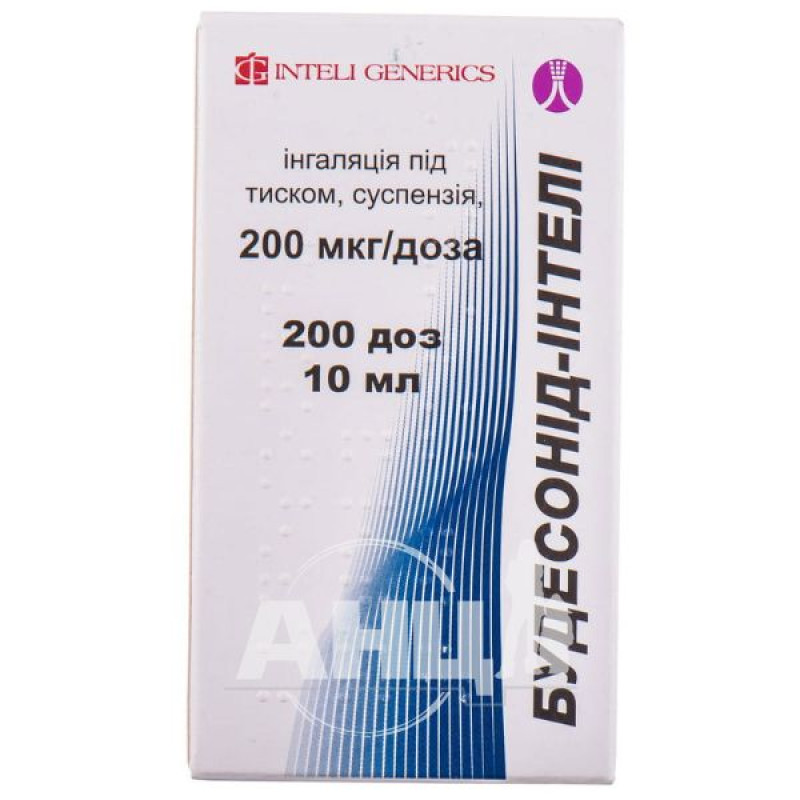
Instructions Budesonide-Inteli pressurised inhalation suspension 200 mcg/dose aluminium cylinder 10 ml 200 doses
Composition
active ingredient: budesonide;
1 dose contains 50 mcg or 200 mcg of micronized budesonide;
excipients: oleic acid, anhydrous ethanol, 1,1,1,2-tetrafluoroethane (HFA-134a).
Dosage form
Pressurized inhalation, suspension.
Main physicochemical properties:
for release: for dosage 50 mcg/dose: white suspension;
for dosage 200 mcg/dose: white suspension with typical odor and taste.
During the shelf life: for both dosages: white suspension.
Pharmacotherapeutic group
Inhalants used for the treatment of obstructive airway diseases. Glucocorticoids. ATX code R03B A02.
Pharmacological properties
Pharmacodynamics. Budesonide is an active synthetic glucocorticoid used to treat allergic and inflammatory diseases of the respiratory tract. It exhibits minor mineralocorticosteroid activity. It belongs to the prolonged-acting drugs with the possibility of a single dosage. Budesonide is characterized by a local anti-inflammatory effect due to its high lipophilicity and ability to penetrate intracellularly and bind to glucocorticoid receptors. The mechanism of action of budesonide is the formation of complexes with glucocorticoid receptors of the cytoplasm. Hormone-receptor complexes penetrate the nuclei of target cells (eosinophils, neutrophils, lymphocytes), bind to DNA and activate genes responsible for the production of lipocortin. Lipocortin is an inhibitor of phospholipase A2, an enzyme that inhibits the synthesis of inflammatory mediators: histamine, leukotrienes, cytokines.
In the tissues of the respiratory tract, budesonide forms conjugates with fatty acid esters, which accumulate in the cells. When the concentration of budesonide in the cells decreases, the steroid esters of fatty acids are destroyed under the influence of lipase. The released budesonide is able to form hormone-receptor complexes, which determine the development of the anti-inflammatory effect of the drug. The ability of budesonide to form conjugates with fatty acids explains the mechanism of local anti-inflammatory activity of a delayed type and the high level of therapeutic efficacy of the drug.
The drug has a greater affinity for glucocorticoid receptors of the bronchi compared to beclomethasone propionate, and accordingly has a higher local anti-inflammatory and antiallergic activity. A significant improvement in the function of external respiration is noted after a few days (7-10 days) from the start of treatment. Budesonide does not affect the smooth muscles of the bronchi. The drug reduces bronchial hyperreactivity, suppresses the early phase of the allergic reaction (after sufficiently long-term use) and the late phase of the reaction, thus preventing asthma attacks. Budesonide also reduces bronchospasm caused by physical exertion, cold air or sulfuric anhydride.
Pharmacokinetics. The drug is rapidly absorbed after inhalation. 34% of the applied dose is deposited in the lungs. Absolute systemic availability is 39% of the administered dose. Maximum plasma concentrations of budesonide are reached 30 minutes after inhalation. The volume of distribution is approximately 2-3 l/kg. The metabolism of most of budesonide (approximately 90%) occurs in the liver with the participation of the CYP3A4 enzyme, resulting in the formation of metabolites with low glucocorticosteroid activity. The glucocorticosteroid activity of the main metabolites 6-beta-hydroxybudesonide and 16-alpha-hydroxybudesonide is less than 1% compared to the active substance. Approximately 90% of the administered dose is converted to an inactive state during the first pass through the liver. Metabolism in the lungs is insignificant. In adults, the plasma half-life of the drug is on average 2 hours, in children - 1.5 hours. The binding of budesonide to plasma proteins ranges from 85 to 90%. It is excreted in the urine (70%) and bile. Since the main action of budesonide occurs in the respiratory tract, there is no data on the relationship between the concentration of the drug in plasma and the effectiveness of its action.
Indication
Bronchial asthma.
Contraindication
Hypersensitivity to any of the components of the drug.
Interaction with other medicinal products and other types of interactions
Budesonide is mainly metabolised by CYP3A4, and inhibitors of this enzyme, such as ketoconazole and itraconazole, may increase the systemic exposure of budesonide (see sections 4.4 and 5.1). Since no data are available on the posology, it is recommended to avoid concomitant use of these medicinal products. If this is not possible, the interval between administration of these medicinal products should be as long as possible. The possibility of reducing the dose of budesonide should also be considered. It is likely that other potent CYP3A4 inhibitors also lead to a significant increase in plasma levels of budesonide.
In women who were simultaneously taking estrogens or hormonal contraceptives, the concentration of budesonide in the blood plasma increased and the effect of corticosteroids was enhanced, however, when budesonide was used together with low doses of combined oral contraceptives, this effect was absent.
Cimetidine has a mild inhibitory effect on the hepatic metabolism of budesonide, but this phenomenon is not clinically significant.
Due to possible suppression of adrenal function, the ACTH (adenocorticotropic hormone) stimulation test for the diagnosis of pituitary insufficiency may give false results (low values).
Children
Interaction studies were conducted only in adults.
Application features
The drug should be used with caution in patients with active or inactive pulmonary tuberculosis and fungal or viral infections of the respiratory tract.
Patients without steroid dependence. Therapeutic effect is usually achieved within 10 days. Patients with excessive bronchial mucus secretion may initially be given a short (about 2 weeks) additional course of oral corticosteroids. After a course of oral drugs, budesonide as monotherapy may be sufficient treatment.
Steroid-dependent patients: The switch from oral steroids to budesonide can be initiated when the patient is in a relatively stable phase of the disease. In such cases, budesonide is used in combination with the oral steroid at the dose previously used for approximately 10 days.
The dose of oral steroids should then be gradually reduced (e.g. by 2.5 mg prednisolone or equivalent every month) until the lowest possible dose is reached. In many cases, complete replacement of oral steroids with budesonide is possible.
When switching from oral steroid therapy to budesonide, in most cases there is a decrease in systemic corticosteroid action, which may lead to the appearance of allergic or arthritic symptoms such as rhinitis, eczema and muscle and joint pain. Specific treatment should be prescribed for these conditions. In isolated cases, symptoms such as fatigue, headache, nausea, vomiting may occur, indicating systemic glucocorticosteroid insufficiency. In such cases, a temporary increase in the dose of the oral steroid may sometimes be necessary.
As with other inhalation therapy, paradoxical bronchospasm may occur immediately after dosing. If severe reactions occur, treatment should be re-evaluated and, if necessary, alternative therapy initiated.
Patients who have required emergency high-dose corticosteroid therapy or long-term treatment with inhaled corticosteroids at the highest recommended dose are also at risk of developing adrenal insufficiency. These patients may develop symptoms of adrenal insufficiency during periods of severe stress. Additional systemic corticosteroid therapy may be considered in stressful situations or during elective surgery.
Systemic effects may occur with any inhaled corticosteroid, especially when high doses are used for long periods. The likelihood of such effects is much lower with inhaled corticosteroids than with oral corticosteroids. Possible systemic effects include Cushing's syndrome, Cushingoid features, adrenal suppression, growth retardation in children, decreased bone mineral density, cataracts and glaucoma, and less commonly, a number of psychological and behavioral disorders, including psychomotor hyperactivity, sleep disturbances, anxiety, depression, or aggression (especially in children). Therefore, the dose of inhaled corticosteroids should be titrated to the lowest effective dose at which effective control of bronchial asthma is maintained.
Budesonide is not indicated for the rapid relief of acute asthma episodes requiring short-acting inhaled bronchodilators. If the patient is not responding to short-acting bronchodilators or if they require more inhalations than usual, medical intervention is necessary. In such a situation, consideration should be given to increasing the usual therapy, for example by increasing the dose of inhaled budesonide or adding a long-acting beta-agonist or a course of oral glucocorticosteroids.
Patients receiving high doses of emergency corticosteroid therapy or prolonged treatment with the maximum recommended dose of inhaled corticosteroids may be at increased risk of adrenal insufficiency. Such patients may develop signs and symptoms of adrenal insufficiency during periods of severe stress. Additional systemic corticosteroids should be considered during periods of stress or elective surgery. These patients should be instructed to carry a card stating that they may require steroids. Additional systemic steroids or Budesonide-Intel should not be discontinued abruptly.
However, plasma clearance after intravenous administration of budesonide was similar in patients with liver cirrhosis and in healthy volunteers. After oral administration, systemic bioavailability of budesonide increased due to impaired liver function due to reduced first-pass metabolism. The clinical significance of these changes for budesonide treatment is not fully understood, as data are lacking for the inhaled formulation, but an increase in plasma levels and therefore an increased risk of systemic adverse reactions can be expected.
Oral administration of ketoconazole and itraconazole (known inhibitors of CYP3A4 activity in the liver and intestinal mucosa) has been shown to increase systemic exposure to budesonide. Concomitant treatment with ketoconazole, itraconazole, HIV protease inhibitors or other potent CYP3A4 inhibitors should be avoided. If this is not possible, the interval between administration of these medicinal products should be as long as possible. A reduction in the dose of budesonide should also be considered (see section 4.5).
Oral candidiasis may develop during treatment with inhaled corticosteroids. This infection may require the use of appropriate antifungal agents and in some patients may require discontinuation of treatment (see also section 4.2).
When using inhaled steroids, patients should rinse their mouth with water after each dose due to the risk of infection of the oropharynx with fungal microflora.
Warning: Budesonide administration by athletes may result in a positive doping test result.
Children
Impact on growth
In children treated with inhaled corticosteroids for a long time, regular monitoring of growth is recommended. If growth is slowed, therapy should be reviewed with the aim of reducing the dose of inhaled corticosteroid to the lowest possible dose at which effective control of bronchial asthma is maintained. The benefits of corticosteroid therapy should be carefully weighed against the possible risk of growth suppression. In addition, it is important to refer the patient for consultation with a pediatric pulmonologist.
Use during pregnancy or breastfeeding
Pregnancy
The use of budesonide during pregnancy requires careful weighing of the benefits to the woman against the risks to the fetus. Inhaled glucocorticosteroids should be preferred over oral glucocorticosteroids due to the lower severity of systemic effects when used in doses required to achieve the same respiratory effect.
Breastfeeding period
Budesonide passes into breast milk. However, at therapeutic doses of budesonide, no effects on the breast-fed child are expected. Budesonide can be used during breast-feeding.
Maintenance treatment with inhaled budesonide (200 or 400 mcg twice daily) in women with bronchial asthma who are breastfeeding results in only a small systemic exposure of budesonide in breastfed infants.
Considering the data on budesonide for inhalation administration and the fact that budesonide exhibits linear PK properties within the therapeutic dose range after nasal, inhalation, oral or rectal administration, it is expected that exposure to budesonide in breast-fed infants at therapeutic doses will be low.
Ability to influence reaction speed when driving vehicles or other mechanisms
Budesonide does not affect the reaction rate when driving vehicles or working with other mechanisms.
Method of administration and doses
It is used only in the form of inhalations.
Children aged 5 to 12 years: 200-800 mcg daily, in 2-4 divided doses.
Adults (including elderly patients) and children over 12 years of age: 200-1600 mcg daily, in 2-4 divided doses.
After achieving the desired clinical effect, the maintenance dose should be gradually reduced to the minimum dose necessary to control symptoms.
After each inhalation, the patient should rinse their mouth with water.
Instructions for proper use:
Before using the inhaler, check the expiration date. If the inhaler is new or has not been used for several days, shake it well and release one dose into the air to make sure it is working.
1. Remove the lid from the dispenser. 3. Shake the inhaler for 20 seconds. 4. Press your lips to the dispenser and exhale completely. 5. Press the aerosol canister while taking a deep breath through your mouth. | |
6. After inhalation, hold your breath for maximum penetration of the drug.
7. If necessary, continue for a few seconds and repeat the procedure again.
8. Close the lid after use.
The plastic adapter should be cleaned regularly. To clean, remove the metal container and wash the adapter in warm (not hot) soapy water.
Rinse thoroughly, dry the adapter and reassemble the device. After assembly, close the lid.
Children.
The drug is contraindicated in children under 5 years of age.
Overdose
With prolonged use of high doses, systemic effects of glucocorticosteroids such as hypercorticism (edema, facial swelling) and suppression of the hypothalamic-pituitary-adrenal axis may occur. Electrolyte imbalance should be corrected by the use of diuretics that do not affect potassium, such as spironolactone and triamterene.
Side effects
The frequency of side effects is presented below according to the following criteria: very common (≥1/10); common (≥1/100 to <1/10); uncommon (≥1/1,000 to <1/100); rare (≥1/10,000 to <1/1,000); very rare (<1/10,000).
Infectious and parasitic diseases
Common: oropharyngeal candidiasis.
Rare: pneumonia (in patients with COPD (chronic obstructive pulmonary disease)).
From the immune system.
Rare: immediate and delayed hypersensitivity reactions (including rash, contact dermatitis, urticaria, angioedema and anaphylactic reaction).
From the endocrine system.
Rare: signs and symptoms of systemic corticosteroid effects, including adrenal suppression and growth retardation*.
From the psychological side.
Rare: psychomotor hyperactivity, sleep disorders, aggressiveness, irritability, psychosis.
change in behavior (mainly in children).
Uncommon: anxiety, depression.
From the nervous system
Uncommon: tremor**.
From the organs of vision
Uncommon: cataract.
Not known: glaucoma.
Respiratory, thoracic and mediastinal disorders
Common: cough, hoarseness, throat irritation.
Rare: dysphonia, bronchospasm, hoarseness***.
On the skin and subcutaneous tissue.
Rare: bruising.
Musculoskeletal and connective tissue disorders
Not known: muscle spasms.
* see the "Children" section below;
** based on frequency reported in clinical trials;
*** occasionally in children.
Description of selected adverse reactions
Oropharyngeal candidiasis is caused by drug deposition. Rinsing the mouth with water after each inhalation minimizes this risk.
As with any inhalation therapy, the development of paradoxical bronchospasm is very rare (see section "Special warnings and precautions for use").
There is an increased risk of pneumonia in patients with newly diagnosed COPD who are initiated on inhaled corticosteroids. However, a weighted evaluation of eight pooled clinical trials did not demonstrate an increased risk of pneumonia. The results of the first seven of these eight trials were published as a separate meta-analysis.
Systemic effects may occur with inhaled corticosteroids, particularly if high doses are used for prolonged periods. This effect is much less likely with inhaled treatment than with oral corticosteroids. Possible systemic effects include decreased bone mineral density. The effect is likely to depend on the dose, time of exposure, concomitant and previous corticosteroid treatment, and individual sensitivity.
Children
Due to the risk of growth retardation in children, growth monitoring in pediatric patients is necessary as described in the section "Special warnings and precautions for use".
Expiration date
2 years.
Storage conditions
Store at a temperature not exceeding 30 ºС.
Keep out of reach of children.
Do not puncture a pressurized cylinder. Do not throw into a fire, even an empty cylinder.
Protect from direct sunlight. Do not store near heat sources.
Do not freeze.
Packaging
Aluminum canister for 200 doses (10 ml) of 50 mcg/dose or 200 mcg/dose of budesonide each, with a plastic adapter and cap in a cardboard box.
Vacation category
According to the recipe.
Producer
LABORATORIO ALDO-UNION, SL/LABORATORIO ALDO-UNION, SL
Location of the manufacturer and address of its place of business.
Baronesa de Malda, 73, 08950 Esplugues de Llobregat, Barcelona, Spain/Baronesa de Malda, 73, 08950 Esplugues de Llobregat, Barcelona, Spain.
Applicant
CJSC "INTELI GENERICS NORD"/JSC "INTELI GENERICS NORD".
Location of the applicant.
Seimyniskiu 3, 09312, Vilnius, Lithuania.