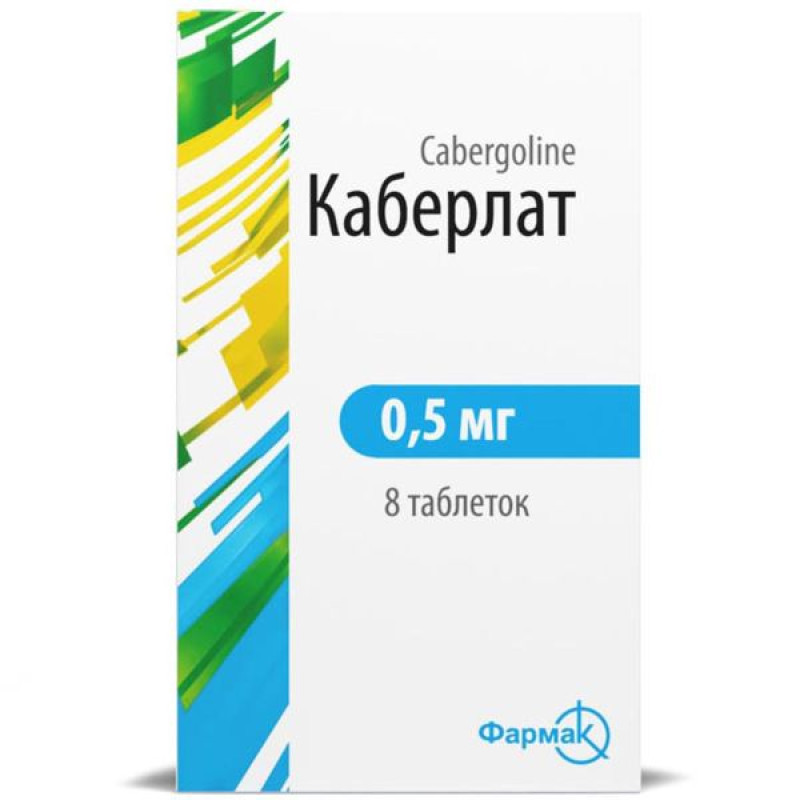
Instructions for use Caberlat tablets 0.5 mg, can No. 8
Composition
active ingredient: cabergoline;
1 tablet contains 0.5 mg of cabergoline;
Excipients: anhydrous lactose, leucine, magnesium stearate.
Dosage form
Main physicochemical properties: white, flat, capsule-shaped tablets with a score, embossed with "APO" on one side of the tablet and embossed with "SA" on one side of the score and "0.5" on the other side of the score - on the other side.
Pharmacotherapeutic group
Drugs used in gynecology. Prolactin inhibitors. WHO ATC code G02C.
Pharmacological properties
Pharmacodynamics.
Cabergoline is a non-dopaminergic ergot derivative with potent and long-lasting prolactin-lowering activity. The drug directly stimulates D2-dopamine receptors on the surface of pituitary lactotropic cells, thereby inhibiting prolactin secretion. Cabergoline reduces prolactin secretion in rats when administered orally at a dose of 3-25 μg/kg and in vitro at a concentration of 45 pg/ml. In addition, cabergoline exerts central dopaminergic effects through stimulation of D2-receptors at oral doses exceeding those effective for reducing serum prolactin levels. The long-term effect of cabergoline on reducing prolactin levels is probably due to its long-term persistence in the target organ, as indicated by the slow elimination rate of total radioactivity from the pituitary gland after a single oral dose in rats (t1/2 is approximately 60 hours).
Pharmacodynamic effects were studied in healthy volunteers, postpartum women and patients with prolactinemia. After a single oral dose of 0.3-1.5 mg, a significant decrease in plasma prolactin levels was observed in each of the studied populations. This effect develops rapidly - within 3 hours after administration of the drug and persists for 7-28 days in healthy individuals and patients with hyperprolactinemia and for 14-21 days in postpartum women. The degree of decrease in prolactin levels and its duration depend on the dose.
Regarding the endocrine effects of cabergoline, not related to the antiprolactinemic effect, the available data from studies involving humans confirm the experimental results obtained in animal studies and indicate that the substance under study is characterized by a highly selective effect and does not affect the basal level of secretion of other pituitary hormones and cortisol. The pharmacodynamic effect of cabergoline did not correlate with the therapeutic effect only in terms of lowering blood pressure. The maximum hypotensive effect of the drug in a single dose is usually observed within the first 6 hours after administration and is dose-dependent for both the maximum reduction and the frequency of occurrence.
Pharmacokinetics.
The pharmacokinetics and metabolic profiles of cabergoline were studied in healthy volunteers of both sexes and in female patients with hyperprolactinemia.
After oral administration of the radioactively labeled substance, it was rapidly absorbed from the gastrointestinal tract, and peak radioactivity in plasma was reached after 0.5-4 hours.
After 10 days of administration, approximately 18% and 72% of the radioactive dose were excreted in the urine and feces, respectively. The content of unchanged drug in the urine was 2-3% of the administered dose.
The main metabolite identified in urine was 6-allyl-8 β-carboxy-ergoline, which accounted for 4-6% of the dose. Three additional metabolites were found in urine, which together accounted for less than 3% of the dose. The in vitro activity of the metabolites in terms of inhibition of prolactin secretion is significantly lower than that of cabergoline. The biotransformation of cabergoline was also studied in the plasma of healthy male volunteers treated with [14C]-cabergoline: it was found that cabergoline undergoes rapid and extensive biotransformation.
The low urinary excretion of unchanged cabergoline was also confirmed in studies using a non-radioactive preparation. The elimination half-life of cabergoline, as determined by the rate of urinary excretion, is long: 63-68 hours in healthy volunteers (using radioimmunoassay) and 79-115 hours in patients with hyperprolactinemia (using HPLC).
Taking into account the half-life, steady state should be reached after 4 weeks, which was confirmed by the mean peak plasma concentrations of cabergoline after a single dose (37 ± 8 pg/ml) and after 4 weeks with multiple doses (101 ± 43 pg/ml).
The results of in vitro experiments showed that the drug at concentrations of 0.1-10 ng/ml is 41-42% bound to blood plasma proteins. Food does not affect the absorption and distribution of the drug.
Indication
Inhibition/suppression of physiological lactation
Inhibition of physiological postpartum lactation immediately after delivery or suppression of established lactation in the following cases:
after childbirth, if the mother has decided not to breastfeed the baby or when breastfeeding is contraindicated for the mother or the baby for medical reasons;
Cabergoline inhibits/suppresses physiological lactation by inhibiting prolactin secretion. In controlled clinical trials, a single dose of 1 mg cabergoline on the first day postpartum was effective in inhibiting milk secretion and in reducing breast engorgement and pain in 70-90% of women. Less than 5% of women experienced a recurrence of breast symptoms by the third week postpartum (which were usually mild in severity).
Suppression of milk secretion and relief of breast engorgement and breast pain have been observed in approximately 85% of lactating women when a total dose of 1 mg cabergoline given in four divided doses for two days has been administered. Recurrence of breast symptoms after 10 days is uncommon (approximately 2% of cases).
Treatment of hyperprolactinic conditions
Disorders associated with hyperprolactinemia, including amenorrhea, oligomenorrhea, anovulation and galactorrhea. Treatment of patients with prolactin-secreting pituitary adenomas (micro- and macroprolactinomas), idiomatic hyperprolactinemia or empty sella syndrome with concomitant hyperprolactinemia, which are the main pathological conditions causing the above-mentioned clinical manifestations.
With long-term treatment at doses of 1 to 2 mg per week, cabergoline was effective in normalizing serum prolactin levels in approximately 84% of patients with hyperprolactinemia.
Regular cycles resumed in 83% of women with amenorrhea. Restoration of ovulation was documented in 89% of women as measured by progesterone levels monitored during the luteal phase. Galactorrhea that occurred before treatment was resolved in 90% of cases. Tumor size decreased in 50-90% of women and men with micro- or macroprolactinoma.
Contraindication
Hypersensitivity to cabergoline, to any of the excipients of the drug or to any ergot alkaloids.
History of fibrotic diseases of the lungs, pericardium and retroperitoneum. Cabergoline is contraindicated in patients with hepatic insufficiency and pregnant women with gestosis. Cabergoline should not be used concomitantly with antipsychotic drugs or in women with a history of postpartum psychosis.
Cabergoline is contraindicated for long-term treatment if there are signs of heart valve damage, determined by echocardiography before the start of treatment (see section "Special warnings and precautions for use").
Interaction with other medicinal products and other types of interactions
Concomitant use of cabergoline with other drugs, especially ergot alkaloids, in the early postpartum period was not associated with obvious interactions that would alter the efficacy and safety of this drug.
Given that there is no data on the interaction of cabergoline with other ergot alkaloids, the simultaneous use of these drugs during long-term treatment is not recommended.
Since cabergoline exerts its therapeutic effect by direct stimulation of dopamine receptors, its concomitant use with dopamine receptor antagonists (e.g. phenothiazines, butyrophenones, thioxanthenes and metoclopramide) is not recommended, as these drugs may reduce the prolactin-lowering effect of cabergoline.
Like other ergot derivatives, cabergoline should not be used with macrolide antibiotics (e.g. erythromycin) due to increased systemic bioavailability of cabergoline.
Application features
General Disclaimer
The safety and efficacy of cabergoline have not been established in patients with renal or hepatic disease. As with other ergot derivatives, cabergoline should be administered with caution to patients with severe cardiovascular disease, Raynaud's phenomenon, renal failure, peptic ulcer or gastrointestinal bleeding, and a history of serious psychiatric disorders, especially psychotic disorders. Particular caution should be exercised if patients are taking a psychotropic drug concomitantly.
Patients with rare hereditary problems of galactose intolerance, the Lapp lactase deficiency or glucose-galactose malabsorption should not take this medicine. Symptomatic hypotension may occur with cabergoline in any indication. Cabergoline should be used with caution when used concomitantly with other antihypertensive medicinal products.
The effect of alcohol on the overall tolerability of the drug is currently unknown.
Pregnancy should be excluded before using cabergoline, and pregnancy should be prevented for at least 1 month after treatment.
Liver failure
Lower doses should be considered for patients with severe hepatic impairment receiving long-term treatment with Caberlate. In patients with severe hepatic impairment (Child-Pugh C) receiving a single dose (1 mg), increased AUC values were observed compared to healthy volunteers and patients with less severe hepatic impairment.
Postural hypotension
Drowsiness/sudden falling asleep
Cabergoline has been associated with somnolence. Dopamine agonists may cause sudden sleep onset episodes in patients with Parkinson's disease. Uncommon cases of sudden sleep onset during daily activities have been reported, in some cases without awareness or warning signs. Patients should be informed of the above information and advised to exercise caution when driving or operating machinery during treatment with cabergoline. Patients who experience somnolence and/or sudden sleep onset episodes should refrain from driving or operating machinery. In such cases, it may be appropriate to reduce the dose or discontinue treatment (see section 4.4).
Impulse control disorder
Patients should be monitored regularly for the development of impulse control disorders. During treatment with dopamine agonists, in particular cabergoline, behavioural symptoms of impulse control disorders, including pathological gambling, increased libido, hypersexuality, compulsive spending and buying, bulimia and compulsive overeating, may occur and patients and their carers should be informed. If such symptoms occur, dose reduction/gradual discontinuation of the drug should be considered.
Inhibition/suppression of physiological lactation
As with other ergot derivatives, Caberlate should not be used in women with pregnancy-induced hypertension, such as preeclampsia or postpartum hypertension, unless the potential benefit outweighs the potential risk.
Serious adverse reactions, including hypertension, myocardial infarction, seizures, stroke, or psychiatric disorders, have been reported in postpartum women receiving cabergoline for lactation suppression.
In some patients, the development of seizures or stroke was preceded by severe headache and/or transient visual impairment.
Blood pressure should be carefully monitored after treatment.
If hypertension, suspicious chest pain, severe, progressive or persistent headache (with or without visual disturbances) or signs of central nervous system toxicity develop, cabergoline should be discontinued and the patient should be evaluated immediately.
In studies of cabergoline use in the postpartum period, the decrease in blood pressure was mostly asymptomatic and often occurred once 2-4 days after the start of treatment. Since a decrease in blood pressure is often observed in the postpartum period regardless of drug treatment, it is likely that a significant number of reported cases of a decrease in blood pressure after taking cabergoline were not due to the drug. However, periodic monitoring of blood pressure is recommended, especially during the first few days after taking cabergoline.
In order to avoid possible postural hypotension, a single dose of Caberlat should not exceed 0.25 mg for women who are breastfeeding and taking the drug to suppress established lactation (see section "Method of administration and dosage"). In a clinical study to evaluate the efficacy and tolerability of a single dose of cabergoline 0.5 mg for suppression of lactation, it was found that the risk of side effects in this indication increases approximately twice if the drug is used as a single dose of 0.5 mg.
Treatment of hyperprolactinemic conditions
Before starting treatment with Caberlat, a complete examination of the pituitary gland is indicated, since hyperprolactinemia accompanied by amenorrhea/galactorrhea and infertility may be caused by a pituitary tumor.
Caberlate restores ovulation and fertility in women with hyperprolactinemic hypogonadism.
Since pregnancy may occur before the return of menstruation, it is recommended to perform a pregnancy test at least every four weeks during the amenorrhea period and after the return of menstruation if the delay is more than three days. Women who wish to avoid pregnancy should be advised to use barrier methods of contraception during treatment with Caberlat and after stopping treatment with this drug until anovulation occurs again. Women who become pregnant should be monitored for signs of pituitary enlargement, as there is a risk of an increase in the volume of a pre-existing pituitary tumor during pregnancy.
It is recommended to perform regular gynecological examinations, including cytological examinations of the cervix and endometrium, in patients taking Caberlate for a long period.
Fibrosis, heart valve damage, and possible related clinical phenomena
Fibrous and serous inflammatory disorders such as pleurisy, pleural effusion, pleural fibrosis, pulmonary fibrosis, pericarditis, pericardial effusion, involvement of one or more heart valves (aortic, mitral and tricuspid) or retroperitoneal fibrosis have been observed after long-term use of ergot derivatives with serotonin 5HT2b receptor agonist activity, such as cabergoline. In some cases, symptoms or manifestations of valvular heart disease may improve after discontinuation of cabergoline.
An excessive increase in erythrocyte sedimentation rate (ESR) has been observed in association with pleural effusion/fibrosis. In the event of an ESR of unknown etiology that is significantly abnormal, a chest X-ray is recommended.
Valvular lesions are associated with drug accumulation, so patients should be treated with the lowest effective dose. The safety profile of patients treated with Caberlate should be reassessed at each visit to determine the appropriateness of continued treatment.
Before initiating long-term treatment with yci, patients should undergo cardiovascular evaluation, including echocardiography, to determine the possible presence of asymptomatic valvular heart disease. It is also advisable to determine the baseline ESR or other markers of inflammation, pulmonary function/chest radiography, and renal function before initiating treatment. It is not known whether treatment with cabergoline may worsen the course of the disease in patients with valvular regurgitation. If a patient is diagnosed with fibrotic valvular heart disease, continued treatment with Cabergoline is not recommended (see section 4.3). Fibrotic diseases may develop asymptomatically during long-term treatment, so the patient should be monitored for possible manifestations of fibrosis progression. Therefore, during treatment, attention should be paid to the following signs and symptoms:
lung and pleural diseases such as dyspnea, shortness of breath, persistent cough, or chest pain;
renal failure or ureteral/abdominal vascular obstruction, which may present as back/side pain and lower extremity edema, as well as any possible abdominal masses or tenderness that may indicate retroperitoneal fibrosis;
Heart failure: Cases of valvular or pericardial fibrosis often present as heart failure. Therefore, valvular fibrosis (and structural pericarditis) should be excluded when these symptoms occur.
Conducting clinical diagnostic monitoring of the development of fibrotic diseases in the established manner is mandatory. The first echocardiography should be performed within 3-6 months after the start of treatment, after which the frequency of echocardiographic studies should be determined by means of an appropriate individual clinical examination with special attention to the above-listed symptoms, but at least every 6-12 months.
Caberlat should be discontinued if echocardiogram reveals new or worsening valvular regurgitation, valve restriction, or valve leaflet thickening (see Contraindications).
The need for other clinical investigations (e.g., physical examination including cardiac auscultation, radiography, and computed tomography) should be determined on an individual basis for each patient.
Appropriate additional studies, including determination of ESR and serum creatinine, should be performed as necessary to confirm the diagnosis of fibrotic disease.
This medicinal product contains lactose. If you have been told by your doctor that you have an intolerance to some sugars, contact your doctor before taking this medicinal product.
Use during pregnancy or breastfeeding
There are currently no adequate and strictly controlled studies of the use of cabergoline in pregnant women. Data are available from a twelve-year observational study of pregnancy outcomes after cabergoline therapy for 256 pregnancies. According to the results of the study, 17 of 256 pregnancies (6.6%) had significant congenital malformations or abortions, and 27 neonatal abnormalities, both significant and subtle, were found in 23 of 258 newborns. The most common anomalies in newborns (10) were malformations of the musculoskeletal system and cardiopulmonary anomalies (5). There is no information on perinatal or long-term development of infants exposed to cabergoline in utero. According to the latest published scientific data, the prevalence of major congenital malformations in the general population is 6.9% or more. The incidence of congenital anomalies varies in different populations. It is not possible to determine with certainty whether there is an increased risk, since no control group was included in the studies.
Due to the long half-life of the drug and limited data on intrauterine exposure, women who wish to become pregnant should discontinue treatment with cabergoline one month before planned conception.
If fertilization occurs during treatment, the drug should be discontinued as soon as pregnancy is confirmed to limit the effect of the drug on the fetus.
There is no information available on the excretion of cabergoline into breast milk, however, mothers are not recommended to breastfeed unless the use of Caberlat has resulted in inhibition/suppression of lactation. Since the drug suppresses lactation.
Caberlate should not be used in mothers with hyperprolactinemic conditions who wish to breastfeed.
Ability to influence reaction speed when driving vehicles or other mechanisms
Patients should be cautious when performing actions that require quick and accurate reactions at the beginning of treatment.
During the first days of using the drug Caberlat, patients should refrain from activities that require quick and accurate reactions, such as driving a car or working with other automated systems.
Patients taking Caberlat and experiencing drowsiness should not drive or engage in other activities where impaired alertness may put themselves or others at risk of serious injury or death (operation of automated systems). Driving and using machines can be resumed after drowsiness and alertness have resolved (see section "Special precautions for use").
Method of administration and doses
Caberlate is for oral administration. Since cabergoline was administered predominantly with food in clinical trials and since the tolerability of this class of drugs is improved when taken with food, it is recommended that the drug be taken with food for all therapeutic indications.
Inhibition/suppression of physiological lactation
Caberlate should be used within the first day after delivery. The recommended therapeutic dose of the drug is 1 mg (2 tablets of 0.5 mg), taken once.
For suppression of established lactation, the recommended therapeutic dosage regimen is 0.25 mg (1/2 tablet of 0.5 mg) every 12 hours for 2 days (total dose - 1 mg). This dosage regimen is better tolerated by women who have decided to suppress lactation than taking it in the form of a single dose, and it is accompanied by a lower incidence of adverse events, especially symptoms of arterial hypotension.
Treatment of hyperprolactinemic conditions
The recommended initial dose of Caberlat is 0.5 mg once a week or 1/2 tablet of 0.5 mg twice a week (e.g. on Monday and Thursday). The weekly dose should be increased gradually, preferably by 0.5 mg per week every month until optimal therapeutic efficacy is achieved. The usual therapeutic dose is 1 mg per week and may range from 0.25 mg to 2 mg per week. Caberlat has been used in doses up to 4.5 mg per week in patients with hyperprolactinemia.
The maximum dose of the drug should not exceed 3 mg per day.
The weekly dose of the drug can be taken as a single dose or divided into two or more doses per week, depending on the patient's tolerability. If the prescribed doses exceed 1 mg per week, it is recommended to divide the weekly dose into several doses, since the tolerability of the drug at doses exceeding 1 mg when taken as a single weekly dose has been evaluated only in a few patients.
When increasing the dose, the patient should be examined to determine the minimum dose of the drug that produces a therapeutic effect. After an effective therapeutic dosage regimen is selected, it is recommended to conduct regular (monthly) determination of serum prolactin levels, since normalization of these levels is usually observed within two to four weeks.
After discontinuation of cabergoline, recurrence of hyperprolactinemia is common. However, some patients have had persistent suppression of prolactin levels for several months. In 23 of 29 women in the follow-up group after discontinuation of cabergoline, ovulatory cycles lasted longer than 6 months.
Elderly patients
Experience in elderly patients is very limited due to the indications for cabergoline. Available data suggest no particular risk.
Children.
The safety and efficacy of cabergoline in patients under 16 years of age have not been studied.
Overdose
Symptoms of overdose may be similar to those resulting from excessive dopamine receptor stimulation (e.g. nausea, vomiting, complaints of gastric discomfort, postural hypotension, confusion/psychosis or hallucinations). Supportive measures should be used as necessary to remove any unabsorbed drug and to maintain blood pressure. In addition, dopamine antagonists may be considered.
Side effects
In general, adverse events are dose-related. The likelihood of adverse events in patients with known intolerance to dopaminergic drugs can be reduced by starting cabergoline treatment at a low dose, e.g. 0.25 mg once a week, followed by a gradual increase to the therapeutic dose. In the event of persistent or severe adverse events, a temporary reduction in dose followed by a more gradual increase, e.g. by 0.25 mg/week every 2 weeks, may improve tolerability.
The following adverse reactions have been observed during treatment with cabergoline with the following frequencies: very common: ≥ 1/10; common: ≥ 1/100 and < 1/10; uncommon: ≥ 1/1000 and < 1/100; rare: ≥ 1/10000 and < 1/1000; very rare: < 1/10000; frequency unknown (cannot be estimated from the available data).
Heart disorders:
very common: valvular lesions (including regurgitation) and related disorders (pericarditis and pericardial effusion);
uncommon: palpitations;
frequency unknown: angina pectoris.
Respiratory, thoracic and mediastinal disorders:
uncommon: dyspnea, pleural effusion, fibrosis (including pulmonary fibrosis), epistaxis;
very rare: pleural fibrosis;
frequency unknown: respiratory distress, respiratory failure, pleurisy, chest pain.
Immune system disorders:
uncommon: hypersensitivity reactions.
Nervous system disorders:
very common: headache*, dizziness/vertigo;
common: drowsiness;
uncommon: transient hemianopsia, syncope, paresthesia;
frequency unknown: sudden sleep onset, tremor.
Disorders of the organs of vision:
frequency unknown: visual impairment.
Mental disorders:
common: depression;
uncommon: increased libido;
frequency unknown: aggression, delusions, hypersexuality, pathological gambling, mental disorders, hallucinations.
Vascular disorders:
common: hypotensive effect in patients receiving long-term treatment; postural hypotension, hot flashes**;
uncommon: peripheral vasospasm, loss of consciousness.
Digestive system disorders:
very common: nausea*, dyspepsia, gastritis, abdominal pain*;
common: constipation, vomiting**;
Rare: epigastric pain.
General disorders and administration site conditions:
very common: asthenia***, fatigue;
uncommon: edema, peripheral edema.
3 sides of the hepatobiliary system:
frequency unknown: liver dysfunction.
3 sides of the skin and subcutaneous tissues:
uncommon: rash, alopecia.
3 sides of the musculoskeletal system and connective tissue:
uncommon: leg cramps.
3 sides of the reproductive system and mammary glands:
Common: breast pain.
Research:
common: asymptomatic decrease in blood pressure (≥ 20 mmHg systolic and ≥ 10 mmHg diastolic);
uncommon: in women with amenorrhea, a decrease in hemoglobin levels has been observed during the first few months after menstruation;
frequency unknown: increased blood creatine phosphokinase, abnormal liver function tests.
* Very common - in patients treated for hyperprolactinemic conditions; common - in patients with inhibition/suppression of lactation.
**Common - in patients treated for hyperprolactinemic conditions: uncommon in patients with inhibition/suppression of lactation.
*** Very common - in patients during treatment of hyperprolactinemic conditions: uncommon - in patients with inhibition/suppression of lactation.
Impulse control disorder.
Pathological gambling, increased libido, hypersexuality, compulsive spending and buying, food refusal, and compulsive overeating may occur in patients receiving treatment with dopamine agonists, particularly cabergoline.
Reporting of suspected adverse reactions
Reporting of suspected adverse reactions after the registration of a medicinal product is important. This allows monitoring of the risk/benefit ratio of the medicinal product. Healthcare professionals are asked to report any suspected adverse reactions.
Expiration date
21 months.
Storage conditions
Store at a temperature of 15 °C to 25 °C in a place protected from light and moisture. Keep out of the reach of children.
Packaging
8 tablets per bottle. 1 bottle per carton.
Vacation category
By prescription.
Producer
Apoteks Inc. / Apotex lnc.
Location of the manufacturer and address of its place of business.
Manufacturing, quality control, release of a drug series:
150 Signet Drive, Toronto, Ontario, M9L 1T9, Canada/ 150 Signet Dl'ive, Toronto. O11tagio, M9L 1T9, Canada.
Quality control, release of a medicinal product:
Etobicoke Site 50 Steinway Blvd Etobicoke Ontario M9W 6Y3, Canada.
Applicant
JSC "Farmak".
Location of the applicant. Ukraine. 04080. Kyiv. Kyrylivska St., 63.