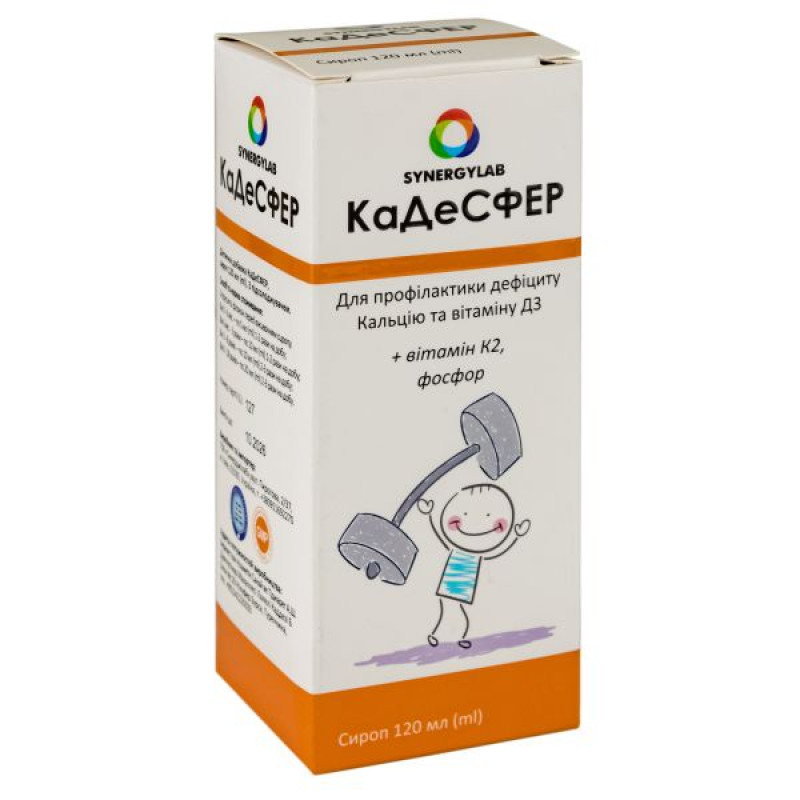

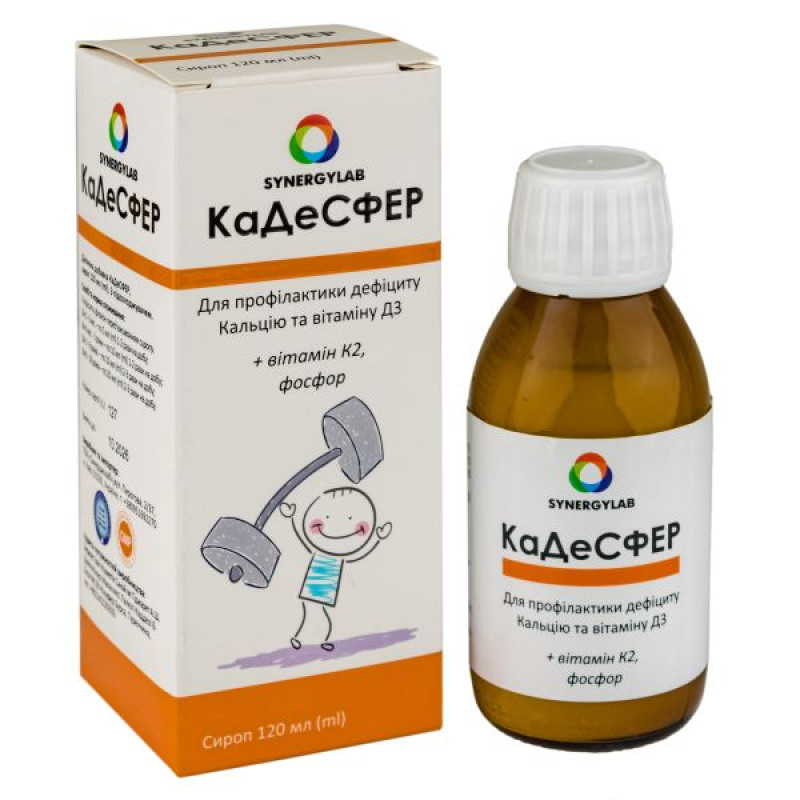
Cadesfer syrup 120 ml
Kadesfer is a combination drug containing calcium, vitamin D3, vitamin K2, magnesium, and phosphorus. It is used to regulate calcium-phosphorus metabolism in the body and eliminate calcium deficiency in children from birth.
composition
Calcium citrate – 1000 mg (equivalent to 210 mg of elemental Ca) Vitamin D3 – 200 IU Vitamin K2 – 15 mcg Phosphorus – 100 mg Magnesium citrate – 100 mg.0.1% sodium benzoate 10 mg 0.1% potassium sorbate 10 mg 0.2% citric acid monohydrate 20 mg 0.02% sugar 2 mg 0.2% raspberry flavor 20 mg, 0.4% xanthan gum 40 mg, 87.48% deionized water 9147.98 mg.
Pharmacological properties
Calcium is the basis of the inorganic composition of bones, is important for the mineralization of teeth, blood clotting. It participates in the transmission of nerve impulses, thereby ensuring the maintenance of stable nervous activity.
Calcium citrate is a form of calcium that is better absorbed by the body. An important feature of calcium citrate is its low ability to form kidney stones, which is important with long-term use of this salt. This is because the citrate salt reduces the amount of oxalates in the urine.
Vitamin D3 improves the absorption of calcium, magnesium and phosphorus, which are important for the normal maintenance of bone tissue. It enhances metabolism, increases the absorption of these chemical elements from the intestines and reabsorption from the renal tubules. Vitamin D3 prevents the leaching of calcium from bone tissue and the development of osteoporosis.
Vitamin K2 is an important vitamin for the absorption of calcium from the intestines and its delivery to bone tissue. It participates in the formation of osteocalcin. Osteocalcin is a key protein that regulates the function of Ca in the processes of bone regeneration and mineralization.
Phosphorus takes an active part in the normal development of bones and teeth.
Magnesium - Magnesium is important for the normal development and functioning of bones and joints. Magnesium is also involved in nerve conduction.
Recommendations for use
Prevention of rickets; Delayed teething in children; Replenishment of calcium and vitamin D3 deficiency; In the treatment of spinal curvatures (kyphosis, scoliosis, lordosis). In all cases where there is poor absorption, reduced assimilation or increased need for calcium and vitamin D3.Dosage and use
As a preventive measure, it is taken orally immediately before or during meals.
For infants from birth to 6 months, 5 ml 2 times a day, previously diluted with milk or boiled water. For premature infants and children with low body weight, the dosage is determined by the doctor individually. From 6 months to 3 years - 10 ml 2 times a day. From 4 to 8 years - 20 ml 2 times a day. From 9 to 18 years - 30 ml 2 times a day. For pregnant and lactating women, for the prevention of osteoporosis - 10 ml 2 times a day.The duration of use is determined individually, based on the clinical situation and daily dose of the drug, usually two months.
Side effect
The drug is usually well tolerated. Nausea, vomiting, constipation, and diarrhea may occasionally occur.
Contraindication
Hypersensitivity to any of the ingredients, primary or secondary hypercalcemia, severe hypercalciuria or urolithiasis, decalcifying tumors such as myeloma, bone metastases, sarcoidosis.
The drug is also contraindicated in hypoparathyroidism and renal failure.
Osteoporosis due to immobilization.
Overdose
Symptoms: nausea, vomiting, anorexia, headache, dizziness, weakness.
In case of overdose, it is necessary to drink plenty of fluids and follow a diet with limited calcium.
Use during pregnancy and breastfeeding
During pregnancy and lactation, the need for calcium and vitamin D3 increases. The use of the syrup is indicated during pregnancy and lactation, but it should not be taken simultaneously with iron preparations. It is also necessary to take into account additional intake of calcium and vitamin D3 from other sources. Calcium penetrates into breast milk, but its content does not increase to such an extent that it negatively affects the child.
Additionally, urinary calcium excretion should be monitored in patients with a history of kidney stones to rule out hypercalciuria.
Storage conditions
Store in a dry, dark place out of reach of children at a temperature of 15°C to 25°C.
There are no reviews for this product.
There are no reviews for this product, be the first to leave your review.
No questions about this product, be the first and ask your question.