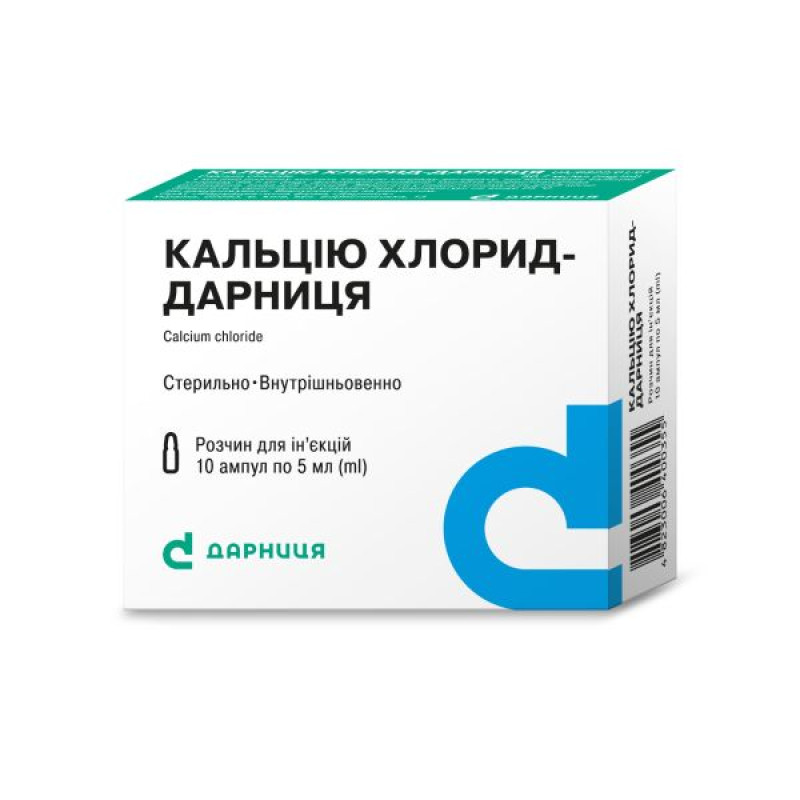
Calcium Chloride-Darnitsa injection solution is used for the following indications:
cases of hypocalcemia requiring a rapid increase in the concentration of calcium ions in the blood plasma (tetany in case of functional insufficiency of the parathyroid gland, tetany in case of vitamin D deficiency, hypocalcemia in case of exchange transfusion and infusion of citrated blood, alkalosis); as part of complex therapy for acute lead colic; cases of magnesium intoxication occurring with magnesium overdose; hyperkalemia registered on the ECG as a violation of cardiac function.
Composition
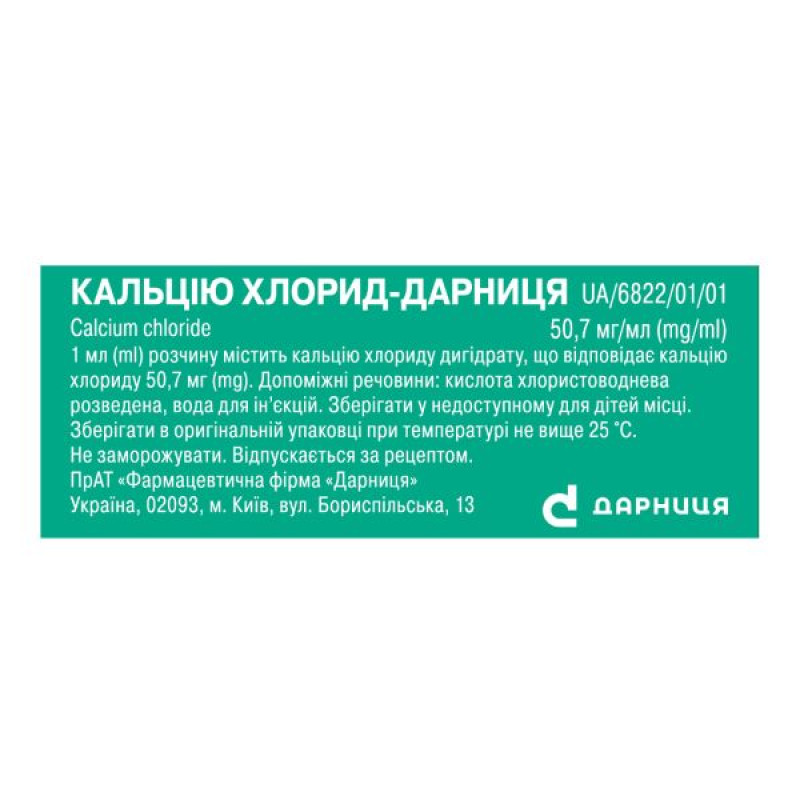
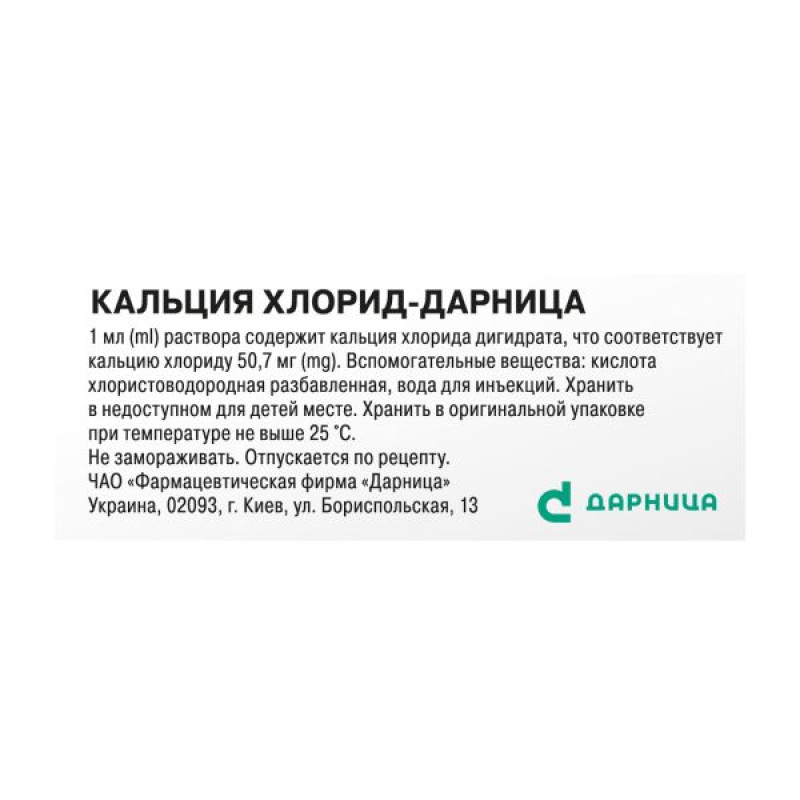
The active substance is calcium chloride (1 ml of solution contains 100 mg of calcium chloride hexahydrate (calculated as calcium chloride - 50.7 mg)).
Excipients: diluted hydrochloric acid, water for injections.
Contraindication
hypersensitivity to the components of the drug; hypercalcemia; severe hypercalciuria; nephrourolithiasis (calcium); severe renal failure; sarcoidosis; hypercoagulation; tendency to thrombus formation; severe atherosclerosis with arterial occlusion phenomena; ventricular fibrillation; asystole and electromechanical dissociations; taking digitalis preparations; simultaneous use with ceftriaxone.
Method of application
Calcium chloride is administered intravenously by jet (very slowly) and intravenously by drip (slowly).
Adults
Intravenous jet injection: 5 ml of a 10% solution is administered at a rate of 1 ml/minute.
Intravenous drip administration: dilute 5-10 ml of a 10% solution of the drug in 100-200 ml of 0.9% sodium chloride solution or 5% glucose solution, administer at a rate of 6-8 drops/minute.
Exchange transfusion and citrate blood transfusion: adults and children 30 mg (0.3 ml) for every 100 ml of blood.
Tetany: 10 ml of a 10% solution (1 g) over 10-30 minutes, repeat after 6 hours if necessary.
Hypocalcemia: 500 mg to 1 g (5-10 ml) at intervals of 1 to 3 days, depending on the patient's response or plasma calcium level. If necessary, a second dose may be administered.
Magnesium intoxication: 500 mg (5 ml) administered rapidly. Administration is carried out under the supervision of a physician and monitoring of the patient's condition before administering subsequent doses.
Hyperkalemia, registered on the ECG, as a violation of cardiac function: the dose should be selected individually, depending on the patient's condition, which should be constantly monitored using a cardiogram.
Doses for elderly patients are the same as those for adults.
Children
Hypocalcemia: administered slowly, at a rate of up to 0.5 ml/minute, at a dose of 10-20 mg/kg (0.1-0.2 ml/kg body weight), repeated every 4-6 hours if necessary.
Tetany: 10 mg/kg (0.1 ml/kg body weight) over 5-10 minutes, repeated after 6 hours if necessary or continued as an infusion. The maximum daily dose for children (regardless of age) is 10 ml (1000 mg).
Application features
Pregnant women
Adequate and strictly controlled studies in pregnant women on the safety and efficacy of the drug have not been conducted. Use during pregnancy is possible only if the benefit to the mother outweighs the potential risk to the fetus.
The drug can be used during breastfeeding.
Drivers
During treatment with the drug, driving and working with other mechanisms are contraindicated.
Overdose
Symptoms of hypercalcemia: weakness, anorexia, abdominal pain, vomiting, nausea, constipation, polydipsia, polyuria, increased fatigue, irritability, malaise, depression, dehydration, possible heart rhythm disturbances, tachycardia, possible sharp decrease in blood pressure and arterial hypertension, muscle pain, arthralgia, coma.
Treatment: in case of a slight overdose (serum calcium concentration - 2.6-2.9 mmol / l), the administration is stopped and other calcium drugs are canceled. In case of severe overdose (serum calcium concentration more than 2.9 mmol / l), parenterally administer calcitonin at a dose of 5-10 IU / kg of body weight per day (diluting it in 500 ml of 0.9% sodium chloride solution), intravenously drip for 6 hours. Intravenous jet slow administration 2-4 times a day is possible. Non-thiazide diuretics are used; the concentration of potassium and magnesium in serum is monitored, if necessary, potassium and magnesium drugs are administered; the function of the cardiovascular system is monitored, beta-blockers are administered to prevent arrhythmias. If necessary, hemodialysis is performed.
Side effects
From the sensory organs: taste of chalk in the mouth.
From the side of metabolism: hypercalcemia.
Psychiatric: depression.
Cardiovascular system: moderate and short-term decrease in blood pressure, bradycardia, arrhythmia, arterial hypertension, venous thrombosis. With excessively rapid administration - ventricular fibrillation.
On the part of the immune system: a feeling of heat, tingling first in the oral cavity and then throughout the body, facial flushing, allergic reactions, urticaria.
Storage conditions
Store in the original packaging at a temperature not exceeding 25 °C, out of the reach of children. Do not freeze.
Shelf life - 5 years.