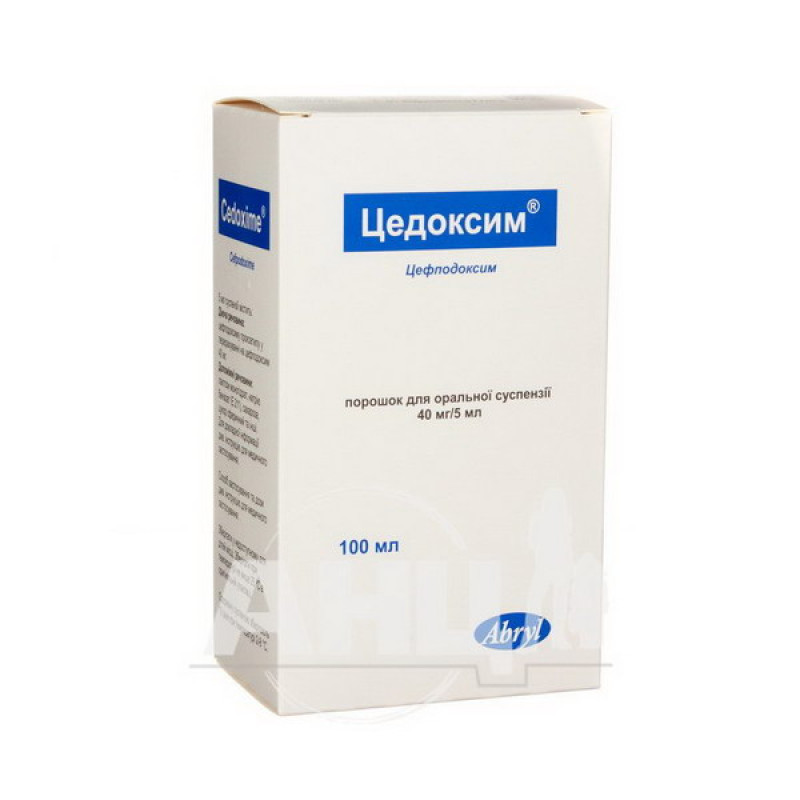
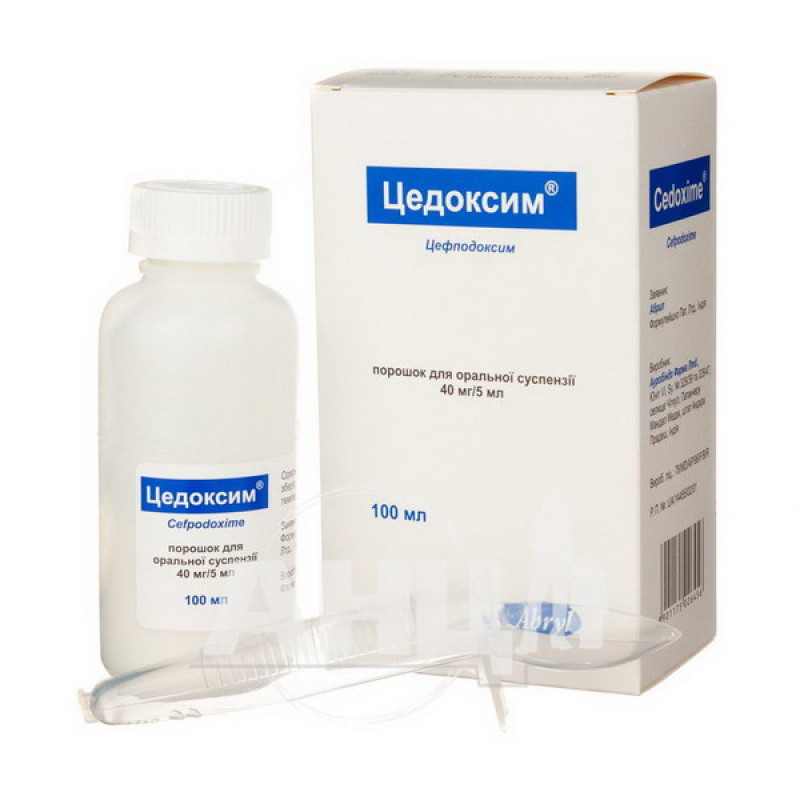
Instructions for use: Cedoxim powder for oral suspension 40 mg/5 ml bottle 100 ml
Composition
active ingredient: cefpodoxime;
5 ml of suspension contains cefpodoxime proxetil equivalent to cefpodoxime 40 mg;
excipients: lactose monohydrate, corn starch, croscarmellose sodium, yellow iron oxide (E 172), low-substituted hydroxypropylcellulose, dispersible cellulose*, colloidal anhydrous silicon dioxide, anhydrous citric acid, sodium citrate, sodium benzoate (E 211), Banana dry flavor 501392TDI0991**, sucrose.
* Dispersing cellulose: sodium carboxymethylcellulose – microcrystalline cellulose.
** Banana dry flavor additive 501392TDI0991: spherical sugar, maltodextrin, natural banana flavor, medium chain triglycerides, silicon dioxide, lecithin.
Dosage form
Powder for oral suspension.
Main physicochemical properties:
for dry powder: granular powder of almost white color.
For the prepared suspension: an almost white suspension with a banana odor.
Pharmacotherapeutic group
Antibacterials for systemic use. Other β-lactam antibiotics. Third generation cephalosporins. ATX code J01D D13.
Pharmacological properties
Pharmacodynamics.
Cedoxim® is a third-generation β-lactam antibiotic for oral administration. Its bactericidal effect is due to the inhibition of the synthesis of components of the bacterial wall of microorganisms. The drug is active against many gram-positive, gram-negative, aerobic and anaerobic microorganisms.
The spectrum of action of cefpodoxime covers the following microorganisms:
sensitive gram-positive bacteria – Streptococcus pneumoniae, streptococci of group A (S. pyogenes), group B (S. agalactiae), groups C, F and G, as well as S. mitis, S. sanguis, S. salivarius and Corynebacterium diphtheriae;
sensitive gram-negative bacteria – Haemophilus influenzae, Haemophilus parainfluenzae, Moraxella (Branhamella) catarrhalis (strains producing and not producing b-lactamase), Neisseria meningitidis, Neisseria gonorrhoeae, Escherichia coli, Klebsiella spp. (K. pneumoniae; K. oxytoca), Proteus mirabilis;
moderately sensitive bacteria – methicillin-sensitive staphylococci, strains that produce and do not produce penicillinase (S. aureus and S. epidermidis).
The following bacteria are resistant to cefpodoxime, as well as to other cephalosporins: enterococci, methicillin-resistant staphylococci (S. aureus and S. epidermidis), Staphylococcus saprophyticus, Pseudomonas aeruginosa and Pseudomonas spp., Clostridium difficile, Bacteroides fragilis.
Pharmacokinetics.
The active substance of the drug is absorbed in the small intestine and hydrolyzed to the active metabolite cefpodoxime. The maximum concentration in the blood plasma is reached within 2-4 hours after taking a single dose. Cefpodoxime binds to blood plasma proteins (mainly albumin), the connection is unsaturated. The minimum inhibitory concentration (MIC) of cefpodoxime for most pathogens is observed in the lung parenchyma, bronchial mucosa, pleural fluid, tonsils, interstitial fluid and prostate secretion.
It penetrates well into the kidney tissue. Within 12 hours after taking a single dose, MIC90 is achieved against most pathogens of kidney and urinary tract infections. It is excreted mainly in the urine, the half-life is about 2.4 hours.
Indication
Infections caused by cefpodoxime-sensitive pathogens:
- ENT organs (including acute otitis media, sinusitis, tonsillitis, pharyngitis); the drug should be prescribed for the treatment of chronic or recurrent infections, as well as in cases of known or suspected insensitivity of the pathogen to widely used antibiotics;
- respiratory tract (including pneumonia, acute bronchitis or bronchiolitis complicated by bacterial superinfection);
- uncomplicated infections of the upper and lower urinary tract (including acute pyelonephritis and cystitis);
- skin and soft tissues (abscesses, cellulitis, infected wounds, boils, folliculitis, paronychia, carbuncles and ulcers).
Contraindication
Hypersensitivity to cephalosporin, penicillin or any component of the drug. Hereditary fructose intolerance or sucrase-isomaltase insufficiency.
Interaction with other medicinal products and other types of interactions
Concomitant administration of high doses of antacids (sodium bicarbonate and aluminum hydroxide) or histamine H2-receptor blockers reduces the extent of absorption by 27-32% and the maximum concentration by 24-42%. Oral anticholinesterase agents increase the time to maximum concentration by 47%, but do not affect the extent of absorption. If necessary, use with ranitidine, the drug should be taken 2-3 hours after taking ranitidine.
Cephalosporins potentially enhance the anticoagulant effect of coumarins and reduce the effect of estrogens.
The bioavailability of cefpodoxime is increased when taken with food.
Concomitant use of the drug with loop diuretics may increase nephrotoxicity. It is recommended to conduct careful monitoring of renal function if Cedoxim® is prescribed simultaneously with drugs that have a nephrotoxic effect. Plasma levels of cefpodoxime are increased if the drug is prescribed with probenecid.
Application features
Hypersensitivity reactions.
Due to cross-hypersensitivity, prior to initiating treatment, it should be determined whether the patient has a history of severe hypersensitivity reactions to cephalosporin or penicillin antibiotics. If an allergic reaction to cefpodoxime develops, the drug should be discontinued.
Allergic reactions (especially anaphylaxis) observed with the use of β-lactam antibiotics can be severe and, in rare cases, fatal (see section "Adverse reactions").
Spectrum of antibacterial activity.
Cefpodoxime is not the main antibiotic in the treatment of staphylococcal pneumonia and should not be used in the treatment of atypical pneumonia caused by bacteria such as Legionella, Mycoplasma and Chlamydia.
Effect on kidney function.
Patients with renal insufficiency should adjust the dosage regimen depending on the creatinine clearance (recommended doses are given in the table below). When using the drug Cedoxim® in combination with aminoglycosides or strong diuretics, renal function may deteriorate. It is recommended to monitor renal function during treatment.
Colitis/overgrowth of non-susceptible microorganisms.
Gastrointestinal side effects (e.g. vomiting, nausea, abdominal pain) may occur. Antibiotics should always be prescribed with caution in patients with gastrointestinal diseases, especially colitis.
During treatment with cefpodoxime and other broad-spectrum antibiotics, intestinal microflora imbalance may result in diarrhea, colitis, including pseudomembranous colitis caused by Clostridium difficile toxin. These adverse reactions, which may occur more frequently in patients treated with high doses of cefpodoxime for a long time, should be considered as potentially serious.
Clostridium difficile testing should be performed. If colitis is suspected, the drug should be discontinued immediately. The diagnosis should be confirmed by sigmoidoscopy and, if clinically indicated, another antibiotic (vancomycin) should be prescribed. Drugs that cause fecal impaction should be avoided.
Prolonged use of cefpodoxime may lead to overgrowth of non-susceptible organisms, including disruption of the normal intestinal flora, which in turn may lead to overgrowth of Candida and development of oral candidiasis (see section 4.8). If superinfections occur, the patient should be evaluated and appropriate treatment should be initiated.
Effect on the blood system.
When using β-lactam antibiotics, neutropenia and agranulocytosis may develop, especially with prolonged use of antibiotics. If neutropenia develops, treatment with Cedoxim® should be discontinued.
Impact on serological test results.
When using cefpodoxime, the Coombs test may give false positive results. It is also possible to reduce hemoglobin levels, very rarely, hemolytic anemia is possible.
Use during pregnancy or breastfeeding
The drug is intended for use in children.
Ability to influence reaction speed when driving vehicles or other mechanisms
The drug is intended for use in children.
Method of administration and doses
Cedoxim® suspension is intended for use in pediatrics. The prepared suspension should be taken orally with food to enhance absorption.
Children aged 5 months to 12 years should be prescribed the drug at a dose of 10 mg/kg of body weight per day (maximum daily dose – 400 mg), which should be administered in 2 doses with an interval of 12 hours (maximum single dose – 200 mg). The duration of treatment depends on the severity of the disease and is determined individually.
Liver dysfunction.
There is no need to change doses for children with hepatic insufficiency.
Kidney dysfunction.
There is no need to change the dose of Cedoxim® if the creatinine clearance is 40 ml/min.
If the creatinine concentration is below 40 ml/min, pharmacokinetic studies indicate an increase in the half-life and maximum plasma concentration, so the dose of the drug should be adjusted.
Table 1
| Creatinine clearance (ml/min) | Recommended dose |
| > 40 | no need to change the dose |
| 39-10 | calculated based on body weight, a single dose every 24 hours |
| < 10 | calculated based on body weight, a single dose every 48 hours |
Patients on hemodialysis are prescribed a single dose calculated based on body weight after each dialysis session.
To prepare the suspension, invert the vial and shake vigorously to loosen the powder, add boiled water cooled to room temperature in 2 doses to the line on the vial (label), shaking vigorously each time, until a homogeneous suspension is formed, the suspension can be taken no earlier than 5 minutes after preparation. The resulting suspension is stored for 10 days at a temperature of 2-8 ° C in the refrigerator. Before each dose, the finished suspension must be shaken thoroughly.
Children.
The drug is prescribed for children aged 5 months to 12 years.
Overdose
Symptoms: nausea, vomiting, abdominal pain, diarrhea. In case of overdose, especially in patients with renal insufficiency, encephalopathy may occur. Cases of encephalopathy are usually reversible at low levels of cefpodoxime in the blood plasma.
Treatment: Hemodialysis, peritoneal dialysis. Symptomatic therapy.
Adverse reactions
From the blood system: eosinophilia; leukopenia, hemorrhages, neutropenia, thrombocytopenia, thrombocytosis, positive Coombs test, agranulocytosis, serum sickness, decreased hematocrit, decreased hemoglobin concentration, hemolytic anemia, prolonged thrombin and prothrombin time, leukocytosis, lymphopenia, lymphocytosis.
Immune system disorders: hypersensitivity, anaphylactic reactions, angioedema.
Metabolic: dehydration, gout, peripheral edema, weight gain.
Musculoskeletal system: myalgia, arthralgia.
Nervous system: cephalalgia, dizziness, unsteadiness of gait, headache, weakness, insomnia, drowsiness, sleep disturbances, neurosis, irritability, nervousness, anxiety, unusual dreams, blurred vision, confusion, nightmares, paresthesia.
Respiratory system: asthma, bronchitis, cough, nosebleeds, sneezing, rhinitis, wheezing, shortness of breath, bronchospasm, sinusitis, pleural effusion, pneumonia.
From the digestive tract: abdominal pain, nausea; diarrhea, thirst, tenesmus, bloating, vomiting, dyspepsia, dry mouth, decreased appetite, feeling of pressure/fullness in the stomach, constipation, candidal stomatitis, toothache, anorexia, belching, gastritis, mouth ulcers, pseudomembranous colitis.
On the part of the hepatobiliary system: cholestatic liver damage, increased liver function tests AST, ALT, alkaline phosphatase, bilirubin.
Skin and subcutaneous tissue disorders: rash, redness, itching, urticaria, increased sweating, macular rash, fungal dermatitis, desquamation, dry skin, hair loss, vesicular rash, solar erythema, purpura, bullous reactions (including Stevens-Johnson syndrome), toxic epidermal necrolysis, erythema multiforme.
From the urinary system: hematuria, urinary tract infections, metrorrhagia, dysuria, frequent urination, nocturia, male genital infections, proteinuria, vaginal pain, vaginal candidiasis.
In isolated cases, renal dysfunction has been observed.
Cardiovascular system: congestive heart failure, palpitations, vasodilation, hematoma, migraine, hypertension or hypotension.
From the organs of vision: eye irritation.
From the auditory system: tinnitus, vertigo.
General disorders: discomfort, fatigue, asthenia, chills, drug fever, chest pain (pain may radiate to the lower back), fever, generalized pain, localized edema, localized pain, taste disturbance, abscess, allergic reaction, facial edema, candidiasis, bacterial infections, parasitic infections.
Biochemical tests: hyper- or hypoglycemia, hypoalbuminemia, hypoproteinemia, hyperkalemia, hyponatremia.
Laboratory indicators: increased urea and creatinine levels.
Expiration date
2 years.
Storage conditions
Store at a temperature not exceeding 25 °C in the original packaging.
Keep out of reach of children.
Packaging
Powder in a 100 ml bottle; 1 bottle in a cardboard box together with a graduated measuring spoon.
Vacation category
According to the recipe.
Producer
Aurobindo Pharma Ltd.
Location of the manufacturer and address of its place of business
Unit VI, Sy. No. 329/39 and 329/47, Village Chitkul, Patancheru Mandal Medak, Andhra Pradesh, India.
Applicant
Abril Formulations Pvt. Ltd.