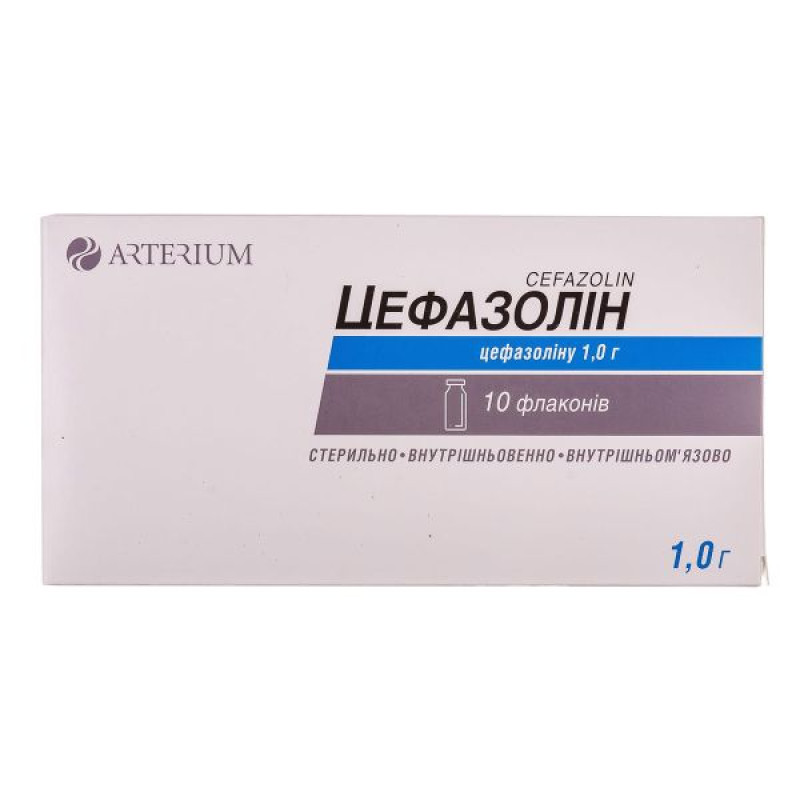
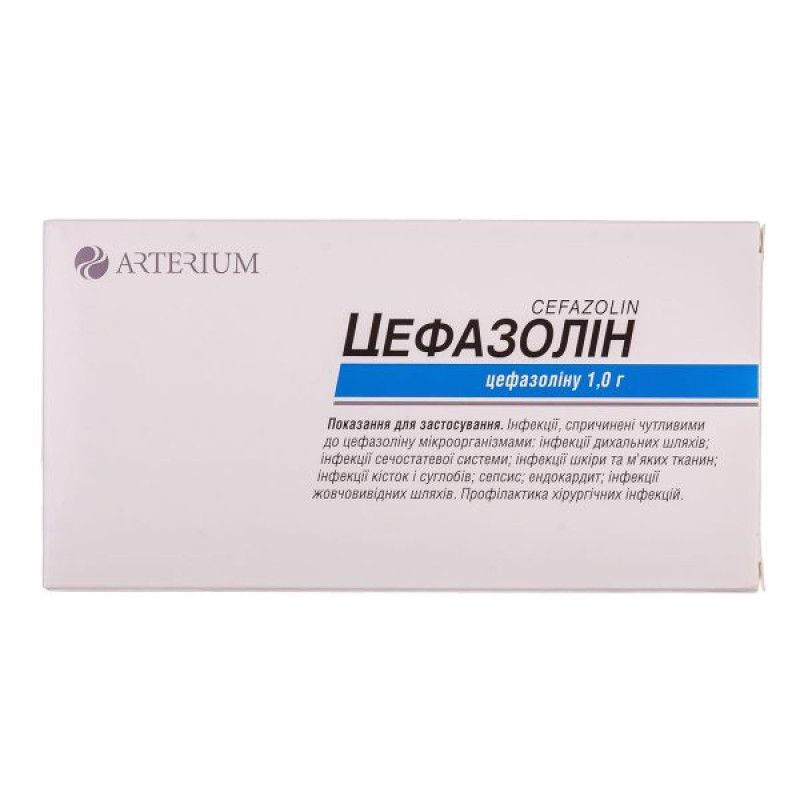
Instructions Cefazolin powder for solution for injection 1 g bottle No. 10
Composition
active ingredient: cefazolin;
1 bottle contains cefazolin sodium salt sterile in terms of cefazolin – 0.5 g or 1 g.
Dosage form
Powder for solution for injection.
Main physicochemical properties: white or almost white powder, very hygroscopic.
Pharmacotherapeutic group
Antimicrobials for systemic use, other β-lactam antibiotics. First-generation cephalosporins. ATC code J01D B04.
Pharmacological properties
Pharmacodynamics.
Cefazolin is a semi-synthetic antibiotic of the cephalosporin group of the I generation for parenteral administration. The mechanism of antimicrobial action is associated with inhibition of the transpeptidase enzyme, blockade of mucopeptide biosynthesis in the bacterial cell wall. The drug has a broad spectrum of bactericidal action, effective against most gram-negative and gram-positive microorganisms, including those that form and do not form penicillinase. Highly active against most gram-negative microorganisms: Escherichia coli, Proteus mirabilis, Salmonella spp., Shigella spp., Klebsiella spp. (including Klebsiella pneumoniae), Enterobacter spp., Haemophilus influenzae, Neisseria gonorrhoeae, Neisseria meningitidis, Treponema spp., Leptospira spp. Active against gram-positive microorganisms, in particular Staphylococcus spp., Streptococcus spp. (including Streptococcus pneumoniae), Corynebacterium diphtheriae, Bacillus anthracis. Most indole-positive strains of Proteus (Proteus vulgaris), as well as Enterobacter cloacae, Morganella morganii, Providencia rettgeri, Serratia spp., Pseudomonas spp., Acinetobacter spp., and anaerobic cocci Peptococcus spp., Peptostreptococcus spp., including B. fragilis, are resistant to cefazolin. It does not act on rickettsiae, viruses, fungi, protozoa.
Pharmacokinetics.
Cefazolin is rapidly absorbed after intramuscular administration, the peak concentration in blood plasma is reached 60 minutes after injection and is 37–64 μg/ml. With intravenous administration, the maximum concentration of the drug is determined immediately after administration and is 185 μg/ml. The bactericidal concentration in the blood is maintained for 8–12 hours. It penetrates well into tissues and body fluids and is found in therapeutic concentrations in mucous membranes, sputum, bone tissue, cerebrospinal fluid, penetrates the placental barrier and in very low concentrations penetrates into breast milk. 90% of the drug binds to serum proteins. It is excreted from the body with urine in an unchanged state (approximately 90%). The drug is metabolized in a small amount in the liver and excreted in bile. The half-life is about 2 hours after intramuscular administration, 1.8 hours after intravenous administration. In cases of impaired renal function, the half-life is 3–42 hours.
Indication
Infections caused by microorganisms sensitive to cefazolin:
respiratory tract infections;
genitourinary system infections;
skin and soft tissue infections;
bone and joint infections;
sepsis;
endocarditis;
biliary tract infections.
Prevention of surgical infections.
Contraindication
Hypersensitivity to cephalosporin antibiotics or to other β-lactam antibiotics.
Interaction with other medicinal products and other types of interactions
Antibiotics.
An antagonistic effect with antibiotics that have a bacteriostatic effect (e.g. tetracyclines, sulfonamides, erythromycin, chloramphenicol) has been observed in vitro, so the possibility of such an effect should be considered when combining cefazolin with these antibiotics.
Like other antibiotics, cefazolin may reduce the therapeutic effect of BCG vaccine, typhoid vaccine, so this combination is not recommended. An interval of at least 24 hours should be observed between the last dose of the antibiotic and the live vaccine.
Probenecid. With simultaneous use of probenecid, the renal clearance of cefazolin decreases, which contributes to its cumulation and a prolonged increase in the concentration of the drug in the blood serum.
Vitamin K. Some antibiotics, such as cefamandole, cefazolin, and cefotetan, may affect vitamin K metabolism, especially in cases of vitamin K deficiency. Supplemental vitamin K may be necessary in such situations.
Anticoagulants. Cephalosporins may very rarely cause coagulation disorders. Coagulation parameters should be monitored when high doses of oral anticoagulants (e.g. warfarin or heparin) are used concomitantly. There have been a number of reports of increased anticoagulant effects in patients receiving antibiotics. Risk factors include the presence of infection or inflammation, advanced age and poor general health of the patient. These disorders are more common with antibiotics such as fluoroquinolones, macrolides, cotrimoxazole and some cephalosporins.
Ethanol: Disulfiram-like reactions are possible.
Oral contraceptives: Cefazolin may reduce the effectiveness of oral contraceptives. For this reason, additional methods of contraception are recommended during treatment with cefazolin.
Application features
Increased sensitivity.
Before starting treatment, ensure that the patient has no history of hypersensitivity reactions to cephalosporins, penicillins or other drugs. Cefazolin should be administered with caution to patients prone to allergic reactions. There is a possibility of cross-allergic reactions between penicillins and cephalosporins. As with other beta-lactam antibacterial agents, severe hypersensitivity reactions, in some cases fatal, have been reported. In the event of severe hypersensitivity reactions, cefazolin should be discontinued immediately and appropriate treatment should be initiated. Before starting therapy, it should be established whether the patient has a history of severe hypersensitivity reactions to cefazolin, other cephalosporins or other beta-lactam antibiotics. Caution should be exercised when prescribing cefazolin to patients who have previously shown hypersensitivity reactions to other beta-lactam antibiotics.
Pseudomembranous colitis associated with antibiotic use.
If a patient has severe or persistent diarrhea, the possibility of antibiotic-associated pseudomembranous colitis should be considered. Pseudomembranous colitis can range in severity from mild to life-threatening, and it is important to consider this diagnosis in all patients who develop diarrhea during or after the use of cefazolin. If severe or bloody diarrhea occurs, cefazolin should be discontinued and appropriate therapy instituted.
Taking drugs that inhibit peristalsis is contraindicated. In the absence of necessary treatment, toxic megacolon, peritonitis, and shock may develop.
Kidney dysfunction.
For patients with renal insufficiency, the dose and/or the interval between administrations of the drug may be adjusted depending on the degree of renal impairment. When prescribing cefazolin to patients with renal impairment, the daily dose should be reduced or the interval between administrations of the drug should be increased to avoid toxic effects.
In renal insufficiency with a glomerular filtration rate of up to 55 ml/min, the possibility of cefazolin accumulation should be considered. Although cefazolin rarely causes renal dysfunction, it is recommended to assess renal function, especially in critically ill patients receiving maximum therapeutic doses and in patients who are also taking other nephrotoxic drugs such as aminoglycosides or potent diuretics (e.g. furosemide). The use of high doses of cefazolin in patients with renal insufficiency is associated with a risk of convulsions.
Intrathecal use
The drug is not intended for intrathecal administration. Serious central nervous system toxicity (including convulsions) has been reported following intrathecal administration of cefazolin.
Bacterial resistance and superinfection
Prolonged use of cefazolin may result in the growth of resistant bacteria. Therefore, the patient should be closely monitored for the development of superinfection. If superinfection develops, appropriate treatment should be instituted.
Blood clotting disorders
Blood coagulation disorders may occur in isolated cases during treatment with cefazolin. The risk of these disorders is greater in patients with vitamin K deficiency or in the presence of other factors leading to coagulation disorders (parenteral nutrition, nutritional deficiency, impaired liver and kidney function, thrombocytopenia). Blood coagulation disorders may also be associated with concomitant diseases (e.g. hemophilia, gastric or duodenal ulcer) that cause or increase bleeding. In patients with the above diseases, blood coagulation should be monitored. If blood coagulation parameters deteriorate, vitamin K (10 mg per week) should be prescribed.
Laboratory test results
Laboratory tests for glucose in the urine using Benedict's or Fehling's solution may be falsely positive in patients receiving cefazolin. Cefazolin does not affect the results of enzymatic tests used to measure glucose in the urine. Direct and indirect Coombs tests may also be falsely positive, for example in newborns whose mothers have received cephalosporins.
Each 0.5 g/1 g vial contains 24.13 mg/48.27 mg sodium, respectively. This should be taken into consideration if the patient is on a controlled sodium diet.
Use during pregnancy or breastfeeding
Animal studies have not shown any effect of cefazolin on fertility.
Pregnancy: Animal studies do not indicate direct or indirect reproductive toxicity.
Breastfeeding. Cefazolin is excreted in small amounts in breast milk, so side effects in the infant are not expected. If the infant develops diarrhea or a Candida fungal infection, breastfeeding should be discontinued or treatment with cefazolin should be discontinued.
The ability to influence the reaction speed when driving or working with other mechanisms
Cefazolin does not affect the ability to drive or use machines. However, some side effects (see section "Adverse reactions") may affect the ability to drive and use machines.
Method of administration and doses
Cefazolin should be administered intramuscularly and intravenously (drip and jet). Cefazolin should not be administered intrathecally.
Dosage. The average daily dose of cefazolin for adults is usually 1–4 g, the maximum daily dose is 6 g. A single dose for adults for infections caused by gram-positive microorganisms is 0.25–0.5 g every 8 hours. For moderate respiratory tract infections caused by pneumococci and infections of the genitourinary system, the drug is prescribed 1 g every 12 hours. For pneumococcal pneumonia, 0.5 g every 12 hours. For diseases caused by sensitive gram-negative microorganisms, the drug is prescribed 0.5–1 g every 6–8 hours. For severe infectious diseases (sepsis, endocarditis, peritonitis, destructive pneumonia, acute hematogenous osteomyelitis, complicated urological infections), 1–1.5 g is prescribed with an interval between administrations of 6–8 hours.
For the prevention of postoperative infectious complications in adults, it is recommended to administer cefazolin intramuscularly or intravenously:
at a dose of 1 g 0.5–1 hour before the start of surgery;
for long operations (2 hours or more) - an additional 0.5–1 g during the operation;
after surgery - at a dose of 0.5–1 g every 6–8 hours for the first 24 hours.
In some cases (e.g. open heart surgery, joint replacement), prophylactic use of cefazolin may continue for 3–5 days after surgery.
Children from 1 month of age. Prescribe the drug at a dose of 25–50 mg/kg per day, divided into 3–4 injections; in severe infections, administer 90–100 mg/kg per day (maximum dose). The average duration of treatment with the drug is 7–10 days.
For adult patients with renal impairment, the dosage regimen should be based on creatinine clearance. After a loading dose appropriate to the severity of the infection, the following recommendations may be used. For creatinine clearance:
55 ml/min and above - dose adjustment is not required;
35–54 ml/min — the single dose does not change, but the interval between administrations should be at least 8 hours;
11–34 ml/min — the single standard dose should be reduced by 2 times, the interval between administrations is 12 hours;
less than 10 ml/min - ¼ of the therapeutic dose should be administered every 18–24 hours.
Elderly patients: dosage as in adults (provided that kidney function is normal).
In case of impaired renal function in children. Initially, the usual single dose of the drug is administered, then subsequent doses are adjusted taking into account the degree of renal failure. Children with moderate renal dysfunction (creatinine clearance 40–70 ml/min) are prescribed 60% of the daily dose of the drug 2 times a day every 12 hours; with creatinine clearance 20–40 ml/min - 25% of the daily dose 2 times a day every 12 hours; with significant renal dysfunction (creatinine clearance 5–20 ml/min) - 10% of the average daily dose every 24 hours. All recommended doses are prescribed after the initial loading dose. The average duration of treatment is 7–10 days.
Method of administration.
The drug Cefazolin is a sterile powder for solution for injection, so it should be reconstituted before administration. The drug Cefazolin is easily soluble in the following solvents: water for injection, 0.5% lidocaine solution, 0.9% sodium chloride solution, Ringer's solution.
It is recommended to use freshly prepared solutions. After dilution with the above solvents, a clear solution of pale yellow to yellow color is formed.
Preparation of solutions for injections and infusions.
For intramuscular injection. Dissolve 1 g of Cefazolin in 4 ml of one of the following compatible solvents, shaking thoroughly until complete dissolution:
water for injection;
0.9% sodium chloride solution;
0.5% lidocaine solution.
Inject deeply into the upper outer quadrant of the gluteus maximus muscle.
For intravenous jet administration.
Dilute Cefazolin in one of the following compatible solvents:
water for injection;
0.9% sodium chloride solution.
Lidocaine solution should not be administered intravenously.
For 1 g of cefazolin, 4 ml of compatible diluent is used. Cefazolin should be administered slowly over approximately 3–5 minutes. The solution should be administered by intravenous injection directly into a vein or infusion line where a compatible infusion solution is being administered.
If 2 g of Cefazolin is required, intravenous administration over approximately 30–60 minutes is recommended.
For intravenous drip administration.
Cefazolin should be pre-dissolved in one of the compatible solvents for intravenous injection.
Further dilutions should be made in one of the following compatible solvents:
0.9% sodium chloride solution;
Ringer's solution;
water for injection.
Dilution of the drug for intravenous infusion:
| Reconstitution | Dilution |
| The minimum volume of solvent in which the contents of the vial are diluted | Volume of solvent for intravenous infusion | |
| 1 g | 4 ml | 50–100 ml |
Add the recommended volume of diluent and shake thoroughly until the contents of the vial are completely dissolved.
Only freshly prepared solutions should be used for intravenous infusions. The solution should be inspected before use. Only clear solutions, free of particles, should be used.
The solution is intended for single use. Any unused solution should be discarded.
Children
Cefazolin should not be used in premature infants or newborns under 1 month of age, as there is currently insufficient data on the use of the drug in these age groups.
Children
The drug should not be prescribed to children under 1 month of age and premature babies.
Overdose
Symptoms: dizziness, paresthesias and headache. Allergic reactions may occur in patients with chronic renal failure. Neurotoxic effects are possible, with increased convulsive readiness, generalized convulsions, vomiting and tachycardia. Laboratory abnormalities such as increased creatinine, blood urea nitrogen, liver enzymes and bilirubin, positive Coombs test, thrombocytosis/thrombocytopenia, eosinophilia, leukopenia and increased prothrombin time are possible.
Treatment: discontinue use of the drug, if necessary, conduct anticonvulsant, desensitizing therapy. In case of severe overdose, supportive therapy and monitoring of hematological, renal, hepatic functions and blood coagulation system are recommended until the patient's condition stabilizes. The drug is removed from the body by hemodialysis; peritoneal dialysis is less effective.
Side effects
The frequency of adverse reactions is defined as follows: very common (≥ 1/10), common (≥ 1/100 to <1/10), uncommon (≥ 1/1000 to <1/100), rare (≥ 1/10,000 to <1/1000), rare (<1/10,000).
Infections and infestations
Uncommon: oral mycoses.
Rare: genital mycoses, vaginitis. Prolonged use of cefazolin may cause overgrowth of non-susceptible microorganisms. Catarrh.
Blood and lymphatic system disorders
Changes in blood cell counts such as leukopenia, granulocytopenia, neutropenia, thrombocytopenia, leukocytosis, granulocytosis, monocytosis, lymphocytopenia, basophilia and eosinophilia have been observed. These changes are rare and reversible.
Rare: coagulation disorders, bleeding.
On the part of the immune system
Uncommon: fever.
Rare: anaphylactic shock (larynx swelling with narrowing of the airways, rapid heartbeat, shortness of breath, low blood pressure, swollen tongue, anal itching, genital itching, facial swelling).
Metabolic and nutritional disorders
Uncommon: hyperglycemia, hypoglycemia.
Nervous system disorders
Uncommon: convulsions.
Uncommon: dizziness.
Vascular disorders
Uncommon: thrombophlebitis.
Respiratory system disorders
Rare: pleural effusion, shortness of breath or respiratory distress, cough.
Gastrointestinal disorders:
Common: nausea, vomiting, diarrhea.
Uncommon: anorexia.
Rare: pseudomembranous colitis (if diarrhea occurs during antibiotic therapy, appropriate treatment should be initiated immediately).
Liver and biliary tract dysfunction
Rare: transient increases in alanine aminotransferase (ALT), aspartate aminotransferase (AST), alkaline phosphatase, gamma-glutamyltransferase, bilirubin and/or lactate dehydrogenase, transient hepatitis and transient cholestatic jaundice.
Skin and subcutaneous tissue disorders
Common: rash.
Uncommon: erythema, erythema multiforme, urticaria, angioedema.
Rare: toxic epidermal necrolysis, Stevens-Johnson syndrome.
Impaired kidney function and urination
Rare: nephrotoxicity, interstitial nephritis, nephropathy, proteinuria, transient increase in blood urea nitrogen, usually in patients receiving other potentially nephrotoxic drugs.
Reproductive system disorders
Rare: vulvar and vaginal itching.
General disorders and administration site conditions
Common: pain at the injection site, sometimes with induration.
Rare: malaise, fatigue, chest pain. If severe diarrhoea occurs during treatment with cefazolin, a doctor should be consulted, as diarrhoea may be a symptom of a serious condition (pseudomembranous colitis) which requires urgent treatment. Patients should not be allowed to self-medicate to reduce bowel motility.
Prolonged use of cephalosporins may result in overgrowth of nonsusceptible bacteria, especially Enterobacter, Citrobacter, Pseudomonas, Enterococcus, Candida. This may lead to superinfection or potential colonization with resistant bacteria or yeasts.
Increased levels of AST, ALT, blood urea nitrogen and alkaline phosphatase without clinical signs of renal or hepatic damage. Animal data have shown the potential nephrotoxicity of cefazolin. Although this effect has not been demonstrated in humans, the possibility of this effect should be borne in mind, especially in patients receiving high doses for a long period. Interstitial nephritis and nephropathy have been reported in rare cases. Patients who developed these conditions were receiving other concomitant therapy. The effect of cefazolin on the development of interstitial nephritis and other nephropathies has not been established.
The following adverse reactions have been reported: decreased hemoglobin and/or hematocrit, anemia, agranulocytosis, aplastic anemia, pancytopenia, and hemolytic anemia.
The following side effects have been reported during treatment with cephalosporins: obsessive dreams, dizziness, hyperactivity, nervousness or anxiety, insomnia, drowsiness, weakness, hot flashes, blurred vision, confusion, and increased epileptogenic brain activity.
Expiration date
3 years.
Storage conditions
In the original packaging at a temperature not exceeding 25 ° C. Keep out of the reach of children.
Incompatibility
It is undesirable to mix the solution of cefazolin with other drugs in the same syringe or in the same infusion system, especially with antibiotics. To prepare the drug solutions, use the solvents specified in the section "Method of administration and dosage"
Packaging
0.5 g or 1 g in vials; 10 vials with powder in contour cell packaging, 1 contour cell packaging in a pack.
Vacation category
According to the recipe.
Producer
PJSC "Kyivmedpreparat".
Address
Ukraine, 01032, Kyiv, Saksaganskoho St., 139.