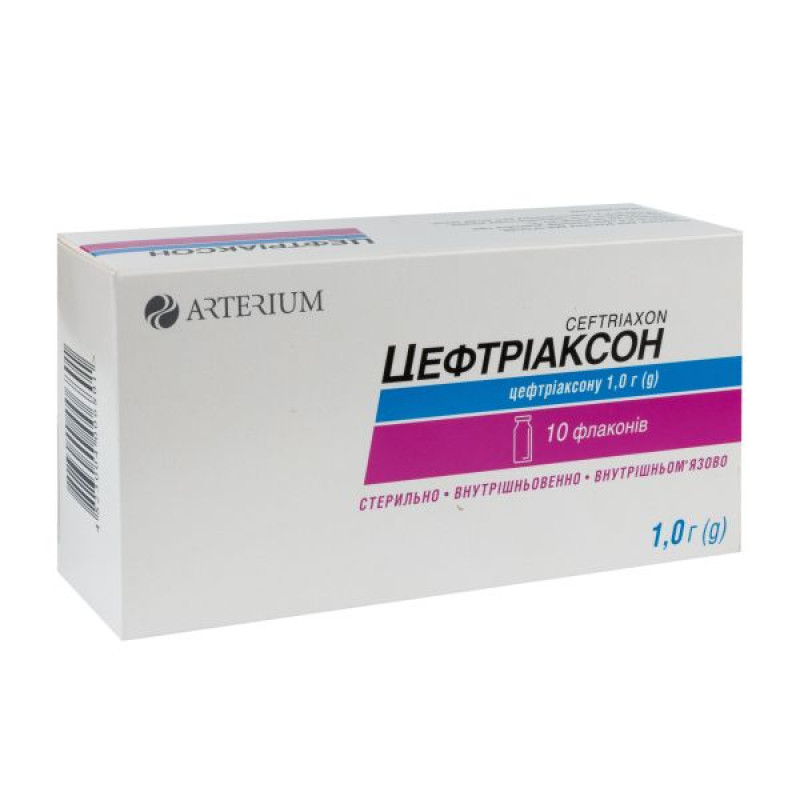
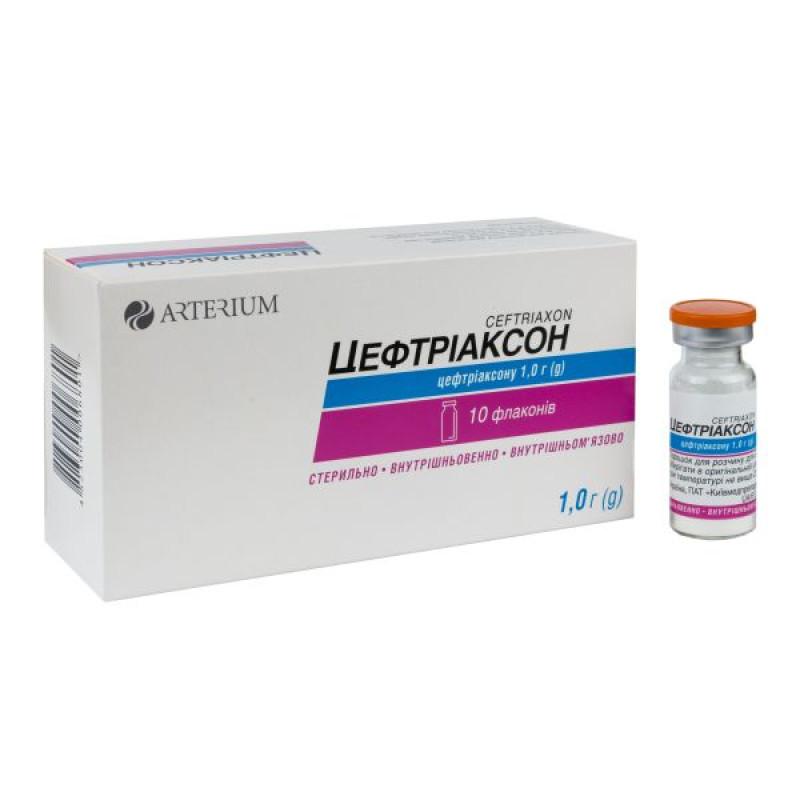
Instructions Ceftriaxone powder for solution for injection 1 g vial No. 10
Composition
active ingredient: ceftriaxone;
1 vial contains ceftriaxone sodium salt sterile equivalent to ceftriaxone 1.0 g.
Dosage form
Powder for solution for injection.
Main physicochemical properties: crystalline powder of almost white or yellowish color, weakly hygroscopic.
Pharmacotherapeutic group
Antibacterials for systemic use. Other beta-lactam antibiotics. Third generation cephalosporins. Ceftriaxone. ATX code J01D D04.
Pharmacological properties
Pharmacodynamics
Ceftriaxone is a third-generation parenteral cephalosporin antibiotic with prolonged action.
Mechanism of action. The bactericidal activity of ceftriaxone is due to inhibition of cell wall synthesis. Ceftriaxone is active in vitro against a wide range of gram-negative and gram-positive microorganisms. Ceftriaxone is characterized by very high resistance to most b-lactamases (both penicillinases and cephalosporinases) of gram-positive and gram-negative bacteria. Ceftriaxone is active against the following microorganisms in vitro and in clinical infections (see section "Indications"):
Gram-positive aerobes. Staphylococcus aureus (methicillin-susceptible), coagulase-negative staphylococci, Streptococcus pyogenes (β-hemolytic, group A), Streptococcus agalactiae (β-hemolytic, group B), β-hemolytic streptococci (groups neither A nor B), Streptococcus viridans, Streptococcus pneumoniae.
Note: Methicillin-resistant Staphylococcus spp. are resistant to cephalosporins, including ceftriaxone. Enterococcus faecalis, Enterococcus faecium, and Listeria monocytogenes are also resistant to ceftriaxone.
Gram-negative aerobes. Acinetobacter lwoffi, Acinetobacter anitratus (mainly A. baumanii)*, Aeromonas hydrophila, Alcaligenes faecalis, Alcaligenes odorans, alkagen-like bacteria, Borrelia burgdorferi, Burkholderia cepacia, Capnocytophaga spp., Citrobacter diversus (including C. amalonaticus), Citrobacter freundii*, Escherichia coli, Enterobacter aerogenes*, Enterobacter cloacae*, Enterobacter spp. (others)*, Haemophilus ducreyi, Haemophilus influenzae, Haemophilus parainfluenzae, Hafnia alvei, Klebsiella oxytoca, Klebsiella pneumoniae**, Moraxella catarrhalis (previously called Branhamella catarrhalis), Moraxella osloensis, Moraxella spp. (others), Morganella morganii, Neisseria gonorrhoeae, Neisseria meningitidis, Pasteurella multocida, Plesiomonas shigelloides, Proteus mirabilis, Proteus penneri*, Proteus vulgaris, Pseudomonas fluorescens*, Pseudomonas spp. (others)*, Providentia rettgeri, Providentia spp. (others), Salmonella typhi, Salmonella spp. (enteritidis group), Serratia marcescens, Serratia spp. (others), Shigella spp., Vibrio spp., Yersinia enterocolitica, Yersinia spp. (others).
*some isolates of these species are resistant to ceftriaxone mainly due to the production of chromosomally encoded β-lactamases.
**some Klebsiella pneumoniae isolates are resistant to ceftriaxone due to the production of a number of plasmid-mediated β-lactamases.
Note: Many of the strains of the above microorganisms, which are multiresistant to antibiotics such as aminopenicillins and ureidopenicillins, first and second generation cephalosporins, and aminoglycosides, are susceptible to ceftriaxone. Treponema pallidum is susceptible to ceftriaxone in vitro and in animal studies. Clinical trials show that ceftriaxone is effective in the treatment of primary and secondary syphilis. With some exceptions, clinical strains of P. aeruginosa are resistant to ceftriaxone.
Anaerobes. Bacteroides spp. (bile-sensitive)*, Clostridium spp. (except C. perfringens group), Fusobacterium nucleatum, Fusobacterium spp. (others), Gaffkia anaerobica (formerly called Peptococcus), Peptostreptococci.
*some isolates of Bacteroides spp. are resistant to ceftriaxone.
Note: Many strains of Bacteroides spp. that produce β-lactamases (including B. fragilis) are resistant to ceftriaxone. Resistant Clostridium difficile.
Susceptibility to ceftriaxone can be determined by the disk method or by serial dilutions on agar or broth using a standard procedure similar to that recommended by the National Committee for Clinical Laboratory Standards (NCCLS). For ceftriaxone, the NCCLS has established the following test criteria:
| Sensitive | Moderately sensitive | Resistant |
Dilution method Inhibitory concentration, mg/l | ≤ 8 | 16-32 | ≥ 64 |
Disk method (disk with 30 mcg ceftriaxone) Diameter of growth retardation zone, mm | ≥ 21 | 20-14 | ≤ 13 |
Ceftriaxone discs should be used to determine the susceptibility of microorganisms, since in vitro studies have shown that ceftriaxone is active against certain strains that are resistant when using discs intended for the entire group of cephalosporins.
Instead of the NCCLS standards, other well-standardized standards, such as DIN and ICS, can be used to determine the sensitivity of microorganisms, allowing an adequate assessment of the level of sensitivity.
Pharmacokinetics
The pharmacokinetics of ceftriaxone are non-linear. All major pharmacokinetic parameters based on total drug concentrations (free and protein-bound ceftriaxone), with the exception of the half-life, are dose-dependent.
Distribution. The volume of distribution of ceftriaxone is 7-12 L. After intravenous administration, ceftriaxone rapidly penetrates into the interstitial fluid, where bactericidal concentrations against sensitive microorganisms are maintained for 24 hours.
After administration at a dose of 1-2 g, ceftriaxone penetrates well into tissues and body fluids. For more than 24 hours, its concentrations far exceed the minimum inhibitory concentrations for most infectious agents in more than 60 tissues and fluids (including the lungs, heart, biliary tract, liver, middle ear and nasal mucosa, bones, as well as cerebrospinal, pleural and synovial fluids, and prostate secretion).
Ceftriaxone is reversibly bound to albumin, with the degree of binding decreasing with increasing concentration, for example, from 95% at a plasma concentration of less than 100 mg/l to 85% at a concentration of 300 mg/l. Due to the lower albumin concentration in tissue fluid, the proportion of free ceftriaxone in it is higher than in plasma.
Ceftriaxone penetrates the inflamed meninges in children, including newborns. The maximum concentration in the cerebrospinal fluid is reached approximately 4 hours after intravenous administration and averages 18 mg/l at doses of 50-100 mg/kg. In bacterial meningitis, the average concentration of ceftriaxone in the cerebrospinal fluid is 17% of the concentration in blood plasma, in aseptic meningitis - 4%. 24 hours after intravenous administration of ceftriaxone at a dose of 50-100 mg/kg, the concentration of ceftriaxone in the cerebrospinal fluid exceeds 1.4 mg/l. In adult patients with meningitis, after administration of a dose of 50 mg/kg, ceftriaxone concentrations in the cerebrospinal fluid are reached within 2-24 hours, which are many times higher than the minimum inhibitory concentrations for the most common pathogens of meningitis.
Ceftriaxone crosses the placental barrier and in small concentrations penetrates into breast milk (3-4% of the concentration in maternal plasma after 4-6 hours).
Metabolism: Ceftriaxone is not subject to systemic metabolism, but is converted to inactive metabolites by the intestinal flora.
Elimination. The total plasma clearance of ceftriaxone is 10-22 ml/min. Renal clearance is 5-12 ml/min. 50-60% of ceftriaxone is excreted unchanged by the kidneys and 40-50% unchanged in the bile. The half-life of ceftriaxone in adults is about 8 hours.
Pharmacokinetics in special populations. In newborns, approximately 70% of the dose is excreted by the kidneys. In children of the first 8 days of life, as well as in patients over 75 years of age, the half-life is on average 2-3 times longer than in young adults.
In patients with mild to moderate renal and hepatic impairment, the pharmacokinetics of ceftriaxone are not significantly altered, with only a slight increase in plasma half-life. If only renal function is impaired, biliary excretion increases, and if hepatic function is impaired, renal excretion increases.
Indication
Ceftriaxone is used to treat infections whose pathogens are sensitive to ceftriaxone:
respiratory tract infections, especially pneumonia, as well as ear, throat and nose infections; abdominal infections (peritonitis, biliary tract and gastrointestinal tract infections); kidney and urinary tract infections; genital infections, including gonorrhea; sepsis; bone, joint, soft tissue, skin and wound infections; infections in patients with weakened immune systems; meningitis; disseminated Lyme disease (stages II and III);
Perioperative prophylaxis of infections during surgical interventions on the gastrointestinal tract, biliary tract, urinary tract and during gynecological procedures, but only in cases of potential or known contamination.
When prescribing ceftriaxone, official recommendations on antibiotic therapy and, in particular, recommendations on the prevention of antibiotic resistance should be followed.
Contraindication
Hypersensitivity to ceftriaxone or any other cephalosporin. History of severe hypersensitivity reactions (e.g. anaphylactic reactions) to any other type of beta-lactam antibacterial agent (penicillins, monobactams and carbapenems).
Ceftriaxone is contraindicated:
premature newborns aged ≤ 41 weeks, taking into account the term of intrauterine development (gestational age + age after birth)*;
full-term newborns (age ≤ 28 days):
with hyperbilirubinemia, jaundice, hypoalbuminemia, or acidosis, as bilirubin binding is likely to be impaired in these conditions*;
who require (or are expected to require) intravenous calcium preparations or infusions of calcium-containing solutions, as there is a risk of precipitation of ceftriaxone calcium salt (see sections "Special warnings and precautions for use" and "Adverse reactions").
Before intramuscular administration of ceftriaxone, it is essential to exclude contraindications to the use of lidocaine when used as a diluent (see section "Special instructions for use"). See the instructions for medical use of lidocaine, especially contraindications.
Ceftriaxone solutions containing lidocaine should never be administered intravenously.
Interaction with other medicinal products and other types of interactions
Diluents containing calcium, such as Ringer's solution or Hartmann's solution, should not be used to reconstitute ceftriaxone in vials or to further dilute the reconstituted solution for intravenous administration, as a precipitate may form. Precipitates of the calcium salt of ceftriaxone may also form when ceftriaxone is mixed with calcium-containing solutions in the same infusion line. Ceftriaxone should not be administered simultaneously with calcium-containing intravenous solutions, including calcium-containing solutions for long-term infusion, such as parenteral nutrition solutions, through a Y-line. However, in all patients, except neonates, ceftriaxone and calcium-containing solutions may be administered sequentially, one after the other, provided that the line is thoroughly flushed with a compatible fluid between infusions. In vitro studies using adult and neonatal cord blood plasma have shown that neonates are at increased risk of precipitation of ceftriaxone calcium salt (see sections “Method of administration and dosage”, “Contraindications”, “Special precautions for use”, “Adverse reactions”).
Concomitant use of the drug with oral anticoagulants may increase the antivitamin K effect and the risk of bleeding. It is recommended to frequently check the international normalized ratio and adjust the dose of the antivitamin K agent appropriately both during and after ceftriaxone therapy (see section "Adverse reactions").
There is conflicting evidence regarding the potential for increased renal toxicity of aminoglycosides when used with cephalosporins. In such cases, the recommendations for monitoring aminoglycoside levels (and renal function) in clinical practice should be carefully followed.
In an in vitro study of ceftriaxone, antagonism was observed when chloramphenicol was used in combination with ceftriaxone. The clinical significance of this finding is unknown.
There have been no reported cases of interaction between ceftriaxone and oral calcium-containing drugs or between intramuscular ceftriaxone and calcium-containing drugs (intravenous or oral).
False-positive Coombs test results may occur in patients receiving ceftriaxone.
Ceftriaxone, like other antibiotics, may cause false-positive test results for galactosemia.
Also, when determining glucose in urine using non-enzymatic methods, the results may be false-positive. For this reason, during the period of use of ceftriaxone, the level of glucose in urine should be determined using enzymatic methods.
No renal dysfunction has been observed after concomitant use of high doses of ceftriaxone and potent diuretics (e.g. furosemide).
Concomitant use of probenecid does not reduce the excretion of ceftriaxone.
Application features
Hypersensitivity reactions.
As with all beta-lactam antibiotics, serious hypersensitivity reactions, sometimes fatal, have been reported (see section 4.8). In the event of a severe hypersensitivity reaction, ceftriaxone should be discontinued immediately and appropriate emergency measures should be taken. Before initiating treatment, it should be ascertained whether the patient has a history of severe hypersensitivity reactions to ceftriaxone, other cephalosporins or other types of beta-lactam agents. Ceftriaxone should be used with caution in patients with a history of non-severe hypersensitivity to other beta-lactam agents.
Cases of serious adverse skin reactions (Stevens-Johnson syndrome or Lyell's syndrome/toxic epidermal necrolysis) and drug reaction with eosinophilia and systemic symptoms (DRESS syndrome), which can be life-threatening or fatal, have been reported, but the frequency of these events is unknown (see section "Adverse reactions").
Jarisch-Herxheimer reaction
Some patients with spirochetal infections may experience Jarisch-Herxheimer reactions shortly after initiation of ceftriaxone therapy. Jarisch-Herxheimer reactions are usually transient and can be managed with symptomatic treatment. Antibiotic therapy should not be discontinued if such a reaction occurs.
Cases of ceftriaxone calcium precipitates in the lungs and kidneys with fatal outcomes have been reported in premature and full-term infants less than 1 month of age. In at least one of these patients, ceftriaxone and calcium were administered at different times and through different intravenous infusion systems. According to the available scientific data, there are no confirmed cases of intravascular precipitates, except in neonates who were administered ceftriaxone and calcium-containing solutions or any other calcium-containing drugs. In vitro studies of ceftriaxone sodium salt have shown that neonates are at increased risk of ceftriaxone calcium precipitates compared with patients of other age groups.
When ceftriaxone is used in patients of any age, it should not be mixed or administered simultaneously with any intravenous solutions containing calcium, even if different infusion systems are used or the drugs are administered at different infusion sites. However, in patients 28 days of age and older, ceftriaxone and calcium-containing solutions may be administered sequentially, one after the other, provided that the drugs are administered through different infusion systems at different body sites or that the infusion system is replaced or thoroughly flushed with saline between administrations to prevent the formation of a precipitate. For patients who require continuous infusions of calcium-containing solutions for total parenteral nutrition (TPN), healthcare professionals may prescribe alternative antibacterial agents that do not carry a similar risk of precipitate formation. If the use of ceftriaxone in patients requiring continuous nutrition is deemed necessary, PPH solutions and ceftriaxone may be administered simultaneously, albeit through different infusion systems and into different body sites. Alternatively, the PPH solutions may be withheld during the ceftriaxone infusion and the infusion systems flushed between administrations (see sections Contraindications, Adverse Reactions and Incompatibilities).
Children.
The safety and efficacy of ceftriaxone in neonates, infants and children have been established at the doses described in the section “Method of administration and dosage”. Studies have shown that ceftriaxone, like some other cephalosporins, can displace bilirubin from its association with serum albumin.
Ceftriaxone is contraindicated in premature and full-term neonates at risk of bilirubin encephalopathy (see Contraindications).
Immune-mediated hemolytic anemia.
Cases of immune-mediated haemolytic anaemia have been reported in patients receiving cephalosporins, including ceftriaxone (see section 4.8). Severe cases of haemolytic anaemia, including fatalities, have been reported during treatment with ceftriaxone in both adults and children.
If a patient develops anemia while taking ceftriaxone, the diagnosis of cephalosporin-associated anemia should be considered and ceftriaxone should be discontinued until the etiology is determined.
Long-term treatment.
During long-term treatment, a complete blood count should be performed regularly.
Colitis/overgrowth of non-susceptible microorganisms.
Antibacterial-associated colitis and pseudomembranous colitis have been reported with nearly all antibacterial agents, including ceftriaxone. The severity of these events may range from mild to life-threatening. Therefore, it is important to consider the possibility of such a diagnosis in patients who develop diarrhoea during or after the use of ceftriaxone (see section 4.8). Ceftriaxone therapy should be discontinued and appropriate anti-Clostridium difficile therapy should be considered. Medicinal products that inhibit peristalsis should not be used.
As with the use of other antibacterial agents, superinfections caused by microorganisms insensitive to the drug may occur.
Severe renal and hepatic insufficiency.
In case of severe renal and hepatic insufficiency, careful clinical monitoring of the safety and efficacy of the drug is recommended (see section "Method of administration and dosage").
Impact on serological test results.
Ceftriaxone may cause false-positive Coombs test results. Ceftriaxone may also cause false-positive galactosemia test results.
False-positive results may be obtained when determining glucose in urine by non-enzymatic methods. During the use of Ceftriaxone, glucose levels in urine should be determined by enzymatic methods of analysis (see section "Adverse reactions").
Sodium.
Each gram of ceftriaxone contains 3.6 mmol sodium. This should be taken into consideration by patients on a controlled sodium diet.
Ceftriaxone has a limited spectrum of antibacterial activity and may not be suitable for use as monotherapy in the treatment of certain types of infection unless the causative agent is already confirmed (see section 4.2). In the case of polymicrobial infections, where ceftriaxone-resistant organisms are suspected, additional antibiotics should be considered.
Use of lidocaine.
If lidocaine solution is used as a diluent, ceftriaxone can only be administered intramuscularly. Before administering the drug, it is necessary to take into account the contraindications to the use of lidocaine, precautions and other relevant information given in the instructions for medical use of lidocaine (see section "Contraindications"). Lidocaine solution should never be administered intravenously.
Gallstone disease.
In case of shadows on the sonogram, the possibility of ceftriaxone calcium precipitates should be considered. Shadows mistaken for gallstones have been observed on sonograms of the gallbladder, and their frequency increased with ceftriaxone doses of 1 g/day and above. Particular caution should be exercised when using the drug in children. Such precipitates disappear after cessation of ceftriaxone therapy. In rare cases, the formation of ceftriaxone calcium precipitates has been accompanied by symptoms. In the presence of symptoms, conservative non-surgical treatment is recommended, and the physician should decide to discontinue the drug based on the results of a benefit-risk assessment in a specific case (see section "Adverse reactions").
Bile stasis.
Cases of pancreatitis, possibly secondary to biliary obstruction, have been reported in patients receiving ceftriaxone (see section 4.8). Most of these patients had risk factors for cholestasis and biliary sludge formation, such as previous significant therapy, severe illness and total parenteral nutrition. It cannot be excluded that biliary precipitate formation due to ceftriaxone may be a precipitating or additional factor in the development of this disorder.
Kidney stone disease.
Cases of kidney stones have been reported, which resolved after discontinuation of ceftriaxone (see section 4.8). If symptoms are present, an ultrasound examination should be performed. The decision to use the drug in patients with a history of kidney stones or hypercalciuria should be made by the physician based on the results of a benefit-risk assessment of the individual case.
Disposal of the medicinal product.
Release of the medicinal product into the environment should be minimised. The medicinal product should not be disposed of via sewage systems or household waste. Any unused medicinal product after the end of treatment or the expiry date should be returned in the original packaging to the supplier (doctor or pharmacist) for proper disposal.
Ability to influence reaction speed when driving vehicles or other mechanisms
No relevant studies have been conducted. Due to the possibility of side effects such as dizziness, Ceftriaxone may affect the ability to drive or operate machinery.
Use during pregnancy or breastfeeding
Pregnancy.
Ceftriaxone crosses the placental barrier. There are limited data from the use of ceftriaxone in pregnant women. Animal studies do not indicate direct or indirect harmful effects with respect to embryonal/fetal, perinatal or postnatal development. Ceftriaxone should be used during pregnancy, particularly in the first trimester, only if the benefit outweighs the risk.
Breast-feeding.
Ceftriaxone is excreted in breast milk in low concentrations, but no effects on the infant are expected at therapeutic doses. However, the risk of diarrhoea and fungal infections of the mucous membranes cannot be excluded. The possibility of sensitization should be considered. A decision should be made whether to discontinue breast-feeding or to discontinue/abstain from ceftriaxone taking into account the benefit/risk.
Fertility.
In reproductive studies, there was no evidence of adverse effects of ceftriaxone on male or female fertility.
Method of administration and doses
Adults and children over 12 years of age: 1-2 g of ceftriaxone once daily (every 24 hours). In severe infections or infections where the pathogens are only moderately sensitive to ceftriaxone, the daily dose may be increased to 4 g.
Newborns, infants and children under 12 years of age.
Below are the recommended doses for once-daily use.
Ceftriaxone is contraindicated for use in neonates ≤ 28 days of age who require (or are expected to require) treatment with intravenous calcium-containing solutions, including continuous intravenous calcium-containing infusions, e.g. parenteral nutrition, due to the risk of precipitation of ceftriaxone calcium salts (see section "Contraindications").
Newborns and children aged 15 days to 12 years: 20-80 mg/kg body weight once a day.
Children weighing more than 50 kg should be given adult doses.
Intravenous doses of 50 mg/kg or greater should be administered by infusion over at least 30 minutes.
Elderly patients.
Elderly patients do not need dose adjustment.
Duration of treatment.
The duration of treatment depends on the indication and course of the disease.
Combination therapy.
Synergism exists between ceftriaxone and aminoglycosides against many gram-negative bacteria. Although increased efficacy of such combinations cannot always be predicted, it should be considered in the presence of severe, life-threatening infections caused by Pseudomonas aeruginosa. Due to the physical incompatibility of ceftriaxone and aminoglycosides, they should be administered separately at the recommended doses.
Dosage in special cases.
Meningitis.
For bacterial meningitis in infants and children aged 15 days to 12 years, treatment should be initiated at a dose of 100 mg/kg (not to exceed 4 g) once daily. Once the pathogen has been identified and its susceptibility determined, the dose can be reduced accordingly. The best results have been achieved with the following duration of treatment:
Neisseria meningitidis Haemophilus influenzae Streptococcus pneumoniae | 4 days 6 days 7 days |
Lyme borreliosis: adults and children – 50 mg/kg (highest daily dose – 2 g) once a day for 14 days.
Gonorrhea.
For the treatment of gonorrhea (caused by penicillinase-producing or non-penicillinase-producing strains), a single dose of 250 mg intramuscularly is recommended.
Prevention of infections in surgery.
For the prevention of postoperative infections in contaminated or potentially contaminated surgical interventions, it is recommended - depending on the degree of risk of infection - to administer a single dose of 1-2 g of ceftriaxone 30-90 minutes before the start of the operation. In operations on the colon and rectum, simultaneous (but separate) administration of ceftriaxone and one of the 5-nitroimidazoles, for example, ornidazole, has proven itself well.
Impaired kidney and liver function.
In patients with impaired renal function, there is no need to reduce the dose if liver function remains normal. Only in the case of pre-terminal renal failure (creatinine clearance less than 10 ml/min) should the daily dose not exceed 2 g.
Patients on dialysis do not require additional administration of the drug after dialysis. However, serum ceftriaxone concentrations should be monitored for possible dose adjustment, as the rate of excretion may be reduced in these patients. The daily dose of ceftriaxone in patients on dialysis should not exceed 2 g.
In patients with impaired liver function, there is no need to reduce the dose if renal function remains normal.
In case of simultaneous severe renal and hepatic impairment, the concentration of ceftriaxone in the blood plasma should be regularly determined and the dose of the drug should be adjusted if necessary, since the excretion rate in such patients may decrease.
Preparation of solutions.
Solutions should be prepared immediately before use. Freshly prepared solutions retain their physical and chemical stability for 6 hours at room temperature (or for 24 hours at 2-8 °C). Depending on the concentration and storage time, the color of the solutions may vary from pale yellow to amber. This property of the active substance does not affect the efficacy or tolerability of the drug.
Intramuscular injection.
For intramuscular injection, dissolve 1 g in 3.5 ml of 1% lidocaine solution; inject into the center of the large muscle. It is recommended to inject no more than 1 g at one site.
If lidocaine is used as a diluent, the resulting solution should never be administered intravenously (see Contraindications). For detailed information, it is recommended to consult the instructions for medical use of lidocaine.
The use of lidocaine requires a preliminary test to determine individual sensitivity to this drug.
Intravenous injection.
For intravenous injection, 1 g of ceftriaxone should be dissolved in 10 ml of water for injection; administer intravenously slowly (2-4 minutes).
Intravenous infusion.
Intravenous infusion should last at least 30 minutes. To prepare the infusion solution, dissolve 2 g of Ceftriaxone in 40 ml of one of the following calcium-free infusion solutions: 0.9% sodium chloride, 0.45% sodium chloride + 2.5% glucose, 5% glucose, 10% glucose, 6% dextran in 5% glucose solution, 6-10% hydroxyethyl starch, water for injection. Due to possible incompatibility, solutions containing ceftriaxone should not be mixed with solutions containing other antibiotics, both during preparation and during administration.
Calcium-containing solvents such as Ringer's solution or Hartmann's solution should not be used to dissolve ceftriaxone in vials or to dilute the reconstituted solution for intravenous administration due to the possibility of precipitation of ceftriaxone calcium salts. Precipitation of ceftriaxone calcium salts may also occur when ceftriaxone is mixed with calcium-containing solutions in the same intravenous infusion system. Ceftriaxone should not be administered intravenously simultaneously with calcium-containing solutions, including long-term infusions containing calcium, e.g. parenteral nutrition. However, except in neonates, ceftriaxone and calcium-containing solutions may be administered sequentially if the infusion system is thoroughly flushed between infusions with a compatible solution (see Interactions with other medicinal products and other forms of interaction).
Children
The drug should be administered to children according to the dosage specified in the section "Method of administration and doses".
Overdose
In case of overdose, hemodialysis or peritoneal dialysis will not reduce excessive plasma drug concentrations. In case of overdose, nausea, vomiting, and diarrhea may occur. There is no specific antidote. Treatment of overdose is symptomatic.
Adverse reactions
The most common adverse reactions observed with ceftriaxone are eosinophilia, leukopenia, thrombocytopenia, diarrhea, rash, and elevated liver enzymes.
Adverse reactions to ceftriaxone are classified according to their frequency of occurrence as follows:
Very common (≥ 1/10)
Common (≥ 1/100 < 1/10)
Uncommon (≥ 1/1000 < 1/100)
Rare (≥ 1/10,000 < 1/1,000)
Frequency not known (cannot be estimated from the available data).
Infections and infestations: uncommon: genital fungal infections; rare: pseudomembranous colitis; frequency unknown: superinfections.
Blood and lymphatic system disorders: common: eosinophilia, leukopenia, thrombocytopenia; uncommon: granulocytopenia, anemia, coagulation disorders; frequency unknown: hemolytic anemia, agranulocytosis.
Immune system disorders: frequency unknown: anaphylactic shock, anaphylactic reactions, anaphylactoid reactions, hypersensitivity reactions including angioedema, dyspnoea, Jarisch-Herxheimer reaction.
Nervous system disorders: uncommon: headache, dizziness; frequency unknown: convulsions.
From the organs of hearing and balance: frequency unknown: vertigo.
Respiratory, thoracic and mediastinal disorders: rare: bronchospasm.
Gastrointestinal disorders: common: loose stools, diarrhea; uncommon: nausea, vomiting; frequency unknown: pancreatitis, stomatitis, glossitis.
Hepatobiliary system: common: increased liver enzymes; frequency unknown: gallbladder precipitates, kernicterus.
Skin and subcutaneous tissue disorders: common: rash; uncommon: pruritus; rare: urticaria; frequency unknown: Stevens-Johnson syndrome, toxic epidermal necrolysis, erythema multiforme, acute generalized exanthematous pustulosis, drug reaction with eosinophilia and systemic symptoms (DRESS syndrome).
Renal and urinary disorders: rare: hematuria, glycosuria; frequency unknown: oliguria, renal precipitate formation (reversible).
General disorders and administration site conditions: uncommon: phlebitis, injection site pain, fever; rare: edema, chills.
Laboratory test results: uncommon: increased blood creatinine; frequency unknown: false-positive Coombs test, false-positive galactosemia test, false-positive non-enzymatic glucose test.
Infections and invasions.
Cases of diarrhoea following ceftriaxone administration may be associated with Clostridium difficile. Appropriate fluid and electrolyte replacement should be administered (see section 4.4).
Precipitates of ceftriaxone calcium salt.
Rare cases of serious adverse reactions, sometimes fatal, have been reported in premature and full-term neonates (< 28 days of age) receiving intravenous ceftriaxone and calcium. Ceftriaxone calcium precipitates have been found in the lungs and kidneys at autopsy. High risk of