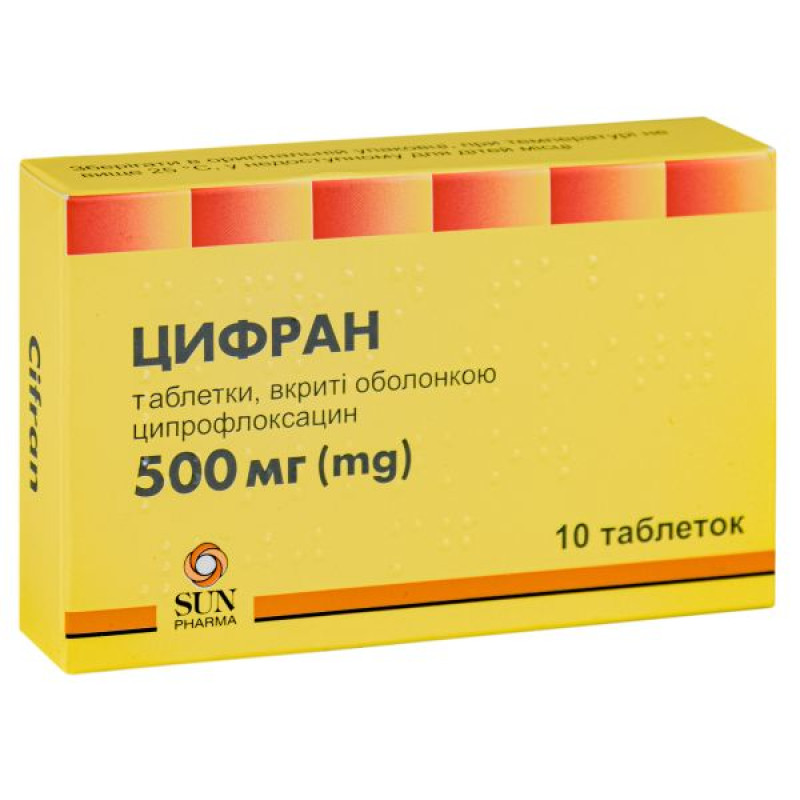
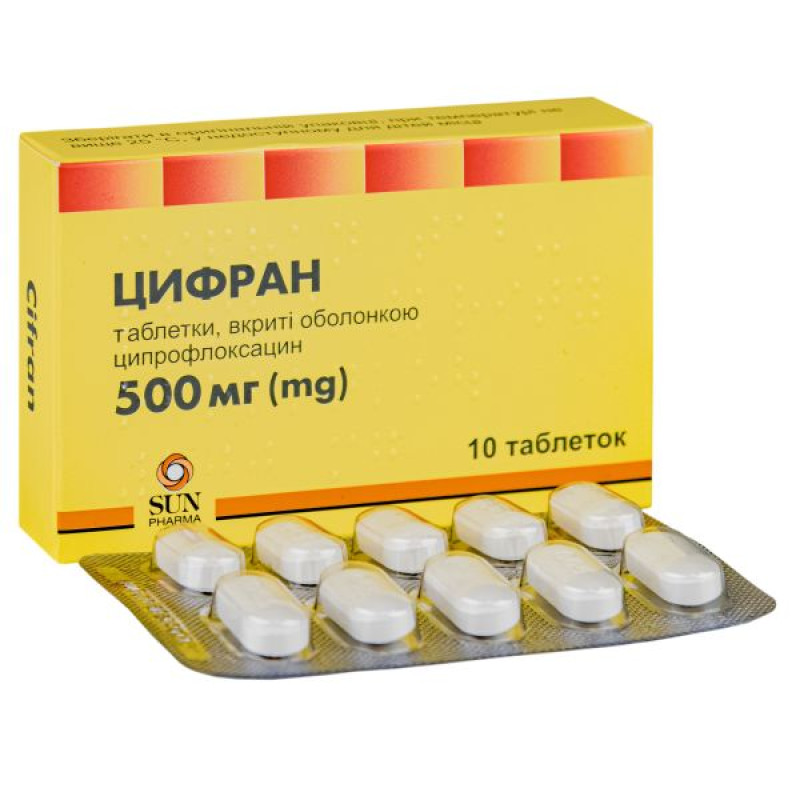
Instructions for use Cifran film-coated tablets 500 mg No. 10
Composition
active ingredient: ciprofloxacin;
1 tablet contains ciprofloxacin hydrochloride 596.388 mg equivalent to ciprofloxacin 500 mg;
Excipients: microcrystalline cellulose, corn starch, magnesium stearate, talc, colloidal anhydrous silica, sodium starch glycolate (type A), hydroxypropylmethylcellulose, macrogol 400, titanium dioxide (E 171).
Dosage form
Film-coated tablets.
Main physicochemical properties: white or almost white oval film-coated tablets, imprinted with "500" on one side and smooth on the other side.
Pharmacotherapeutic group
Antibacterial agents for systemic use.
Fluoroquinolone group. ATX code J01M A02.
Pharmacological properties
Pharmacodynamics.
Mechanism of action
The bactericidal effect of ciprofloxacin as a fluoroquinolone antibacterial agent is due to its ability to inhibit type II topoisomerases (DNA gyrase and topoisomerase IV), which are essential in many processes of the DNA life cycle, such as replication, transcription, repair, and recombination.
Pharmacokinetic/pharmacodynamic relationships
Efficacy mainly depends on the ratio between the maximum serum concentration (Cmax) and the minimum inhibitory concentration (MIC) of ciprofloxacin for the bacterial pathogen and on the value of the area under the pharmacokinetic concentration-time curve (AUC) and MIC.
Mechanism of resistance
Resistance to ciprofloxacin in vitro is usually associated with target site mutations that arise in topoisomerase IV and DNA gyrase by multistep mutations. The degree of cross-resistance between ciprofloxacin and other fluoroquinolones resulting from the above varies. Single mutations do not usually result in clinical resistance, but multiple mutations usually result in clinical resistance to several or all members of the fluoroquinolone class.
Resistance mechanisms such as impermeability and/or efflux pumps may have a different impact on susceptibility to fluoroquinolones, depending on the physiochemical properties of the different members of the class and the affinity of the transport systems for each active substance. All in vitro resistance mechanisms are generally observed in clinical isolates. Resistance mechanisms that inactivate other antibacterial agents, such as the permeability barrier (inherent in Pseudomonas aeruginosa) and efflux mechanisms, may affect susceptibility to ciprofloxacin.
The development of plasmid-mediated resistance encoded by the qnr gene has been reported.
Spectrum of antibacterial activity
The checkpoints separate susceptible strains from strains with intermediate susceptibility, and the latter
from resistant strains.
EUCAST recommendations
| Microorganisms | Sensitive | Resistant |
| Enterobacteriaceae | £ 0.5 mg/l | > 1 mg/l |
| Pseudomonas spp. | £ 0.5 mg/l | > 1 mg/l |
| Acinetobacter spp. | £ 1 mg/l | > 1 mg/l |
| Staphylococcus spp.1 | £ 1 mg/l | > 1 mg/l |
| Haemophilus influenzae and Moraxella catarrhalis | £ 0.5 mg/l | > 0.5 mg/l |
| Neisseria gonorrhoeae | £ 0.03 mg/l | > 0.06 mg/l |
| Neisseria meningitidis | £ 0.03 mg/l | > 0.06 mg/l |
| Non-species related control points * | £ 0.5 mg/l | > 1 mg/l |
1 Staphylococcus spp. – Ciprofloxacin breakpoints are relevant to high-dose therapy.
* Non-species breakpoints were determined primarily based on pharmacokinetic and pharmacodynamic data and are independent of species-specific MICs. They are only used for species that do not have their own breakpoints and not for species in which susceptibility testing is not recommended.
The prevalence of acquired resistance of isolated species may vary with location and time, and local information on resistance is therefore necessary, particularly in the treatment of severe infections. Specialist advice should be sought when the local prevalence of resistance is such that the benefit of the medicinal product, at least in some types of infections, is questionable.
The following genera and species of bacteria are generally susceptible to ciprofloxacin (for Streptococcus species, see section "Special precautions for use").
| Sensitive (usually) types of microorganisms |
Aerobic Gram-positive microorganisms Bacillus anthracis (1) |
Aerobic Gram-negative microorganisms Aeromonas spp. Brucella spp. Citrobacter koseri Francisella tularensis Haemophilus ducreyi Haemophilus influenzae* Legionella spp. Moraxella catarrhalis* Neisseria meningitidis Pasteurella spp. Salmonella spp.* Shigella spp.* Vibrio spp. Yersinia pestis |
Anaerobic microorganisms Mobiluncus |
Other microorganisms Chlamydia trachomatis ($) Chlamydia pneumoniae ($) Mycoplasma hominis ($) Mycoplasma pneumoniae ($) |
| Species for which acquired resistance is possible |
Aerobic Gram-positive microorganisms Enterococcus faecalis ($) Staphylococcus spp.* (2) |
Aerobic Gram-negative microorganisms Acinetobacter baumannii+ Burkholderia cepacia+* Citrobacter freundii* Enterobacter aerogenes Enterobacter cloacae* Escherichia coli* Klebsiella oxytoca Klebsiella pneumoniae* Morganella morganii* Neisseria gonorrhoeae* Proteus mirabilis* Proteus vulgaris* Providencia spp. Pseudomonas aeruginosa* Pseudomonas fluorescens Serratia marcescens* |
Anaerobic microorganisms Peptostreptococcus spp. Propionibacterium acnes |
| Microorganisms initially resistant to ciprofloxacin |
Aerobic Gram-positive microorganisms Actinomyces Enterococcus faecium Listeria monocytogenes |
Aerobic Gram-negative microorganisms Stenotrophomonas maltophilia |
Anaerobic microorganisms Except for the above |
Other microorganisms Mycoplasma genitalium Ureaplasma urealyticum |
* Clinical efficacy has been demonstrated for susceptible isolates in approved clinical indications. + Resistance rate ≥ 50% in one or more countries of the European Union. $ Natural average sensitivity in the absence of an acquired resistance mechanism. 1 Studies have been conducted in experimental animals infected by airborne Bacillus anthracis spores; these studies demonstrate that taking antibiotics immediately after exposure to the pathogen helps prevent disease if the number of spores can be reduced below the infectious dose. Recommendations for the use of ciprofloxacin are based primarily on in vitro susceptibility data in animals, together with limited data from humans. A 2-month course of oral ciprofloxacin 500 mg twice daily is considered effective in preventing anthrax infection in adults. The physician should refer to national and/or international protocols for the treatment of anthrax. 2 Methicillin-resistant S. aureus is very often also resistant to fluoroquinolones. The rate of methicillin resistance among all staphylococcal species is approximately 20-50% and is usually high in hospital isolates. |
Preclinical safety data
Ciprofloxacin revealed no special hazard for humans based on conventional nonclinical data on single-dose toxicity, repeated-dose toxicity, carcinogenic potential, or reproductive toxicity.
Pharmacokinetics.
Absorption
After oral administration of ciprofloxacin tablets at a dose of 250 mg, 500 mg and 750 mg, ciprofloxacin is rapidly and well absorbed, mainly from the upper small intestine. Cmax is reached after 1-2 hours.
Single doses of 100-750 mg resulted in dose-dependent Cmax between 0.56 mg/L and 3.7 mg/L. Serum concentrations increase proportionally with doses up to 1000 mg.
The absolute bioavailability of the drug is 70-80%. An oral dose of ciprofloxacin 500 mg every 12 hours was characterized by a total AUC equivalent to that after intravenous infusion of 400 mg ciprofloxacin, which was carried out over 60 minutes every 12 hours.
Distribution
The percentage of ciprofloxacin binding to blood proteins is insignificant (20-30%). Ciprofloxacin is found in blood plasma mainly in the non-ionized form and has a significant volume of distribution at steady state, which is 2-3 l/kg of body weight; it reaches high concentrations in various tissues, for example in the lungs (epithelial fluid, alveolar macrophages, biopsy specimens), sinuses, inflamed damaged tissues and in tissues of the genitourinary organs (urine, prostate, endometrium), where the total concentration exceeds that in blood plasma.
Biotransformation
Low concentrations of the following four metabolites were recorded: desethyleneciprofloxacin (M1), sulfociprofloxacin (M2), oxociprofloxacin (M3) and formylciprofloxacin (M4). The metabolites demonstrate in vitro antimicrobial activity, but to a lesser extent than the parent compound.
Ciprofloxacin is known to be a moderate inhibitor of CYP 450 1A2 isoenzymes.
Breeding
Ciprofloxacin is excreted mainly unchanged by the kidneys and to a lesser extent through the intestines. The plasma half-life in individuals with normal renal function is approximately 4-7 hours.
| Ciprofloxacin elimination (% dose) after oral administration |
| Name | Ways of withdrawal |
| with urine | with feces |
| Ciprofloxacin | 44.7 | 25 |
| Metabolites (M1-M4) | 11.3 | 7.5 |
Renal clearance is 180-300 ml/kg/h, and total clearance is 480-600 ml/kg/h. Ciprofloxacin is subject to glomerular filtration and tubular secretion. In severe renal impairment, the half-life of ciprofloxacin is up to 12 hours.
Non-renal clearance of ciprofloxacin is primarily due to transintestinal secretion and metabolism. 1% of the dose is excreted via the biliary tract. Ciprofloxacin is present in high concentrations in bile.
Pharmacokinetic data in children are limited. In studies involving children, no age-related Cmax and AUC (in children aged 1 year and older) were observed. After multiple administration of the drug (10 mg/kg 3 times a day), no significant increase in Cmax and AUC was observed. In 10 children aged less than 1 year with severe sepsis, Cmax was 6.1 mg/l (range 4.6-8.3 mg/l) after a 1-hour intravenous infusion of 10 mg/kg. This figure was 7.2 mg/l (range 4.7-11.8 mg/l) in children aged 1 to 5 years. AUC values were 17.4 mg*h/l (range 11.8-32 mg*h/l) and 16.5 mg*h/l (range 11-23.8 mg*h/l) in the respective age groups. These values are within the normal range observed in adults at therapeutic doses. Based on pharmacokinetic analyses in pediatric patients with various infections, the predicted mean elimination half-life in children is approximately 4-5 hours and the bioavailability of the oral suspension is 50% to 80%.
Indication
Ciprofloxacin is indicated for the treatment of the following infections (see sections "Pharmacological properties" and "Special instructions for use"). Before starting therapy, special attention should be paid to all available information on resistance to ciprofloxacin.
Official recommendations on the appropriate use of antibacterial drugs should be considered.
Adults
Lower respiratory tract infections caused by gram-negative bacteria:
exacerbation of chronic obstructive pulmonary disease*;
bronchopulmonary infections in cystic fibrosis or bronchiectasis;
community-acquired pneumonia.
Chronic purulent otitis media.
Exacerbation of chronic sinusitis, especially if caused by gram-negative bacteria*.
Urinary tract infections:
uncomplicated acute cystitis*;
acute pyelonephritis;
complicated urinary tract infections;
bacterial prostatitis.
Genital tract infections:
gonococcal urethritis and cervicitis caused by susceptible strains of Neisseria gonorrhoeae;
orchiepididymitis, particularly caused by sensitive strains of Neisseria gonorrhoeae;
pelvic inflammatory disease, particularly those caused by sensitive strains of Neisseria gonorrhoeae.
In the above genital tract infections, when Neisseria gonorrhoeae is known or suspected as the causative agent, it is particularly important to obtain local information on ciprofloxacin resistance and confirm susceptibility based on laboratory tests.
Gastrointestinal tract infections (e.g., treatment of traveler's diarrhea).
Intra-abdominal infections.
Skin and soft tissue infections caused by gram-negative bacteria.
Bone and joint infections.
Pulmonary form of anthrax (post-exposure prophylaxis and radical treatment).
Fever in patients with neutropenia caused by bacterial infection.
Children and adolescents
Bronchopulmonary infections caused by Pseudomonas aeruginosa in patients with cystic fibrosis.
Complicated urinary tract infections and acute pyelonephritis.
Pulmonary form of anthrax (post-exposure prophylaxis and radical treatment).
Ciprofloxacin can also be used to treat severe infections in children and adolescents when the doctor considers it necessary.
Treatment should only be initiated by a physician experienced in the treatment of the above infections in children and adolescents (see sections “Pharmacological properties” and “Special instructions for use”).
*Only if other antibacterial agents commonly prescribed for the treatment of this infection are ineffective or inappropriate.
Contraindication
Hypersensitivity to the active substance or to other drugs of the fluoroquinolone group, or to any of the excipients of the drug.
The simultaneous use of ciprofloxacin and tizanidine is contraindicated (see section "Interaction with other medicinal products and other types of interactions").
Interaction with other medicinal products and other types of interactions
Effects of other medicinal products on ciprofloxacin
Drugs that prolong the QT interval
Ciprofloxacin, like other fluoroquinolones, should be administered with caution to patients receiving drugs that prolong the QT interval (e.g., class IA and III antiarrhythmics, tricyclic antidepressants, macrolides, antipsychotics) (see section "Special warnings and precautions for use").
Chelate complex formation
With simultaneous use of ciprofloxacin (oral) and drugs containing multivalent cations and mineral supplements (e.g. calcium, magnesium, aluminum, iron), phosphate-binding polymers (e.g. sevelamer or lanthanum carbonate), sucralfate or antacids, as well as drugs with a high buffer capacity (such as didanosine tablets) containing magnesium, aluminum or calcium, the absorption of ciprofloxacin is reduced. In this regard, ciprofloxacin should be taken either 1-2 hours before or at least 4 hours after taking these drugs. This restriction does not apply to antacids belonging to the class of H2-receptor blockers.
Food and dairy products
Calcium in food has little effect on absorption. However, simultaneous administration of ciprofloxacin and dairy or mineral-fortified products (such as milk, yoghurt, calcium-fortified orange juice) should be avoided, as absorption of ciprofloxacin may be reduced.
Probenecid affects the renal secretion of ciprofloxacin. Concomitant use of probenecid and ciprofloxacin leads to an increase in the serum concentration of ciprofloxacin.
Metoclopramide
Metoclopramide accelerates the absorption of ciprofloxacin (oral form), resulting in a faster achievement of Cmax. No effect of ciprofloxacin on bioavailability was observed.
Omeprazole
Concomitant use of ciprofloxacin and medicinal products containing omeprazole leads to a slight decrease in Cmax and AUC of ciprofloxacin.
Effect of ciprofloxacin on other drugs
Tizanidine
Tizanidine should not be used concomitantly with ciprofloxacin (see section "Contraindications"). In a clinical study in healthy volunteers, concomitant administration of ciprofloxacin and tizanidine resulted in an increase in plasma tizanidine concentrations (7-fold increase in Cmax, range 4-21-fold; 10-fold increase in AUC, range 6-24-fold). Hypotensive and sedative adverse reactions are associated with increased serum tizanidine concentrations.
Methotrexate
Concomitant use of ciprofloxacin may slow down the tubular transport of methotrexate, which may lead to an increase in the concentration of methotrexate in the blood plasma. This may increase the likelihood of adverse toxic reactions caused by methotrexate, therefore their simultaneous use is not recommended (see section "Special instructions").
Theophylline
The simultaneous use of ciprofloxacin and theophylline may lead to an undesirable increase in the concentration of theophylline in the blood serum, which, in turn, may cause the development of adverse reactions. In isolated cases, such adverse reactions may be life-threatening or fatal. Therefore, when using ciprofloxacin and theophylline simultaneously, the concentration of theophylline in the blood serum should be monitored and, if necessary, its dose should be reduced (see section "Special instructions").
Other xanthine derivatives
Increased serum concentrations of these xanthine derivatives have been reported following concomitant administration of ciprofloxacin and caffeine or pentoxifylline (oxpentifylline).
Phenytoin
Concomitant use of ciprofloxacin and phenytoin may result in increased or decreased serum concentrations of phenytoin, therefore monitoring of drug levels is recommended.
Cyclosporine
Transient increases in serum creatinine have been reported with concomitant use of ciprofloxacin and cyclosporine-containing medicinal products. Therefore, frequent (twice weekly) monitoring of serum creatinine concentrations is necessary in these patients.
Vitamin K antagonists
Concomitant use of ciprofloxacin and vitamin K antagonists may potentiate their anticoagulant effect. The degree of risk may vary depending on the underlying type of infection, age, and general condition of the patient, so it is difficult to accurately assess the effect of ciprofloxacin on the increase in the International Normalized Ratio (INR). Frequent monitoring of INR should be performed during and immediately after concomitant use of ciprofloxacin and vitamin K antagonists (e.g. warfarin, acenocoumarol, phenprocoumon, fluindione).
Duloxetine
In clinical studies, it has been shown that concomitant use of duloxetine with strong CYP450 1A2 inhibitors, such as fluvoxamine, may lead to an increase in duloxetine AUC and Cmax. Although there are no clinical data on a possible interaction with ciprofloxacin, similar effects can be expected with the simultaneous use of these drugs (see section "Special instructions").
Ropinirole
In clinical studies, it was found that concomitant use of ropinirole with ciprofloxacin, a moderate inhibitor of the CYP450 1A2 isoenzyme, resulted in an increase in Cmax and AUC of ropinirole by 60% and 84%, respectively. Monitoring of side effects of ropinirole and appropriate dose adjustment are recommended during and immediately after concomitant use with ciprofloxacin (see section 4.4).
Lidocaine
Concomitant administration of ciprofloxacin, a moderate inhibitor of cytochrome P450 1A2, and lidocaine-containing medicinal products has been shown to reduce the clearance of intravenous lidocaine by 22% in healthy volunteers. Despite the normal tolerability of lidocaine treatment, an interaction with ciprofloxacin is possible, which is associated with adverse reactions when these drugs are used simultaneously.
Clozapine
After concomitant administration of 250 mg ciprofloxacin with clozapine for 7 days, serum concentrations of clozapine and N-desmethylclozapine were increased by 29% and 31%, respectively. Clinical monitoring and appropriate dose adjustment of clozapine are recommended during and immediately after concomitant administration with ciprofloxacin (see section 4.4).
Sildenafil
Cmax and AUC of sildenafil increased approximately 2-fold in healthy volunteers after simultaneous oral administration of 50 mg sildenafil and 500 mg ciprofloxacin. Therefore, caution should be exercised when co-administering ciprofloxacin with sildenafil and the risk/benefit ratio should be considered.
In clinical studies, fluvoxamine, a strong inhibitor of the CYP450 1A2 isoenzyme, was found to moderately inhibit the metabolism of agomelatine, resulting in a 60-fold increase in agomelatine exposure. Although no clinical data are available on a possible interaction with ciprofloxacin, a moderate inhibitor of CYP450 1A2, similar effects can be expected with its simultaneous use (see “Cytochrome P450” in the “Special instructions for use” section).
Zolpidem
Concomitant use of ciprofloxacin may increase the blood level of zolpidem, therefore concomitant use of these drugs is not recommended.
Application features
The drug should be avoided in patients who have had serious adverse reactions to quinolones or fluoroquinolones in the past. Treatment of these patients with ciprofloxacin should only be initiated in the absence of alternative treatment options and after a careful benefit/risk assessment.
Prolonged, disabling and potentially irreversible serious adverse reactions
In very rare cases, prolonged (months or years), disabling and potentially irreversible serious adverse reactions affecting various body systems, and sometimes several systems at once (musculoskeletal, nervous, mental and sensory) have been reported in patients treated with quinolones and fluoroquinolones, regardless of age and existing risk factors. The drug should be discontinued immediately at the first signs or symptoms of any serious adverse reaction and a doctor should be consulted.
Severe infections and/or mixed infections caused by Gram-positive or anaerobic bacteria
Ciprofloxacin should not be used as monotherapy for the treatment of severe infections and infections caused by Gram-positive or anaerobic bacteria. For the treatment of these infections, ciprofloxacin should be used in combination with appropriate antibacterial agents.
Streptococcal infections (including Streptococcus pneumoniae)
Ciprofloxacin is not recommended for the treatment of streptococcal infections due to insufficient efficacy.
Genital tract infections
Fluoroquinolone-resistant strains of Neisseria gonorrhoeae can cause gonococcal urethritis, cervicitis, epididymo-orchitis, and pelvic inflammatory disease.
Accordingly, ciprofloxacin should be used for the treatment of gonococcal urethritis or cervicitis only if ciprofloxacin resistance in Neisseria gonorrhoeae has been excluded.
Empirical therapy with ciprofloxacin for epididymo-orchitis and pelvic inflammatory disease should only be used in combination with other appropriate antibacterial agents (e.g. cephalosporins) except in clinical situations where the presence of ciprofloxacin-resistant strains of Neisseria gonorrhoeae has been excluded.
If clinical improvement does not occur after 3 days, therapy should be reviewed.
Urinary tract infections
Fluoroquinolone resistance in Escherichia coli, the most common pathogen causing urinary tract infections, varies across the European Union. Physicians are advised to consider the local prevalence of fluoroquinolone resistance in Escherichia coli when prescribing therapy.
Single doses of ciprofloxacin, which can be used for uncomplicated cystitis in premenopausal women, are thought to be less effective than longer-term therapy with the drug. This fact should be taken into account in view of the increasing level of resistance of Escherichia coli to quinolones.
Intra-abdominal infections
Data on the efficacy of ciprofloxacin in the treatment of postoperative intra-abdominal infections are limited.
Traveler's diarrhea
When choosing a drug, information on the resistance to ciprofloxacin of relevant microorganisms in the countries visited should be taken into account.
Bone and joint infections
Ciprofloxacin should be used in combination with other antimicrobial agents depending on the results of microbiological testing.
Pulmonary form of anthrax
Use in humans is based on in vitro susceptibility data, animal studies and limited human data. The physician should follow national and/or international protocols for the treatment of anthrax.
Bronchopulmonary infections caused by Pseudomonas aeruginosa in patients with cystic fibrosis
Clinical studies included children and adolescents aged 5-17 years. There is more limited experience in children aged 1 to 5 years.
Complicated urinary tract infections and acute pyelonephritis
Treatment of urinary tract infections with ciprofloxacin should be considered when other treatments are not possible. Treatment should be based on microbiological results.
Clinical studies have evaluated the use of ciprofloxacin in children and adolescents aged 1-17 years.
Other specific severe infections
The use of ciprofloxacin in specific severe infections other than those mentioned above has not been evaluated in clinical trials and clinical experience is limited. Therefore, caution is recommended when treating patients with such infections.
Hypersensitivity to the drug
Hypersensitivity and allergic reactions, including anaphylactic/anaphylactoid reactions, may occur after a single dose of ciprofloxacin (see section 4.8) and may be life-threatening. In such cases, ciprofloxacin should be discontinued and appropriate medical treatment should be initiated, if necessary.
Musculoskeletal system
In general, ciprofloxacin should not be used in patients with a history of tendon diseases/disorders associated with the use of quinolones. However, in rare cases, after microbiological investigation of the pathogen and an assessment of the benefit/risk ratio, ciprofloxacin may be prescribed to these patients for the treatment of certain severe infections, namely in cases of failure of standard therapy or bacterial resistance, when microbiological results justify the use of ciprofloxacin. Tendinitis and tendon rupture (not limited to the Achilles tendon), sometimes bilateral, may occur as early as 48 hours after the start of treatment with quinolones and fluoroquinolones and even up to several months after discontinuation of treatment. The risk of tendonitis and tendon rupture is increased in elderly patients, patients with impaired renal function, patients with solid organ transplantation and patients receiving concomitant corticosteroids. Therefore, concomitant use of corticosteroids should be avoided.
At the first signs of tendinitis (e.g. painful swelling, inflammation), treatment with the drug should be discontinued and alternative treatment should be considered. The affected limb(s) should be treated appropriately (e.g. immobilization). Corticosteroids should not be used if signs of tendinopathy occur.
Ciprofloxacin should be used with caution in patients with myasthenia gravis due to possible exacerbation of the symptoms of this disease (see section "Adverse reactions").
Vision impairment
If vision is impaired or if there is any noticeable effect on the eyes, you should consult a doctor immediately.
Photosensitivity
Ciprofloxacin has been shown to cause photosensitivity reactions. Patients taking ciprofloxacin are advised to avoid direct sunlight and UV radiation during treatment (see section "Adverse reactions").
Central nervous system (CNS)
Ciprofloxacin, like other quinolones, is known to cause seizures or lower the seizure threshold. Cases of status epilepticus have been reported. Ciprofloxacin should be used with caution in patients with CNS disorders that may predispose to seizures. If seizures occur, ciprofloxacin should be discontinued (see section 4.8). Psychotic reactions may occur even after the first use of ciprofloxacin. In rare cases, depression or psychosis may progress to suicidal thoughts and actions, such as suicide or attempted suicide. In these cases, ciprofloxacin should be discontinued.
Cases of polyneuropathy (based on neurological symptoms such as pain, burning, sensory disturbances or muscle weakness, alone or in combination) have been reported in patients receiving ciprofloxacin. Ciprofloxacin should be discontinued in patients who develop symptoms of neuropathy, including pain, burning, tingling, numbness and/or weakness, to prevent the development of irreversible conditions (see section 4.8).
Peripheral neuropathy
Cases of sensory or sensorimotor polyneuropathy resulting in paresthesia, hypoesthesia, dysesthesia, or weakness have been reported in patients treated with quinolones and fluoroquinolones. If symptoms of neuropathy such as pain, burning, tingling, numbness, or weakness occur, patients taking the drug should inform their physician to prevent the development of a potentially irreversible condition.
Heart disorders
Fluoroquinolones, including ciprofloxacin, should be used with caution in patients with known risk factors for QT prolongation, including:
with hereditary QT prolongation syndrome;
in case of simultaneous use of drugs that may prolong the QT interval (e.g., class IA and III antiarrhythmics, tricyclic antidepressants, macrolides, neuroleptics);
with uncorrected electrolyte imbalance (e.g. hypokalemia, hypomagnesemia);
in the presence of heart disease (e.g., heart failure, myocardial infarction, bradycardia).
Elderly patients and younger women may be more sensitive to drugs that prolong the QTc interval. Therefore, fluoroquinolones, including ciprofloxacin, should be used with caution in these patient groups (see sections 4.5, 4.8, 4.2, and 4.8).
Epidemiological studies suggest an increased risk of aortic aneurysm and aortic dissection, particularly in the elderly, following the use of fluoroquinolones. Cases of aortic aneurysm and aortic dissection, associated with aortic rupture (including fatal cases) and adverse reactions, have been reported in patients receiving fluoroquinolones (see section 4.8).
Therefore, fluoroquinolones should only be used after careful benefit/risk assessment and after consideration of other treatment options in patients with a family or personal history of aortic aneurysm or aortic dissection or heart failure, or in the presence of other risk factors:
in aortic aneurysm and aortic dissection and heart failure (including connective tissue diseases such as, for example, Marfan syndrome, vascular Ehlers-Danlos syndrome, Turner syndrome, Behçet's disease, hypertension, rheumatoid arthritis or in addition to aortic aneurysm or aortic dissection (including vascular diseases such as Takayasu arteritis, giant cell arteritis, atherosclerosis, Sjögren's syndrome)) or in addition
in case of aneurysm and aortic dissection (for example, in vascular diseases such as Takayasu arteritis or giant cell arteritis, atherosclerosis or Sjögren's syndrome) or additionally:
with regurgitation/insufficiency of the heart valve (for example, with infective endocarditis).
The risk of developing aortic aneurysm and dissection, as well as their rupture, may be increased in patients who use the drug concomitantly with systemic corticosteroids.
In case of sudden abdominal, chest or back pain, patients should be advised to seek immediate medical attention in the emergency department.
Patients should be advised to seek immediate medical attention if they experience acute shortness of breath, new onset of palpitations, or develop abdominal or lower extremity edema.
Dysglycemia
As with other quinolones, blood glucose disturbances, including both hypoglycemia and hyperglycemia, have been reported, usually in diabetic patients receiving concomitant treatment with oral hypoglycemic agents (e.g. glibenclamide) or insulin. Cases of hypoglycemic coma have been reported. Close monitoring of blood glucose levels is recommended in diabetic patients.
Gastrointestinal tract
The occurrence of severe and persistent diarrhoea during or after treatment (even several weeks after treatment) may indicate the development of antibiotic-associated colitis (a potentially life-threatening condition with a fatal outcome) and requires urgent treatment (see section 4.8). In such cases, ciprofloxacin should be discontinued and appropriate therapy should be initiated. Medicinal products that inhibit peristalsis are contraindicated in this clinical situation.
Kidneys and urinary system
Crystalluria has been reported in association with the use of ciprofloxacin (see section 4.8). Patients receiving ciprofloxacin should be adequately hydrated. Excessive alkalinity of the urine should be avoided.
Kidney dysfunction
Since ciprofloxacin is excreted mainly unchanged by the kidneys, in patients with impaired renal function, dose adjustment is necessary according to the information provided in the "Method of administration and dosage" section to avoid an increase in the frequency of adverse reactions caused by accumulation of ciprofloxacin.
Hepatobiliary system
Cases of liver necrosis and life-threatening hepatic failure have been reported with ciprofloxacin (see section 4.8). If any signs and symptoms of liver disease appear,