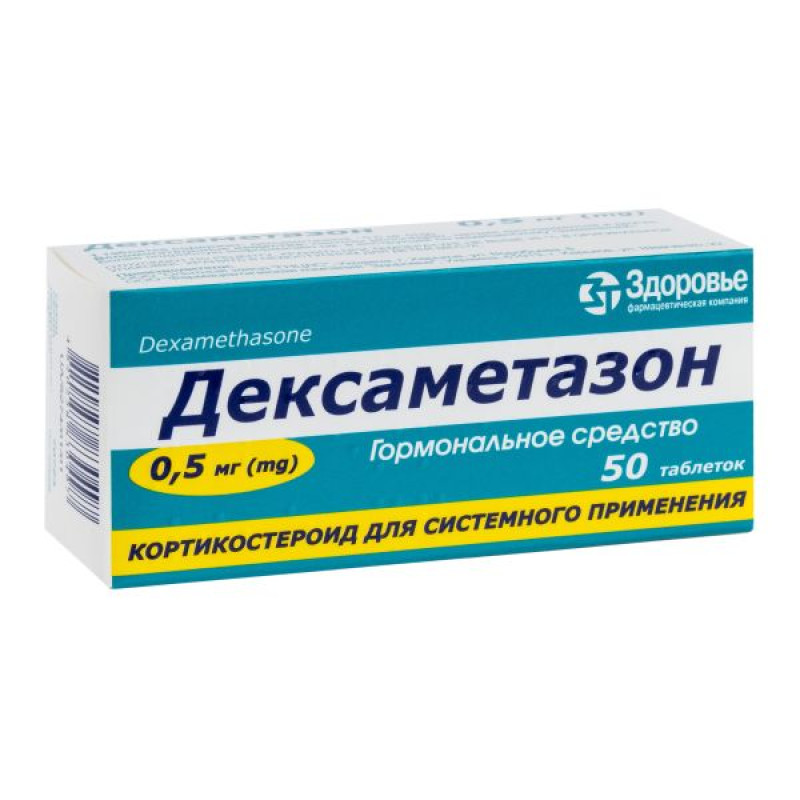
Instructions Dexamethasone tablets 0.5 mg No. 50
Composition
active ingredient: dexamethasone;
1 tablet contains dexamethasone 0.5 mg;
Excipients: potato starch, calcium stearate, lactose monohydrate, croscarmellose sodium.
Dosage form
Pills.
Main physicochemical properties: white tablets.
Pharmacotherapeutic group
Corticosteroids for systemic use. Glucocorticoids. ATC code H02A B02.
Pharmacological properties
Pharmacodynamics
Dexamethasone is a semisynthetic adrenal cortex hormone (corticosteroid) that has glucocorticoid effects. It has anti-inflammatory and immunosuppressive effects, and also affects energy metabolism, glucose metabolism, and (through negative feedback) the secretion of hypothalamic-activating factor and adenohypophyseal trophic hormone.
The mechanism of action of glucocorticoids is still not fully understood. There are enough reports on the mechanism of action of glucocorticoids to confirm that they act at the cellular level. There are two well-defined receptor systems in the cytoplasm of cells. By binding to glucocorticoid receptors, corticosteroids exert anti-inflammatory and immunosuppressive effects and regulate glucose metabolism, and by binding to mineralocorticoid receptors, they regulate sodium, potassium metabolism and water-electrolyte balance.
Glucocorticoids are lipid-soluble and readily enter target cells through the cell membrane. Binding of the hormone to the receptor changes the receptor conformation, which increases its affinity for DNA. The hormone/receptor complex enters the cell nucleus and binds to a regulatory center of the DNA molecule, also called the glucocorticoid response element (GRE). The activated receptor, bound to the GRE or to specific genes, regulates mRNA transcription, which can be increased or decreased. The newly formed mRNA is transported to the ribosome, after which new proteins are formed. Depending on the target cells and the processes occurring in the cells, protein synthesis can be increased (for example, the formation of tyrosine transaminase in liver cells) or decreased (for example, the formation of IL-2 in lymphocytes). Since glucocorticoid receptors are present in all types of tissues, it can be assumed that glucocorticoids act on most cells of the body.
Impact on energy metabolism and glucose homeostasis
Dexamethasone, together with insulin, glucagon and catecholamines, regulates energy storage and utilization. In the liver, glucose formation from pyruvate or amino acids and glycogen formation are increased. In peripheral tissues, especially in muscle, glucose consumption and mobilization of amino acids (from proteins), which are substrates for gluconeogenesis in the liver, are reduced. Direct effects on fat metabolism are a central distribution of adipose tissue and an increase in the lipolytic response to catecholamines.
Using receptors in the renal proximal tubules, dexamethasone increases renal blood flow and glomerular filtration, inhibits the formation and secretion of vasopressin, and improves the kidneys' ability to excrete acids from the body.
By increasing the number of β-adrenergic receptors and the affinity for β-adrenergic receptors that transmit the positive inotropic effect of catecholamines, dexamethasone directly increases cardiac contractile function and peripheral vascular tone.
At high doses, dexamethasone inhibits fibroblast production of type I and type III collagen and the formation of glycosaminoglycans. Thus, by inhibiting the formation of extracellular collagen and matrix, wound healing is delayed. Long-term administration of high doses causes progressive bone resorption by indirect action and reduces osteogenesis by direct action (increased secretion of parathyroid hormone and decreased secretion of calcitonin), and also causes a negative calcium balance by reducing calcium absorption in the intestine and increasing its excretion in the urine. This usually leads to secondary hyperparathyroidism and phosphaturia.
Effects on the pituitary gland and hypothalamus
The anti-inflammatory and immunosuppressive effects of glucocorticoids are based on their molecular and biochemical effects. The molecular anti-inflammatory effect occurs as a result of binding to glucocorticoid receptors and from changes in the expression of a number of genes that regulate the formation of various information molecules, proteins and enzymes involved in the inflammatory reaction. The biochemical anti-inflammatory effect of glucocorticoids is the result of blocking the formation and functioning of humoral mediators of inflammation: prostaglandins, thromboxanes, cytokines and leukotrienes. Dexamethasone reduces the formation of leukotrienes by reducing the release of arachidonic acid from cellular phospholipids, caused by inhibition of the activity of phospholipase A2. The effect on phospholipases is achieved not by direct action, but as a result of an increase in the concentration of lipocortin (macrocortin), which is an inhibitor of phospholipase A2. Dexamethasone inhibits the formation of prostaglandins and thromboxane by reducing the formation of specific mRNA and, consequently, the amount of cyclooxygenase formed. Dexamethasone also reduces the production of platelet-activating factor (PAF) by increasing the concentration of lipocortin. Other biochemical anti-inflammatory effects include a decrease in the formation of tumor necrosis factor (TNF) and interleukin (IL-1).
Clinical efficacy and safety of use in COVID-19
Clinical efficacy
RECOVERY (Randomised Evaluation of Covid-19 Therapy)1 was an individually randomised, controlled, open-label, adaptive platform study initiated by the investigator to assess the effects of potential treatments in patients hospitalised with COVID-19.
The trial was conducted in 176 hospitals in the UK. 6425 patients were randomised to receive dexamethasone (2104 patients) or usual care (4321 patients). 89% of patients had laboratory-confirmed SARS-CoV-2 infection.
At randomization, 16% of patients received invasive mechanical ventilation (VMV) or extracorporeal membrane oxygenation, 60% received oxygen alone (with or without noninvasive ventilation), and 24% received neither.
The mean age of the patients was 66.1 ± 15.7 years. 36% of the patients were female. 24% of the patients had a history of diabetes, 27% had heart disease, and 21% had chronic lung disease.
Primary endpoint
Mortality at 28 days was significantly lower in the dexamethasone group than in the usual care group: 482 of 2104 patients (22.9%) and 1110 of 4321 patients (25.7%), respectively (rate ratio 0.83; 95% confidence interval (CI) 0.75-0.93; P < 0.001).
In the dexamethasone group, the incidence of fatal outcomes was lower among patients in the usual care group who received invasive mechanical ventilation (29.3% vs. 41.4%; rate ratio 0.64; 95% CI 0.51-0.81) and in those who received supplemental oxygen without invasive mechanical ventilation (23.3% vs. 26.2%; rate ratio 0.82; 95% CI 0.72-0.94).
There was no clear effect of dexamethasone among patients who were not receiving any respiratory support at randomization (17.8% vs. 14.0%; rate ratio 1.19; 95% CI 0.91-1.55).
Secondary endpoint
Patients in the dexamethasone group had a shorter length of hospital stay than those in the usual care group (median 12 days vs. 13 days) and were more likely to be discharged from the hospital within 28 days (rate ratio 1.10; 95% CI 1.03-1.17).
According to the primary endpoint, the greatest effect in reducing the duration of hospitalization to 28 days was observed among patients who received invasive mechanical ventilation at randomization (rate ratio 1.48; 95% CI 1.16, 1.90), a slightly smaller effect among patients who received oxygen alone (rate ratio 1.15; 95% CI 1.06-1.24), and there was no beneficial effect in patients who did not receive oxygen (rate ratio 0.96; 95% CI 0.85-1.08).
| Result | Dexamethasone (N = 2104) | Conventional treatment (N = 4321) | Risk frequency coefficient* (95% CI) |
| Number/total number of patients (%) | | | |
| Primary endpoint | | | |
| Mortality in 28 days | 482/2104 (22.9) | 1110/4321 (25.7) | 0.83 (0.75–0.93) |
| Secondary endpoint | | | |
| Discharged from hospital within 28 days | 1413/2104 (67.2) | 2745/4321 (63.5) | 1.10 (1.03–1.17) |
| Invasive mechanical ventilation or fatal outcome†: | 456/1780 (25.6) | 994/3638 (27.3) | 0.92 (0.84–1.01) |
| - invasive mechanical ventilation | 102/1780 (5.7) | 285/3638 (7.8) | 0.77 (0.62–0.95) |
| - fatal outcome | 387/1780 (21.7) | 827/3638 (22.7) | 0.93 (0.84–1.03) |
*Ratios were adjusted for age for 28-day mortality and hospital discharge outcomes. Hazard ratios were adjusted for age for invasive mechanical ventilation or death and its components.
† This category excludes patients who received invasive mechanical ventilation at randomization.
Safety
During the study, 4 serious adverse events related to the study treatment were recorded, namely: 2 cases of hyperglycemia, 1 case of steroid-induced psychosis, and 1 case of upper gastrointestinal bleeding. In all cases, the disorders were resolved.
Subgroup analysis
Effects of dexamethasone administration on 28-day mortality, depending on age and method of respiratory support, obtained by randomization2
| Dexamethasone | Routine care | RR (95% CI) | |
| Lack of oxygen (χ12 = 0.70; p = 0.40) | | | | | |
| < 70 | 10/197 (5.1%) | 18/462 (3.9%) | | | 1.31 (0.60–2.83) |
| ≥ 70 < 80 | 25/114 (21.9%) | 35/224 (15.6%) | | | 1.46 (0.88–2.45) |
| ≥ 80 | 54/190 (28.4%) | 92/348 (26.4%) | | | 1.06 (0.76–1.49) |
| Subtotal | 89/501 (17.8%) | 145/1034 (14.0%) | | | 1.19 (0.91–1.55) |
| | | | | |
| Oxygen only (χ12 = 2.54; p = 0.11) | | | | | |
| < 70 | 53/675 (7.9%) | 193/1473 (13.1%) | | 0.58 (0.43–0.78) | |
| ≥ 70 < 80 | 104/306 (34.0%) | 178/531 (33.5%) | 0.98 (0.77–1.25) | | |
| ≥ 80 | 141/298 (47.3%) | 311/600 (51.8%) | 0.85 (0.70–1.04) | | |
| Subtotal | 298/1279 (23.3%) | 682/2604 (26.2%) | 0.82 (0.72–0.94) | | |
| | | | | |
| Mechanical ventilation (χ12 = 0.28; p = 0.60) | | | | | |
| < 70 | 66/269 (24.5%) | 217/569 (38.1%) | | 0.61 (0.46–0.81) | |
| ≥ 70 < 80 | 26/49 (53.1%) | 58/104 (55.8%) | 0.85 (0.53–1.34) | | |
| ≥ 80 | 3/6 (50.0%) | 8/10 (80.0%) | 0.39 (0.10–1.47) | | |
| Subtotal | 95/324 (29.3%) | 283/683 (41.4%) | 0.64 (0.51–0.81) | | |
| | | | | |
| All participants | 482/2104 (22.9%) | 1110/4321 (25.7%) | | 0.83 (0.75–0.93) p < 0.001 | |
| | | 0.5 0.75 1 1.5 2 | | |
| | | Dexamethasone is better | Regular care is better | |
Effects of dexamethasone administration on 28-day mortality, by respiratory support method and by the presence of any chronic disease, obtained by randomization3
| Dexamethasone | Routine care | | RR (95% CI) | | |
| Lack of oxygen (χ12 = 0.08; p = 0.78) | | | | | | |
| Previous illness | 65/313 (20.8%) | 100/598 (16.7%) | | | 1.22 (0.89–1.66) | |
| Without previous illness | 24/188 (12.8%) | 45/436 (10.3%) | 1.12 (0.68–1.83) | | | |
| Subtotal | 89/501 (17.8%) | 145/1034 (14.0%) | 1.19 (0.91–1.55) | | | |
| | | | | | |
| Oxygen only (χ12 = 2.05; p = 0.15) | | | | | | |
| Previous illness | 221/702 (31.5%) | 481/1473 (32.7%) | | 0.88 (0.75–1.03) | | |
| Without previous illness | 77/577 (13.3%) | 201/1131 (17.8%) | 0.70 (0.54–0.91) | | | |
| Subtotal | 298/1279 (23.3%) | 682/2604 (26.2%) | 0.82 (0.72–0.94) | | | |
| | | | | | |
| Mechanical ventilation (χ12 = 1.52; p = 0.22) | | | | | | |
| Previous illness | 51/159 (32.1%) | 150/346 (43.4%) | | 0.75 (0.54–1.02) | | |
| Without previous illness | 44/165 (26.7%) | 133/337 (39.5%) | 0.56 (0.40–0.78) | | | |
| Subtotal | 95/324 (29.3%) | 283/683 (41.4%) | 0.64 (0.51–0.81) | | | |
| | | | | | |
| All participants | 482/2104 (22.9%) | 1110/4321 (25.7%) | | 0.83 (0.75–0.93) p < 0.001 | | |
| | | 0.5 0.75 1 1.5 2 | | | |
| | | Dexamethasone is better | Regular care is better | | |
| | | | | | |
1 www.recoverytrial.net
2, 3 (source: Horby P. et al., 2020; https://www.medrxiv.org/content/10.1101/2020.06.22.20137273v1;
doi: https://doi.org/10.1101/2020.06.22.20137273).
Pharmacokinetics
Dexamethasone is rapidly and almost completely absorbed after oral administration. The bioavailability of dexamethasone in tablets is close to 80% (different sources indicate bioavailability from 53% to 112%). The maximum concentration in the blood plasma after oral administration is reached after 1–2 hours, the duration of the effect after taking a single dose is approximately 2.75 days.
In blood plasma, approximately 77% of dexamethasone is bound to plasma proteins, mainly albumin. Only a small amount of dexamethasone is bound to other proteins. Dexamethasone is fat-soluble, so it freely penetrates cells and the intercellular space. In the central nervous system (hypothalamus, pituitary gland), it binds and acts through membrane receptors. In peripheral tissues, it binds and acts through cytoplasmic receptors. Its destruction occurs at the site of action, i.e. in the cell itself. Dexamethasone is primarily metabolized in the liver, but also, possibly, in the kidneys and other tissues. It is mainly excreted in the urine.
Indication
Replacement therapy for primary or secondary (pituitary) adrenal insufficiency (except acute adrenal insufficiency, in which hydrocortisone or cortisone are the drugs of choice, given their more pronounced hormonal effect); congenital adrenal hyperplasia; subacute thyroiditis (de Quervain) and severe forms of radiation thyroiditis.
Rheumatic diseases:
rheumatoid arthritis, including juvenile rheumatoid arthritis and extra-articular manifestations of rheumatoid arthritis (rheumatic lung, changes in the heart and eyes, cutaneous vasculitis), as adjunctive therapy in the period when basic therapy has not yet had an effect and in cases where the analgesic and anti-inflammatory effects of NSAIDs were unsatisfactory.
Systemic connective tissue diseases, vasculitic syndromes and amyloidosis (supportive and symptomatic treatment in certain cases during the underlying disease):
systemic lupus erythematosus (treatment of polyserositis and damage to internal organs); Sjögren's syndrome (treatment of pulmonary, renal and cerebral lesions); systemic sclerosis (treatment of myositis, pericarditis and alveolitis); polymyositis, dermatomyositis;
systemic vasculitis; amyloidosis (replacement therapy for adrenal insufficiency).
Skin diseases:
pemphigus; bullous dermatitis herpetiformis; exfoliative dermatitis; exudative erythema (severe forms); erythema nodosum; seborrheic dermatitis (severe forms); psoriasis (severe forms); lichen; urticaria that does not respond to standard treatment; mycosis fungoides; scleroderma; angioedema.
Allergic diseases (not amenable to standard treatment):
asthma, contact dermatitis, atopic dermatitis, serum sickness, allergic rhinitis, drug allergy, urticaria after blood transfusion.
Diseases of the organs of vision:
inflammatory eye diseases (acute central choroiditis, optic neuritis); allergic diseases (conjunctivitis, uveitis, scleritis, keratitis, iritis); systemic immune diseases (sarcoidosis, temporal arteritis); proliferative changes in the orbit (endocrine ophthalmopathy, pseudotumor); sympathetic ophthalmia; immunosuppressive therapy during corneal transplantation.
Gastrointestinal diseases:
ulcerative colitis (severe exacerbation), Crohn's disease (severe exacerbation), chronic autoimmune hepatitis, liver transplant rejection.
Respiratory tract diseases:
acute toxic bronchiolitis, chronic bronchitis;
allergic bronchopulmonary aspergillosis; exogenous allergic alveolitis; idiopathic fibrosing alveolitis; sarcoidosis; eosinophilic infiltration, focal or disseminated pulmonary tuberculosis (together with appropriate anti-tuberculosis therapy); tuberculous pleurisy (together with appropriate anti-tuberculosis therapy); pleurisy in systemic connective tissue diseases; pulmonary vasculitis; berylliosis (granulomatous inflammation); obliterative bronchitis caused by poisoning with toxic gases, radiation or aspiration pneumonitis.
Hematological diseases:
acquired or congenital chronic aplastic anemia; autoimmune hemolytic anemia; secondary thrombocytopenia in adults; erythroblastopenia; acute lymphoblastic leukemia (induction therapy); myelodysplastic syndrome; angioimmunoblastic malignant T-cell lymphoma (in combination with cytostatics); plasmacytoma (in combination with cytostatics); severe anemia after myelofibrosis with myeloid metaplasia or with lymphoplasmacytoid immunocytoma; systemic histiocytosis (systemic dependence).
Kidney diseases:
primary and secondary glomerulonephritis (Goodpasture syndrome); renal failure in systemic connective tissue diseases (systemic lupus erythematosus, Sjögren's syndrome); systemic vasculitis (usually in combination with cyclophosphamide); glomerulonephritis in polyarthritis nodosa; Churg-Strauss syndrome; Wegener's granulomatosis; Schönlein-Henoch purpura; mixed cryoglobulinemia; renal failure in Takayasu arteritis; interstitial nephritis; immunosuppressive therapy in kidney transplantation; induction of diuresis and reduction of proteinuria in idiopathic nephrotic syndrome (without uremia) and renal failure in systemic lupus erythematosus.
Oncological diseases:
palliative treatment of leukemia and lymphoma in adults, acute leukemia in children, hypercalcemia in malignant diseases.
Neurological diseases:
cerebral edema due to primary or metastatic brain tumor, craniotomy, and traumatic brain injury.
Coronavirus disease 2019 (COVID-19):
treatment of coronavirus disease 2019 (COVID-19) in adults and adolescent patients (aged 12 years and over with a body weight of at least 40 kg) who require supplemental oxygen therapy.
Other indications:
tuberculous meningitis with subarachnoid block (along with appropriate anti-tuberculosis therapy), trichinosis with neurological symptoms or myocardial trichinosis; diagnostic test for adrenal hyperfunction.
Contraindication
Hypersensitivity to dexamethasone or to any other component of the drug. Acute viral, bacterial or systemic fungal infections (if appropriate therapy is not used), Cushing's syndrome, vaccination with a live vaccine, and breastfeeding (except in urgent cases).
Interaction with other medicinal products and other types of interactions
Concomitant use of dexamethasone and nonsteroidal anti-inflammatory drugs increases the risk of gastrointestinal bleeding and ulceration.
The effect of dexamethasone is reduced by concomitant use of drugs that activate the CYP 3A4 enzyme (phenytoin, phenobarbital, carbamazepine, primidone, rifabutin, rifampicin) or increase the metabolic clearance of glucocorticoids (ephedrine and aminoglutethimide); in these cases, the dose of dexamethasone should be increased. Interactions between dexamethasone and all of the above-mentioned drugs may distort the dexamethasone suppression test. This should be taken into account when interpreting the test results.
Concomitant use of dexamethasone and drugs that inhibit CYP 3A4 enzyme activity, such as ketoconazole, macrolides, may result in increased serum concentrations of dexamethasone. Dexamethasone is a moderate inducer of CYP 3A4. Concomitant use with drugs metabolized by CYP 3A4, such as indinavir, erythromycin, may increase their clearance, resulting in decreased serum concentrations.
By inhibiting the enzyme CYP 3A4, ketoconazole may increase the serum concentration of dexamethasone. On the other hand, ketoconazole may inhibit adrenal synthesis of glucocorticoids, thus, adrenal insufficiency may develop due to a decrease in dexamethasone concentration.
Dexamethasone reduces the therapeutic effect of antidiabetic and antihypertensive drugs, praziquantel and natriuretics (therefore, the dose of these drugs should be increased); it increases the activity of heparin, albendazole and kaliuretics (the dose of these drugs should be reduced if necessary).
Dexamethasone may alter the effect of coumarin anticoagulants, so when using this combination of drugs, prothrombin time should be checked more frequently.
Concomitant use of high doses of glucocorticoids and β2-adrenergic agonists increases the risk of hypokalemia. In patients with hypokalemia, cardiac glycosides are more likely to cause arrhythmias and are more toxic.
Dexamethasone reduces the therapeutic effect of anticholinesterase agents used for myasthenia gravis.
Antacids reduce the absorption of dexamethasone in the stomach. The effect of dexamethasone when taken with food and alcohol has not been studied, but simultaneous use of the drug and food with a high sodium content is not recommended. Smoking does not affect the pharmacokinetics of dexamethasone.
Glucocorticoids increase renal clearance of salicylate, so it is sometimes difficult to obtain therapeutic serum concentrations of salicylates. Caution should be exercised in patients who are gradually reducing the dose of corticosteroid, as this may result in increased serum salicylate concentrations and intoxication.
If oral contraceptives are used concomitantly, the half-life of glucocorticoids may be prolonged, which enhances their biological effects and may increase the risk of side effects.
The concomitant use of ritoridine and dexamethasone is contraindicated during labor because it may result in maternal death due to pulmonary edema. There has been a report of a fatal case due to the development of this condition in a woman in labor.
Concomitant use of dexamethasone and thalidomide may cause toxic epidermal necrolysis.
Types of interactions that have therapeutic benefits: simultaneous administration of dexamethasone and metoclopramide, diphenhydramine, prochlorperazine or 5-HT3 receptor antagonists (serotonin or 5-hydroxytryptamine receptors, type 3, such as ondansetron or granisetron) is effective for the prevention of nausea and vomiting caused by chemotherapy with cisplatin, cyclophosphamide, methotrexate, fluorouracil.
Concomitant use with CYP3A inhibitors, including cobicistat-containing products, is expected to increase the risk of systemic adverse reactions. This combination should be avoided unless the benefit outweighs the risk of systemic corticosteroid adverse reactions. In such cases, the patient should be monitored for systemic corticosteroid effects.
Application features
In patients treated with dexamethasone for a long time, upon discontinuation of treatment, a withdrawal syndrome (without visible signs of adrenal insufficiency) may occur with the following symptoms: fever, runny nose, conjunctival redness, headache, dizziness, drowsiness or irritability, muscle and joint pain, vomiting, weight loss, general weakness, and convulsions are also common. Therefore, the dose of dexamethasone should be reduced gradually. Abrupt discontinuation may be fatal.
If the patient is under severe stress (due to trauma, surgery, or severe illness) during therapy, the dose of dexamethasone should be increased, and if this occurs during discontinuation of treatment, hydrocortisone or cortisone should be used.
Patients who have been taking dexamethasone for a long time and experience severe stress after stopping therapy should resume taking dexamethasone, as the adrenal insufficiency it causes may persist for several months after stopping treatment.
Treatment with dexamethasone or natural glucocorticoids may mask symptoms of pre-existing or new infection, as well as symptoms of intestinal perforation. Dexamethasone may exacerbate systemic fungal infection, latent amebiasis, and pulmonary tuberculosis.
Patients with active pulmonary tuberculosis should receive dexamethasone (along with anti-tuberculosis drugs) only for transient or severe disseminated pulmonary tuberculosis. Patients with inactive pulmonary tuberculosis treated with dexamethasone or patients who respond to tuberculin should receive chemical prophylaxis.
Caution and medical supervision are recommended in patients with osteoporosis, arterial hypertension, heart failure, tuberculosis, glaucoma, hepatic or renal failure, diabetes, active peptic ulcer, recent intestinal anastomosis, ulcerative colitis and epilepsy. Special care is required in patients during the first weeks after myocardial infarction, patients with thromboembolism, myasthenia gravis, glaucoma, hypothyroidism, psychosis or psychoneurosis, as well as elderly patients.
During treatment, exacerbation of diabetes or transition from the latent phase to clinical manifestations of diabetes may occur.
During long-term treatment, serum potassium levels should be monitored.
Vaccination with live vaccines is contraindicated during treatment with dexamethasone. Vaccination with inactivated viral or bacterial vaccines does not induce the expected antibody response and does not have the expected protective effect. Dexamethasone should generally not be administered for 8 weeks prior to vaccination and should not be initiated for at least 2 weeks thereafter.
Patients who are treated with high doses of dexamethasone for a long time and have never had measles should avoid contact with infected individuals; in case of accidental contact, prophylactic treatment with immunoglobulin is recommended.
Caution is advised in patients recovering from surgery or bone fractures, as dexamethasone may slow wound healing and bone formation.
Systemic corticosteroids should not be discontinued in patients who are already taking (oral) corticosteroids for other reasons (e.g., patients with chronic obstructive pulmonary disease) and do not require supplemental oxygen.
The effect of glucocorticoids is enhanced in patients with cirrhosis or hypothyroidism.
Corticosteroids may distort the results of skin allergy tests.
In a post-marketing study in patients with hematological malignancies, tumor lysis syndrome (TLS) has been observed after the use of dexamethasone alone or in combination with other chemotherapeutic agents. Patients at high risk of TLS, such as those with high proliferation rate, large tumor mass, and high sensitivity to cytotoxic agents, should be closely monitored and appropriate precautions should be taken.
Systemic and topical glucocorticoid therapy may cause visual impairment. If blurred or other visual impairment occurs, the patient should be referred for an ophthalmological examination to determine the cause. This may include cataracts, glaucoma, or the rare disease chorioretinopathy, which has been reported with systemic and topical corticosteroids.
This medicinal product contains lactose. If you have been told by your doctor that you have an intolerance to some sugars, contact your doctor before taking this medicinal product.
Use during pregnancy or breastfeeding
Glucocorticoids cross the placenta and reach high concentrations in the fetus. Dexamethasone is less extensively metabolized in the placenta than, for example, prednisone, and therefore high concentrations of dexamethasone may be observed in the fetal serum. According to some data, even pharmacological doses of glucocorticoids may increase the risk of placental insufficiency, oligohydramnios, fetal growth retardation or intrauterine death, increased fetal leukocyte (neutrophil) counts, and adrenal insufficiency. There is no evidence to support the teratogenic effects of glucocorticosteroids.
It is recommended to use additional doses of glucocorticosteroids during labor for women who took glucocorticosteroids during pregnancy. In cases of prolonged labor or when a cesarean section is planned, intravenous administration of 100 mg of hydrocortisone every 8 hours is recommended.
Small amounts of glucocorticoids are excreted in breast milk, so breastfeeding is not recommended for mothers treated with dexamethasone, especially when used in excess of physiological doses (about 1 mg). This may lead to growth retardation in the infant and decreased secretion of endogenous corticosteroids.
Ability to influence reaction speed when driving vehicles or other mechanisms
Dexamethasone does not affect the ability to drive a car or other mechanical devices.
Method of administration and doses
The dose should be determined individually according to the specific patient's disease, the intended period of treatment, corticosteroid tolerance, and the body's response.
Treatment.
The recommended starting dose for adults is 0.5–9 mg per day. The maintenance dose is usually 0.5–3 mg per day. The daily dose can be divided into 2–4 doses.
Initial doses of dexamethasone should be used until a clinical response is obtained, and then the dose should be gradually reduced to the lowest clinically effective dose. If oral treatment with high doses is continued for more than a few days, the dose should be gradually reduced over several consecutive days or even over a longer period (usually by 0.5 mg over 3 days). The maximum daily dose is usually 15 mg, the minimum effective dose is 0.5–1 mg per day.
During long-term treatment with high doses, it is recommended to take dexamethasone with food and use antacids between meals.
COVID-19 treatment
Adults and children over 12 years of age with a body weight of at least 40 kg: 6 mg of dexamethasone orally once a day for up to 10 days.
The duration of treatment is determined individually, according to the patient's clinical condition.
Elderly patients, patients with impaired renal or hepatic function: no dose adjustment is required.
Doses for children
The recommended oral dose for replacement therapy is 0.02 mg/kg body weight or 0.67 mg/m2 body surface area per day in 3 divided doses.
For all other indications, the initial dose range is 0.08–0.3 mg/kg/day or 2.5–10 mg/m2 body surface area/day in 3–4 divided doses.
Diagnostic test for adrenal hyperfunction
Dexamethasone test (Liddle test). Perform in the form of small and large tests.
During the mini-test, dexamethasone is administered at 0.5 mg every 6 hours for 48 hours (namely: at 8 am, 2 pm, 8 pm, and 2 am). Before and after the administration of dexamethasone, determine the content of 17-hydroxycorticosteroid or free cortisol in the daily urine. The above doses of dexamethasone suppress the formation of corticosteroids in almost all practically healthy individuals. 6 hours after the last dose of dexamethasone, the content of cortisol in the blood plasma is below 135–138 nmol/l (4.5–5 μg/100 ml). Decrease