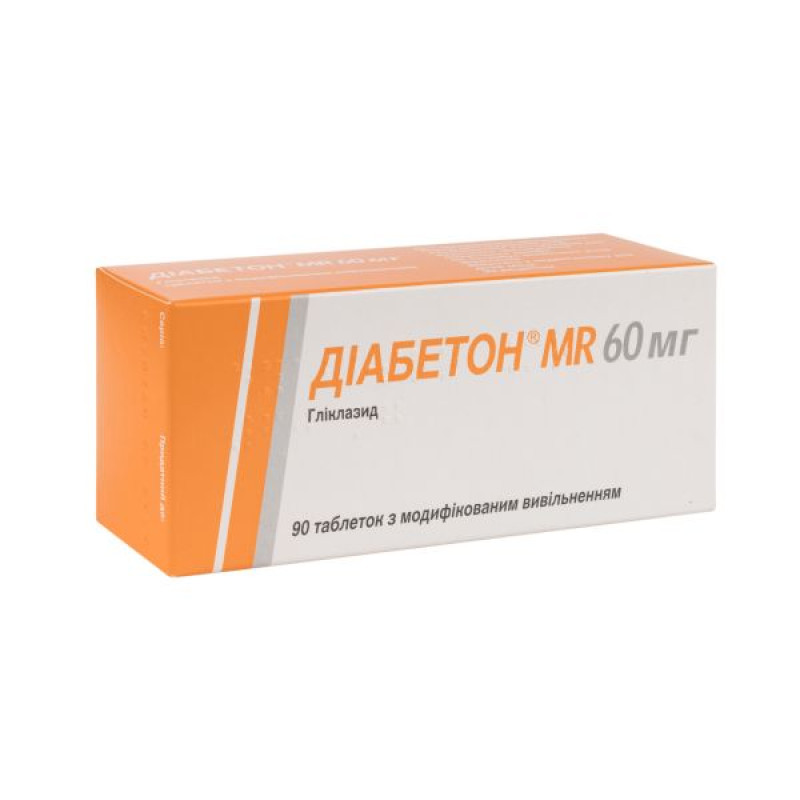
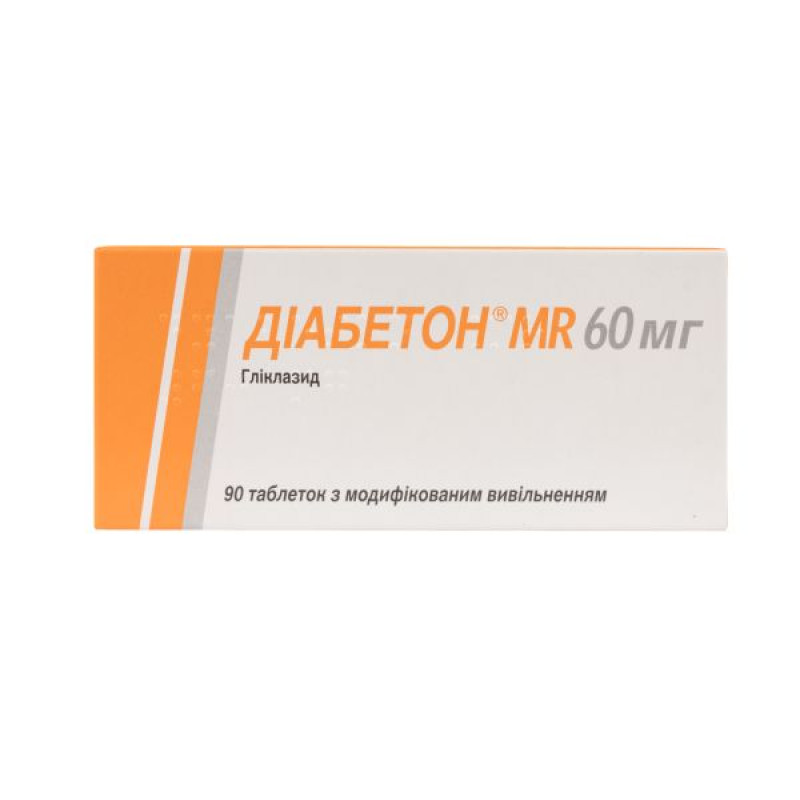
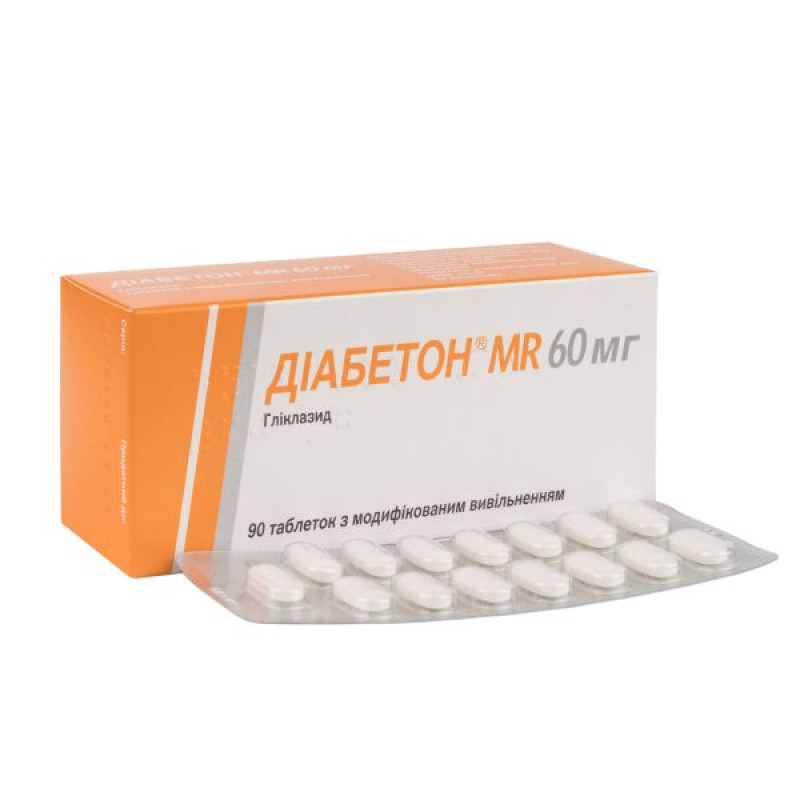
Instructions Diabeton MR 60 mg modified-release tablets 60 mg blister No. 90
Composition
active ingredient: gliclazide;
1 tablet contains gliclazide 60 mg;
Excipients: lactose monohydrate, hypromellose, magnesium stearate, maltodextrin, colloidal anhydrous silicon dioxide.
Dosage form
Modified-release tablets.
Main physicochemical properties: white, oblong tablets with a score and embossed "DIA 60" on both sides. The tablets are divisible.
Pharmacotherapeutic group
Drugs affecting the digestive system and metabolism. Antidiabetic drugs. Hypoglycemic drugs, except insulins. Sulfonamides, urea derivatives. Gliclazide. ATC code A10B B09.
Pharmacological properties
Pharmacodynamics.
Mechanism of action. Diabeton® MR 60 mg is an oral hypoglycemic agent. The active substance gliclazide is a sulfonylurea derivative and is characterized by the presence of a heterocyclic ring containing nitrogen and having endocyclic bonds.
Gliclazide reduces plasma glucose levels by stimulating insulin secretion by β-cells of the islets of Langerhans of the pancreas. The increase in postprandial insulin levels and C-peptide secretion persist even after 2 years of use of the drug. In addition to the above metabolic properties, gliclazide also has hemovascular properties.
Pharmacodynamic effects.
Effect on insulin secretion. In patients with type 2 diabetes, gliclazide restores the early peak of insulin secretion in response to glucose and increases the second phase of insulin secretion. Increased insulin secretion is observed in response to a meal or a glucose load.
Hemovascular properties. Gliclazide reduces microthrombosis through two mechanisms that may be involved in the development of complications of diabetes:
partially inhibits platelet aggregation and adhesion, reduces the number of platelet activation markers (β-thromboglobulin, thromboxane B2);
affects the fibrinolytic activity of the vascular endothelium (increases the activity of tPA).
Pharmacokinetics.
Absorption. The concentration of gliclazide in the blood plasma increases progressively during the first 6 hours after administration, and then reaches a constant level (plateau), which is maintained from the 6th to the 12th hour after administration.
Individual fluctuations are insignificant.
Gliclazide is completely absorbed from the gastrointestinal tract. Food intake does not affect the rate and extent of absorption.
Distribution: Gliclazide is approximately 95% bound to plasma proteins. The volume of distribution is approximately 30 liters.
A single daily dose of Diabeton® MR 60 mg provides an effective concentration of gliclazide in blood plasma for 24 hours.
Biotransformation: Gliclazide is metabolized mainly in the liver and excreted in the urine, less than 1% of the active substance is excreted in the urine unchanged. No active metabolites have been detected in the blood plasma.
Elimination: The elimination half-life of gliclazide is approximately 12–20 hours.
Linearity/non-linearity. When using the drug in doses up to 120 mg, a linear relationship is observed between the dose taken and the concentration in the blood plasma.
Special patient groups.
Elderly patients: No clinically significant changes in the pharmacokinetic parameters of the drug were observed in elderly patients.
Indication
Type II diabetes in adults:
lowering and controlling blood glucose when it is impossible to normalize glucose levels through diet, exercise, and weight loss alone.
Contraindication
– Hypersensitivity to gliclazide or to other sulfonylurea drugs, sulfonamides or to any component of the drug;
– type I diabetes;
– diabetic precoma and coma, diabetic ketoacidosis;
– severe renal or hepatic insufficiency (in such cases, the use of insulin is recommended);
– treatment with miconazole;
– breastfeeding period.
Interaction with other medicinal products and other types of interactions
Drugs that are likely to increase the risk of hypoglycemia.
Concomitant use contraindicated
Miconazole (for systemic use, oral gel) enhances the hypoglycemic effect with the possible development of symptoms of hypoglycemia and even the development of coma.
Concomitant use not recommended
Phenylbutazone (for systemic use) enhances the hypoglycemic effect of sulfonylurea drugs (replaces their binding to plasma proteins and/or reduces their excretion).
It is advisable to use another anti-inflammatory agent, and the patient should be warned and advised of the importance of self-monitoring. If necessary, the dose of the drug should be adjusted during and after therapy with the anti-inflammatory agent.
Alcohol increases the risk of hypoglycemic reactions (due to inhibition of compensatory reactions), which can lead to hypoglycemic coma. Alcohol and alcohol-containing medications should be avoided.
When used simultaneously with one of the following drugs, hypoglycemia may occur in some cases due to an increase in the hypoglycemic effect: other sugar-lowering drugs [insulins, acarbose, metformin, thiazolidinediones, dipeptidyl peptidase-4 inhibitors, glucagon-like peptide-1 (GLP-1) receptor agonists], β-blockers, fluconazole, angiotensin-converting enzyme (ACE) inhibitors (captopril, enalapril), H2-receptor antagonists, monoamine oxidase (MAO) inhibitors, sulfonamides, clarithromycin and nonsteroidal anti-inflammatory drugs.
Drugs that can cause hyperglycemia
Concomitant use not recommended
Danazol has diabetogenic effects. If the use of this active substance cannot be avoided, the patient should be warned and his attention should be drawn to the importance of monitoring glucose levels in the urine and blood. It may be necessary to adjust the dose of the antidiabetic agent during and after treatment with danazol.
Combinations requiring caution
Chlorpromazine (neuroleptic) when used in high doses (more than 100 mg per day) increases blood glucose levels (due to reduced insulin release). The patient should be warned and his attention should be drawn to the importance of blood glucose control. It may be necessary to adjust the dose of the antidiabetic active substance during and after treatment with the neuroleptic.
Glucocorticoids (systemic and local: intra-articular, cutaneous and rectal preparations) and tetracosactide increase blood glucose levels with possible development of ketoacidosis (reduce carbohydrate tolerance). The patient should be warned and his attention should be drawn to the importance of blood glucose control, especially at the beginning of treatment. It may be necessary to adjust the dose of the antidiabetic agent during and after treatment with glucocorticoids.
Intravenous: ritodrine, salbutamol, terbutaline increase blood glucose levels due to β2-agonist effect. The patient should be advised of the importance of blood glucose monitoring. If necessary, the patient should be switched to insulin.
St. John's wort (Hypericum perforatum) preparations reduce the concentration of gliclazide. The patient's attention should be drawn to the importance of blood glucose control.
Drugs that can cause dysglycemia
Combinations requiring caution
Fluoroquinolones. In case of simultaneous use with the drug Diabeton® MR 60 mg, the patient should be warned about the risk of dysglycemia and his attention should be drawn to the importance of monitoring blood glucose levels.
Combinations for which there are caveats
Anticoagulants (e.g. warfarin, etc.). When used simultaneously with anticoagulants, sulfonylureas may potentiate the anticoagulant effect of the latter. If necessary, the dose of anticoagulants may be adjusted.
Application features
Hypoglycemia. This medicinal product should only be prescribed to patients who are able to eat regularly (including breakfast). It is important to consume carbohydrates regularly, as the risk of hypoglycemia increases if meals are taken late, in inadequate quantities or if the meal is low in carbohydrates. Hypoglycemia is more likely to occur with a low-calorie diet, prolonged or intense exercise, alcohol consumption or the use of a combination of hypoglycemic drugs.
Hypoglycemia may occur when taking sulfonylureas (see section "Adverse reactions"). Sometimes hypoglycemia can be severe and prolonged. In this case, hospitalization and administration of glucose for several days may be necessary.
To reduce the risk of hypoglycemic episodes, it is necessary to take into account the individual characteristics of patients, give them clear instructions and carefully select the dose.
Factors that increase the risk of hypoglycemia:
– the patient refuses or cannot follow the doctor's recommendations (this especially applies to elderly patients);
– unsatisfactory, irregular nutrition, missed meals, periods of fasting or changes in diet;
– imbalance between physical activity and carbohydrate intake;
– renal failure;
– severe liver failure;
– drug overdose;
– certain endocrine system disorders: thyroid dysfunction, hypopituitarism, and adrenal insufficiency;
– simultaneous use of certain medicines (see section “Interaction with other medicines and other types of interactions”).
Renal and hepatic insufficiency. The pharmacokinetics and/or pharmacodynamics of gliclazide may be altered in patients with hepatic and severe renal insufficiency. Episodes of hypoglycemia in such patients may be prolonged and require appropriate treatment.
Patient information
The patient and his family members should be informed about the risk of hypoglycemia and its symptoms (see section "Adverse reactions"), about the treatment and conditions that may contribute to its development.
Deterioration of glycemic control in patients receiving hypoglycemic drugs may be caused by: St. John's wort (Hypericum perforatum) preparations (see section "Interaction with other medicinal products and other types of interactions"), fever, trauma, infection, or surgery. In some cases, insulin may be necessary.
The hypoglycaemic efficacy of any oral hypoglycaemic agent, including gliclazide, may diminish over time. This may be due to progression of the disease or to a decrease in response to treatment. This phenomenon is known as secondary insufficiency, which is different from primary insufficiency, when the drugs are ineffective from the start of treatment. Before concluding that a patient has developed secondary insufficiency, it is necessary to check the correctness of the prescribed dose and the patient's adherence to the diet.
Dysglycemia: Changes in blood glucose levels, including hypoglycemia and hyperglycemia, have been reported in diabetic patients receiving concomitant therapy with fluoroquinolones, particularly in the elderly. Therefore, careful monitoring of blood glucose levels is recommended in all patients receiving Diabeton® MR 60 mg and a fluoroquinolone concomitantly.
Laboratory tests: Glycated hemoglobin (or fasting blood glucose) is recommended to assess blood glucose control. Self-monitoring of blood glucose levels by patients may also be useful.
In patients with glucose-6-phosphate dehydrogenase (G6PD) deficiency, the use of sulfonylureas may cause hemolytic anemia. Since gliclazide belongs to the sulfonylurea class of chemical origin, caution should be exercised and consideration should be given to prescribing alternative therapy with a drug from a different class to patients with G6PD deficiency.
Patients with porphyria: Cases of acute porphyria have been described with the use of some other sulfonylureas in patients with porphyria.
Excipients.
The medicinal product contains lactose, therefore patients with rare hereditary problems of galactose intolerance, the Lapp lactase deficiency or glucose-galactose malabsorption syndrome are not recommended to take this medicine.
Use during pregnancy or breastfeeding
Pregnancy: There are no or limited amount of data from the use of gliclazide during pregnancy (less than 300 exposed pregnancies), and there are no data from the use of other sulfonylureas. Animal studies have shown that gliclazide is not teratogenic.
As a precautionary measure, it is preferable to avoid taking gliclazide during pregnancy.
Glucose control should be achieved before planning pregnancy to reduce the risk of abnormalities associated with uncontrolled diabetes.
For the treatment of diabetes during pregnancy, the drug of first choice is insulin, and oral hypoglycemic drugs are not acceptable.
When planning or immediately after pregnancy, it is necessary to transfer a woman from oral hypoglycemic drugs to insulin.
Breastfeeding. There is no data on the excretion of gliclazide or its metabolites into breast milk. Diabeton® MR 60 mg is contraindicated during breast-feeding due to the risk of neonatal hypoglycemia. A risk to the newborn and infant cannot be excluded.
Fertility: In nonclinical studies, no effects on fertility or reproductive performance were observed in male or female rats.
Ability to influence reaction speed when driving vehicles or other mechanisms
Diabeton® MR 60 mg may have a minor influence on the ability to drive or use machines. Patients should be aware of the symptoms of hypoglycemia, be able to recognize them and, if they occur, exercise caution when driving or operating machinery, especially at the beginning of treatment.
Method of administration and doses
For oral use.
It is intended for adults only.
The daily dose can vary from 0.5 to 2 tablets (30 to 120 mg per day).
The tablet can be divided into equal doses.
The daily dose should be taken once during breakfast.
Half a tablet or whole tablet(s) should be swallowed whole (do not crush or chew).
If the patient forgets to take the tablets, the dose should not be increased the next day.
Like all hypoglycemic agents, Diabeton® MR 60 mg requires individual dose adjustment depending on the patient's response to treatment (blood glucose level, glycosylated hemoglobin HbA1c).
The maximum recommended daily dose is 120 mg (2 tablets).
1 modified-release tablet of Diabeton® MR 60 mg is equivalent to 2 modified-release tablets of gliclazide 30 mg.
The modified-release tablet of the drug Diabeton® MR 60 mg is divisible, which makes it possible to use the drug in a dose of 30 mg (0.5 tablet) and in a dose of 90 mg (1.5 tablets).
Transferring a patient from a medicinal product containing gliclazide 80 mg to Diabeton® MR 60 mg, modified-release tablets. 1 tablet containing gliclazide 80 mg corresponds to 0.5 tablets of Diabeton® MR 60 mg. Blood counts should be carefully monitored during transfer to Diabeton® MR 60 mg.
Transferring a patient from another oral hypoglycemic agent to Diabeton® MR 60 mg. When transferring to Diabeton® MR 60 mg, the dosage and half-life of the previous oral hypoglycemic agent should be taken into account. A transition period is usually not required. The dose should be started at 30 mg with subsequent adjustment (see “Initial dose and dose selection”).
When transferring from a sulfonylurea hypoglycemic drug with a long half-life, a break in treatment for several days may be necessary to avoid the cumulative effect of the two drugs and the development of hypoglycemia. Treatment with Diabeton® MR 60 mg is started with a dose of 30 mg per day (0.5 tablets) with subsequent dose adjustment in accordance with the rules for starting treatment and selecting the dose (see above).
Concomitant use with other antidiabetic agents. Diabeton® MR 60 mg can be used in combination with biguanides, alpha-glucosidase inhibitors or insulin. If adequate blood glucose control is not achieved in patients taking Diabeton® MR 60 mg, concomitant insulin therapy can be initiated under close medical supervision.
Special patient groups.
Elderly patients. For patients over 65 years of age, the dosage regimen of Diabeton® MR 60 mg is the same as for patients under 65 years of age.
Patients with impaired renal function. For patients with mild to moderate renal insufficiency, the dosage regimen of Diabeton® MR 60 mg is the same as for patients with normal renal function, but the patient should be closely monitored.
Risk factors for hypoglycemia:
- insufficient or poor nutrition;
- severe or insufficiently compensated disorders of the endocrine system (hypothyroidism, hypopituitarism and adrenocorticotropic insufficiency);
- discontinuation of long-term corticosteroid therapy and/or high-dose corticosteroid therapy;
- severe vascular diseases (severe ischemic heart disease, severe carotid vascular pathology, diffuse vascular diseases).
A minimum starting dose of 30 mg per day is recommended.
Children
It is not recommended to prescribe Diabeton® MR 60 mg to children due to the lack of data on the use of the drug in this category of patients.
Overdose
Overdose of sulfonylureas can cause hypoglycemia.
Symptoms of mild hypoglycemia (without loss of consciousness and without neurological symptoms) should be corrected by carbohydrate (sugar) intake, dose adjustment of the hypoglycemic drug and/or diet. Close monitoring of the patient should continue until the physician is confident that the patient is safe.
Severe hypoglycemia may occur with the development of coma, convulsions or other neurological disorders, which requires emergency medical care with immediate hospitalization.
If a diagnosis of hypoglycemic coma is made or if coma is suspected, the patient should be given 50 ml of a concentrated glucose solution (20% to 30%) intravenously rapidly, followed by continuous infusion of a less concentrated glucose solution (10%) at a frequency that will maintain a blood glucose level above 1 g/l. The patient should be kept under constant observation. Depending on the patient's condition, the physician will decide on further monitoring.
Gliclazide has a high level of binding to plasma proteins, so dialysis is ineffective.
Adverse reactions
The most common adverse reaction with gliclazide is hypoglycemia. As with other sulfonylureas, gliclazide can cause hypoglycemia with irregular meals and especially if meals are missed. Possible symptoms of hypoglycemia are: headache, intense hunger, nausea, vomiting, fatigue, sleep disturbances, agitation, aggression, decreased concentration and attention, slowed reactions, depression, confusion, visual and speech disorders, aphasia, tremor, paresis, sensory disturbances, dizziness, feeling of weakness, loss of self-control, delirium, convulsions, shallow breathing, bradycardia, drowsiness and loss of consciousness, which can lead to coma and death.
Usually, the symptoms of hypoglycemia disappear after taking carbohydrates (sugar). However, taking sugar substitutes will not be effective in this case. Experience with other sulfonylureas shows that even if the measures taken are effective, hypoglycemia may occur again.
If the hypoglycemic episode is severe or prolonged and the patient's condition is temporarily under control by taking sugar, emergency medical attention or even hospitalization is necessary.
Other adverse reactions.
Gastrointestinal disorders, including abdominal pain, nausea, vomiting, dyspepsia, diarrhea, and constipation. Following the recommendations for taking the drug with breakfast will help avoid or minimize the occurrence of these manifestations.
The following undesirable effects are less common.
Skin and subcutaneous tissue disorders: rash, pruritus, urticaria, angioedema, erythema, maculopapular rash, bullous reactions (such as Stevens-Johnson syndrome, toxic epidermal necrolysis and autoimmune bullous disorders) and very rarely - drug rash with eosinophilia and systemic symptoms (DRESS).
Blood and lymphatic system disorders: Hematological disorders are rare and may include anemia, leukopenia, thrombocytopenia, granulocytopenia. These phenomena usually disappear after discontinuation of treatment.
Hepatobiliary system: increased levels of liver enzymes (alanine aminotransferase (ALT), aspartate aminotransferase (AST), alkaline phosphatase), hepatitis (isolated cases). In case of cholestatic jaundice, treatment with the drug should be discontinued.
These undesirable effects usually disappear after discontinuation of the drug.
On the part of the organs of vision: temporary visual disturbances may occur due to changes in blood glucose levels, especially at the beginning of treatment.
Reactions characteristic of the sulfonylurea class of drugs.
There are reports of erythrocytopenia, agranulocytosis, hemolytic anemia, pancytopenia, allergic vasculitis, hyponatremia, elevated liver enzymes and even liver dysfunction (e.g. with cholestasis and jaundice), hepatitis with regression after discontinuation of sulfonylureas or in isolated cases with subsequent life-threatening liver failure.
Reporting of suspected adverse reactions. Reporting of suspected adverse reactions during the post-marketing period of a medicinal product is important. This allows monitoring of the benefit/risk balance of the medicinal product. Healthcare professionals are required to report any suspected adverse reactions through the national pharmacovigilance system.
Expiration date
3 years.
Storage conditions
Does not require any special storage conditions. Keep out of the reach of children.
Packaging
15 tablets in a blister (PVC/aluminium). 2 or 6 or 8 blisters in a cardboard box.
Vacation category
According to the recipe.
Producer
Servier Industry Laboratories / Les Laboratoires Servier Іndustrie.
Location of the manufacturer and address of its place of business
905 route de Saran, 45520 Gidy, France / 905 route de Saran, 45520 Gidy, France.
Producer
Servier (Ireland) Industries Ltd.
Location of the manufacturer and address of its place of business
Moneylands, Gorey Road, Arklow, Co. Wicklow, Ireland / Moneylands, Gorey Road, Arklow, Co. Wicklow, Ireland.
Applicant
LE LABORATORY SERVIER / LES LABORATOIRES SERVIER.
Applicant's location
50, rue Carnot, 92284 Suresnes Сedex, France / 50, rue Carnot, 92284 Suresnes Сedex, France.
For any information regarding the medicinal product, please contact Servier Ukraine LLC by phone: (044) 490 3441, fax: (044) 490 3440.