Translation of the instructions can be
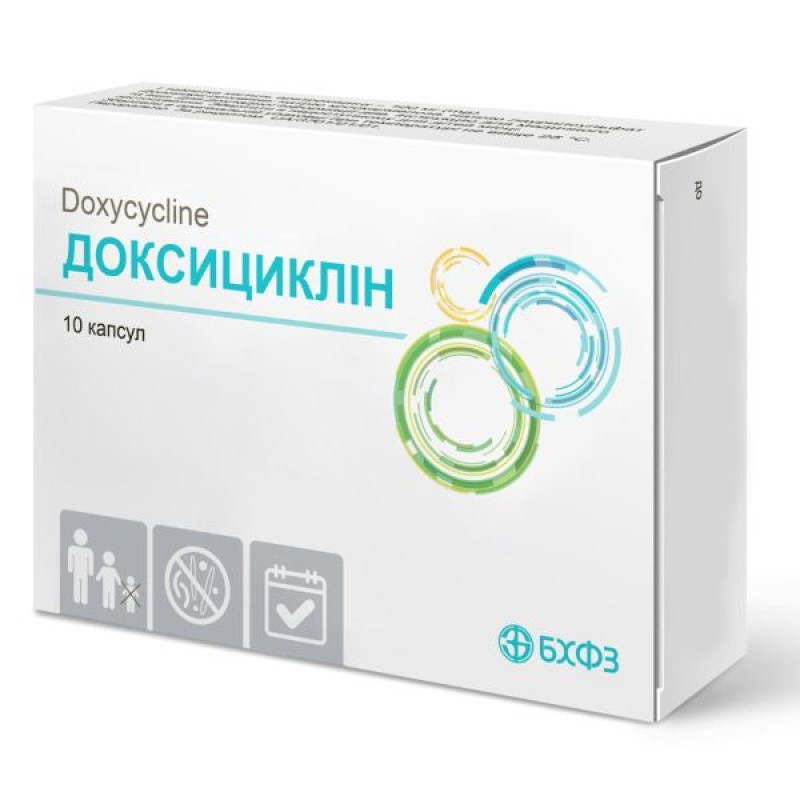
Doxycycline capsules 100 mg
Instruction
For medical use of the medicinal product
Composition:
Active ingredient: doxycycline;
1 capsule contains doxycycline hyclate equivalent to doxycycline - 100 mg;
excipients: lactose, calcium stearate; the capsules contain the dye Sunset Yellow (E 110).
Dosage form.
Capsules.
Main physicochemical properties: hard capsules with a yellow cap and body, containing a powder or mass in the form of a partially or fully formed column of yellow color with a greenish tint. White inclusions are allowed.
Pharmacotherapeutic group.
Antibacterials for systemic use. tetracycline. doxycycline. atx code j01a a02.
Pharmacological properties.
Pharmacodynamics.
Doxycycline is a semi-synthetic antibiotic of the broad-spectrum tetracycline group. Causes bacteriostatic action by inhibiting protein synthesis of pathogens as a result of blocking the connection of aminoacyl-transfer RNA (tRNA) with the complex "messenger RNA (mRNA) - ribosome". Active against gram-positive bacteria: aerobic cocci - Staphylococcus spp. (including those that produce penicillinase), Streptococcus spp. (including Streptococcus pneumoniae); aerobic spore-forming bacteria - Bacillus anthracis; aerobic non-spore-forming bacteria - Clostridium spp. Doxycycline is also active against gram-negative bacteria: aerobic cocci - Neisseria gonorrhoeae; aerobic bacteria - Escherichia coli; Shigella spp., Salmonella spp., Enterobacter spp., Klebsiella spp., Bordetella pertussis, as well as Rickettsia spp., Treponema spp., Mycoplasma spp., Chlamydia spp. Pseudomonas aeruginosa, Proteus spp., Serratia spp., Most strains of Bacteroides are resistant to doxycycline fragile.
Pharmacokinetics.
The drug is rapidly absorbed from the digestive tract and slowly excreted from the body. Studies show that the absorption of doxycycline differs from some other tetracyclines, it is not affected by simultaneous ingestion of food (including milk). Depending on the dose, the therapeutic concentration in the blood is maintained for 18-24 hours. It binds to blood proteins by 80-90%. It is rapidly distributed in most body fluids, including bile, paranasal sinuses, pleural, synovial and ascitic fluids. The concentration in the cerebrospinal fluid varies and after parenteral administration can be 10-25% of the concentration in the blood serum.
The half-life of the drug is 12-22 hours. A significant part is excreted unchanged in the feces, approximately 40% in the urine.
Clinical characteristics.
Indication.
Treatment of infections caused by susceptible strains of Gram-positive and Gram-negative microorganisms and some other microorganisms, namely:
Respiratory tract infections: pneumonia and other lower respiratory tract diseases caused by sensitive strains of Streptococcus pneumoniae, Haemophilus influenza, Klebsiella pneumoniae; pneumonia caused by Mycoplasma pneumoniae; chronic bronchitis, sinusitis; urinary tract infections: infections caused by sensitive strains of the Klebsiella, Enterobacter species, as well as Escherichia coli, Streptococcus faecalis bacteria; sexually transmitted infections: infections caused by Chlamydia trachomatis, including uncomplicated urethral and endocervical infections and rectal infections; non-gonococcal urethritis caused by Ureaplasma urealyticum (T-mycoplasma); soft chancre, inguinal granuloma, venereal granuloma; the drug is an alternative for the treatment of gonorrhea and syphilis; skin infections: acne when antibiotic therapy is necessary.
Treatment of infections caused by microorganisms sensitive to tetracycline, namely:
ophthalmic infections: infections caused by sensitive bacteria Gonococci, Staphylococci and Haemophilus influenza. The infection causing trachoma is not always eliminated, which is confirmed by immunofluorescence analysis. For the treatment of paratrachoma, the drug can be used as monotherapy or in combination with other drugs; rickettsial infections: typhus group, Rocky Mountain spotted fever, Q fever, tick-borne fever, Coxiella endocarditis; other infections: ornithosis, brucellosis (when used in combination with streptomycin), cholera, bubonic plague, epidemic relapsing typhus, tick-borne relapsing fever, tularemia, melioidosis; tropical malaria resistant to chloroquine, and acute intestinal amebiasis (when used in combination with an amebicide).
Alternative treatment for leptospirosis, gas gangrene, tetanus.
Prevention of the following conditions: Japanese river fever, traveler's diarrhea (caused by enterotoxigenic Escherichia coli), leptospirosis, malaria. Malaria prophylaxis should be carried out in accordance with current practice due to the possibility of resistance development.
Contraindication.
Hypersensitivity to tetracycline, doxycycline and other components of the drug; porphyria; severe liver failure; leukopenia.
Interaction with other drugs and other types of interactions.
Iron salts, oral zinc, bismuth preparations, aluminum, calcium, magnesium antacids and other preparations containing these cations (including magnesium-containing laxatives, sucralfate), cholestyramine, colestipol, kaolin, activated charcoal, agents that increase gastric pH (including sodium bicarbonate, N2-histamine blockers): reduced absorption of doxycycline. The use of doxycycline with these drugs should be separated as much as possible in time (2 hours before or 4 hours after their use).
Sulfonylurea derivatives: increased hypoglycemic effect.
Curare-like drugs: doxycycline potentiates their effect.
Penicillins, cephalosporins, beta-lactam antibiotics: as a bacteriostatic antibiotic, doxycycline may interfere with the bactericidal activity of other antibiotics.
Indirect anticoagulants, including warfarin, phenindione, antithrombotic agents: possible increase in prothrombin index. Tetracyclines reduce the level of prothrombin in blood plasma, potentiate the effect of indirect anticoagulants, therefore, a reduction in the dose of anticoagulants is possible.
Barbiturates, carbamazepine, primidone, phenytoin, other drugs that induce liver enzymes, including rifampicin, carbonic anhydrase inhibitors (including acetazolamide): reduced plasma concentrations and shortened half-life (T1/2) of doxycycline (induction of monooxygenases and acceleration of biotransformation in the liver), which may lead to a decrease in the antibacterial effect. This effect may persist for several days after discontinuation of the above drugs, so an increase in the daily dose of doxycycline should be considered.
Ethanol: shortening of T1/2 of doxycycline. Alcohol should not be consumed during doxycycline therapy.
Hormonal contraceptives: reduced effectiveness (unplanned pregnancy) and increased frequency of breakthrough bleeding when used simultaneously with tetracyclines. In this regard, it is recommended to use non-hormonal methods of contraception during use of doxycycline and for 7 days after completing the course of doxycycline.
Cyclosporine: increased plasma concentrations and, as a result, increased toxicity may occur. This combination should be used under close supervision.
Methoxyflurane anesthesia: possible toxic effects on the kidneys, including acute renal failure, with fatal outcome.
Methotrexate: increased toxicity of the latter; this combination should be used with caution.
Ergotamine and methysergide: increased risk of ergotism.
Vitamin A and retinoids (including isotretinoin, etretinate): increased risk of intracranial hypertension; this combination should not be used. To prevent this complication, an interval should be maintained after doxycycline therapy when treating acne with retinoids.
Theophylline: increased risk of side effects from the digestive system.
Lithium preparations: possible increase or decrease in lithium levels in the blood.
Oral typhoid vaccine: Antibacterial drugs, including tetracycline, may reduce its therapeutic effect. The vaccine should be avoided during treatment with doxycycline.
When conducting a fluorescent test, a false result of increased levels of catecholamines in the urine is possible. Also, the use of tetracycline can lead to inaccurate results of laboratory tests when determining the amount of sugar, protein, urobilin in the urine.
Application features.
Hepatic impairment. Doxycycline should be used with caution in patients with impaired hepatic function and in patients receiving potentially hepatotoxic drugs. Hepatic impairment associated with oral or parenteral administration of tetracyclines, including doxycycline, has been reported extremely rarely.
Renal impairment. Renal excretion of doxycycline is approximately 40% per 72 hours in patients with normal renal function. This range may decrease to 1-5% per 72 hours in patients with severe renal impairment (creatinine clearance below 10 ml/min). Studies have not shown a significant difference in the serum half-life of doxycycline in patients with normal renal function and those with severe renal impairment. Hemodialysis does not affect the serum half-life of the drug. The anti-anabolic effect of tetracyclines may lead to an increase in blood urea levels. Studies to date show that doxycycline does not have an anti-anabolic effect in patients with renal impairment. There is no need for dose adjustment in renal impairment.
Microflora. The use of antibiotics can sometimes lead to overgrowth of non-susceptible microorganisms, in particular fungi, including Candida, and the development of superinfection, which requires the withdrawal of the antibiotic and the adoption of appropriate measures. To prevent the development of candidiasis, it is recommended to use antifungal drugs simultaneously with doxycycline. Treatment with antibacterial drugs disrupts the normal flora of the large intestine, which can cause overgrowth of Clostridium difficile. The occurrence of diarrhea associated with toxins A and B produced by C. difficile (CDAD) has been reported with the use of almost all antibacterial agents, including doxycycline. The severity of the manifestations can range from mild diarrhea to fatal colitis. In the absence of appropriate treatment, toxic megacolon, peritonitis, shock may develop. Drugs that inhibit intestinal peristalsis should not be prescribed during treatment. The possibility of CDAD should be considered in all patients who have diarrhea during or after antibiotic use. A careful medical history should be taken, as CDAD can occur within 2 months of stopping antibacterial therapy. Pseudomembranous colitis has been reported with nearly all antibacterial agents, including doxycycline. The severity of this complication has ranged from mild to life-threatening. This diagnosis should be considered in patients presenting with diarrhea secondary to antibacterial agents.
Esophagitis. Cases of esophagitis and esophageal ulcers have been reported in patients taking encapsulated or tableted forms of tetracyclines, including doxycycline. Most of these patients took the drug with insufficient fluid or immediately before bedtime. The drug should be taken with sufficient fluid and swallowed in an upright sitting or standing position. If symptoms such as dysphagia or chest pain occur, the possibility of this complication should be considered and the drug should be discontinued. Doxycycline should be used with caution in patients with esophageal reflux.
Benign intracranial hypertension has been reported in patients receiving the drug at the maximum therapeutic dose. It rapidly regresses after drug withdrawal.
Porphyria: Rare cases of porphyria have been observed in patients receiving tetracycline.
Venereal Diseases. Appropriate diagnostic procedures, including dark-field microscopy and other tests, should be used in the treatment of venereal diseases with suspected concomitant syphilis. In such cases, monthly serological tests should be performed for at least 4 months.
Beta-hemolytic streptococcus. For infections caused by group A beta-hemolytic streptococci, treatment should be continued for at least 10 days.
Myasthenia gravis: Tetracyclines can cause mild neuromuscular blockade, so doxycycline should be used with caution in patients with myasthenia gravis.
Systemic lupus erythematosus. Tetracyclines can cause exacerbation of systemic lupus erythematosus.?
Methoxyflurane: Methoxyflurane should be used with caution in conjunction with tetracyclines due to the potential for fatal nephrotoxicity.
Excipients. Patients with rare hereditary problems of galactose intolerance, the Lapp lactase deficiency or glucose-galactose malabsorption should not take this medicine (the medicine contains lactose). The medicine contains sunset yellow FCF (E 110), which may cause allergic reactions, including bronchial asthma. The risk of allergy is higher in patients with hypersensitivity to acetylsalicylic acid.
With prolonged therapy with high doses, laboratory evaluation of the functions of the hematopoietic organs, kidneys, and liver should be performed regularly.
Use during pregnancy and breastfeeding.
The use of the drug during pregnancy is contraindicated, since, penetrating through the placenta, the drug can disrupt the normal development of teeth, cause inhibition of the growth of the bones of the fetal skeleton (see the "Children" section), as well as fatty infiltration of the liver.
Tetracyclines are excreted in breast milk, so if it is necessary to use the drug, breastfeeding should be discontinued for the period of treatment.
The ability to influence the reaction speed when driving vehicles or other mechanisms.
The effect of doxycycline on the ability to drive or use machines has not been studied. If you experience adverse reactions such as hypotension, tinnitus, blurred vision, scotoma, diplopia, or long-term vision loss, you should refrain from driving or using machines.
The drug should be taken orally during or after meals to reduce the risk of irritation of the esophagus or stomach, washed down with sufficient fluid (can be washed down with milk or kefir). Simultaneous food intake (including milk) has almost no effect on the absorption of the drug. Capsules should be swallowed in an upright position, sitting or standing, well before bedtime, to reduce the risk of irritation or ulcers of the esophagus. The duration of the course of treatment is determined individually by the doctor; treatment should be continued for at least 24-48 hours after the disappearance of symptoms of the disease and normalization of body temperature. In streptococcal infections, the drug should be used for at least 10 days to prevent the development of rheumatic fever or glomerulonephritis.
Adults and children aged 12 years and over with a body weight of more than 45 kg.
On the first day of treatment of acute infections, the daily dose is 200 mg (once or 100 mg at intervals of 12 hours), on the following days - 100 mg/day. In the treatment of severe infections (especially chronic urological infections), the drug should be used at a dose of 200 mg per day throughout the entire period of treatment. The frequency of administration is 1-2 times a day.
Special use cases.
Acne - the drug should be prescribed at a dose of 50 mg per day for 6-12 weeks (dosage forms containing 50 mg of doxycycline should be used).
Sexually transmitted infections: uncomplicated infections of the urethra, cervix and rectal area caused by Chlamydia trachomatis; non-gonococcal urethritis caused by Ureaplasma urealyticum; uncomplicated genital infections caused by Neisseria gonorrhoeae (except anorectal infection in men) - 100 mg 2 times a day, at least 7 days; acute orchoepididymitis caused by Chlamydia trachomatis or Neisseria gonorrhoeae - 100 mg 2 times a day for 10 days; primary and secondary syphilis in patients without confirmed pregnancy and with an allergy to penicillins (as an alternative treatment) - 200 mg 2 times a day for 14 days.
Epidemic relapsing typhus, tick-borne relapsing typhus - a single dose of 100-200 mg, depending on the severity of the disease.
Tropical malaria resistant to chloroquine - 200 mg per day for at least 7 days. Given the potential severity of the infectious disease, a fast-acting schizonticidal agent (e.g. quinine) should always be used as an adjunct to doxycycline, the dose of which depends on the specific case.
Malaria prevention - the recommended dose for adults is 100 mg per day. For children over 12 years of age, the recommended dose is 2 mg/kg per day (doxycycline preparations with the possibility of such a dosage should be used) up to a total dose of 100 mg per day. Prophylactic use can be started 1-2 days before traveling to a region with malaria, continue taking the drug daily while staying in a region with malaria and for 4 weeks after leaving this region. Current standards for the treatment of malaria should also be taken into account.
Prevention of Japanese river fever - the recommended dose of the drug is 200 mg once.
Treatment and prevention of cholera - the recommended dose of the drug is 300 mg once.
Prevention of travelers' diarrhea in adults - 200 mg on the first day of travel (as a single dose or 100 mg every 12 hours) and 100 mg/day during the following days of travel. Information on the use of the drug for prophylactic purposes for longer than 21 days is not available.
Leptospirosis prophylaxis - 200 mg once a week during the entire stay in the region with leptospirosis and 200 mg of the drug at the end of the trip. There is no information on the use of the drug for longer than 21 days for the purpose of prophylaxis.
Special patient groups.
Elderly patients: The drug can be used in normal doses without special precautions. There is no need for dose adjustment in cases of impaired renal function. Doxycycline may be the drug of choice for elderly patients, as its use is less associated with the development of esophageal irritation and ulcers.
In patients with impaired renal function, the use of the drug in recommended doses does not lead to antibiotic cumulation (see the section "Special instructions for use").
Patients with impaired liver function: see section "Special warnings and precautions for use".
Children.
Doxycycline is contraindicated in children under 12 years of age. This dosage form is not used in children over 12 years of age and weighing up to 45 kg. Like other tetracyclines, doxycycline forms stable calcium complexes in any bone formation (skeletal structure, enamel, dentin of teeth). A decrease in the growth rate of the fibula was observed in premature children who received tetracycline orally at a dose of 25 mg/kg of body weight every 6 hours. This adverse reaction is reversible upon discontinuation of the drug. The use of tetracycline during the period of tooth development (II-III trimesters of pregnancy, breastfeeding, neonatal period, children under 12 years of age) can cause a permanent change in tooth color (yellow-brown-gray). This adverse reaction is more common during long-term use, but can also be observed after repeated short courses of treatment. There have also been reports of enamel hypoplasia.
Overdose.
Acute antibiotic overdose is rare.
Treatment. The drug should be discontinued, gastric lavage, symptomatic and supportive therapy should be performed. Since tetracyclines can form chelate complexes with calcium salts, calcium salts may be used as a countermeasure in case of intoxication. Hemodialysis does not affect the half-life of the drug from the blood serum, therefore it is ineffective in case of overdose.
Adverse reactions.
Blood and lymphatic system: anemia, including hemolytic anemia, leukopenia, leukocytosis, thrombocytopenia, neuropenia and eosinophilia, lymphocytopenia, lymphadenopathy, the appearance of atypical lymphocytes, toxic granulation of granulocytes, blood clotting disorders, decreased prothrombin activity, hematuria, porphyria.
Immune system: hypersensitivity reactions, including anaphylactic shock, anaphylaxis, hypotension, pericarditis, tachycardia, angioedema, dyspnoea (including bronchospasm, exacerbation of bronchial asthma), generalized rash, exacerbation of systemic lupus erythematosus, serum sickness, peripheral oedema and urticaria; anaphylactoid reactions, anaphylactoid purpura. Cases of DRESS syndrome (drug rash with eosinophilia and systemic symptoms) have been reported. There is complete cross-allergy among tetracyclines. The drug contains sunset yellow FCF dye (E 110), which can cause allergic reactions, including bronchial asthma.
Skin and subcutaneous tissue: itching, rashes, including maculopapular, erythematous, pustular, photosensitivity reactions, erythema multiforme, exfoliative dermatitis, Stevens-Johnson syndrome, toxic epidermal necrolysis, photoonycholysis, nail discoloration.
Nervous system: bulging fontanelle in infants and benign intracranial hypertension in adolescents and adults, the first symptoms of which may be headache, dizziness, fatigue, blurred vision, scotomas, diplopia, nausea, vomiting; hypoesthesia, paresthesia, restlessness, anxiety, feeling of malaise, confusion, drowsiness. Convulsions, depression, hallucinations are possible.
Sense organs: tinnitus, vertigo; conjunctivitis, periorbital edema. There have been reports of prolonged/permanent loss of vision, impaired/loss of smell and taste, which were sometimes only partially reversible.
Vascular system: tides.
Digestive system: nausea, vomiting, dry mouth, pharyngitis, abdominal pain, dyspepsia (including heartburn/gastritis), dysphagia, diarrhea, pancreatitis, steatorrhea, anorexia. Cases of esophagitis and esophageal ulceration have been reported in patients taking doxycycline capsules and tablets.
Hepatobiliary system: cases of hepatotoxicity with transient increases in hepatic transaminases in the blood, liver dysfunction; hepatitis, jaundice, fatty liver, liver failure have been reported.
Effects due to biological action: with prolonged use of high doses of antibiotics, including doxycycline, the development of superinfection is possible, which can cause the development of candidiasis, glossitis, glossopharyngitis, stomatitis, staphylococcal enterocolitis, CDAD, pseudomembranous colitis, itching in the anal area, inflammatory lesions of the anogenital area (as a result of candidiasis), vulvovaginitis.
Endocrine system: with prolonged use of tetracycline, microscopic brown-black areas may appear in the thyroid tissue. Thyroid function is not impaired. Hypoglycemia is possible.
Musculoskeletal system: arthralgia, myalgia.
Human anatomical models: Dose-dependent increase in blood urea. Cases of interstitial nephritis, acute renal failure, anuria have been reported.
Other: Tetracyclines can cause tooth discoloration and tooth enamel hypoplasia.
Expiration date.
3 years. Do not use after the expiry date stated on the packaging.
Storage conditions.
In the original packaging at a temperature not exceeding 25 ° C. Store out of the reach of children.
Packaging.
10 capsules in a blister, 1 blister in a pack.
Vacation category.
According to the recipe.
Producer.
Public Joint Stock Company "Research and Production Center" Borshchagov Chemical and Pharmaceutical Plant ".
Location of the manufacturer and address of its place of business.
Ukraine, 03134, Kyiv, Svit St., 17.