Characteristic
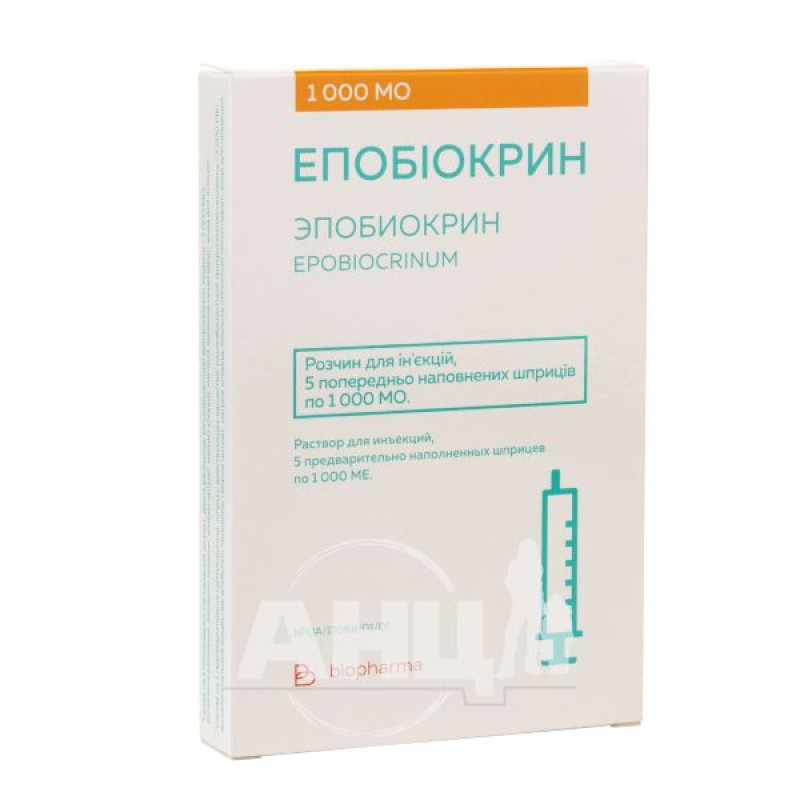
Immunological and biological properties. Recombinant human erythropoietin in biological and immunological activity corresponds to human erythropoietin (EPO) - a natural glycoprotein hormone that stimulates erythropoiesis. Normally, in a healthy person, EPO is synthesized by the kidneys (90%) and Kupffer cells of the liver (10%). The level of its synthesis is determined by the level of blood oxygen saturation. EPO stimulates the proliferation and differentiation of erythroid cells into mature erythrocytes. Its effect is manifested in the early stages of erythropoiesis at the level of burst-forming erythroid units and colony-forming erythroid units, then at the level of proerythroblasts, erythroblasts and reticulocytes (the sensitivity of these cells to EPO is proportional to their degree of maturity). EPO normalizes hemoglobin and hematocrit levels and eliminates symptoms associated with anemia.
Pharmacological properties
Pharmacokinetics. with intravenous administration of the drug, t½ in individuals with normal renal function is about 4 hours; in patients with impaired renal function - about 5 hours.
With s / c administration, the concentration of the drug in the blood increases slowly and reaches a maximum in the period from 12 to 18 hours after administration. T ½ is 24 hours.
The drug does not have cumulative properties.
Indication
Anemia in patients with uremic stage of chronic kidney disease receiving therapy with chronic hemodialysis (CHD) and permanent ambulatory peritoneal hemodialysis (PAPD); anemia in pregnant women (III trimester of pregnancy) and in women in labor with reduced hemoglobin and hematocrit levels; early anemia in newborns of premature babies; late anemia in newborns with hemolytic disease who have undergone intrauterine transfusion of red blood cell mass or postnatal replacement and fractional blood transfusions, which are characterized by inadequately low (relative to the degree of anemia) production of erythropoietin; stimulation of erythropoiesis in late hyporegenerative anemia in newborns with hemolytic disease; anemia caused by erythropoietin deficiency in patients with chronic renal failure; anemia associated with chemotherapy and radiotherapy of tumors; anemia in patients with HIV caused by the use of zidovudine; Epo-dependent anemia (non-myeloid tumors, rheumatoid arthritis, etc.); to reduce the volume of blood transfusions during major surgical interventions and acute blood loss.
Application
The drug is administered subcutaneously or intravenously. The duration of intravenous injection is 1-2 minutes.
The drug is not used for infusions.
Anemia in patients with uremic stage of chronic renal failure. Patients on hemodialysis (HD), the drug is administered subcutaneously or intravenously at a dose of 200 IU / kg / week after a hemodialysis session. It is recommended to divide the weekly dose (200 IU / kg / week) into 3 injections during the week (after each hemodialysis session). The maximum dose should not exceed 200 IU / kg 3 times a week. The drug is administered subcutaneously at a dose of 100 IU / kg 1 time a week.
Patients on PAPD are administered subcutaneously at a dose of 75 IU/kg once a week. The course of treatment is 8 weeks.
Intravenous administration of Epobiocrin allows you to reach C max of the drug in the blood within the first hour, with its decrease to the baseline level by the end of the first day after administration. Subcutaneous administration of Epobiocrin allows you to reach C max of the drug in the blood within 8-24 hours, regardless of the type of dialysis (with its decrease to the baseline level by the end of the second day after administration).
The subcutaneous route of administration of Epobiocrin is appropriate for routine therapy of patients undergoing hemodialysis and peritoneal dialysis, as it requires a lower starting dose.
Anemia in pregnant women and postpartum women. Pregnant women (III trimester of pregnancy) and postpartum women with anemia are administered the drug subcutaneously at a dose of 450 IU / kg / week (for 6 days) in combination with adequate saturation of the body with iron in combination with vitamins of group B (B 1, B 6, B 12 and folic acid). On the first day, the drug is administered at a dose of 150 IU / kg, the next 5 injections are carried out at a dose of 60 IU / kg.
In case of resistance to therapy, it is necessary to promptly identify factors that suppress erythropoiesis, such as iron deficiency, latent infection, hypoproteinemia, and, if possible, correct them.
Anemia in newborns. For the prevention and treatment of early anemia in premature newborns, treatment of late anemia in newborns with hemolytic disease who have undergone intrauterine transfusion of red blood cells or postnatal replacement and fractional blood transfusions, which are characterized by inadequately low (relative to the degree of anemia) production of erythropoietin; to stimulate erythropoiesis in late hyporegenerative anemia in newborns with hemolytic disease, the drug is administered subcutaneously at a dose of 200 IU / kg 3 times a week. The course of treatment is 10 injections. In combination with Epobiocrin therapy, iron preparations are prescribed at 2-3 mg / kg / day (elemental iron), folic acid - 50 mcg / day and vitamin E - 5 mg / day.
Anemia in patients with chronic renal failure. The initial dose of Epobiocrin is 30-75 IU / kg 3 times a week. The correction period lasts until the optimal level of hemoglobin (110-125 g / l), hematocrit (30-35%). These indicators must be monitored weekly.
The following situations are possible:
1) hematocrit increases from 0.5 to 2.0% per week. In this case, the dose is not changed until optimal indicators are achieved;
3) increased response to EPO (hematocrit increase rate more than 2.0% in 2 weeks). It is necessary to reduce the single dose of the drug by 1.5 times;
4) Hematocrit remains low or decreases. The reasons for resistance should be analyzed.
The effectiveness of treatment depends on a correctly selected individual treatment regimen.
Maintenance therapy period. The previous dose of the correction period is reduced by 25-30% and maintained at such a level that the hematocrit values are in the range of 30-35%, and the hemoglobin concentration is 110-125 g / l. As a rule, the maintenance dose is 50-60 IU / kg 3 times a week. For therapy in the maintenance period, the subcutaneous route of administration is recommended (as the most economical and safe).
Anemia in patients after chemotherapy and radiotherapy of tumors. Before starting treatment, it is recommended to determine the level of endogenous erythropoietin. With an EPO concentration below 200 IU / ml, the initial dose is 150 IU / kg. In the absence of a response, the dose may be increased to 300 IU / kg 8 weeks after the start of treatment. Further dose increases are not recommended. It is not recommended to prescribe Epobiocrin to patients with an endogenous erythropoietin content in the blood plasma above 200 IU / ml.
Anemia in HIV patients caused by zidovudine administration. Administration of Epobiocrin at a dose of 100 IU/kg 3 times a week is effective in HIV patients receiving zidovudine therapy, provided that the patient's serum endogenous erythropoietin level is below 500 IU/mL and the zidovudine dose is less than 4200 mg/week.
Surgery. Preparation for major surgical interventions. Epobiocrin is used at a dose of 100-300 IU / kg every other day, 10 days before surgery and for 4-6 days after surgery.
Systemic diseases. Rheumatoid arthritis. The initial dose of Epobiocrin is 50-75 IU/kg 3 times a week. In the absence of response after 4 weeks of treatment, it is recommended to increase the dose to 150-200 IU/kg 3 times a week. Further dose increases are not recommended.
After achieving optimal levels of hematocrit and hemoglobin, the dose and frequency of administration of Epobiocrin should be selected individually for each patient. When treating with Epobiocrin, it is necessary to remember that the dose should be increased no more than once a month. The normal level of response is an increase in hematocrit of 0.5 to 2.0% in 2 weeks. If the rate of increase in hematocrit is more than 2% in 2 weeks, the dose should be reduced by 1.5 times.
Replacement of other erythropoietins with Epobiocrin. Based on the possible more pronounced effect of Epobiocrin, its dose should not exceed the dose of recombinant erythropoietin used in the previous course of treatment. During the first 2 weeks, the dose is not changed, assessing the dose / response ratio. After that, the dose can be reduced or increased according to the above scheme.
Contraindication
Uncontrolled ag. hypersensitivity to epoetin alfa.
The use of the drug is also contraindicated:
before major surgery not within the framework of a pre-deposit program using autologous blood; with severe vascular pathology (including coronary, carotid, cerebral, peripheral); with a recent myocardial infarction, acute cerebrovascular accident.
Side effects
Flu-like syndrome. Dizziness, drowsiness, fever, headache, pain in the joints and muscles are possible (mainly at the beginning of treatment).
On the part of the cardiovascular system: possible dose-dependent increase in blood pressure; worsening of the course of existing hypertension (most often in patients with chronic renal failure); in some cases - hypertensive crisis, malignant hypertension with symptoms of encephalopathy (headache, confusion) and symptoms of generalized tonic-clonic seizures.
From the hematopoietic system: rarely - thrombocytosis.
On the part of the blood coagulation system: in rare cases - shunt thrombosis in patients with a tendency to hypotension (on hemodialysis) or in the presence of stenoses, aneurysms.
On the part of the urinary system: hyperkalemia, hyperphosphatemia, increased concentration of urea, creatinine, uric acid in blood plasma (in patients with chronic renal failure) are possible.
Allergic reactions: in some cases - mild or moderate skin rashes, eczema, urticaria, itching, Quincke's edema. Anaphylactic reactions rarely occur: potentially serious complications associated with respiratory failure or a decrease in blood pressure, immune reactions (has a minimal ability to induce antibody formation).
Local reactions: hyperemia of the skin, burning sensation, mild or moderate pain at the injection site (more often occur with subcutaneous injection).
Special instructions
The drug cannot be used if its integrity, labeling, physical properties, or shelf life are violated.
The drug should be used with caution in patients with a history of convulsive reactions; patients with an increased risk of developing thrombosis or other vascular complications. Careful medical supervision is required.
Use with caution in gout.
During the use of the drug, it is necessary to monitor the level of blood pressure, paying attention to the occurrence or intensification of unusual headaches. In this case, it may be necessary to adjust the therapy or prescribe antihypertensive drugs. If, despite adequate therapy, blood pressure does not decrease, Epobiocrin should be canceled.
Before starting the use of Epobiokrin, the state of the iron depot in the body should be assessed. In most patients with chronic renal failure, in oncological and HIV-infected patients, the level of ferritin in the blood plasma decreases simultaneously with an increase in hematocrit. The level of ferritin should be determined throughout the course of treatment. If it is less than 100 ng / ml, replacement therapy with iron preparations is recommended. Patients who donate autologous blood and patients in the pre- or postoperative period should also receive an adequate amount of iron.
During the period of use, the hemoglobin level should be monitored at least once a week until a stable level is reached, then less frequently. In the pre- and postoperative period, the hemoglobin level should be checked more often if the initial level was less than 14 g/dl. The hematocrit level should also be monitored regularly. During the first 8 weeks of therapy, the platelet count should be monitored regularly, since Epobiocrin can cause a moderate dose-dependent increase in their number (which returns to normal on its own during the course of therapy); thrombocytosis develops rarely.
It should be noted that preoperative elevation of hemoglobin levels may be a factor in the development of thrombotic complications. Patients should receive adequate prophylactic antithrombotic therapy before elective surgery.
In the pre- and postoperative period, it is not recommended to use Epobiocrin with a baseline hemoglobin level of more than 15 g/dl.
It should be used with caution in patients with porphyria. In chronic renal failure, exacerbation of porphyria is possible during Epobiocrin therapy.
Correction of anemia may be accompanied by improved appetite and increased absorption of potassium and proteins. It should be borne in mind that periodic correction of dialysis parameters may be necessary to maintain the level of urea, creatinine and potassium within normal limits. In patients with chronic renal failure, it is necessary to monitor the level of electrolytes in the blood plasma. The use of Epobiocrin in predialysis patients does not accelerate the progression of renal failure.
Patients on hemodialysis, on the background of Epobiocrin therapy, usually require an increase in the dose of heparin during dialysis (due to an increase in hematocrit). With an inadequate dose of heparin, occlusion of the dialysis system is possible.
In patients with chronic renal failure and clinically significant coronary artery disease or congestive heart failure, the maintenance hemoglobin concentration should not exceed the upper limit of the optimal recommended concentration (no more than 10-12 g/dl in adults).
When used in patients with impaired liver function, a slowdown in the biotransformation of Epobiocrin and a pronounced increase in erythropoiesis are possible. The safety of Epobiocrin in this category of patients has not been established.
The possibility of an effect of Epobiocrine on the growth of some types of tumors, especially malignant neoplasms of the bone marrow, cannot be completely ruled out.
All special warnings and precautions associated with the autologous blood collection program should be followed (this applies to all patients receiving Epobiocrine).
The therapeutic efficacy of Epobiocrin may decrease in cases of iron deficiency, folic acid deficiency, vitamin B12 deficiency, aluminum intoxication, intercurrent diseases, occult bleeding, hemolysis, and bone marrow fibrosis.
Use during pregnancy and breastfeeding. The safety of using Epobiocrin during pregnancy and lactation has not been established.
Effects on ability to drive. No effect on ability to drive.
Interactions
The effect of Epobiocrin may be enhanced by the simultaneous administration of blood products.
When using Epobiocrin simultaneously with cyclosporine, a decrease in the plasma concentration of the latter is possible due to an increase in the degree of its binding to erythrocytes (when using such a combination, it is necessary to monitor the plasma concentration of cyclosporine and, if necessary, increase its dose).
Incompatibility: Epobiocrin should not be mixed with solutions of other drugs.
Overdose
Possible with an incorrectly selected individual treatment regimen. For symptoms of overdose, measures to prevent and eliminate them, see the sections: side effects and special instructions.
Storage conditions
In a dry place, protected from light, at a temperature of 2-8 °C. Do not freeze. DO NOT shake.
Translation of the instructions can be