Composition
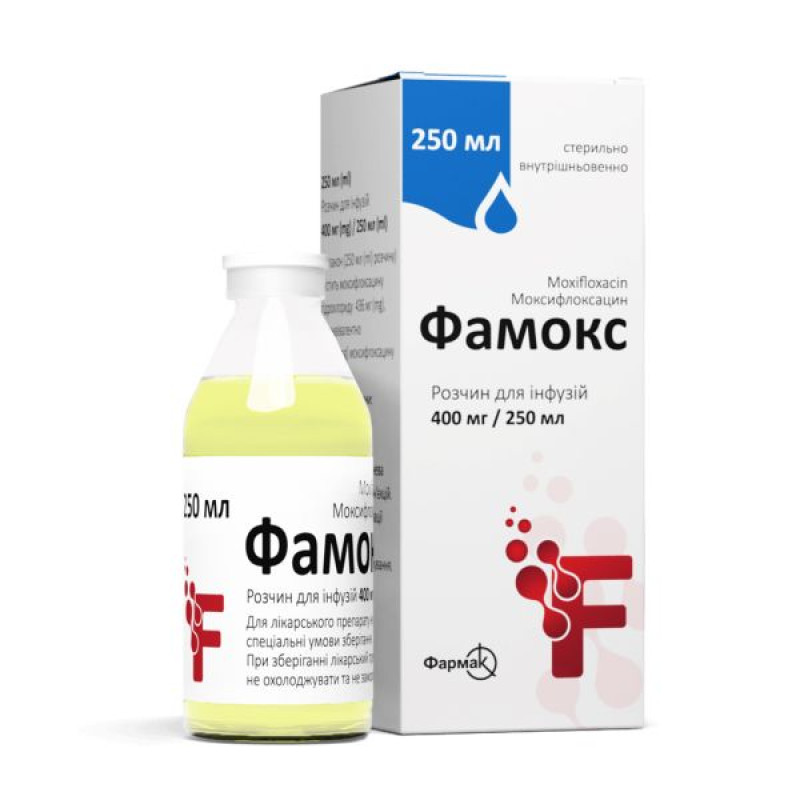
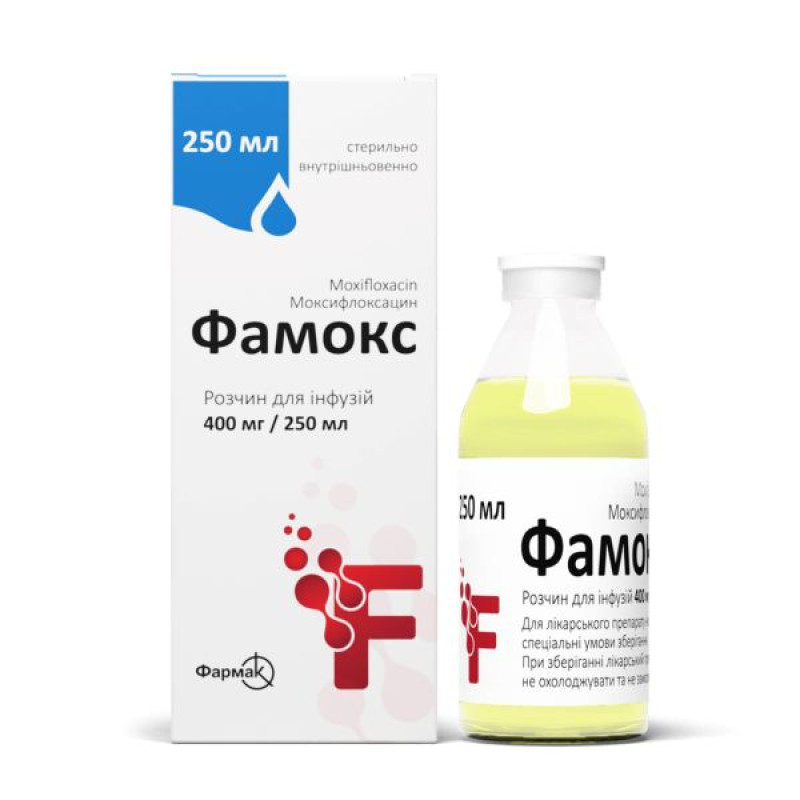
active ingredient: moxifloxacin;
1 bottle (250 ml of solution) contains 436 mg of moxifloxacin hydrochloride, equivalent to 400 mg of moxifloxacin;
Excipients: sodium chloride, sodium hydroxide, diluted hydrochloric acid, water for injections.
Release form
Antimicrobial drugs for systemic use. Antibacterial agents of the quinolone group. ATX code J01M A14.
Pharmacological properties
Pharmacodynamics.
Mechanism of action
Moxifloxacin inhibits bacterial type II topoisomerases (DNA gyrase and topoisomerase IV), which are essential for the replication, transcription and repair of bacterial DNA.
Pharmacokinetics/pharmacodynamics
The ability of fluoroquinolones to kill bacteria is directly dependent on their concentration. Pharmacodynamic studies of fluoroquinolones in animal models of infectious and inflammatory diseases and in humans indicate that the main determinant of efficacy is the ratio between the area under the pharmacokinetic curve (AUC 24 ) and the minimum inhibitory concentration (MIC).
Mechanism of resistance
Resistance to fluoroquinolones can arise from mutations in DNA gyrase and topoisomerase IV. Other mechanisms include overexpression of efflux pumps, impermeability, and protein-mediated protection of DNA gyrase. Cross-resistance can be expected between moxifloxacin and other fluoroquinolones.
Resistance mechanisms common to antibacterial agents belonging to other classes do not affect the antibacterial efficacy of moxifloxacin.
Indication
Community-acquired pneumonia.
Complicated infectious diseases of the skin and subcutaneous tissues.
Moxifloxacin should only be used when other antibacterial agents that are usually recommended for the initial treatment of these infections are inappropriate.
Official recommendations on the appropriate use of antibacterial agents should be taken into account.
Contraindication
- Hypersensitivity to moxifloxacin, other quinolone antibiotics or any of the excipients;
- pregnancy or breastfeeding (see section "Use during pregnancy or breastfeeding");
- childhood (up to 18 years old);
- History of tendon disease/pathology associated with the use of quinolones.
During preclinical and clinical studies, changes in electrophysiological parameters of cardiac activity, manifested by prolongation of the QT interval, were observed after administration of moxifloxacin. For this reason, moxifloxacin is contraindicated in patients with:
- congenital or acquired prolongation of the QT interval;
- electrolyte imbalance, especially in the case of uncorrected hypokalemia;
- clinically significant bradycardia;
- clinically significant heart failure with reduced left ventricular ejection fraction;
- history of symptomatic arrhythmias.
Moxifloxacin should not be used concomitantly with drugs that prolong the QT interval (see also section “Interaction with other medicinal products and other types of interactions”).
Due to insufficient clinical experience, moxifloxacin is contraindicated in patients with impaired liver function (Child-Pugh class C) and increased transaminase levels by five times or more.
Application
Method of application
The drug should be administered intravenously as a continuous infusion lasting at least 60 minutes (see also the section "Special instructions for use").
If indicated, the infusion solution can be administered via a T-catheter together with compatible infusion solutions (see section "Special precautions").
Renal/hepatic impairment
Patients with mild to severe renal impairment and patients on chronic dialysis, such as those undergoing haemodialysis and long-term ambulatory peritoneal dialysis, do not require dose adjustment (for more details see section 5.1).
There is insufficient information in patients with hepatic impairment (see section "Contraindications").
Other special patient groups
Elderly patients and patients with low body weight do not require dose adjustment.
Children.
Due to the negative effect on the cartilage of young animals (see section "Pharmacological properties"), the use of moxifloxacin in children (under 18 years of age) is contraindicated (see section "Contraindications").
Adverse reactions
From the circulatory and lymphatic systems
Uncommon: anemia, leukopenia, neutropenia, thrombocytopenia, thrombocythemia, eosinophilia, prolonged prothrombin time/increased INR.
Rare: increased prothrombin level/decreased INR, agranulocytosis, pancytopenia.
On the part of the immune system
Uncommon: allergic reactions (see section "Special warnings and precautions for use").
Rare: anaphylaxis, including in rare cases life-threatening shock (see section "Special warnings and precautions for use"), allergic edema/angioedema, including laryngeal edema, which is potentially life-threatening (see section "Special warnings and precautions for use").
Endocrine disorders
Rare: syndrome of inappropriate antidiuretic hormone secretion (SAIDH).
Metabolic and nutritional disorders
Uncommon: hyperlipidemia.
Rare: hyperglycemia, hyperuricemia.
Rare: hypoglycemia, hypoglycemic coma.
Uncommon: anxiety reactions, increased psychomotor activity/agitation.
Rare: mood lability, depression (in rare cases with self-harm, manifested as suicidal ideation/thoughts or suicide attempts) (see section "Special warnings and precautions for use"), hallucinations, delirium.
Rare: depersonalization, psychotic reactions (sometimes with self-harm, manifested as suicidal ideation/thoughts or suicide attempts) (see section "Special warnings and precautions for use").
Nervous system*
Common: headache, dizziness.
Uncommon: paraesthesia/dysesthesia, taste disturbance (including ageusia in rare cases), confusion and disorientation, sleep disorders (mainly insomnia), tremor, vertigo, somnolence.
Rare: hypoaesthesia, olfactory disorders (including loss of smell), abnormal dreams, coordination disorders (including gait disturbance due to dizziness or vertigo), seizures (including grand mal seizures) (see section "Special warnings and precautions for use"), disturbance in attention, speech disorder, amnesia, peripheral neuropathy and polyneuropathy.
Rare: hyperesthesia.
From the side of the organs of vision*
Uncommon: visual disturbances, including diplopia and blurred vision (especially during CNS reactions) (see section "Special warnings and precautions for use").
Rare: photophobia.
Rare: transient loss of vision (especially during CNS reactions) (see sections "Special warnings and precautions for use", "Ability to influence the speed of reaction when driving vehicles or using other mechanisms"), uveitis and bilateral acute transillumination of the iris (see section "Special warnings and precautions for use").
From the side of the organs of hearing and vestibular apparatus*
Rare: tinnitus, hearing impairment including deafness (usually reversible).
From the heart**
Common: QT prolongation in patients with hypokalemia (see sections "Contraindications", "Special warnings and precautions for use").
Uncommon: QT prolongation (see section "Special warnings and precautions for use"), palpitations, tachycardia, atrial fibrillation, angina pectoris.
Rare: ventricular tachyarrhythmias, syncope (e.g. acute and brief loss of consciousness).
Rare: non-specific arrhythmias, torsade de pointes (see section "Special warnings and precautions for use"), cardiac arrest (see section "Special warnings and precautions for use").
Vascular**
Uncommon: vasodilation.
Uncommon: hypertension, hypotension.
Rare: vasculitis.
Respiratory, thoracic and mediastinal disorders
Uncommon: dyspnoea (including asthmatic status).
Gastrointestinal tract
Common: nausea, vomiting, gastrointestinal and abdominal pain, diarrhea.
Uncommon: decreased appetite and food intake, constipation, dyspepsia, flatulence, gastritis, increased amylase levels.
Rare: dysphagia, stomatitis, antibiotic-associated colitis (including pseudomembranous colitis, which in rare cases causes life-threatening complications) (see section "Special warnings and precautions for use").
Hepatobiliary disorders
Common: increased transaminase levels.
Uncommon: liver function abnormalities (including increased LDH (lactate dehydrogenase), increased bilirubin, GGTP (gamma-glutamyl transpeptidase), blood alkaline phosphatase.
Rare: jaundice, hepatitis (predominantly cholestatic).
Rare: fulminant hepatitis, which may lead to life-threatening liver failure (see section "Special warnings and precautions for use").
Skin and subcutaneous tissue disorders
Uncommon: itching, rash, urticaria, dry skin.
Rare: potentially life-threatening bullous skin reactions such as Stevens-Johnson syndrome or toxic epidermal necrolysis (see section "Special warnings and precautions for use").
Not known: acute generalized exanthematous pustulosis (AGEP).
Musculoskeletal and connective tissue disorders*
Uncommon: arthralgia, myalgia.
Rare: tendinitis (see section "Special warnings and precautions for use"), increased muscle tone, muscle cramps, muscle weakness.
Rare: tendon rupture (see section "Special warnings and precautions for use"), arthritis, increased muscle rigidity as a symptom of myasthenia gravis (see section "Special warnings and precautions for use").
Not known: rhabdomyolysis.
Renal and urinary tract disorders
Uncommon: dehydration.
Rare: renal dysfunction (including increased blood urea nitrogen and creatinine levels), renal failure (see section "Special warnings and precautions for use").
General disorders and administration site conditions*
Common: injection and infusion site reactions.
Uncommon: malaise (predominantly asthenia or fatigue), pain (including back, chest, pelvic and extremity pain), increased sweating, (thrombophlebitis) at the infusion site.
* Rare cases of prolonged (over several months or years), disabling and potentially irreversible serious adverse reactions affecting various body systems and sensory organs (including reactions such as tendonitis, tendon rupture, arthralgia, pain in extremities, gait disturbance, neuropathy associated with paraesthesia, depression, fatigue, memory impairment, sleep disorders and disturbances of hearing, vision, taste and smell) have been reported in patients taking quinolones and fluoroquinolones, regardless of the patient's age and the presence of risk factors (see section "Special warnings and precautions for use").
** Rare cases of aortic aneurysm and aortic wall dissection, sometimes complicated by rupture (including fatal), as well as regurgitation/insufficiency of any of the heart valves, have been reported in patients receiving fluoroquinolones (see section 4.4).
The frequency of the following effects is higher with intravenous administration, with or without subsequent oral therapy.
Common: increased gamma-glutamyltransferase.
Uncommon: ventricular tachyarrhythmia, hypotension, oedema, antibiotic-associated colitis (including pseudomembranous colitis, in rare cases with life-threatening complications, see section 4.4), seizures (including grand mal seizures) (see section 4.4), hallucinations, renal impairment (including increases in blood urea nitrogen and creatinine), renal failure (see section 4.4).
In rare cases, side effects have been reported after treatment with other fluoroquinolones, which are likely to also occur during treatment with moxifloxacin: increased intracranial pressure (including idiopathic intracranial hypertension), hypernatremia, hypercalcemia, hemolytic anemia, photosensitivity reactions (see section "Special instructions").
Overdose
No specific measures are recommended after accidental overdose. In case of overdose, symptomatic treatment is carried out. Since QT interval prolongation is possible, ECG monitoring is required. Simultaneous use of activated charcoal with a dose of moxifloxacin 400 mg administered orally or intravenously reduces the systemic bioavailability of the drug by more than 80% or 20%, respectively. Administration of activated charcoal at the initial stage of absorption may be effective in preventing excessive increase in systemic exposure to moxifloxacin in case of overdose after oral administration of the drug.
Interaction
Drug interactions
An additive effect of moxifloxacin and other medicinal products that can cause QTc prolongation cannot be excluded. This effect may lead to the development of ventricular arrhythmias, including polymorphic ventricular tachycardia of the pirouette type. For this reason, the use of moxifloxacin in combination with any of the following medicinal products is contraindicated (see also section "Contraindications"):
- class IA antiarrhythmic drugs (e.g. quinidine, hydroquinidine, disopyramide);
- class III antiarrhythmic drugs (e.g. amiodarone, sotalol, dofetilide, ibutilide);
- antipsychotic drugs (e.g. phenothiazines, pimozide, sertindole, haloperidol, sultopride);
- tricyclic antidepressants;
- certain antimicrobials (saquinavir, sparfloxacin, erythromycin IV, pentamidine, antimalarials, including halofantrine);
- some antihistamines (terfenadine, astemizole, mizolastine);
- other medications (cisapride, vincamine IV, bepridil, diphemanil).
Moxifloxacin should be administered with caution to patients taking drugs that may lower potassium levels (e.g. loop and thiazide diuretics, laxatives and enemas (in high doses), corticosteroids, amphotericin B), or drugs associated with clinically significant bradycardia.
After multiple administration of moxifloxacin in healthy volunteers, an increase in Cmax of digoxin by approximately 30% was observed without any effect on AUC or the level of the curve.
In studies involving volunteers with diabetes, simultaneous use of oral moxifloxacin and glibenclamide resulted in a decrease in the maximum concentration of glibenclamide in the blood plasma by approximately 21%. The combination of glibenclamide with moxifloxacin can theoretically provoke the development of a slight short-term hyperglycemia. However, the observed changes in the pharmacokinetics of glibenclamide did not cause changes in the pharmacodynamic parameters (blood glucose level, insulin level). Therefore, there is no clinically significant interaction between moxifloxacin and glibenclamide.
Change in the international normalized ratio (INR)
Clinical studies have shown no clinically significant interactions of moxifloxacin with the following substances: ranitidine, probenecid, oral contraceptives, calcium supplements, parenteral morphine, theophylline, cyclosporine or itraconazole.
In vitro studies using human cytochrome P450 enzymes confirmed these results. Thus, metabolic interactions via cytochrome P450 enzymes are unlikely.
Interaction with food
Moxifloxacin does not show clinically significant interactions with food, including dairy products.
Storage conditions
The medicinal product does not require any special storage conditions. Do not refrigerate or freeze the medicinal product during storage. Keep out of the reach of children.