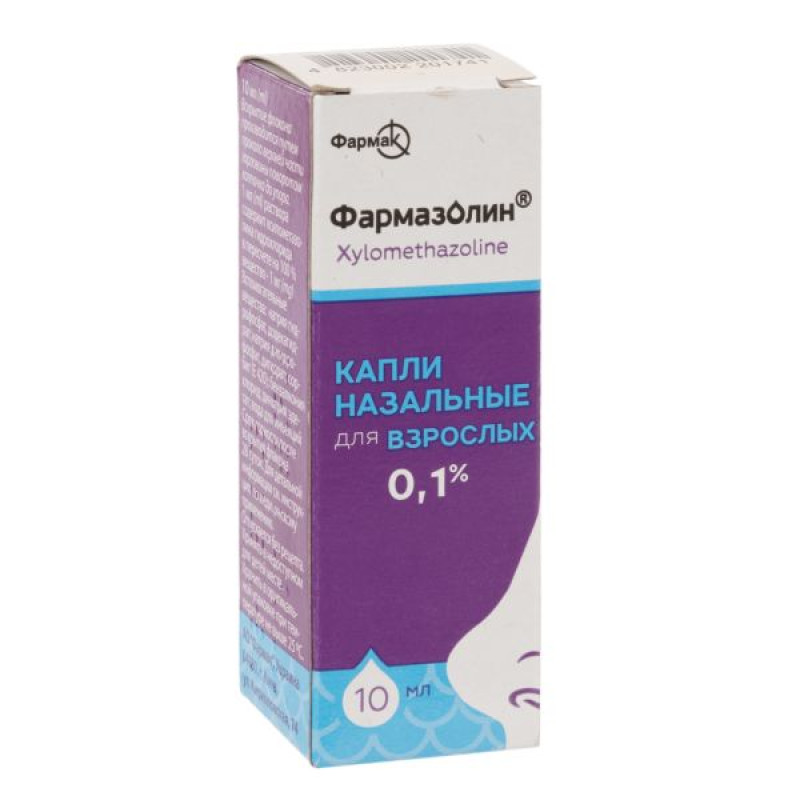
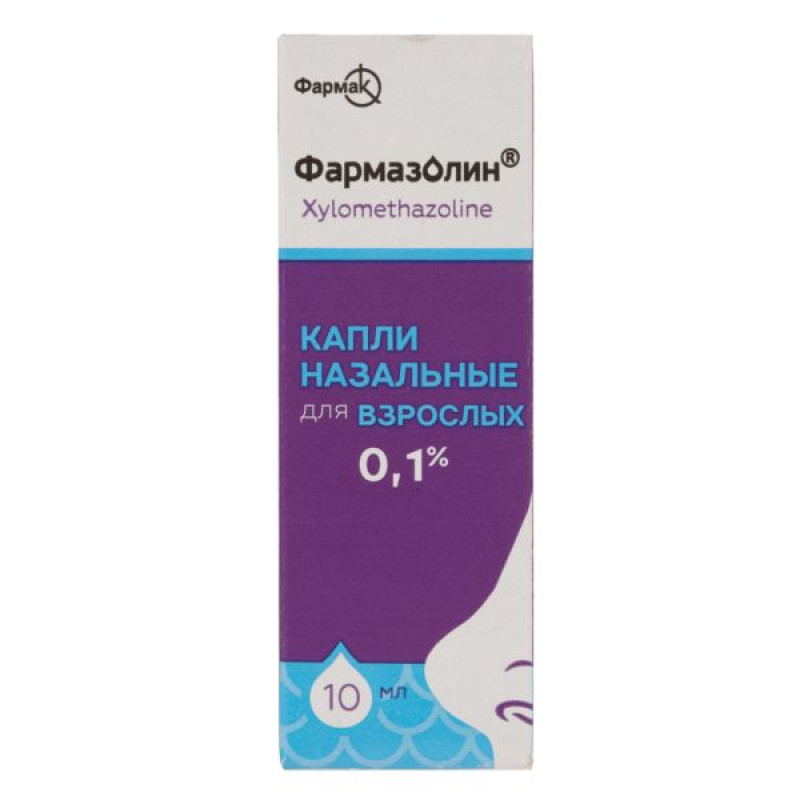
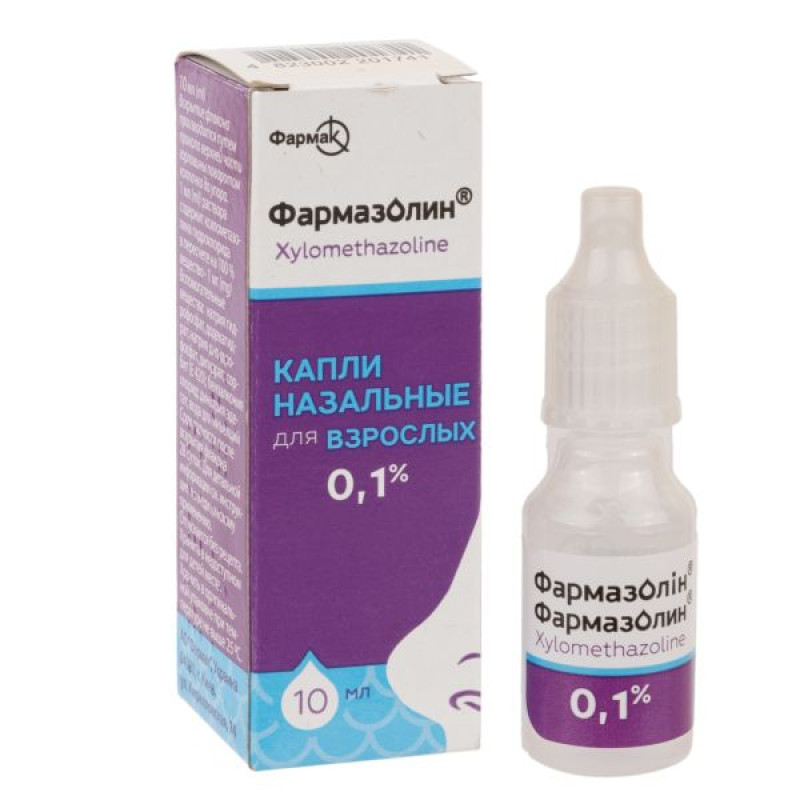
Instructions Farmazolin nasal drops 0.1% bottle 10 ml
Composition
active ingredient: xylometazoline;
1 ml of solution contains xylometazoline hydrochloride, calculated as 100% substance, 1 mg;
other ingredients: sodium hydrogen phosphate dodecahydrate; sodium dihydrogen phosphate dihydrate; sorbitol (E 420); benzalkonium chloride; disodium edetate; water for injections.
Dosage form
Nasal drops.
Main physicochemical properties: colorless transparent liquid.
Pharmacotherapeutic group
Drugs used in diseases of the nasal cavity. Anti-edematous and other drugs for local use in diseases of the nasal cavity. Sympathomimetics, simple drugs. ATX code R01A A07.
Pharmacological properties
Pharmacodynamics
Xylometazoline is a sympathomimetic agent that acts on α-adrenergic receptors.
Farmazolin causes a narrowing of the nasal blood vessels, reducing swelling of the nasal mucosa and paranasal sinuses, thereby improving nasal breathing in case of nasal and paranasal sinus congestion. The drug is well tolerated, including by patients with sensitive mucous membranes. The drug does not reduce mucociliary function. Thanks to the moisturizing component (sorbitol), the drug helps in case of dryness and irritation of the nasal mucosa. Farmazolin, nasal drops, has a balanced pH value within the limits inherent in the nasal cavity.
Pharmacokinetics
The drug begins to act a few minutes after application and lasts up to 12 hours. When applied topically, the drug is practically not absorbed, the concentrations of xylometazoline in the blood plasma are so low that it cannot be determined by modern analytical methods.
Indication
Symptomatic treatment of nasal congestion in colds, hay fever, other allergic rhinitis, sinusitis. To facilitate the outflow of secretions in diseases of the paranasal sinuses. Adjunctive therapy in cases of otitis media (to eliminate swelling of the mucous membrane). To facilitate rhinoscopy.
Contraindication
Hypersensitivity to xylometazoline or any other component of the drug, acute coronary disease, coronary asthma, hyperthyroidism, angle-closure glaucoma, transsphenoidal hypophysectomy and surgical interventions with meningeal exposure in history, dry rhinitis. Concomitant treatment with MAO inhibitors and 2 weeks after their discontinuation.
Interaction with other medicinal products and other types of interactions
Monoamine oxidase inhibitors (MAOIs): Xylometazoline may potentiate the effects of monoamine oxidase inhibitors and induce hypertensive crisis. Do not use xylometazoline in patients who are taking or have taken MAOIs within the last two weeks.
Tri- and tetracyclic antidepressants: with simultaneous use of tri- or tetracyclic antidepressants and sympathomimetic drugs, the sympathomimetic effect of xylometazoline may be enhanced, therefore the simultaneous use of such drugs is not recommended.
When used together with β-blockers, it may cause bronchial spasm or a decrease in blood pressure.
Application features
Farmazolin, nasal drops 0.1%, should not be used in children under 12 years of age.
The drug should not be used for more than 10 consecutive days. Prolonged or excessive use may lead to recurrence of nasal congestion and/or atrophy of the nasal mucosa.
The drug, like other sympathomimetics, should be prescribed with caution to patients who have strong reactions to adrenergic agents, manifested as insomnia, dizziness, tremor, cardiac arrhythmia, or increased blood pressure.
The recommended dose of the drug should not be exceeded, especially when treating children and the elderly.
The drug should be prescribed with caution to patients with cardiovascular diseases, arterial hypertension, diabetes mellitus, thyroid diseases, pheochromocytoma, prostatic hypertrophy, and should not be used in patients who have received concomitant treatment with MAO inhibitors and have not used them for 2 weeks. Patients with long QT syndrome receiving xylometazoline may have an increased risk of serious ventricular arrhythmias.
To prevent infection, each vial of the drug can only be used by one person.
The drug contains benzalkonium chloride, prolonged use of which may cause swelling of the nasal mucosa.
Ability to influence reaction speed when driving vehicles or other mechanisms
The drug usually has no or negligible influence on the ability to drive or use machines.
Use during pregnancy or breastfeeding
The drug should not be used during pregnancy due to its potential vasoconstrictor effect.
There is no evidence of any adverse effects on the infant. It is not known whether xylometazoline is excreted in breast milk, therefore caution is required and the drug should be used during breastfeeding only as directed by a physician.
Method of administration and doses
When using a polyethylene bottle, before the first use, the cap should be screwed as tightly as possible. At the same time, the spike located on the inside of the cap pierces the hole. Unscrew the cap, remove it and, slightly pressing on the bottle body, drip the solution into the nose.
When using a tamper-evident polyethylene bottle, immediately before use, hold the bottle in your palm to warm it to body temperature. After instillation, screw the cap tightly.
Before administering the drug, the nasal cavity should be thoroughly cleaned.
Farmazolin, nasal drops 0.1%, for use in adults and children over 12 years of age.
Nasal drops 0.1%:
Adults and children over 12 years of age: 2-4 drops in each nasal passage 3 times a day.
Apply no more than 3 times a day.
The duration of treatment depends on the course of the disease and should not exceed 10 days.
Children
Farmazolin, nasal drops 0.1%, should not be used in children under 12 years of age.
Overdose
Excessive topical application of xylometazoline hydrochloride or accidental ingestion may result in severe dizziness, sweating, a significant decrease in body temperature, headache, bradycardia, arterial hypertension, respiratory depression, coma, and convulsions. Elevated blood pressure may change to low blood pressure. Younger children are more sensitive to toxicity than adults.
All patients suspected of overdose should be given appropriate supportive measures and, if necessary, immediate symptomatic treatment under medical supervision. Medical care should include observation of the patient for several hours. In severe overdose accompanied by cardiac arrest, resuscitation measures should last at least 1 hour.
Adverse reactions
On the part of the immune system:
rare (<1/10,000): hypersensitivity reactions, including angioedema, rash, itching.
From the nervous system:
common (≥1/100, <1/10): headache.
On the part of the organs of vision:
rare (<1/10,000): temporary visual impairment.
From the cardiovascular system:
rare (<1/10,000): irregular or rapid heartbeat.
Respiratory, thoracic and mediastinal disorders:
common (≥1/100, <1/10): dryness or discomfort of the nasal mucosa.
From the gastrointestinal tract:
common (≥1/100, <1/10): nausea.
General disorders and administration site conditions:
common (≥1/100, <1/10): burning sensation at the application site.
Expiration date
3 years.
After opening the bottle, the drug is suitable for use for 28 days.
Do not use the drug after the expiration date indicated on the package.
Storage conditions
Store in the original packaging at a temperature not exceeding 25 °C.
Keep out of reach of children.
Packaging
10 ml in a polyethylene bottle, sealed with a cap or a dropper stopper and cap, or in a polyethylene bottle with a dispenser, sealed with a cap with a seal (with first-time opening control).
Vacation category
Without a prescription.
Producer
JSC "Formak".
Location of the manufacturer and its business address
Ukraine, 04080, Kyiv, Kyrylivska St., 74.