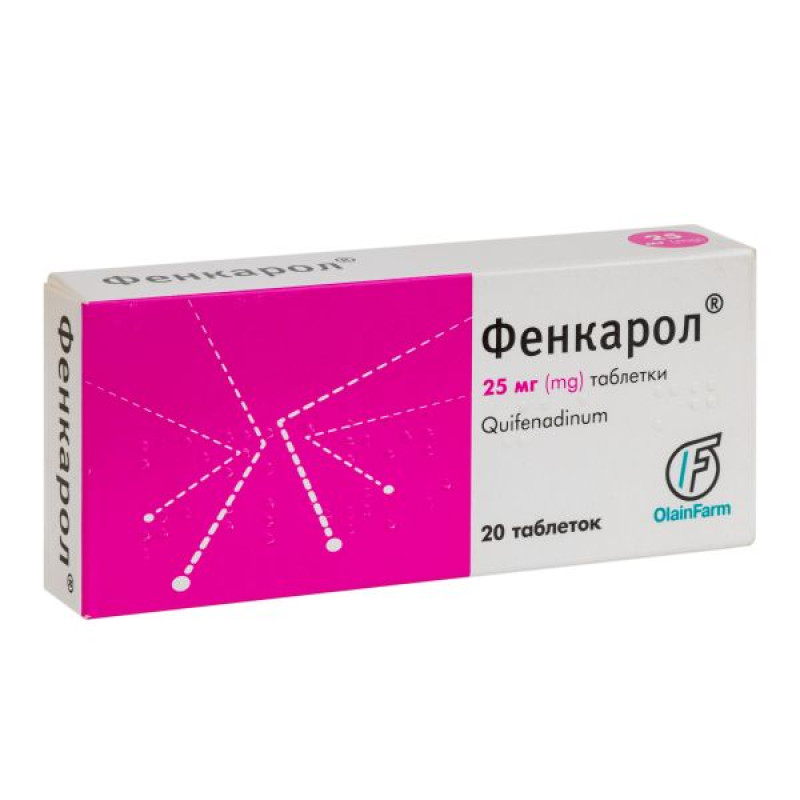
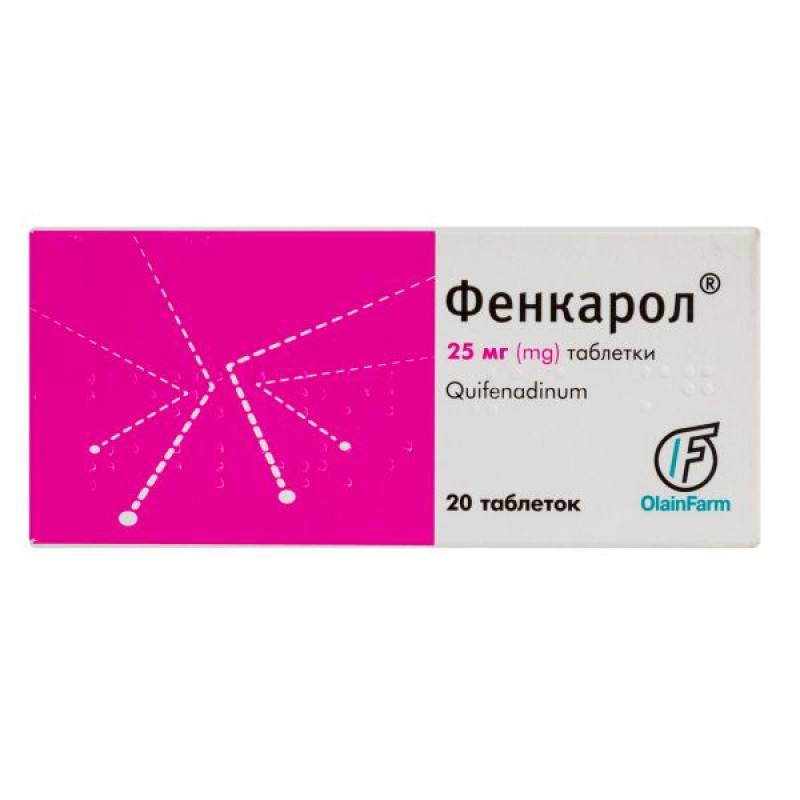
Instructions for Fenkarol tablets 25 mg No. 20
Composition
active ingredient: hifenadine;
1 tablet contains hifenadine hydrochloride 25 mg;
excipients: potato starch, sucrose, calcium stearate.
Dosage form
Pills.
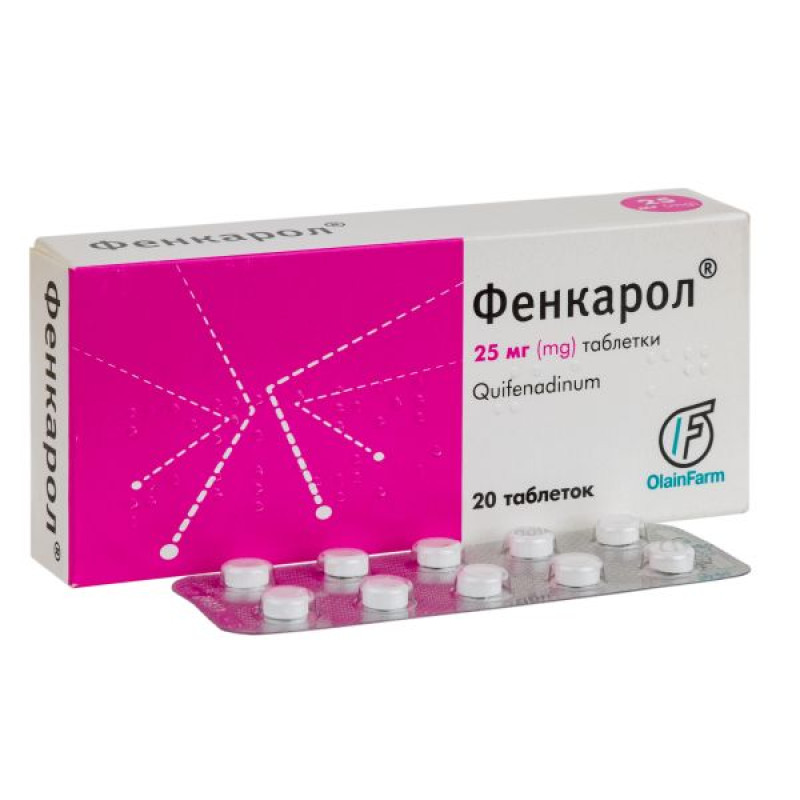
Main physicochemical properties: flat-cylindrical tablets of white or almost white color, with a bevel.
Pharmacotherapeutic group
Antihistamines for systemic use.
ATX code R06A X31.
Pharmacological properties
Pharmacodynamics
Hifenadine is a derivative of quinuclidine carbinol, which reduces the effects of histamine on organs and systems. Hifenadine is a competitive blocker of H1 receptors. In addition, it activates the enzyme diamine oxidase, which breaks down approximately 30% of endogenous histamine. This explains the effectiveness of hifenadine in patients insensitive to other antihistamines. Hifenadine poorly penetrates the blood-brain barrier and has little effect on the processes of serotonin deamination in the brain, and has a weak effect on the activity of monoamine oxidase. The antihistamine properties of hifenadine are associated with the presence of a cyclic quinuclidine nucleus in the structure and the distance between the diphenylcarbinol group and the nitrogen atom. In terms of antihistamine activity and duration of action, hifenadine is superior to diphenhydramine. Hifenadine reduces the toxic effect of histamine, removes or weakens its bronchoconstrictor effect and spasmolytic effect on intestinal smooth muscles, has a moderate antiserotonin and weak anticholinergic effect, well-pronounced antipruritic and desensitizing properties. Hifenadine weakens the hypotensive effect of histamine and its effect on capillary permeability, does not directly affect cardiac activity and blood pressure, and has no protective effect on aconicotine arrhythmias.
Hifenadine does not have a depressing effect on the central nervous system, but with individual hypersensitivity, a weak sedative effect is possible. The drug is not very lipophilic and its content in brain tissues is low (less than 0.05), which explains the lack of a depressing effect on the central nervous system.
Pharmacokinetics
Hifenadine is rapidly absorbed from the gastrointestinal tract and is detected in body tissues within 30 minutes. Maximum concentration is reached after 1 hour.
Metabolites and the unchanged portion of hifenadine are mainly excreted in urine and bile within 48 hours.
Indication
Pollinosis, food and drug allergies, other allergic diseases, acute and chronic urticaria, angioedema (angioedema), hay fever, allergic rhinopathy, dermatoses (eczema, psoriasis, neurodermatitis, skin itching), as well as infectious-allergic reactions with a bronchospastic component.
Contraindication
Hypersensitivity to hifenadine or to any of the excipients of the drug.
Interaction with other medicinal products and other types of interactions
Fenkarol® does not enhance the depressant effect of alcohol and hypnotics on the central nervous system, has weak M-cholinoblocking properties, but with reduced gastrointestinal motility, the absorption of slowly absorbed medications may increase (for example, indirect anticoagulants - coumarins).
Application features
The drug should be prescribed with caution to patients with severe diseases of the cardiovascular system, gastrointestinal tract, kidneys, and liver.
The drug contains sucrose, which should be taken into account by patients with diabetes.
Patients with rare hereditary problems of fructose intolerance or sucrose-isomaltase insufficiency should not take this medicine.
Use during pregnancy or breastfeeding
It is contraindicated to prescribe the drug during the first trimester of pregnancy. It is not recommended to use the drug during the second and third trimesters of pregnancy.
There is no data on the penetration of the drug into breast milk, therefore the use of Fenkarol® is contraindicated during breastfeeding.
Ability to influence reaction speed when driving vehicles or other mechanisms
Individuals whose work requires rapid physical or mental reactions (transport drivers) should first establish their individual sensitivity (by short-term administration) to the sedative effect. If there is increased sensitivity, such individuals should be especially careful when using the drug.
Method of administration and doses
Fenkarol® should be taken orally immediately after meals.
A single dose for adults is 25-50 mg 2-4 times a day.
In hay fever, a daily dose of less than 75 mg is ineffective. The maximum daily dose is 200 mg. The duration of the treatment course is 10-20 days.
Children over 12 years old - 25 mg 2-3 times a day. The duration of the course of treatment is 10-20 days. If necessary, repeat the course of treatment (after consulting a doctor).
If the next dose is missed, the course of treatment should be continued at the previously prescribed doses. If necessary, consult a doctor.
Children
The drug can be used in children over 12 years of age.
Children under 12 years of age are recommended to use the drug in a different dosage (Fenkarol®, 10 mg tablets).
Overdose
No cases of overdose have been reported. Daily doses up to 300 mg/day do not cause serious clinically significant side effects. Large doses may cause dryness of the mucous membranes, headache, vomiting, epigastric pain, and dyspeptic symptoms.
If necessary, carry out symptomatic treatment.
Adverse reactions
From the nervous system: dizziness, headache.
Sometimes a weak sedative effect is possible, which manifests itself in the form of weakness, drowsiness, and slowing down of the body's reactions.
On the part of the gastrointestinal tract: dryness of the mucous membranes of the oral cavity, dyspeptic phenomena (nausea, vomiting, bitterness in the mouth), which usually disappear when the dose is reduced or the drug is discontinued.
Respiratory, thoracic and mediastinal disorders: sneezing, difficulty breathing.
On the part of the psyche: anxiety.
Renal and urinary disorders: proteinuria, interstitial nephritis.
Musculoskeletal and connective tissue disorders: joint pain.
From the organ of vision: lacrimation.
In people with gastrointestinal diseases, the possibility of side effects increases.
If any undesirable effects occur, you should stop using the drug and consult a doctor.
Expiration date
5 years.
Storage conditions
Store in the original packaging at a temperature not exceeding 25 °C.
Keep out of reach of children.
Packaging
10 tablets in a blister. 2 blisters in a cardboard pack.
Vacation category
Without a prescription.
Producer
JSC "Olainfarm" / JSC "Olainfarm".
Location of the manufacturer and its business address
5 Rupnicu street, Olaine, LV-2114, Latvia.