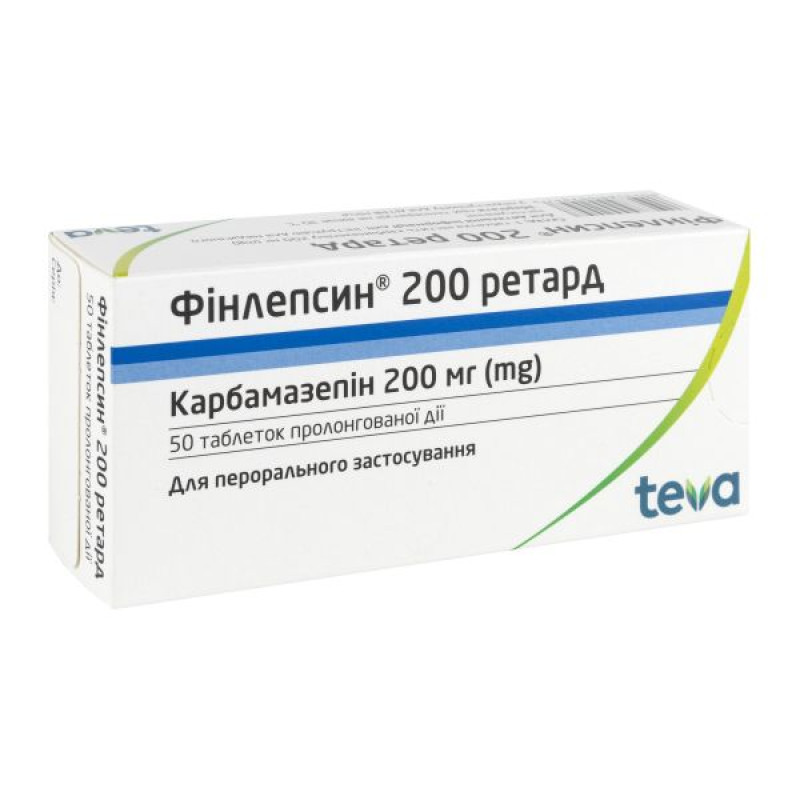
Instructions Finlepsin 200 retard prolonged-release tablets 200 mg No. 50
Composition
active ingredient: carbamazepine;
1 tablet contains 200 mg of carbamazepine;
Excipients: ammonium methacrylate copolymer (type B) dispersion, triacetin, talc, methacrylate copolymer dispersion, crospovidone, colloidal anhydrous silica, magnesium stearate, microcrystalline cellulose.
Dosage form
Extended-release tablets.
Main physicochemical properties: white or yellowish round flat tablets in the shape of a clover leaf, with beveled edges, with a cross-shaped break line on both sides and 4 notches on the sides, with a smooth surface and solid edges and a uniform appearance.
Pharmacotherapeutic group
Antiepileptic drugs. ATX code N03A F01.
Pharmacological properties
Pharmacodynamics
Anticonvulsant, a derivative of tricyclic iminostilbene. It exhibits antiepileptic, neurotropic and psychotropic activity. The exact mechanism of action of carbamazepine is unknown. The therapeutic effect is primarily due to inhibition of synaptic transmission of excitation and thereby reducing the spread of seizures. In higher concentrations, carbamazepine causes a decrease in the conductivity of convulsive discharges. Reduces pain in trigeminal neuralgia. This effect is due to inhibition of synaptic transmission of irritation in the spinal nucleus of the trigeminal nerve.
While a reduction in glutamate release and stabilization of neuronal membranes may explain the drug's anticonvulsant effects, the antimanic effect of carbamazepine may be due to inhibition of dopamine and norepinephrine metabolism.
In diabetes insipidus, the drug has an antidiuretic effect, presumably due to its effect on the osmoreceptors of the hypothalamus.
Pharmacokinetics
After oral administration, carbamazepine is absorbed slowly and almost completely. The elimination half-life is 8.5 hours and has a wide range (approximately
1.72-12 hours). After a single dose, the maximum concentration of carbamazepine in the blood plasma in adults is reached after 4-16 hours (very rarely - after 35 hours), in children - after approximately 4-6 hours. The concentration of carbamazepine in the blood plasma is not linearly dependent on the dose and when using higher doses, the plasma concentration curve has the form of a plateau.
When using prolonged-release tablets, a lower concentration of carbamazepine in the blood plasma is achieved than when using regular tablets.
Steady state concentration is reached after 2-8 days.
Regarding therapeutic and toxic concentrations of carbamazepine in blood plasma, it is indicated that seizures may disappear at a plasma level of 4-12 μg/ml. Plasma concentrations of the drug exceeding 20 μg/ml worsen the picture of the disease.
At a concentration of the active substance in blood plasma of 5-18 mcg/ml, it eliminates pain in trigeminal neuralgia.
The threshold values for carbamazepine plasma concentrations for adverse reactions are 8–9 μg/ml.
70-80% of carbamazepine is bound to plasma proteins. The proportion of unbound carbamazepine remains constant at concentrations up to 50 μg/ml.
48-53% of the pharmacologically active metabolite carbamazepine-10,11-epoxide is bound to plasma proteins. The concentration of carbamazepine in cerebrospinal fluid is 33% of the plasma concentration. The concentration in saliva corresponds to the fraction that is not bound in plasma and shows a significant correlation with the plasma concentration of the drug (approximately 20-30%). If this value is multiplied by 4, this figure can be used to determine the plasma concentration during the period of monitoring treatment.
Carbamazepine penetrates the placental barrier and into breast milk (about 58% of the plasma concentration).
After a single dose, carbamazepine is eliminated from plasma with a half-life of 36 hours (range: 18 to 65 hours). With prolonged treatment, the half-life is reduced by 50% due to induction of liver microsomal enzymes.
In healthy people, the total plasma clearance is approximately 19.8 ml/h/kg, in patients with monotherapy - approximately 54.6 ml/h/kg, in patients with combination therapy - approximately 113.3 ml/h/kg. After a single oral dose of carbamazepine, 72% of the dose is excreted from the body by the kidneys in the form of metabolites. The remaining 28% is excreted in the feces, partly unchanged. Only 2-3% of the substance excreted in the urine is carbamazepine in unchanged form.
Features of pharmacokinetics in certain groups of patients
Children: Due to the more rapid elimination of carbamazepine, children may require higher doses of carbamazepine on a mg/kg body weight basis compared to adults to maintain therapeutic drug concentrations.
Elderly patients: There is no evidence to suggest that the pharmacokinetics of carbamazepine are altered in elderly patients (compared to young adults).
Patients with renal or hepatic impairment: There are no data on the pharmacokinetics of carbamazepine in patients with renal or hepatic impairment.
Indication
– complex or simple partial seizures (with or without loss of consciousness) with or without secondary generalization;
– generalized tonic-clonic seizures;
– mixed forms of convulsive seizures.
Finlepsin® 200 retard can be used as monotherapy or as part of combination therapy.
Acute manic states; maintenance therapy in bipolar affective disorders to prevent exacerbations or to reduce the clinical manifestations of exacerbations.
Alcohol withdrawal syndrome.
Idiopathic trigeminal neuralgia and trigeminal neuralgia in multiple sclerosis (typical and atypical).
Idiopathic glossopharyngeal neuralgia.
Contraindication
Finlepsin® 200 retard should not be prescribed:
with established hypersensitivity to carbamazepine or to chemically similar drugs (such as tricyclic antidepressants), or to other components of the drug;
with atrioventricular block;
patients with a history of bone marrow suppression;
patients with a history of hepatic porphyria (e.g. acute intermittent porphyria, mixed porphyria, porphyria cutanea tarda);
in combination with monoamine oxidase inhibitors (MAOIs) and within 14 days after stopping their use;
concomitantly with voriconazole, as treatment may be ineffective.
Interaction with other medicinal products and other types of interactions
Cytochrome P450 3A4 (CYP3A4) is the main enzyme catalyzing the formation of the active metabolite carbamazepine-10,11-epoxide. Concomitant use of CYP3A4 inhibitors may lead to increased plasma concentrations of carbamazepine, which in turn may lead to adverse reactions. Concomitant use of CYP3A4 inducers may increase the metabolism of carbamazepine, resulting in a potential decrease in carbamazepine plasma concentrations and therapeutic effect. Similarly, discontinuation of a CYP3A4 inducer may decrease the rate of carbamazepine metabolism, resulting in increased plasma levels of carbamazepine.
Carbamazepine is a potent inducer of CYP3A4 and other phase I and phase II enzyme systems in the liver, and therefore may reduce plasma concentrations of other drugs that are predominantly metabolized by CYP3A4 by inducing their metabolism.
Human microsomal epoxide hydrolase is the enzyme responsible for the formation of 10,11-transdiol derivatives of carbamazepine. Concomitant administration of inhibitors of human microsomal epoxide hydrolase may lead to increased plasma concentrations of carbamazepine-10,11-epoxide.
Drugs that may increase carbamazepine plasma levels
Since an increase in carbamazepine plasma levels may lead to undesirable reactions (such as dizziness, drowsiness, ataxia, diplopia), the dosage of the drug should be adjusted accordingly and/or its plasma levels monitored when used simultaneously with the following drugs.
Analgesics, anti-inflammatory drugs: dextropropoxyphene, ibuprofen.
Androgens: danazol.
Antibiotics: macrolide antibiotics (e.g. erythromycin, troleandomycin, josamycin, clarithromycin), ciprofloxacin.
Antidepressants: desipramine, fluoxetine, fluvoxamine, nefazodone, paroxetine, viloxazine, trazodone.
Antiepileptic drugs: stiripentol, vigabatrin.
Antifungals: azoles (e.g. itraconazole, ketoconazole, fluconazole, voriconazole). Alternative antiepileptic agents may be recommended for patients receiving voriconazole or itraconazole treatment.
Antihistamines: terfenadine, loratadine.
Antipsychotic drugs: olanzapine, loxapine, quetiapine.
Anti-tuberculosis drugs: isoniazid.
Antiviral drugs: protease inhibitors for the treatment of HIV (e.g. ritonavir).
Carbonic anhydrase inhibitors: acetazolamide.
Cardiovascular drugs: verapamil, diltiazem.
Drugs for the treatment of gastrointestinal diseases: cimetidine, omeprazole.
Muscle relaxants: oxybutynin, dantrolene.
Antiplatelet drugs: ticlopidine.
Other substances: nicotinamide (in adults, only in high doses), grapefruit juice.
Drugs that may increase the level of the active metabolite
carbamazepine-10,11-epoxide in blood plasma
Since increased levels of the active metabolite carbamazepine-10,11-epoxide in the blood plasma may lead to the development of adverse reactions (e.g. dizziness, drowsiness, ataxia, diplopia), the dosage of carbamazepine should be adjusted accordingly and/or the level of carbamazepine in the blood plasma should be monitored if Finlepsin® 200 retard is taken simultaneously with the following drugs: loxapine, quetiapine, primidone, progabide, valproic acid, valnoctamide, brivaracetam and valpromide.
Drugs that may reduce carbamazepine plasma levels
Antiepileptic drugs: phenobarbital, phensuximide, phenytoin (to avoid phenytoin intoxication and subtherapeutic carbamazepine concentrations, it is recommended to adjust the phenytoin plasma concentration to 13 μg/mL before starting carbamazepine treatment), fosphenytoin, primidone, felbamate, methsuximide, oxcarbazepine and, although the data are partly contradictory, clonazepam.
Anticancer drugs: doxorubicin, cisplatin.
Anti-tuberculosis drugs: rifampicin.
Bronchodilators or anti-asthma drugs: theophylline, aminophylline.
Dermatological drugs: isotretinoin.
Others: preparations containing St. John's wort (Hypericum perforatum).
Mefloquine may antagonize the antiepileptic effect of carbamazepine. The dose of carbamazepine should be adjusted accordingly.
Isotretinoin has been reported to alter the bioavailability and/or clearance of carbamazepine and carbamazepine-10,11-epoxide; plasma concentrations of carbamazepine should be monitored.
Effect of carbamazepine on plasma levels of concomitantly administered drugs
Carbamazepine may reduce the plasma levels of some drugs and reduce or eliminate their effects. Dosage adjustments of the following drugs may be necessary as clinically indicated.
Analgesics, anti-inflammatory drugs: buprenorphine, methadone, paracetamol (long-term use of carbamazepine with paracetamol may be associated with the development of hepatotoxicity), tramadol, phenazone.
Antibiotics: doxycycline, rifabutin.
Anticoagulants: oral anticoagulants (e.g. warfarin, phenprocoumon, dicumarol, acenocoumarol).
Antidepressants: bupropion, citalopram, mianserin, nefazodone, sertraline, trazodone, tricyclic antidepressants (e.g. imipramine, amitriptyline, nortriptyline, clomipramine).
Antiemetics: aperpitant.
Antiepileptic drugs: clobazam, clonazepam, eslicarbazepine, ethosuximide, felbamate, primidone, lamotrigine, oxcarbazepine, tiagabine, topiramate, valproic acid, zonisamide. Phenytoin plasma concentrations may increase or decrease under the influence of carbamazepine. In exceptional cases, this may lead to a state of confusion and even coma. There are few reports of increased plasma concentrations of mephenytoin.
Antifungals: voriconazole, itraconazole, ketoconazole. Alternative antiepileptic agents may be recommended for patients receiving treatment with voriconazole or itraconazole.
Anthelmintic drugs: praziquantel, albendazole.
Anticancer drugs: imatinib, cyclophosphamide, lapatinib, temsirolimus.
Neuroleptic drugs: clozapine, haloperidol and bromperidol, olanzapine, risperidone, quetiapine, ziprasidone, aripiprazole, paliperidone.
Antiviral drugs: protease inhibitors for the treatment of HIV (e.g. ritonavir, indinavir, saquinavir).
Anxiolytics: midazolam, alprazolam.
Bronchodilators or anti-asthma drugs: theophylline.
Contraceptives: Hormonal contraceptives containing estrogens and/or progestogens. In patients using hormonal contraceptives, contraceptive efficacy may be reduced and breakthrough bleeding may occur. Therefore, alternative methods of contraception should be considered.
Cardiovascular drugs: calcium channel blockers (dihydropyridine group), e.g. felodipine, digoxin, isradipine, quinidine, propranolol, simvastatin, atorvastatin, lovastatin, cerivastatin, ivabradine.
Corticosteroids: prednisolone, dexamethasone.
Drugs used to treat erectile dysfunction: tadalafil.
Immunosuppressants: cyclosporine, everolimus, tacrolimus, sirolimus.
Thyroid medications: levothyroxine.
Others: buprenorphine, gestrinone, tibolone, toremifene, mianserin, sertraline.
Drug combinations that require separate consideration
Carbamazepine may antagonize the effects of non-depolarizing muscle relaxants (e.g. pancuronium). The dose of these drugs may need to be increased and patients should be closely monitored because of the possibility of a more rapid than expected recovery of neuromuscular blockade. Carbamazepine, like other psychotropic drugs, may reduce alcohol tolerance, and patients should be advised to abstain from alcohol. Concomitant use of carbamazepine with direct-acting oral anticoagulants (rivaroxaban, dabigatran, apixaban, edoxaban) may result in decreased plasma concentrations of direct-acting oral anticoagulants, thus increasing the risk of thrombosis. Therefore, if concomitant use is necessary, patients should be closely monitored for signs and symptoms of thrombosis.
Contraindicated interaction
Since carbamazepine is structurally similar to tricyclic antidepressants, Finlepsin® 200 retard is not recommended for use simultaneously with MAO inhibitors. At least 2 weeks should elapse between the start of carbamazepine and the end of MAO inhibitors, or more if the patient's clinical condition allows.
Other interactions
Neurotoxic effects may be enhanced by concomitant use of carbamazepine and lithium salts. Careful monitoring of the concentration of both drugs is necessary. Patients should not take neuroleptics for 8 weeks before starting treatment with carbamazepine, as well as during treatment with carbamazepine.
Particular attention should be paid to the following symptoms of neurotoxicity: unsteady gait, ataxia, horizontal nystagmus, excessive reflexes, muscle spasm.
There are reports in the literature that when taking carbamazepine in patients using neuroleptics, the risk of developing neuroleptic malignant syndrome or Stevens-Johnson syndrome increases.
Carbamazepine may increase the elimination of thyroid hormones, thereby increasing the need for these hormones in patients with thyroid insufficiency. It is necessary to determine the concentration of thyroid hormones at the beginning and at the end of treatment in patients receiving thyroid hormone replacement therapy. It may be necessary to adjust the dose of hormones. Thyroid function may be altered, especially during concomitant administration of carbamazepine and other antiepileptic drugs (such as phenobarbital).
In the case of simultaneous use of carbamazepine with serotonin reuptake inhibitors (e.g. fluoxetine), serotonin syndrome may develop.
Finlepsin® 200 retard should not be used in combination with nefazodone (antidepressant), as it may cause a significant decrease in the concentration of nefazodone in the blood plasma and a complete loss of its effectiveness. Simultaneous administration of nefazodone and Finlepsin® 200 retard increases the concentration of carbamazepine in the blood plasma and reduces the concentration of its active metabolite, carbamazepine-10,11-epoxide.
Concomitant use of carbamazepine with antiarrhythmic drugs, cyclic antidepressants, or erythromycin increases the risk of cardiac conduction disorders.
Impact on serological studies
Carbamazepine may give a false-positive result in HPLC (high-performance liquid chromatography) assays for perphenazine concentration.
Carbamazepine and carbamazepine-10,11-epoxide may give a false-positive result in the polarized fluorescence immunoassay for tricyclic antidepressants.
Application features
Carbamazepine should be prescribed only under medical supervision, only after assessing the benefit/risk ratio and subject to careful monitoring of patients with impaired cardiac, hepatic or renal function, with impaired sodium metabolism, myotonic dystrophy, adverse hematological reactions to other drugs in history, or patients with interrupted courses of carbamazepine therapy.
It is recommended to perform a complete urinalysis and determine the level of urea nitrogen in the blood at the beginning and at certain intervals during therapy.
Carbamazepine exhibits mild anticholinergic activity, therefore patients with increased intraocular pressure should be warned and advised about possible risk factors. It should be remembered about the possible activation of latent psychoses, and in elderly patients - about the possible activation of confusion and the development of anxiety. The drug is usually ineffective in absences (small epileptic seizures) and myoclonic seizures. Individual cases indicate that an increase in seizures may occur in patients with atypical absences. Finlepsin® 200 retard should not be used in patients with convulsive seizures of this type.
Patients should be informed about the early signs of toxicity and symptoms of possible hematological disorders, as well as about the symptoms of dermatological and hepatic reactions. The patient should be warned that in the event of reactions such as fever, sore throat, skin rash with enlarged lymph nodes and/or flu-like symptoms, mouth ulcers, easy bruising, petechial hemorrhages or hemorrhagic purpura, a doctor should be consulted immediately (blood counts should be monitored). If the number of leukocytes or platelets decreases significantly during therapy, the patient's condition should be closely monitored, and a complete blood count should be performed regularly. Blood counts should be checked before starting treatment, then checked at weekly intervals for a month and then once a month. After 6 months of treatment, 2-4 tests per year are sufficient. Carbamazepine treatment should be discontinued if the patient develops leukopenia that is severe, progressive, or accompanied by clinical manifestations such as fever or sore throat. Carbamazepine should be discontinued if signs of bone marrow depression appear.
Periodically or frequently, a temporary or persistent decrease in the number of platelets or leukocytes is noted in connection with the use of carbamazepine. However, in most of these cases, their transience has been confirmed and they do not indicate the development of aplastic anemia or agranulocytosis. Before starting therapy and periodically during it, a blood test should be performed, including determining the number of platelets (and, possibly, the number of reticulocytes and hemoglobin levels). Treatment should be discontinued if thrombocytopenia occurs, including that accompanied by bruising or hemorrhage. Due to the occurrence of the undesirable reactions mentioned above and hypersensitivity reactions, it is necessary to monitor the morphological composition of the blood, renal and hepatic function, the concentration of carbamazepine in the blood and the concentration of other anticonvulsants during combination therapy, especially during long-term treatment.
Blood tests at short intervals (weekly) are required in the event of: fever, infection, skin rash, fatigue, sore throat, mouth ulcers, bruising, increased aminotransferase activity, decreased leukocyte count <3000/mm3 or granulocyte count <1500/mm3, decreased platelet count <125000/mm3, decreased reticulocyte count <0.3% = 20000/mm3, increased plasma iron concentration >150 mcg%.
Carbamazepine discontinuation is required in the event of: bruising or purpuric bleeding, liver failure, decreased red blood cell count <4,000,000/mm3, decreased hematocrit <32%, decreased hemoglobin concentration below 11 g/dL, decreased leukocyte count <2,000/mm3 and, accordingly, granulocytes <1,000/mm3 or platelets <80,000/mm3, symptomatic hematopoietic disorders.
Serious dermatological reactions. Serious dermatological reactions, including toxic epidermal necrolysis (TEN) or Lyell's syndrome and Stevens-Johnson syndrome (SJS), have occurred very rarely with carbamazepine. Patients with serious dermatological reactions may require hospitalization, as these conditions can be life-threatening and fatal. Most cases of SJS/TEN occur within the first few months of carbamazepine treatment. It is estimated that these dermatological reactions occur in 1 to 6 out of 10,000 new patients in countries with a predominantly Caucasian population. However, the risk may be approximately 10-fold higher in patients from some Asian countries. If signs and symptoms suggestive of serious dermatological reactions, such as cutaneous erythema multiforme (CER), Lyell's syndrome/TEN (such as progressive skin rash with blistering or mucosal changes), carbamazepine should be discontinued immediately and alternative therapy should be instituted. Patients should be advised of the signs and symptoms suggestive of a hypersensitivity reaction and monitored closely for skin reactions. The best results in the treatment of CER and TEN are achieved by early identification and immediate discontinuation of all potentially causative drugs. Early discontinuation is associated with a better prognosis. If a patient develops CER or TEN associated with carbamazepine, carbamazepine should not be restarted.
Pharmacogenomics: There is increasing evidence that different HLA alleles influence a patient's susceptibility to immune-related adverse reactions.
Retrospective studies in Han Chinese patients have shown a strong correlation between carbamazepine-associated cutaneous reactions of SS/TEN and the presence of the human leukocyte antigen (HLA) HLA-B*1502 allele. A higher incidence of SS (rare rather than very rare) has been reported in some Asian countries (e.g. Taiwan, Malaysia, and the Philippines) where the HLA-B*1502 allele is prevalent. The prevalence of this allele in the Asian population is over 15% in the Philippines, Thailand, Hong Kong, and Malaysia, approximately 10% in Taiwan, almost 4% in northern China, approximately 2% to 4% in South Asia (including India), and less than 1% in Japan and Korea. Prevalence of the allele
HLA-B*1502 is insignificant among European, African, Native American, and Hispanic populations.
Patients considered to be genetically at risk should be tested for the presence of the allele before starting carbamazepine treatment.
HLA-B*1502. If testing for the presence of the HLA-B*1502 allele is positive, carbamazepine treatment should not be initiated unless there are no other treatment options. Patients who are tested and have a negative result for HLA-B*1502 are at low risk of developing SSc, although very rarely such reactions may still occur. At present, due to lack of data, it is not known whether all people of Southeast Asian descent are at risk.
The HLA-B*1502 allele may be a risk factor for the development of SS/TEN in Chinese patients receiving other antiepileptic drugs that may be associated with SS/TEN. Therefore, other drugs that may be associated with SS/TEN should be avoided in patients who carry the HLA-B*1502 allele if alternative therapies are available. Genetic screening of patients from ethnicities with a low allele rate is generally not recommended.
HLA-B*1502. Screening is not generally recommended in individuals already receiving carbamazepine, as the risk of developing SSc/TEN is largely limited to the first few months, regardless of the presence of the HLA-B*1502 allele in the patient's genes. In Caucasian patients, there is no association between the HLA-B*1502 allele and the development of SSc.
Linkage with HLA-A*3101
Human leukocyte antigen (HLA) may be a risk factor for cutaneous adverse reactions such as cutaneous lupus erythematosus (CLE), TEN, drug rash with eosinophilia and systemic symptoms (DRESS), acute generalized exanthematous pustulosis (AGEP), and maculopapular rash in Caucasians and Japanese. The frequency of the HLA-A*3101 allele varies significantly between ethnic groups. It is 2–5% in Caucasians and ≈10% in Japanese.
The presence of the HLA-A*3101 allele may increase the risk of skin reactions (mostly mild) from 5% overall among all patient groups to 26% in individuals of European descent, while the absence of this allele may reduce the risk mentioned above from 5% to 3.8%.
There is insufficient data to support the recommendation for HLA-A*3101 screening before starting carbamazepine treatment.
If testing reveals the presence of the HLA-A*3101 allele in patients of European or Japanese descent, the use of carbamazepine should be considered if the benefits outweigh the risks.
Limitations of genetic screening
Genetic screening results should not replace appropriate clinical monitoring and treatment of patients. Other possible factors such as antiepileptic drug dosage, adherence to treatment regimen, concomitant medications play a role in the occurrence of these severe skin adverse reactions. The impact of other diseases and the level of monitoring of skin disorders have not been studied.
Other dermatological reactions. Transient and non-life-threatening mild dermatological reactions, such as isolated macular or maculopapular exanthema, may also occur. They usually resolve within a few days or weeks, both with continued dosing and after dose reduction. Since early signs of more serious dermatological reactions may be difficult to distinguish from mild transient reactions, the patient should be closely monitored to ensure that the drug is discontinued promptly if the reaction worsens with continued use.
The presence of the HLA-B*1502 allele in a patient is not a risk factor for developing less serious skin adverse reactions to carbamazepine, such as anticonvulsant hypersensitivity syndrome or minor rashes (maculopapular rashes). During treatment with carbamazepine, patients should avoid exposure to the sun due to photosensitivity.
The presence of the HLA-A*3101 allele in a patient is associated with the occurrence of less serious adverse skin reactions to carbamazepine, such as anticonvulsant hypersensitivity syndrome or minor rashes (maculopapular rashes).
Patients with hypersensitivity reactions to carbamazepine should be informed that approximately 25-30% of such patients may also have hypersensitivity reactions to oxcarbazepine. In general, if signs and symptoms suggestive of hypersensitivity occur, carbamazepine should be discontinued immediately.
Cross-hypersensitivity may occur when carbamazepine is used with aromatic antiepileptic drugs (e.g. phenytoin, primidone and phenobarbital).
Seizures. Carbamazepine should be used with caution in patients with mixed seizures that include absences (typical or atypical). In such circumstances, the drug may precipitate seizures. If seizures are precipitated, carbamazepine should be discontinued immediately. An increase in seizure frequency may occur when switching from oral to suppository forms of the drug.
Liver function: During therapy with the drug, it is necessary to assess liver function at baseline and periodically during therapy, especially in patients with a history of liver disease and in elderly patients. In case of exacerbation of liver function disorders or in patients with active liver disease, the drug should be discontinued immediately.
Some laboratory tests used to assess liver function may be abnormal in patients taking carbamazepine, including gamma-glutamyltransferase (GGT). This is likely due to induction of liver enzymes. Enzyme induction may also result in a modest increase in alkaline phosphatase. This increase in liver function is not an indication for discontinuation of carbamazepine.
Severe hepatic reactions due to carbamazepine are very rare. If signs and symptoms of hepatic dysfunction or active liver disease occur, the patient should be evaluated urgently and carbamazepine treatment should be discontinued until the results of the evaluation are available.
Renal function: It is recommended to assess renal function, perform urinalysis, and determine blood urea nitrogen levels at the beginning and periodically during therapy.
Hyponatremia. Hyponatremia has been reported with carbamazepine. In patients with pre-existing renal impairment associated with low sodium levels or in patients receiving concomitant sodium-lowering medicinal products (such as diuretics, medicinal products associated with inappropriate antidiuretic hormone secretion), serum sodium levels should be measured before treatment. Measurements should then be made every 2 weeks, then at 1-month intervals for the first 3 months of treatment or as clinically indicated. This is particularly true in elderly patients. Fluid intake should be restricted in this case.
Hypothyroidism: Carbamazepine may reduce thyroid hormone levels, therefore, an increase in the dose of thyroid hormone replacement therapy is necessary for patients with hypothyroidism.
Anticholinergic effects. Carbamazepine exhibits moderate anticholinergic activity. Therefore, patients with elevated intraocular pressure and urinary retention should be closely monitored during therapy. Patients with glaucoma should have their intraocular pressure measured regularly.
Psychiatric effects: The possibility of activation of latent psychosis and, in elderly patients, confusion or agitation should be borne in mind.
Caution: if carbamazepine is used for the indication "alcohol withdrawal syndrome", the drug should always be used in a hospital setting.
It should be taken into account that the adverse reaction of carbamazepine may be similar to symptoms of alcohol withdrawal, and this should be kept in mind during treatment with Finlepsin® 200 retard in patients with alcohol withdrawal syndrome.
Suicidal ideation and behavior. There have been several reports of suicidal ideation and behavior in patients receiving antiepileptic drugs. A meta-analysis of placebo-controlled trials of antiepileptic drugs also showed a small increased risk of suicidal ideation and behavior. The mechanism of this risk is unknown, and the available data do not exclude an increased risk of suicidal ideation and behavior for carbamazepine.
Therefore, patients should be monitored for suicidal thoughts and behavior and, if necessary, treated appropriately. Patients (and caregivers of patients) should be advised to seek medical advice if signs of suicidal thoughts and behavior appear.
Endocrine effects: Intermenstrual bleeding has been observed in women taking hormonal contraceptives and carbamazepine concomitantly.
Women of childbearing potential. Carbamazepine may cause fetal harm when administered to pregnant women. Prenatal effects of carbamazepine