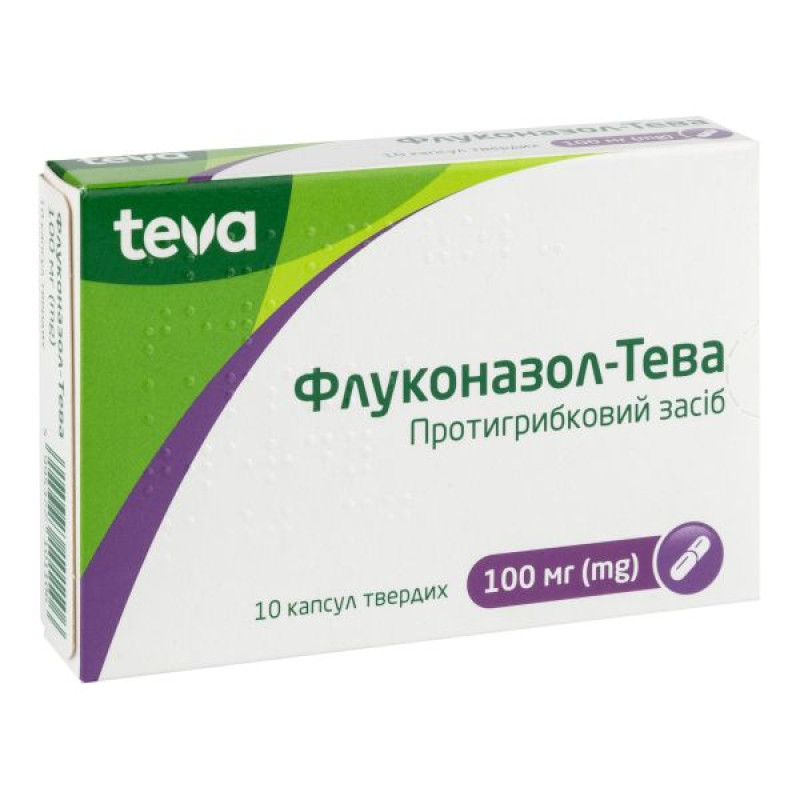
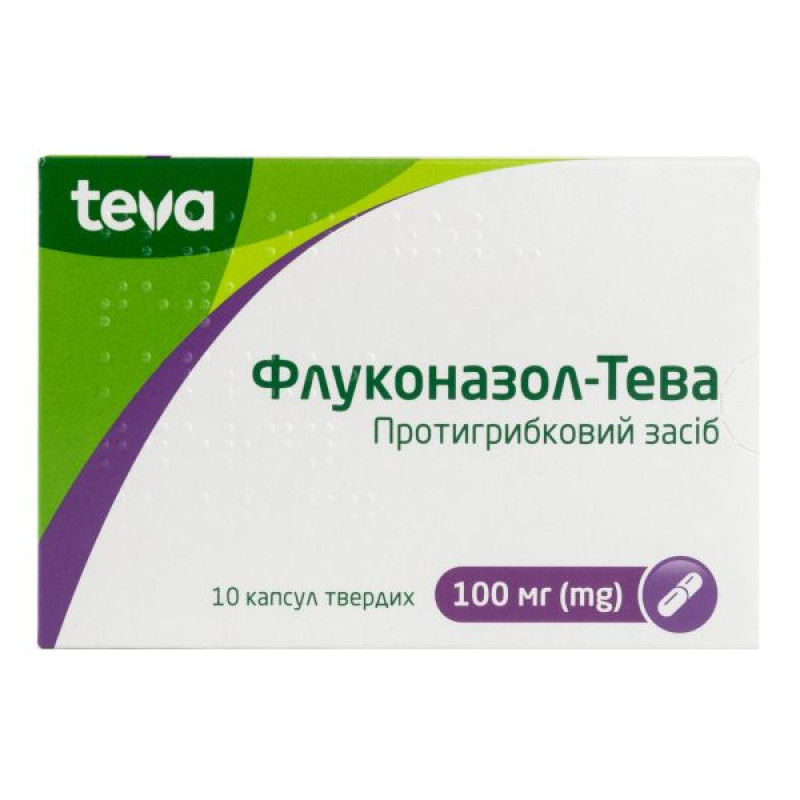
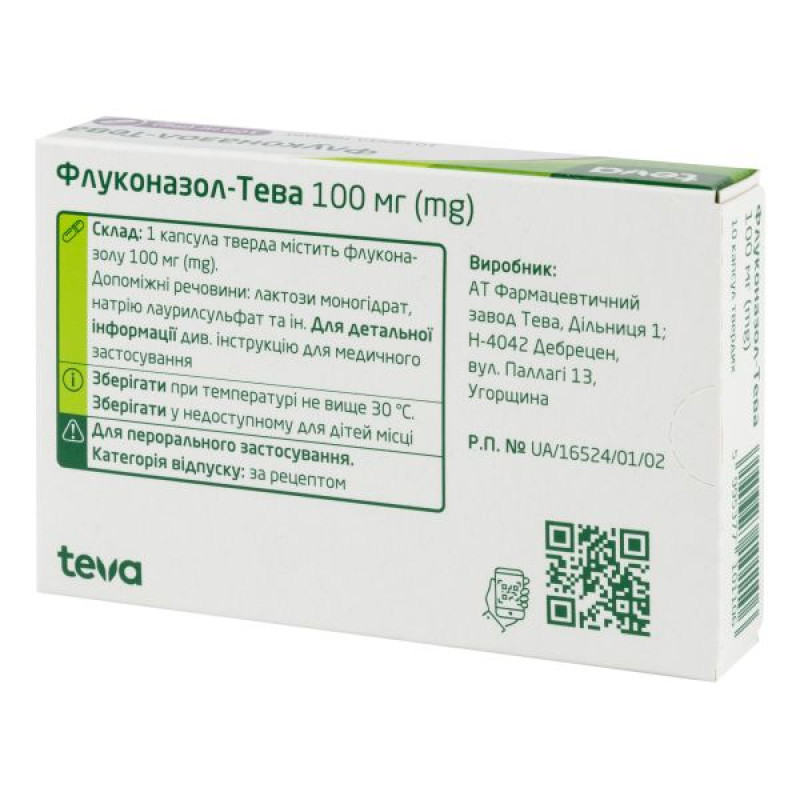
Instructions Fluconazole-Teva hard capsules 100 mg blister No. 10
Composition
active ingredient: fluconazole;
1 hard capsule contains 100 mg of fluconazole;
excipients:
capsule contents: lactose monohydrate, corn starch, colloidal anhydrous silica, sodium lauryl sulfate, magnesium stearate;
capsule shell: titanium dioxide (E 171), diamond blue FCF (E 133), gelatin, azorubine (E 122) (only for 200 mg capsules).
Dosage form
The capsules are hard.
Main physicochemical properties:
100 mg hard capsules: hard gelatin capsules filled with white or yellowish-white homogeneous powder, with an opaque blue cap and an opaque white body.
Pharmacotherapeutic group
Antifungal drugs for systemic use, triazole derivatives. ATX code J02A C01.
Pharmacological properties
Pharmacodynamics
Mechanism of action.
Fluconazole is an antifungal drug belonging to the triazole class. Its primary mechanism of action is inhibition of fungal cytochrome P450-mediated 14-α-lanosterol demethylation, an essential step in fungal ergosterol biosynthesis. Accumulation of 14-alpha-methyl sterols correlates with subsequent loss of ergosterol from the fungal cell membrane and may be responsible for the antifungal activity of fluconazole. Fluconazole is more selective for fungal cytochrome P450 enzymes than for various mammalian cytochrome P450 enzyme systems.
Fluconazole 50 mg daily for 28 days had no effect on plasma testosterone levels in men or on endogenous steroid levels in women of reproductive age. Fluconazole at doses of 200 to 400 mg daily had no clinically significant effect on endogenous steroid levels or on the response to adrenocorticotropic hormone (ACTH) stimulation in healthy male volunteers.
Interaction studies with antipyrine have shown that single or repeated administration of 50 mg fluconazole does not affect the metabolism of antipyrine.
In vitro sensitivity
In vitro, fluconazole exhibits antifungal activity against most clinically common Candida species (including C. albicans, C. parapsilosis, C. tropicalis). C. glabrata exhibits a wide range of susceptibility, while C. krusei is resistant to fluconazole.
Fluconazole also exhibits in vitro activity against Cryptococcus neoformans and Cryptococcus gattii, as well as against the endemic fungal forms Blastomyces dermatiditis, Coccidioides immitis, Histoplasma capsulatum and Paracoccidioides brasiliensis.
Pharmacodynamics/pharmacokinetics relationship
In animal studies, a correlation was found between the minimum inhibitory concentration (MIC) and the efficacy of the drug in an experimental model of mycosis caused by Candida species. In clinical studies, an almost 1:1 linear relationship between AUC and dose of fluconazole was found. There is also a direct but insufficient relationship between AUC or dose and a positive clinical response to the treatment of oral candidiasis and, to a lesser extent, candidemia. Treatment is also less effective in infections caused by strains with higher fluconazole MICs.
Mechanism of resistance
Candida species have a number of mechanisms of resistance to azole antifungals. Fungal strains that have developed one or more of these mechanisms of resistance are known to have high minimum inhibitory concentrations (MICs) for fluconazole, which adversely affects efficacy in vivo and in the clinical setting. Superinfection with Candida species other than C. albicans, which are often naturally non-susceptible to fluconazole (e.g., Candida krusei), has been reported. Such cases may require alternative antifungal therapy.
Breakpoints (according to the recommendations of the European Committee on Antimicrobial Susceptibility Testing (EUCAST))
Breakpoints for fluconazole against Candida species have been established based on analyses of pharmacokinetic/pharmacodynamic (PK/PD) data, in vitro susceptibility and clinical response. They are divided into non-species-related breakpoints, which were determined primarily on the basis of PK/PD data and are independent of species-specific MIC allocation, and breakpoints related to species most commonly associated with human infections. These breakpoints are listed in the table below:
| Antifungal drug | Species-specific thresholds (S≤/R>) | Limit values not associated with a specific speciesA (S≤/R>) | | | | |
| Candida albicans | Candida glabrata | Candida krusei | Candida parapsilosis | Candida tropicalis | |
| Fluconazole | 2/4 | IE | -- | 2/4 | 2/4 | 2/4 |
S – susceptible, R – resistant
A - Non-species specific breakpoints have been determined primarily from PK/PD data and are not dependent on species assignment based on MICs. They are used only for organisms that do not have specific breakpoints.
-- – susceptibility testing is not recommended, as this species is not the target of drug therapy.
IE – there is insufficient evidence to support this type of drug therapy.
Pharmacokinetics
Absorption. Fluconazole is well absorbed after oral administration, and plasma levels and systemic bioavailability exceed 90% of those achieved after intravenous administration. Concomitant food intake does not affect oral absorption. Peak plasma concentrations are reached 0.5-1.5 hours after dosing with a plasma half-life of approximately 30 hours. Plasma concentrations are dose-proportional. Steady-state concentrations of 90% can be achieved by day 4-5 when the daily dose is administered in divided doses. Steady-state concentrations of 90% are achieved by day 2 of treatment with a loading dose of twice the usual daily dose on the first day.
Distribution: The volume of distribution is approximately equal to the total body fluid content. Plasma protein binding is low (11-12%).
Fluconazole penetrates well into all studied body fluids. Fluconazole levels in saliva and sputum are similar to plasma concentrations. In patients with fungal meningitis, fluconazole levels in cerebrospinal fluid reach 80% of plasma concentrations.
High concentrations of fluconazole in the skin, exceeding serum levels, are achieved in the stratum corneum, epidermis, dermis and sweat. Fluconazole accumulates in the stratum corneum. When a dose of 50 mg is used once a day, the concentration of fluconazole after 12 days of treatment was 73 μg/g, and 7 days after the end of treatment, the concentration was still 5.8 μg/g. When a dose of 150 mg is used once a week, the concentration of fluconazole in the stratum corneum on the 7th day of treatment was 23.4 μg/g; 7 days after the next dose, the concentration was still 7.1 μg/g.
The concentration of fluconazole in nails after 4 months of 150 mg once weekly administration was 4.05 μg/g in healthy volunteers and 1.8 μg/g in patients with nail diseases; fluconazole was detected in nail samples 6 months after the end of therapy.
Biotransformation. Fluconazole is metabolized to a small extent. When a dose labeled with radioactive isotopes is administered, only 11% of fluconazole is excreted unchanged in the urine. Fluconazole is a selective inhibitor of CYP2C9 and CYP3A4 isoenzymes, as well as an inhibitor of CYP2C19 isoenzyme.
Elimination: The plasma half-life of fluconazole is approximately
30 hours. The majority of the drug is excreted by the kidneys, with 80% of the administered dose being found in the urine unchanged. Fluconazole clearance is proportional to creatinine clearance. No circulating metabolites have been identified.
The long half-life of the drug from blood plasma allows for a single use of the drug for vaginal candidiasis, as well as the use of the drug once a week for other indications.
Pharmacokinetics in renal impairment
In patients with severe renal impairment (GFR < 20 ml/min), the elimination half-life is increased from 30 to 98 hours, requiring a dose reduction. Fluconazole is removed by hemodialysis and, to a lesser extent, by peritoneal dialysis. A 3-hour hemodialysis session reduces the plasma levels of fluconazole by approximately 50%.
Pharmacokinetics in children
Pharmacokinetic parameters in children were evaluated in 5 studies: 2 single-dose studies, 2 multiple-dose studies, and one study involving premature neonates.
After administration of 2-8 mg/kg fluconazole to children aged 9 months to 15 years, an AUC of approximately 38 μg*h/ml per 1 mg/kg dose was observed. With multiple administration, the mean plasma half-life of fluconazole ranged between 15 and 18 hours, and the volume of distribution was approximately 880 ml/kg. A longer plasma half-life of fluconazole of approximately 24 hours was observed after a single dose. This is comparable to the plasma half-life of fluconazole after a single intravenous dose of 3 mg/kg to children aged 11 days to 11 months. The volume of distribution in this age group was approximately 950 ml/kg.
Experience with fluconazole in neonates is limited to pharmacokinetic studies in 12 premature infants with a gestational age of approximately 28 weeks. The mean age of the infant at the time of first dose was 24 hours (range 9-36 hours), and the mean birth weight was 0.9 kg (range 0.75-1.10 kg). A maximum of 5 intravenous injections of fluconazole at a dose of 6 mg/kg were administered every 72 hours. The mean half-life was 74 hours (44-185) on the first day, then decreased to 53 hours (30-131) on the 7th day and to 47 (27-68) on the 13th day. The area under the curve (μg*h/mL) was 271 (173-385) on day 1, increasing to 490 (292-734) on day 7, then decreasing to 360 (167-566) on day 13. The volume of distribution (mL/kg) was 1183 (1070-1470) on day 1, increasing to 1184 (510-2130) on day 7 and 1328 (1040-1680) on day 13, respectively.
In a study conducted in 22 patients (aged 65 years and older), fluconazole was administered orally at a dose of 50 mg. 10 of the participants were taking diuretics concomitantly. Cmax was 1.54 μg/ml and was reached within 1.3 hours after fluconazole administration. The mean AUC was 76.4 ± 20.3 μg*h/ml. The mean half-life was 46.2 hours. These pharmacokinetic parameters are higher compared to those in healthy young volunteers. Concomitant use of diuretics had no significant effect on Cmax and AUC. Also, creatinine clearance (74 mL/min), percentage of fluconazole excreted unchanged in urine (0-24 hours, 22%), and renal clearance of fluconazole (0.124 mL/min/kg) in patients of this age group were lower than those in younger volunteers. Therefore, changes in pharmacokinetics in elderly patients are likely to depend on renal function parameters.
Indication
Treatment of diseases in adults such as:
cryptococcal meningitis; coccidioidomycosis; invasive candidiasis; candidiasis of the mucous membranes, including oropharyngeal and esophageal candidiasis, candiduria, chronic candidiasis of the skin and mucous membranes; chronic atrophic candidiasis (candidiasis caused by the use of dentures) when local dental hygiene products are ineffective; vaginal candidiasis (acute or recurrent), when local therapy is not appropriate; candidal balanitis, when local therapy is not appropriate; dermatomycoses, including athlete's foot, smooth skin mycosis, inguinal dermatomycosis, lichen multicolor and candidal skin infections, when systemic therapy is indicated; dermatophyte onychomycosis, when other drugs are not appropriate.
Prevention of diseases in adults such as:
Recurrence of cryptococcal meningitis in patients at high risk of developing it; Recurrence of oropharyngeal or esophageal candidiasis in HIV patients at high risk of developing it; Reduction of the frequency of recurrences of vaginal candidiasis (4 or more cases per year); Prevention of candidal infections in patients with prolonged neutropenia (e.g., patients with blood malignancies receiving chemotherapy or patients undergoing hematopoietic stem cell transplantation).
Children.
Fluconazole can be used in children for the treatment of candidiasis of the mucous membranes (oropharyngeal candidiasis, esophageal candidiasis), invasive candidiasis, cryptococcal meningitis and for the prevention of candidal infections in patients with reduced immunity. The drug can be used as maintenance therapy to prevent recurrence of cryptococcal meningitis in children at high risk of its development.
Therapy with the drug can be initiated before the results of culture and other laboratory tests are available; once the results are available, antibacterial therapy should be adjusted accordingly.
Contraindication
Hypersensitivity to fluconazole, to other azoles or to any of the excipients of the drug; simultaneous use of fluconazole with terfenadine is contraindicated in patients taking fluconazole multiple times at doses of 400 mg per day or higher (based on the results of interaction studies with multiple administration);
simultaneous use of fluconazole with other drugs that cause QT prolongation and are metabolized by the CYP3A4 enzyme (e.g. cisapride, astemizole, pimozide, quinidine, amiodarone and erythromycin), see also sections "Special instructions" and "Interaction with other medicinal products and other types of interactions".
Interaction with other medicinal products and other types of interactions
Concomitant use with the following drugs is contraindicated:
Cisapride. Cardiac events such as torsades de pointes have been reported in patients receiving fluconazole and cisapride concomitantly. In a controlled study, concomitant administration of fluconazole 200 mg once daily and cisapride 20 mg four times daily resulted in significant increases in plasma cisapride levels and prolongation of the QT interval. Concomitant treatment with fluconazole and cisapride is contraindicated (see section 4.3).
Astemizole. Concomitant use of fluconazole with astemizole may reduce the clearance of astemizole. The resulting increased plasma concentrations of astemizole may lead to QT prolongation and, in rare cases, torsades de pointes. Concomitant use of fluconazole and astemizole is contraindicated (see section 4.3).
Pimozide. Concomitant use of fluconazole with pimozide may result in inhibition of pimozide metabolism, although in vitro and in vivo studies have not been conducted. Increased plasma concentrations of pimozide may lead to QT prolongation and, in rare cases, torsades de pointes. Concomitant use of fluconazole with pimozide is contraindicated (see section 4.3).
Quinidine. Concomitant use of fluconazole and quinidine may result in inhibition of quinidine metabolism, although in vitro and in vivo studies have not been conducted. Quinidine has been associated with QT prolongation and, in rare cases, paroxysmal torsades de pointes. Concomitant use of fluconazole and quinidine is contraindicated (see section 4.3).
Erythromycin. Concomitant use of fluconazole with erythromycin may lead to an increased risk of cardiotoxicity (QT prolongation and torsades de pointes) and, as a result, sudden coronary death. Concomitant use of fluconazole and erythromycin is contraindicated (see section "Contraindications").
Amiodarone. Concomitant use of fluconazole with amiodarone may result in inhibition of amiodarone metabolism. An association between amiodarone use and QT prolongation has been observed. Concomitant use of fluconazole and amiodarone is contraindicated (see section 4.3).
Concomitant use with the following medications is not recommended:
Halofantrine. Fluconazole may increase the plasma concentration of halofantrine due to its inhibitory effect on CYP3A4. Concomitant use of fluconazole and halofantrine may increase the risk of cardiotoxicity (QT prolongation, torsades de pointes) and, as a result, sudden coronary death. The use of this combination should be avoided (see section 4.4).
Concomitant use of fluconazole with such drugs requires caution and dose adjustment.
Effects of other drugs on fluconazole
Rifampicin: Concomitant administration of fluconazole and rifampicin resulted in a 25% decrease in AUC and a 20% decrease in the half-life of fluconazole. Therefore, an increase in the dose of fluconazole should be considered in patients taking rifampicin.
Interaction studies have shown that there was no clinically significant effect on the absorption of fluconazole when administered orally with food, cimetidine, antacids, or subsequent total body irradiation for bone marrow transplantation.
Hydrochlorothiazide: In a pharmacokinetic interaction study, co-administration of multiple hydrochlorothiazide in healthy volunteers receiving fluconazole increased the plasma concentrations of fluconazole by 40%. These interaction parameters do not require changes in the dosing regimen of fluconazole in patients receiving concomitant diuretics.
Effect of fluconazole on other drugs
Fluconazole is a potent inhibitor of the cytochrome P450 (CYP) 2C9 isoenzyme and a moderate inhibitor of CYP3A4. Fluconazole is also an inhibitor of the CYP2C19 isoenzyme. In addition to these interactions that have been observed or documented, there is a risk of increased concentrations of other compounds that are metabolized by CYP2C9, CYP2C19 and CYP3A4 when used concomitantly with fluconazole. Therefore, caution should be exercised and the patient should be closely monitored when these combinations are used. The enzyme inhibitory effect of fluconazole persists for 4-5 days after discontinuation of fluconazole treatment due to the long half-life of fluconazole.
Alfentanil: Concomitant administration of fluconazole (400 mg) with intravenous alfentanil (20 mcg/kg) to healthy volunteers resulted in a doubling of the AUC10 of alfentanil, possibly due to inhibition of CYP3A4. Dose adjustment of alfentanil may be necessary.
Amitriptyline, nortriptyline. Fluconazole potentiates the effects of amitriptyline and nortriptyline. It is recommended to measure 5-nortriptyline and/or S-amitriptyline at the beginning of combination therapy and after one week. If necessary, the dose of amitriptyline/nortriptyline should be adjusted.
Anticoagulants. During the post-marketing period, as with other azole antifungals, bleeding episodes (hematomas, epistaxis, gastrointestinal bleeding, hematuria and melena) associated with an increase in prothrombin time have been reported in patients receiving fluconazole concomitantly with warfarin. A two-fold prolongation of prothrombin time has been observed with concomitant treatment with fluconazole and warfarin, possibly due to inhibition of warfarin metabolism by CYP2C9. Patients receiving coumarin-type or indandione anticoagulants concomitantly with fluconazole should have their prothrombin time carefully monitored. Dosage adjustment of the anticoagulant may be necessary.
Short-acting benzodiazepines, e.g. midazolam, triazolam. Administration of fluconazole after oral midazolam resulted in a significant increase in midazolam concentrations and increased psychomotor effects. Concomitant administration of fluconazole 200 mg and midazolam 7.5 mg orally resulted in a 3.7- and 2.2-fold increase in AUC and half-life, respectively. Administration of fluconazole 200 mg/day and triazolam 0.25 mg orally resulted in a 4.4- and 2.3-fold increase in AUC and half-life, respectively. Potentiation and prolongation of the effects of triazolam were observed with concomitant administration of fluconazole and triazolam.
If a patient undergoing treatment with fluconazole is to be prescribed concomitant therapy with benzodiazepines, the dose of the latter should be reduced and appropriate monitoring of the patient's condition should be established.
Carbamazepine. Fluconazole inhibits the metabolism of carbamazepine and causes a 30% increase in serum carbamazepine levels. There is a risk of carbamazepine toxicity. The dose of carbamazepine may need to be adjusted depending on its concentration and effect.
Calcium channel blockers. Some calcium antagonists (nifedipine, isradipine, amlodipine, verapamil, and felodipine) are metabolized by the CYP3A4 enzyme. Fluconazole has the potential to increase systemic exposure to calcium channel blockers. Close monitoring for adverse reactions is recommended.
Celecoxib: Concomitant administration of fluconazole (200 mg daily) and celecoxib (200 mg) increased celecoxib Cmax and AUC by 68% and 134%, respectively. A halving of the celecoxib dose may be necessary when celecoxib and fluconazole are coadministered.
Cyclophosphamide: Concomitant use of cyclophosphamide and fluconazole has been shown to increase serum bilirubin and creatinine levels. These drugs may be used concomitantly, given the risk of increased serum bilirubin and creatinine concentrations.
Fentanyl. One fatal case of fentanyl intoxication has been reported due to a possible interaction between fentanyl and fluconazole. In addition, a study in 12 healthy volunteers demonstrated that fluconazole significantly delayed the elimination of fentanyl. Increased fentanyl concentrations may lead to respiratory depression, so the patient should be closely monitored. Fentanyl dosage adjustment may be necessary.
HMG-CoA reductase inhibitors. Concomitant use of fluconazole and inhibitors
HMG-CoA reductase inhibitors metabolized by CYP3A4 (atorvastatin and simvastatin) or HMG-CoA reductase inhibitors metabolized by CYP2C9 (fluvastatin) increase the risk of myopathy and rhabdomyolysis. If concomitant use of these drugs is necessary, the patient should be closely observed for symptoms of myopathy and rhabdomyolysis and creatine kinase levels should be monitored. In the event of a significant increase in creatine kinase levels, as well as when myopathy/rhabdomyolysis is diagnosed or suspected, the use of HMG-CoA reductase inhibitors should be discontinued.
Immunosuppressants (e.g. cyclosporine, everolimus, sirolimus and tacrolimus)
Cyclosporine. Fluconazole significantly increases the concentration and AUC of cyclosporine. With simultaneous use of fluconazole at a dose of 200 mg/day and cyclosporine at a dose of 2.7 mg/kg/day, an increase in the AUC of cyclosporine by 1.8 times was observed. These drugs can be used simultaneously, provided that the dose of cyclosporine is reduced depending on its concentration.
Everolimus: Although in vitro and in vivo studies have not been conducted, fluconazole may increase serum concentrations of everolimus due to inhibition of CYP3A4.
Sirolimus: Fluconazole increases plasma concentrations of sirolimus, possibly by inhibiting sirolimus metabolism by CYP3A4 and P-glycoprotein. These drugs can be used concomitantly, with dose adjustments of sirolimus based on drug levels and effects.
Tacrolimus: Fluconazole may increase the serum concentrations of tacrolimus up to 5-fold when administered orally due to inhibition of tacrolimus metabolism by the CYP3A4 enzyme in the intestine. No significant changes in pharmacokinetics have been observed with intravenous administration of tacrolimus. Elevated tacrolimus levels are associated with nephrotoxicity. The oral dose of tacrolimus should be reduced depending on tacrolimus concentrations.
(E-31 74), which accounts for most of the antagonism to angiotensin II receptors during the use of losartan. It is recommended to carry out continuous monitoring of blood pressure in patients.
Methadone: Fluconazole may increase the serum concentration of methadone. Methadone dosage adjustment may be necessary when methadone and fluconazole are used concomitantly.
Non-steroidal anti-inflammatory drugs (NSAIDs). When co-administered with fluconazole, the Cmax and AUC of flurbiprofen increased by 23% and 81%, respectively, compared to flurbiprofen alone. Similarly, when co-administered with racemic ibuprofen (400 mg), the Cmax and AUC of the pharmacologically active isomer S-(+)-ibuprofen increased by 15% and 82%, respectively, compared to racemic ibuprofen alone.
Although no specific studies have been conducted, fluconazole has the potential to increase the systemic exposure of other NSAIDs metabolized by CYP2C9 (e.g. naproxen, lornoxicam, meloxicam, diclofenac). Periodic monitoring for adverse reactions and toxicities associated with NSAIDs is recommended. Dose adjustment of the NSAID may be necessary.
Phenytoin. Fluconazole inhibits the metabolism of phenytoin in the liver. Simultaneous multiple administration of 200 mg of fluconazole and 250 mg of phenytoin intravenously leads to an increase in phenytoin AUC24 by 75% and Cmin by 128%. When these drugs are used simultaneously, phenytoin serum concentrations should be monitored to avoid the development of phenytoin toxicity.
Prednisone. A case report has been made of a liver transplant patient receiving prednisone who developed acute adrenal insufficiency after discontinuation of a three-month course of fluconazole. Discontinuation of fluconazole is likely to have resulted in increased CYP3A4 activity, leading to increased metabolism of prednisone. Patients receiving long-term concomitant treatment with fluconazole and prednisone should be carefully monitored for the development of adrenal insufficiency after discontinuation of fluconazole.
Rifabutin. Fluconazole increases the serum concentration of rifabutin, leading to an increase in the AUC of rifabutin by up to 80%. Cases of uveitis have been reported with the simultaneous use of fluconazole and rifabutin. When using this combination of drugs, symptoms of rifabutin toxicity should be taken into account.
Saquinavir: Fluconazole increases the AUC and Cmax of saquinavir by approximately 50% and 55%, respectively, due to inhibition of the hepatic metabolism of saquinavir by CYP3A4 and inhibition of P-glycoprotein. Interactions between fluconazole and saquinavir/ritonavir have not been studied and may be more severe. Saquinavir dose adjustment may be necessary.
Sulfonylureas: Concomitant use of fluconazole prolongs the half-life of oral sulfonylureas (chlorpropamide, glibenclamide, glipizide, and tolbutamide) in healthy volunteers. Frequent monitoring of blood glucose levels and appropriate dose reduction of sulfonylureas is recommended when co-administered with fluconazole.
Theophylline. In a placebo-controlled study of the interaction of fluconazole and theophylline, it was found that the use of fluconazole 200 mg for 14 days resulted in an 18% decrease in the mean plasma clearance of theophylline. Patients receiving high doses of theophylline or who are at increased risk of theophylline toxicity for other reasons should be monitored for signs of theophylline toxicity. Therapy should be changed if signs of toxicity appear.
Vinca alkaloids: Although not studied, fluconazole, possibly through inhibition of CYP3A4, may increase plasma concentrations of vinca alkaloids (e.g. vincristine and vinblastine), leading to neurotoxic effects.
Vitamin A. A patient receiving all-trans retinoic acid (the acid form of vitamin A) and fluconazole was reported to have a CNS adverse reaction in the form of pseudotumor cerebri; this effect resolved after discontinuation of fluconazole. These drugs can be used concomitantly, but the risk of CNS adverse reactions should be kept in mind.
Zidovudine. Fluconazole increased the Cmax and AUC of zidovudine by 84% and 74%, respectively, due to a decrease in zidovudine clearance by approximately 45% when administered orally. The half-life of zidovudine was also prolonged by approximately 128% after the combination of fluconazole and zidovudine. Patients receiving this combination should be monitored for adverse reactions associated with zidovudine. A reduction in the dose of zidovudine may be considered.
Azithromycin: In an open-label, randomized, three-way crossover study in 18 healthy volunteers, the effects of azithromycin and fluconazole on the pharmacokinetics of each other were evaluated when administered orally at single doses of 1200 mg and 800 mg, respectively. No significant pharmacokinetic interactions were observed.
Oral contraceptives. From two pharmacokinetic studies of multiple administration of fluconazole and a combined oral contraceptive, it is known that when fluconazole was used at a dose of 50 mg, there was no effect on hormone levels, while when fluconazole was used at a dose of 200 mg per day, an increase in the AUC of ethinylestradiol by 40% and levonorgestrel by 24% was observed. This indicates that multiple administration of fluconazole at these doses is unlikely to affect the efficacy of a combined oral contraceptive.
Ivacaftor: Co-administration with ivacaftor, a cystic fibrosis transmembrane conductance regulator enhancer, increases ivacaftor exposure 3-fold and hydroxymethylivacaftor (M1) exposure 1.9-fold. A dose reduction of ivacaftor to 150 mg once daily is recommended for patients concomitantly taking moderate CYP3A inhibitors such as fluconazole and erythromycin.
Application features
Ringworm: A study of fluconazole for the treatment of ringworm in children found that fluconazole was not superior to griseofulvin in efficacy and the overall efficacy rate was less than 20%. Therefore, fluconazole should not be used for the treatment of ringworm.
Cryptococcosis. There is insufficient evidence of fluconazole efficacy in the treatment of cryptococcosis of other sites (e.g., pulmonary cryptococcosis and cutaneous cryptococcosis), and therefore no dosage recommendations can be made for these conditions.
Deep endemic mycoses. Evidence of the effectiveness of fluconazole for the treatment of other forms of endemic mycoses, such as paracoccidioidomycosis, histoplasmosis and cutaneous-lymphatic sporotrichosis, is insufficient, therefore there are no recommendations for a dosage regimen for the treatment of such diseases.
Renal system: The drug should be used with caution in patients with impaired renal function (see section "Method of administration and dosage").
Adrenal insufficiency. Ketoconazole is known to cause adrenal insufficiency, and this may also apply to fluconazole, although it is rare. Adrenal insufficiency associated with concomitant treatment with prednisone is described in the section "Interaction with other medicinal products and other forms of interaction".
Hepatobiliary system. The drug should be used with caution in patients with impaired liver function. The use of fluconazole has been associated with rare cases of severe hepatotoxicity, including fatalities, mainly in patients with severe underlying diseases. In cases where hepatotoxicity has been associated with the use of fluconazole, there has been no clear relationship between the total daily dose of the drug, duration of therapy, gender or age of the patient. Usually, hepatotoxicity caused by fluconazole is reversible and its manifestations disappear after discontinuation of therapy.
Patients who develop abnormal liver function tests while taking fluconazole should be closely monitored for the possible development of more severe liver damage.
Patients should be informed about symptoms that may indicate serious liver effects (severe asthenia, anorexia, persistent nausea, vomiting, and diarrhea).