Composition
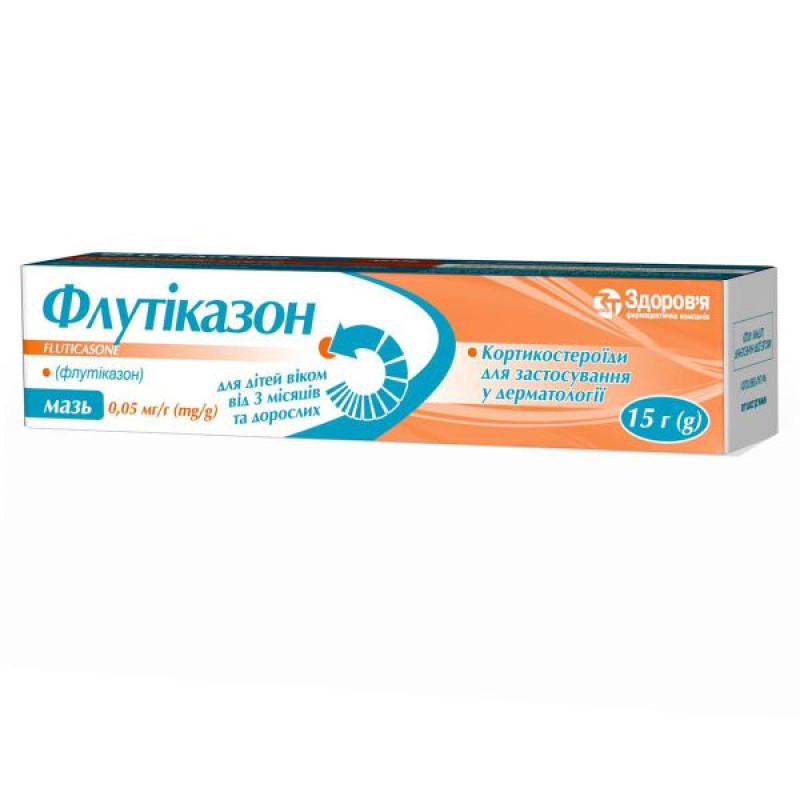
active ingredient: fluticasone;
1 g of the drug contains fluticasone propionate 0.05 mg;
excipients: microcrystalline wax, propylene glycol, sorbitan sesquioleate, mineral oil.
Dosage form
Ointment.
Main physicochemical properties: homogeneous translucent ointment of white or almost white color.
Pharmacotherapeutic group
Corticosteroids for use in dermatology. Active corticosteroids (group III). ATX code D07A C17.
Pharmacological properties
Pharmacodynamics.
Fluticasone propionate is a glucocorticoid drug with high anti-inflammatory activity and a very low level of suppression of the hypothalamic-pituitary-adrenal system when applied topically, so its therapeutic index is one of the widest of all currently available topical steroids.
Fluticasone propionate has high systemic activity after subcutaneous administration, but very low activity after oral administration, possibly due to metabolic inactivation. In vitro studies have shown it to have high affinity for human glucocorticoid receptors.
Fluticasone propionate does not exhibit unpredictable hormonal effects and no significant effects on the central and peripheral nervous systems, gastrointestinal, cardiovascular or respiratory systems.
Pharmacokinetics.
Absorption.
With topical and oral administration, bioavailability is very low due to limited absorption of the drug through the skin or from the gastrointestinal tract and due to extensive first-pass metabolism. Oral bioavailability is close to zero, so the systemic exposure to fluticasone propionate with any internal application of the ointment will be low.
Distribution.
Studies have shown that very little orally administered fluticasone propionate reaches the systemic circulation and is rapidly excreted in the bile and feces. Fluticasone propionate is not retained in any tissues and does not bind to melanin.
Metabolism.
According to pharmacokinetic studies in animals, fluticasone propionate is rapidly excreted and undergoes extensive metabolic clearance. In humans, metabolic clearance is broad and, accordingly, elimination is rapid. The drug is rapidly inactivated when absorbed through the skin into the systemic circulation. The main mechanism of metabolism is hydrolysis to the carboxylic acid, which has very low glucocorticoid and anti-inflammatory activity.
Breeding.
According to animal studies, the route of excretion of fluticasone propionate is independent of the route of administration. It is excreted mainly in the feces, and this process is completely completed within 48 hours.
Indication
Adults.
Dermatoses sensitive to corticosteroid treatment, such as:
- atopic dermatitis;
- nummular dermatitis (discoid eczema);
- nodular itching;
- psoriasis (except widespread plaque psoriasis);
- chronic lichen simplex (neurodermatitis), lichen planus;
- seborrheic dermatitis;
- irritant or allergic contact dermatitis;
- discoid lupus erythematosus;
- generalized erythroderma (as an additional remedy);
- reaction to insect bites;
- red sweat.
Children.
Treatment of atopic dermatitis in children aged 3 months and older when treatment with less potent corticosteroids is ineffective.
Contraindication
Hypersensitivity to the active substance or to any component of the drug.
Untreated skin infections.
Rosacea.
Common acne.
Perioral dermatitis.
Perianal and genital itching.
Itching without inflammation.
Dermatoses in children under 3 months of age, including dermatitis and diaper rash.
Interaction with other medicinal products and other types of interactions
Concomitant use with drugs that may inhibit CYP3A4 (e.g. ritonavir, itraconazole) has been shown to inhibit the metabolism of corticosteroids, which may result in increased systemic exposure. The extent to which this interaction is clinically significant depends on the dose of the drug, the route of administration of the corticosteroid, and the potency of the CYP3A4 inhibitor.
Application features
The drug should be used with caution in patients with a history of local hypersensitivity reactions to corticosteroids or any of the excipients. Local hypersensitivity reactions (see section 4.8) may resemble the symptoms of the disease being treated.
Manifestations of hypercorticism (Cushing's syndrome) and reversible suppression of the hypothalamic-pituitary-adrenal axis with suppression of adrenal function in some individuals may result from increased systemic absorption of topical steroids. If any of the above symptoms occur, the drug should be gradually discontinued by reducing the frequency of application or changing to a less potent corticosteroid. Abrupt discontinuation of treatment may result in glucocorticosteroid insufficiency (see section "Adverse reactions").
Risk factors for systemic effects include:
- potency and composition of the topical steroid;
- duration of use;
- application to a large area of skin;
- application on touching skin surfaces, for example, in diaper areas or at the site of application of an occlusive dressing (in infants, diapers can play the role of an occlusive dressing);
- application to areas with thin skin, such as the face;
- application to areas of damaged skin or under other conditions where the skin barrier is disrupted.
Children and adolescents may absorb proportionally greater amounts of topical corticosteroids than adults and are therefore more susceptible to systemic side effects. This is because children have an immature skin barrier and a larger skin surface area relative to body weight than adults.
Children.
Long-term daily use of topical corticosteroids in infants and children under 12 years of age should be avoided if possible, as they are more likely to develop adrenal suppression.
Psoriasis treatment.
Topical corticosteroids should be used with caution in the treatment of psoriasis, as in some cases relapses, development of tolerance, risk of generalization of pustular psoriasis and development of symptoms of local or systemic toxicity due to impaired skin barrier function have been reported. When used for the treatment of psoriasis, the patient should be under close medical supervision.
Applying ointment to the face.
Prolonged application of the ointment to the skin of the face is undesirable, as this area is more vulnerable to atrophic changes.
Application to the eyelids.
When applying the ointment to the eyelids, avoid getting the drug in the eyes, as repeated use may cause cataracts and glaucoma.
Visual impairment.
Visual impairment may occur with systemic and topical corticosteroids. If a patient presents with symptoms such as blurred vision or other visual disturbances, they should be referred to an ophthalmologist for evaluation of possible causes, which may include cataracts, glaucoma, or rare conditions such as central serous chorioretinopathy, which have been reported with systemic and topical corticosteroids.
Concomitant infections.
Whenever treating inflammatory lesions that are infected, appropriate antibacterial agents should be prescribed. In the event of widespread infection, topical corticosteroids should be discontinued and appropriate antibacterial therapy should be prescribed.
Risk of infection when applying an occlusive dressing.
The risk of bacterial infections increases in warm and moist conditions in skin folds or under occlusive dressings, so the skin should be thoroughly cleaned before applying a new dressing.
Chronic leg ulcers.
Topical corticosteroids are sometimes used to treat dermatitis around chronic leg ulcers. However, this use is associated with an increased incidence of local hypersensitivity reactions and an increased risk of local infections.
Overt suppression of adrenal cortex function (morning plasma cortisol level less than 5 μg/dl) is unlikely when using the ointment in therapeutic doses, unless more than 50% of the body surface area in adults is treated and more than 20 g of the drug is used per day.
The presence of propylene glycol may cause skin irritation.
The medicinal product contains mineral oil. Patients should be warned not to smoke or be near fire when applying the ointment due to the risk of severe burns. If the medicinal product comes into contact with fabric (clothing, bedding, bandages, etc.), the material may easily catch fire and cause a serious fire. Washing clothing and bedding reduces the accumulation of the medicinal product in the material, but does not completely remove it.
Use during pregnancy or breastfeeding
Pregnancy.
Data on the use of fluticasone propionate in pregnant women are limited.
Topical corticosteroids in pregnant animals may cause fetal malformations, although the relevance of these data to pregnant women has not been established. However, fluticasone propionate should be administered to pregnant women only if the expected benefit to the mother justifies the potential risk to the fetus and infant. The lowest effective dose should be used for the shortest possible duration.
Breast-feeding.
The safety of topical corticosteroids during breastfeeding has not been established. It is not known whether topical corticosteroids can result in systemic absorption that would result in measurable amounts of the drug in breast milk. In a study in laboratory rats, fluticasone propionate was found to be present in breast milk at defined plasma levels following subcutaneous administration.
Fluticasone propionate ointment should be prescribed during breastfeeding only if the expected benefit to the mother outweighs the potential risk to the child. If prescribed during breastfeeding, the ointment should not be applied to the breasts to avoid accidental ingestion of the ointment by the child.
Fertility.
There are no data to assess the effects of topical corticosteroids on human fertility.
Ability to influence reaction speed when driving vehicles or other mechanisms
No studies have been conducted on this effect. Given the adverse reaction profile, no effect on the reaction speed when driving or operating other mechanisms is expected.
Adults and children aged 3 months and over.
The ointment is most suitable for treating dry skin surfaces, as well as skin with lichen or scaly lesions.
The drug should be applied in a thin layer to the affected areas of the skin 1 or 2 times a day. The duration of treatment with daily use is up to 4 weeks until the condition improves, then it is necessary to reduce the frequency of application of the ointment or change to a less potent drug. After applying the ointment, sufficient time should be allowed for absorption of the drug before the next application of an emollient.
Once disease control is achieved, the frequency of topical corticosteroids should be gradually reduced until completely discontinued, and emollients should be used as maintenance therapy.
Recurrence of symptoms of an existing disease is possible with sudden discontinuation of topical corticosteroids, especially potent ones.
Duration of treatment for adults and elderly patients.
If the condition worsens or does not improve within 2-4 weeks, the diagnosis and treatment should be reviewed.
Children from 3 months of age.
Children are more likely to experience local or systemic adverse reactions to topical corticosteroids, so they are generally prescribed shorter courses of treatment and less potent drugs than adults.
The drug should be used with caution to ensure the application of the minimum effective amount of the drug.
Duration of treatment for children.
If the ointment is not effective in children within 7-14 days, treatment should be discontinued and the child should be further examined. If control of the disease is achieved within 7-14 days of treatment, the minimum effective dose should be used for the shortest possible time. The duration of treatment with daily use should not exceed 4 weeks.
Elderly patients.
Clinical studies have not shown any differences in response to treatment between elderly and younger patients. Since elderly patients are more likely to have decreased renal or hepatic function, which may delay the elimination of the drug in the event of systemic absorption, the lowest effective dose should be used for the shortest duration necessary to achieve the desired therapeutic effect.
Liver/kidney failure.
In case of systemic absorption (when applied to a large surface area and for a long time), the metabolism and elimination of the drug may slow down and the risk of systemic toxicity may increase. Therefore, to achieve the desired result, the minimum effective dose should be used for the shortest possible time.
Children.
Use for the treatment of children aged 3 months and older.
Overdose
Symptoms.
Fluticasone propionate, when applied topically, can be absorbed in sufficient quantities to produce systemic effects. Acute overdose is unlikely. In case of chronic overdose or abuse, signs of hypercorticism may occur (see section "Adverse reactions").
Treatment.
In case of overdose, the use of the ointment should be gradually discontinued by reducing the frequency of application or replaced with a less potent topical corticosteroid, taking into account the risk of developing glucocorticosteroid insufficiency. Further treatment should be carried out according to the clinical condition of the patient.
Adverse reactions
Adverse reactions are classified by organ system and frequency of occurrence: very common (≥1/10), common (≥1/100, <1/10), uncommon (≥1/1000, <1/100), rare (≥1/10000, <1/1000), very rare (<1/10000), including isolated cases, unknown (frequency cannot be estimated from the available data).
Infections and invasions.
Very rare: opportunistic infections.
From the immune system.
Very rare: hypersensitivity.
From the endocrine system.
Very rare: hypothalamic-pituitary-adrenal axis suppression:
- weight gain/obesity;
- delayed weight gain/growth retardation in children;
- Cushingoid features (e.g., moon face, central obesity);
- reduction in endogenous cortisol levels;
- hyperglycemia/glucosuria;
- arterial hypertension;
- osteoporosis;
- cataract;
- glaucoma.
On the skin and subcutaneous tissue.
Common: itching.
Uncommon: local burning sensation of the skin.
Very rare: skin thinning, skin atrophy, striae, telangiectasia, pigmentation changes, hypertrichosis, allergic contact dermatitis, exacerbation of the main symptoms, pustular psoriasis, erythema, rash, urticaria.
From the organs of vision.
Not known: visual impairment (see section "Special warnings and precautions for use").
Expiration date
2 years.
Storage conditions
Store in the original packaging at a temperature not exceeding 25 °C.
Do not freeze. Keep out of reach of children.
Packaging
15 g in a tube in a box.
Vacation category
According to the recipe.
Producer
Limited Liability Company "Pharmaceutical Company "Zdorovya".
Location of the manufacturer and address of its place of business.
Ukraine, 61013, Kharkiv region, Kharkiv city, Shevchenko street, building 22.
(all stages of production, quality control, series production)
Ukraine, 08301, Kyiv region, Boryspil city, Shevchenko st., building 100, letter B-II (building 4).
(all stages of production, series production)