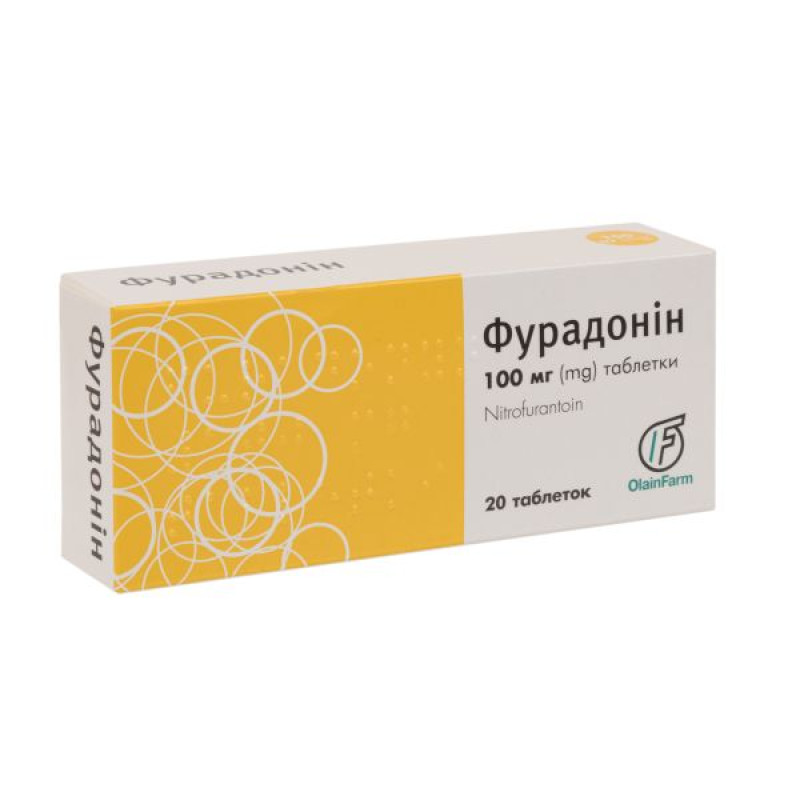
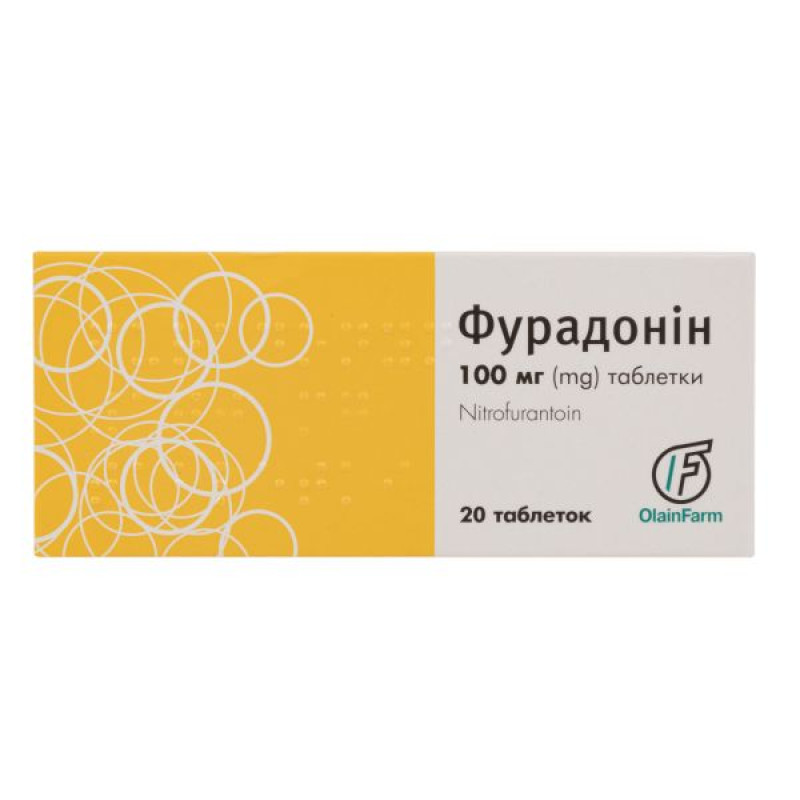
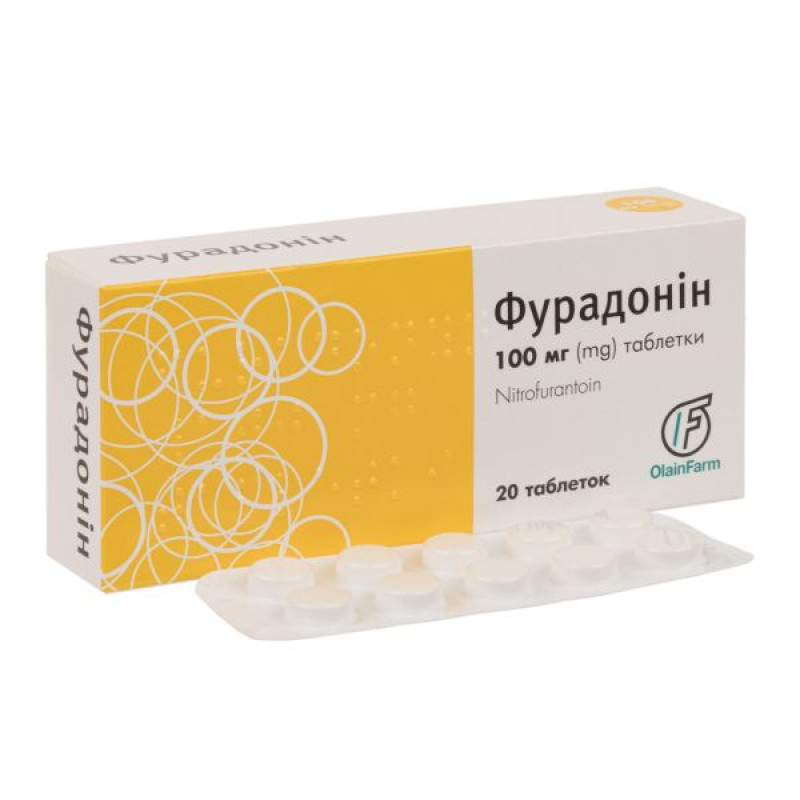
Instructions Furadonin tablets 100 mg No. 20
Composition
active ingredient: nitrofurantoin;
1 tablet contains 100 mg of nitrofurantoin;
excipients: potato starch, colloidal anhydrous silicon dioxide, calcium stearate.
Dosage form
Pills.
Main physicochemical properties: round flat tablets of yellow or greenish-yellow color with a bevel.
Pharmacotherapeutic group
Antibacterial agents. Nitrofuran derivatives.
ATX code J01X E01.
Pharmacological properties
Pharmacodynamics.
Nitrofurantoin is an antimicrobial agent of the nitrofuran group, a uroantiseptic.
Antimicrobial properties are due to the ability of nitrofurantoin to affect various enzyme systems of microorganisms. Nitrofurantoin, due to the creation of high concentrations in the urine, is especially effective in the treatment of urinary tract diseases.
Nitrofurantoin has a bacteriostatic effect (the drug is bactericidal at high concentrations).
The spectrum of antibacterial activity includes most microorganisms that cause urinary tract infections. Bacterial resistance to nitrofurantoin is rarely observed.
Microorganisms sensitive to nitrofurantoin: Enterococci, Escherichia coli, Citrobacter spp., Group B Streptococci, Staphylococcus aureus, Staphylococcus epidermidis, as well as those that rarely cause urinary tract infections: Salmonella spp., Bacteroides spp., Streptococcus pneumoniae; moderately sensitive: Klebsiella pneumoniae, Enterobacter spp., Proteus spp., Providencia spp.; resistant to the drug: Pseudomonas aeruginosa, Serratia spp., Proteus mirabilis, Pseudomonas cepacia, Acinetobacter spp.
Pharmacokinetics.
Nitrofurantoin is well absorbed from the gastrointestinal tract. Bioavailability is approximately 50% (food increases bioavailability). Binding to plasma proteins is 60-95%. It is partially metabolized in the liver. 30-50% of the dose is rapidly excreted in the urine unchanged, which explains the bacteriostatic and bactericidal effect of the drug in urinary tract infections. Effective therapeutic concentration of nitrofurantoin in the blood and tissues is not achieved. The half-life is 0.5-1 hour. High concentration of the drug in the urine is maintained for up to 12 hours. The maximum concentration in the blood serum after taking 100 mg of the drug is achieved after 30 minutes. In anuria or renal failure with creatinine clearance below 45 ml/min, antibacterial concentration of nitrofurantoin in the urine is not achieved, but the frequency of side effects increases. Penetrates through the placental and blood-brain barriers, penetrates into breast milk. The half-life is 0.3−1 hour.
Indication
Bacterial infections of the urinary tract (pyelitis, pyelonephritis, cystitis, urethritis), including for the treatment of relapses, as well as for the prevention of infection during urological operations, catheterization, cystoscopy.
Contraindication
Hypersensitivity to nitrofurantoin or to any of the excipients of the drug;
hypersensitivity to other nitrofurans;
pulmonary fibrosis;
pyelonephritis in the presence of concomitant parenchymal inflammation of the kidneys or paranephral
abscess;
anury;
oliguria;
porphyria;
renal failure (creatinine clearance less than 45 ml/min);
cirrhosis;
chronic hepatitis;
chronic heart failure;
conducting hemodialysis;
glucose-6-phosphate dehydrogenase deficiency (threat of hemolytic anemia);
neuritis and polyneuropathy;
pregnancy and breastfeeding;
children's age up to 12 years.
Interaction with other medicinal products and other types of interactions
The use of nitrofurantoin should not be combined with the use of drugs that cause renal dysfunction.
Antacids and adsorbents reduce the absorption of the drug, so they are not recommended for use simultaneously with nitrofurantoin.
Uricosuric agents (probenacid and sulfinpyrazone) reduce the excretion of nitrofurantoin (increasing the concentration of nitrofurantoin in the blood, reducing its effectiveness and increasing the risk of toxicity), therefore they are not recommended for use simultaneously with the drug.
Carbonic anhydrase inhibitors reduce the antibacterial activity of the drug.
Nitrofurantoin reduces the reabsorption of estrogens.
If used simultaneously with contraceptives, the contraceptive effect may be reduced.
Nitrofurantoin inactivates the oral typhoid vaccine.
In vitro, nitrofurantoin reduces the antibacterial effect of quinolone drugs (nalidixic acid, fluoroquinolones). Concomitant use of these drugs should be avoided.
It should not be used simultaneously with ristomycin, chloramphenicol, sulfonamides, as inhibition of hematopoiesis is possible.
In renal failure, the simultaneous use of nitrofurantoin with aminoglycosides is not recommended.
When used simultaneously with antibiotics (penicillins and cephalosporins), the antibacterial effect is significantly increased. The drug combines well with tetracycline and erythromycin.
The antibacterial effect of nitrofurantoin is reduced in alkaline urine, so it should not be combined with drugs that increase urine pH.
Alcoholic beverages should not be consumed during treatment, as undesirable side effects (e.g. headache, nausea, vomiting) may be increased.
Application features
According to some published data, the use of nitrofurantoin has been associated with the occurrence of acute attacks of porphyria, therefore the use of the drug is contraindicated in patients with porphyria.
Caution should be exercised in patients with impaired renal function. With reduced urinary excretion of nitrofurantoin, its antibacterial concentration in the urine may not be achieved, thus increasing plasma concentrations and the risk of toxicity (if creatinine clearance is less than 45 ml/min, use is contraindicated).
No significant differences in response to nitrofurantoin treatment have been found between older people (over 65 years) and younger patients, but caution is advised due to possible impaired renal function in the elderly.
Cases of pseudomembranous colitis have been reported during treatment with nitrofurantoin. The possibility of this adverse reaction should be considered in patients with diarrhea caused by suppression of the natural microflora of the rectum during the use of antibacterial agents. In the case of mild pseudomembranous colitis, it is sufficient to stop taking the antibacterial agent, in the case of moderate and severe pseudomembranous colitis, appropriate treatment is necessary.
Caution should be exercised in patients with anemia, diabetes mellitus, electrolyte imbalance, emaciated patients, patients with B vitamin and folic acid deficiency, lung diseases, liver failure, and those prone to developing peripheral neuropathies.
If signs of peripheral neuropathy appear, the use of the drug should be discontinued.
During long-term therapy, lung function should be monitored, especially in elderly patients, who may have worsening pulmonary reactions. The drug should be discontinued at the first signs of lung damage.
During long-term therapy, blood counts and liver function tests should be monitored. Nitrofurantoin may give a false-positive reaction for sugar in the urine when using the copper reduction method.
If an enzymatic method is used to determine glucose in urine, the use of nitrofurantoin does not affect the test results.
The medicine turns urine dark yellow or brown.
Hepatotoxicity.
Hepatic reactions, including hepatitis, autoimmune hepatitis, cholestatic jaundice, chronic active hepatitis, can be insidious, so patients should have periodic biochemical tests to monitor liver function. If hepatitis occurs, the drug should be discontinued immediately and appropriate measures taken.
Nitrofurantoin should not be used to treat diseases of the renal cortex, purulent paranephritis, and prostatitis.
The use of the drug may lead to diarrhea caused by Clostridium difficile. Treatment with the drug alters the normal microflora of the colon and promotes the overgrowth of Clostridium difficile. If diarrhea caused by Clostridium difficile is suspected or confirmed, treatment with nitrofurantoin should be discontinued and appropriate treatment should be initiated.
In some cases, during treatment with nitrofurantoin (especially with prolonged use), bacterial resistance may develop. In case of resistance, it is necessary to stop taking nitrofurantoin and choose another antibacterial agent for further treatment.
Use during pregnancy or breastfeeding
The drug is contraindicated during pregnancy or breastfeeding.
Ability to influence reaction speed when driving vehicles or other mechanisms
Furadonin does not affect the reaction rate when driving or working with other mechanisms, but caution should be exercised in individuals who experience dizziness, headache, or other side effects from the central nervous system during treatment.
Method of administration and doses
Furadonin should be taken orally, immediately after meals, with plenty of water.
Acute infections: adults - 100 mg 2 times a day for 7 days.
Severe chronic recurrent infections: adults – 100 mg 3-4 times a day for 7 days.
If nausea occurs, the dose should be reduced or the drug should be discontinued. For the prevention of urinary tract infections, the recommended dose is 100 mg at bedtime. For adults, the highest single dose is 300 mg, daily dose is 600 mg. For children over 12 years of age, adult doses can be used in case of acute uncomplicated urinary tract infections. Patients with impaired liver and/or kidney function, elderly patients There is no data on dosage for patients with impaired liver and/or kidney function and elderly patients. However, the drug should be used with caution. Furadonin is contraindicated in patients with renal failure.
Surgical prophylaxis: 100 mg 2 times a day on the day of the procedure and for 3 days after the procedure.
If the next dose has not been taken, the course of treatment should be continued at the previously prescribed doses.
Children.
The medicine can be used in children over 12 years of age.
Overdose
Nervous system disorders indicate an increased concentration of nitrofurantoin in the blood plasma. The development of polyneuritis is a consequence of the cumulation of nitrofurantoin and its metabolites, therefore, in case of renal failure, the risk of polyneuritis increases.
Treatment: discontinuation of the drug; drinking plenty of fluids to help eliminate nitrofurantoin in the urine; use of enterosorbents, antihistamines, and B vitamins. Therapy is symptomatic. There is no specific antidote.
In case of acute overdose, gastric lavage is necessary.
Nitrofurantoin is removed by hemodialysis.
Adverse reactions
The medicine can cause side effects that not everyone gets.
Adverse reactions are listed according to the MedDRA system organ class and frequency of development: very common (≥ 1/10); common (≥ 1/100 to < 1/10); uncommon (≥ 1/1000 to < 1/100); rare (≥ 1/10,000 to < 1/1000); very rare (< 1/10,000), not known (cannot be estimated from the available data). Infections and infestations Pseudomembranous colitis has been reported during nitrofurantoin therapy. In the case of mild pseudomembranous colitis, it is sufficient to discontinue the drug. In the case of moderate and severe pseudomembranous colitis, appropriate treatment is required.
From the side of the hematopoietic and lymphatic systems: rarely - patients with glucose-6-phosphate dehydrogenase deficiency may develop megaloblastic anemia, leukopenia, granulocytopenia or agranulocytosis, thrombocytopenia, hemolytic anemia.
Immune system disorders: unknown - cutaneous vasculitis.
In isolated cases, autoimmune reactions have been observed, mainly associated with chronic changes in the lungs or liver. The main symptoms of this lupus-like syndrome are fever, short-term rash, arthralgia and eosinophilia. Increased serum levels of: antinuclear antibodies, antibodies to smooth muscle or glomeruli of the kidneys and Coombs' test are observed. From the nervous system: often - headache, rarely - drowsiness, dizziness, depression, euphoria, nystagmus, confusion, psychotic reactions, restlessness (excitement), asthenia, increased intracranial pressure, benign intracranial hypertension, peripheral neuropathy, the first symptoms of which are paresthesia, burning sensation in the heels, muscle weakness. At the first symptoms of peripheral neuropathy, the drug should be discontinued. Respiratory, thoracic and mediastinal disorders: Acute and chronic pulmonary hypersensitivity reactions are characterized by sudden fever, eosinophilia, cough, chest pain, shortness of breath. Pulmonary infiltrates or thickening and pleural effusion may appear within hours or days of initiation of therapy, which resolve after discontinuation of the drug. During prolonged therapy, patients may develop acute and subacute pulmonary symptoms, including pulmonary fibrosis. Pulmonary fibrosis may be irreversible, especially if therapy is continued after the onset of symptoms. At the first symptoms of pulmonary hypersensitivity reactions, the drug should be discontinued and appropriate treatment initiated. Gastrointestinal: often - nausea, vomiting, loss of appetite, anorexia (frequency and severity depend on the dose); rarely - diarrhea, pancreatitis. Adverse reactions are observed less often if the drug is taken during meals, drinking plenty of fluids.
On the part of the liver and/or biliary tract: rarely - hepatitis, cholestatic jaundice (independent of the dose and disappearing after discontinuation of the drug), cholestatic liver dysfunction; unknown - autoimmune hepatitis.
Skin and subcutaneous tissue disorders: often - hypersensitivity reactions (skin rash, maculopapular rash, urticaria, itching); rarely - reversible hair loss; in some cases, angioedema, inflammation of the salivary glands, exfoliative dermatitis, erythema multiforme (Stevens-Johnson syndrome), lupus-like syndrome are possible.
Vascular disorders: rarely – hyperemia, circulatory collapse.
Renal and urinary disorders: not known - interstitial nephritis.
Musculoskeletal and connective tissue disorders: rarely – gout, myalgia, joint pain.
On the part of the organs of vision: very rarely - visual impairment.
Reproductive system and breast disorders: very rarely - transient disorders of spermatogenesis.
Others: unknown - possible resistance to microorganisms such as Pseudomonas.
Expiration date
5 years.
Storage conditions
Store in a dry place, protected from light, at a temperature not exceeding 25 °C.
Keep out of reach of children.
Packaging
10 tablets in a blister. 2 blisters in a cardboard pack.
Vacation category
According to the recipe.
Producer
JSC "Olainfarm" / JSC "Olainfarm".
Location of the manufacturer and its business address.
5 Rupnicu street, Olaine, LV-2114, Latvia.