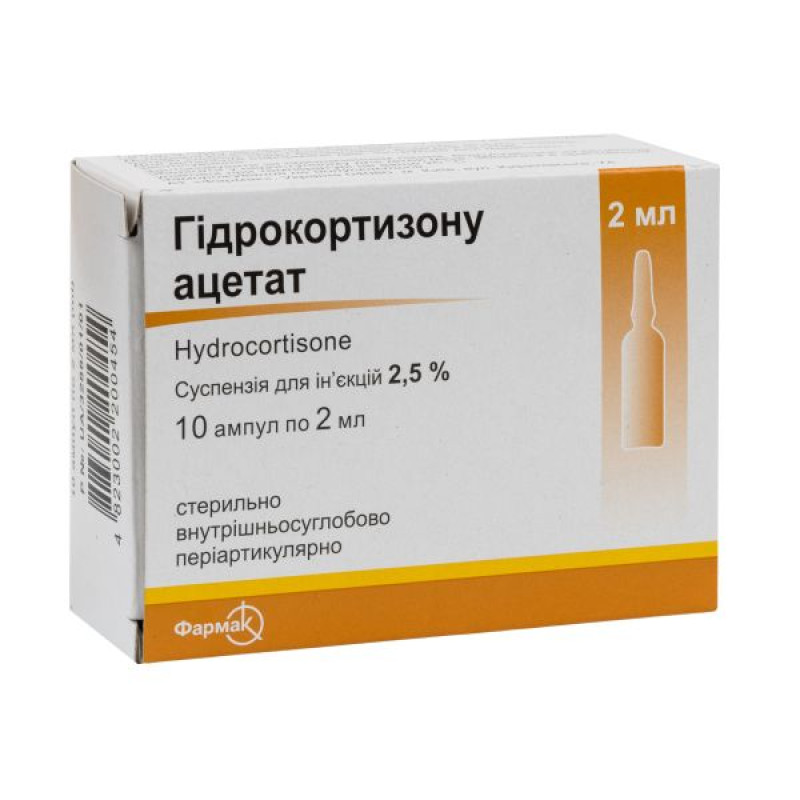
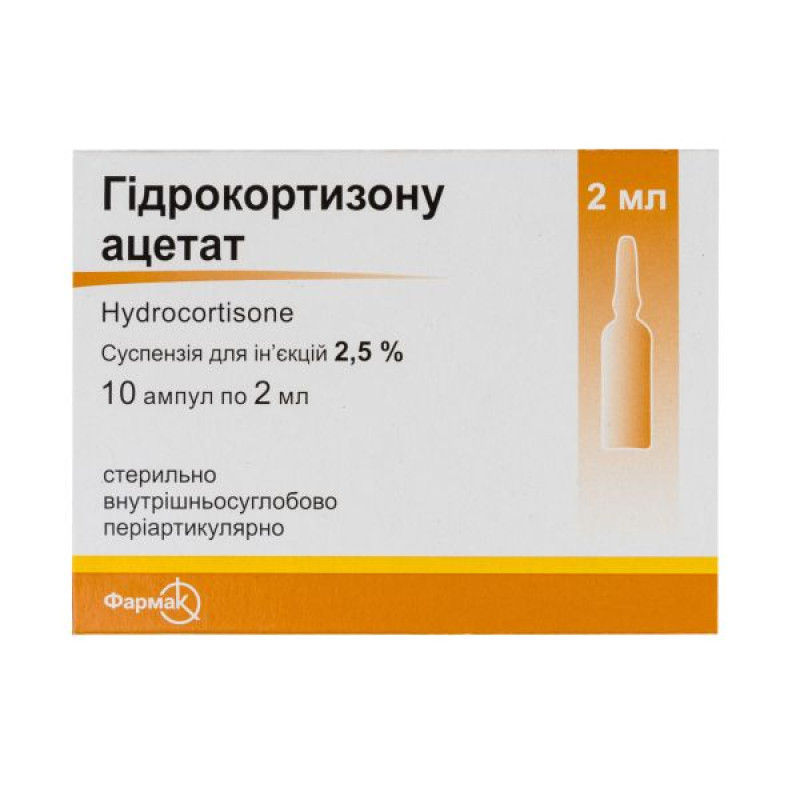
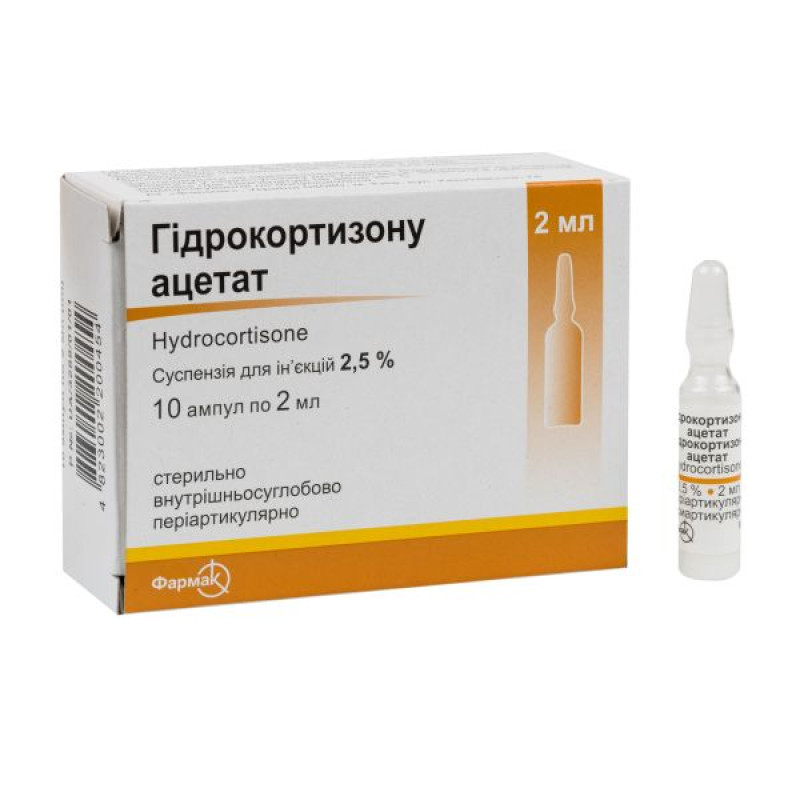
Instructions for use Hydrocortisone acetate suspension for injection 2.5% ampoule 2 ml No. 10
Composition
active ingredient: hydrocortisone;
1 ml of suspension contains hydrocortisone acetate, calculated as 100% dry matter, 25 mg;
Excipients: propylene glycol, sorbitol (E 420), povidone, sodium chloride, benzyl alcohol, water for injections.
Dosage form
Suspension for injection.
Main physicochemical properties: the drug, after shaking for 2 minutes, is a suspension of white or white with a yellowish tint, which settles upon standing, with a specific odor.
Pharmacotherapeutic group
Corticosteroids for systemic use, simple preparations. Hydrocortisone. ATX code H02A B09.
Pharmacological properties
Pharmacodynamics
Hydrocortisone acetate belongs to the group of glucocorticosteroids of natural origin. It has anti-shock, antitoxic, immunosuppressive, antiexudative, antipruritic, anti-inflammatory, desensitizing, antiallergic effects. It inhibits the hypersensitivity reaction, proliferative and exudative processes in the focus of inflammation. The action of hydrocortisone acetate is mediated through specific intracellular receptors. The anti-inflammatory effect consists in inhibiting all phases of inflammation: stabilization of cellular and subcellular membranes, reduction of the release of proteolytic enzymes from lysosomes, inhibition of the formation of superoxide anion and other free radicals. Hydrocortisone inhibits the release of inflammatory mediators, including interleukin-1 (IL-1), histamine, serotonin, bradykinin, reduces the release of arachidonic acid from phospholipids and the synthesis of prostaglandins, leukotrienes, thromboxane. Reduces inflammatory cell infiltrates, reduces the migration of leukocytes and lymphocytes into the focus of inflammation. Inhibits connective tissue reactions during the inflammatory process and reduces the intensity of scar tissue formation. Reduces the number of mast cells that produce hyaluronic acid, inhibits the activity of hyaluronidase and helps reduce capillary permeability. Inhibits the production of collagenase and activates the synthesis of protease inhibitors. Reduces the synthesis and enhances the catabolism of proteins in muscle tissue. By stimulating steroid receptors, it induces the formation of a special class of proteins – lipocortins, which have an anti-edema effect. It has a counterinsular effect, increasing the level of glycogen in the liver, and causes the development of hyperglycemia. It retains sodium and water in the body, increasing the volume of circulating blood and increasing blood pressure (anti-shock effect). It stimulates the excretion of potassium, reduces the absorption of calcium from the digestive tract, and reduces the mineralization of bone tissue.
Like other glucocorticoids, hydrocortisone reduces the number of T lymphocytes in the blood, thereby reducing the effect of T helpers on B lymphocytes, inhibits the formation of immune complexes, reducing the manifestations of allergic reactions.
Pharmacokinetics
Hydrocortisone, which is applied topically, can be absorbed and have a systemic effect. It is absorbed relatively slowly from the injection site. Up to 90% of the drug binds to blood proteins (80% to transcortin, 10% to albumin), about 10% is a free fraction. Metabolism occurs in the liver. Unlike synthetic derivatives, a small amount of the drug penetrates the placenta (up to 67% is destroyed in the placenta itself to inactive metabolites). Hydrocortisone metabolites are excreted mainly by the kidneys.
Indication
Osteoarthritis, various monoarthrosis (knee, elbow, hip joints), rheumatoid arthritis and arthritis of other origin (except tuberculous and gonorrheal arthritis). Scapular periarthritis, bursitis, epicondylitis, tendovaginitis.
Before surgery on ankylosing joints.
As a topical adjunct to systemic corticosteroid therapy.
Contraindication
Hypersensitivity to the active substance or to any of the excipients.
Systemic infections (unless specific anti-infective therapy is used).
Patients vaccinated with live vaccines.
Intraarticular and periarticular injections of this drug are contraindicated if the joint or surrounding tissues are infected. The presence of infection is also a contraindication for injections into tendon sheaths and bursae. The drug should not be injected directly into tendons, nor into the spine or other non-diarthrodial joints.
Interaction with other medicinal products and other types of interactions
Corticosteroid metabolism may be increased and therapeutic effects reduced by some barbiturates (e.g., phenobarbital) and phenytoin, rifampicin, rifabutin, primidone, carbamazepine, and aminoglutethimide.
Mifepristone may reduce the effect of corticosteroids for 3–4 days.
Erythromycin and ketoconazole may inhibit the metabolism of corticosteroids.
Ritonavir may increase plasma concentrations of hydrocortisone acetate.
Concomitant treatment with CYP3A inhibitors, including cobicistat-containing products, is expected to increase the risk of systemic adverse reactions. This combination should be avoided unless the benefit outweighs the increased risk of systemic corticosteroid adverse reactions, in which case patients should be monitored for systemic corticosteroid effects.
Concomitant use with corticosteroids may inhibit the stimulatory effect of somatropin on growth rate.
Corticosteroids counteract the expected effects of hypoglycemic drugs (including insulin), antihypertensives, and diuretics.
The efficacy of coumarin anticoagulants may depend on concomitant corticosteroid therapy; careful monitoring of INR or prothrombin time is necessary to prevent spontaneous bleeding.
Serum levels of salicylates (acetylsalicylic acid and benorylates) may increase significantly if corticosteroid therapy is discontinued, which may lead to intoxication. Concomitant use of salicylates or nonsteroidal anti-inflammatory drugs (NSAIDs) with corticosteroids increases the risk of gastrointestinal bleeding and ulceration.
The hypokalemic effects of acetazolamide, loop diuretics, thiazide diuretics, and carbenoxolone are potentiated by corticosteroids; signs of hypokalemia should be monitored during concomitant use. The risk of hypokalemia is increased by concomitant use of theophylline and amphotericin. Corticosteroids should not be administered concomitantly with amphotericin unless necessary to control reactions.
The risk of hypokalemia is also increased when high doses of corticosteroids are administered with high doses of sympathomimetics, such as bambuterol, fenoterol, formoterol, ritodrine, salbutamol, salmeterol, and terbutaline. The toxicity of cardiac glycosides, such as digoxin, is increased in the presence of hypokalemia.
Concomitant use of methotrexate may lead to an increased risk of hematological toxicity.
High doses of corticosteroids impair the immune response, so the use of live vaccines should be avoided (see section "Special warnings and precautions for use").
Application features
Since joints and tissues after corticosteroid injections are more susceptible to infection, local injections of this medicinal product should be performed under aseptic conditions.
Adrenaline suppression
Adrenal cortical atrophy develops with prolonged therapy and may persist for years after discontinuation of treatment. Therefore, withdrawal of corticosteroids after prolonged therapy should always be gradual to avoid acute adrenal insufficiency, with a gradual tapering over weeks or months depending on the dose and duration of treatment. During prolonged therapy, any intercurrent illness, trauma, or surgery will require a temporary increase in dosage. If corticosteroids have been discontinued after prolonged therapy, temporary reintroduction may be necessary.
Patients should be given clear instructions on precautions to minimize risk, including details of the prescriber, the drug, dosage, and duration of treatment.
Anti-inflammatory/immunosuppressive effects and infection
Suppression of the inflammatory response and immune function increases susceptibility to and severity of infections. The clinical presentation may often be atypical, and serious infections such as septicemia and tuberculosis may be masked and may progress to a late stage before being recognized. New infections may occur during corticosteroid use.
Varicella is of particular concern because this usually minor disease can be fatal in immunocompromised patients. Patients (or parents of children) with an unclear history of varicella should be advised to avoid close personal contact with varicella or herpes zoster and should seek immediate medical attention if exposed. Passive immunization with varicella/herpes zoster immunoglobulin is recommended for immunocompromised contacts who are receiving systemic corticosteroids or have used them within the previous 3 months; if positive, the disease requires specialized care and urgent treatment. Corticosteroids should not be discontinued, and the dose may need to be increased.
Patients should be advised to take special precautions to avoid contact with measles and to seek medical attention immediately if exposed. Prophylaxis with intramuscular normal immunoglobulin may be necessary.
Live vaccines should not be given to individuals with a weakened immune response caused by high doses of corticosteroids. Inactivated vaccines or toxoids may be given, although their effectiveness may be reduced.
Special caution and frequent monitoring are required when prescribing systemic corticosteroids to patients with the following diseases:
– history of tuberculosis or characteristic chest X-ray pattern. However, the development of active tuberculosis can be stopped by prophylactic use of anti-tuberculosis therapy;
– diabetes mellitus (or family history of diabetes);
– hypertension or congestive heart failure;
– presence or history of severe affective disorders (especially steroid psychosis in history);
– glaucoma (or family history of glaucoma);
– previous corticosteroid-induced myopathy;
– stomach ulcer;
– epilepsy;
– liver failure;
– renal failure.
Large volumes should be used with caution and only when necessary, especially in patients with impaired liver or kidney function due to the risk of accumulation and toxicity (metabolic acidosis).
Recent myocardial infarction
During treatment, the patient should be monitored for psychotic reactions, muscle weakness, electrocardiographic changes, hypertension, and adverse hormonal effects.
Corticosteroids should be used with caution in patients with hypothyroidism.
Children
Corticosteroids cause growth retardation in infancy, childhood and adolescence; this may be irreversible. Treatment should be limited to the lowest dose for the shortest duration possible to minimize suppression of the hypothalamic-pituitary-adrenal (HPA) axis and growth retardation (see Dosage and Administration).
Increased risk due to accumulation in young children.
Elderly patients
The general side effects of systemic corticosteroids may be associated with more serious consequences in old age, especially osteoporosis, hypertension, hypokalemia, diabetes, susceptibility to infections and thinning of the skin. Close clinical supervision is necessary to avoid life-threatening reactions (see section "Method of administration and dosage").
Withdrawal symptoms
In patients who have been receiving supraphysiological doses of systemic corticosteroids (approximately 40 mg cortisone or equivalent) for more than 3 weeks, withdrawal should not be abrupt. The method of dose reduction depends largely on the likelihood of disease relapse when the systemic corticosteroid dose is reduced. Clinical assessment of disease activity may be necessary during withdrawal. If the disease is unlikely to recur when systemic corticosteroids are discontinued, but there is uncertainty about the suppression of the GSH system, the dose of systemic corticosteroid can be rapidly reduced to physiologic levels. Once a daily dose equivalent to 40 mg cortisone is reached, the dose should be reduced more slowly to allow the GSH system to recover.
Abrupt withdrawal of systemic corticosteroid therapy for up to 3 weeks is appropriate if the disease is considered unlikely to recur. Abrupt withdrawal of cortisone up to 200 mg/day or equivalent for 3 weeks is unlikely to result in clinically significant suppression of the GABA system in most patients. Gradual withdrawal of systemic corticosteroid therapy should be considered in the following patient groups, even after courses of 3 weeks or less:
patients who have had repeated courses of systemic corticosteroids, especially if taken for more than 3 weeks;
when prescribing a short course within 1 year after discontinuation of long-term therapy (months or years);
patients who may have causes for adrenocortical insufficiency other than exogenous corticosteroid therapy;
patients receiving doses of systemic corticosteroid exceeding 200 mg of cortisone per day (or equivalent);
patients taking repeat doses in the evening.
Patients/and/or caregivers should be warned that potentially serious psychiatric adverse reactions may occur with systemic steroids (see section 4.8). Symptoms usually appear within a few days or weeks of starting treatment. The risks may be higher with high doses/systemic exposure (see section 4.5), although dose levels do not predict the onset, type, severity or duration of reactions. Most adverse reactions resolve after dose reduction or discontinuation, although specific treatment may be required. Patients/caregivers should be advised to seek medical advice if distressing psychological symptoms occur, particularly if depressed mood or suicidal thoughts are suspected. Patients/caregivers should also be alert to the possibility of psychiatric disorders that may occur during or immediately after dose reduction/withdrawal of systemic steroids, although such reactions have been reported infrequently.
Particular caution is required when considering the use of systemic corticosteroids in patients with a history of severe affective disorders, either in themselves or in a first-degree relative. These include depressive or manic-depressive illness and previous steroid psychosis.
Vision impairment
This medicinal product contains sorbitol. If you have been told by your doctor that you have an intolerance to some sugars, contact your doctor before taking this medicinal product.
This medicine contains benzyl alcohol and should not be used in premature babies and newborns. It may cause toxic and allergic reactions in infants and children under 3 years of age.
This medicinal product contains less than 1 mmol (23 mg) sodium/dose, i.e. essentially 'sodium-free'.
Use during pregnancy or breastfeeding
Pregnancy
The ability of corticosteroids to cross the placenta varies between individual drugs, but cortisone readily crosses the placenta.
Administration of corticosteroids to pregnant animals may cause fetal malformations, including cleft palate, intrauterine growth retardation, and effects on growth and brain development. There is no evidence that corticosteroids increase the incidence of congenital anomalies such as cleft palate/lip in humans, but corticosteroids may increase the risk of intrauterine growth retardation with prolonged or repeated use during pregnancy. Hypoadrenalism may theoretically occur in neonates exposed to corticosteroids in utero, but this usually resolves spontaneously after delivery and is not clinically significant. Corticosteroids should be administered only when the benefits to the mother and child outweigh the risks. However, when the use of corticosteroids is essential, patients with normal pregnancies should be treated in the same way as nonpregnant patients.
Breast-feeding
Corticosteroids pass into breast milk, although there are no data for cortisone. Doses up to 200 mg of cortisone per day are unlikely to cause systemic effects in the infant. Infants receiving higher doses may have adrenal suppression, but the benefits of breastfeeding may outweigh the theoretical risk.
Ability to influence reaction speed when driving vehicles or other mechanisms
Minor.
Method of administration and doses
Before use, shake the contents of the ampoule until a homogeneous suspension is formed.
Adults and children over 14 years of age: a single dose, depending on the size of the joint and the severity of the disease, is 5–50 mg of hydrocortisone intra-articularly and periarticularly.
Adults can be injected into no more than 3 joints within 24 hours.
Children: a single dose of hydrocortisone, depending on the size of the joint and the severity of the disease, is 5–30 mg intra-articularly and periarticularly.
Elderly patients: Steroids should be used with caution due to increased side effects.
The therapeutic effect of intra-articular administration of the drug occurs within 6–24 hours and lasts from several days to several weeks. Repeated administration of the drug is possible after 3 weeks.
The drug cannot be injected directly into the tendon, so in the case of tendinitis it must be injected into the tendon sheath.
The drug cannot be used for systemic corticosteroid therapy.
Children
Corticosteroids cause growth retardation in infancy, childhood and adolescence; this may be irreversible. Treatment should be limited to the lowest possible dosage for the shortest possible duration to minimize suppression of the hypothalamic-pituitary-adrenal axis and growth retardation (see section 4.2).
There is an increased risk of drug accumulation in young children.
This medicine contains benzyl alcohol and should not be used in premature babies and newborns. It may cause toxic and allergic reactions in infants and children under 3 years of age.
Overdose
Symptoms
Overdose is unlikely with this medicinal product, there is no specific antidote. Overdose may cause nausea and vomiting, sodium and water retention, hyperglycemia and occasionally gastrointestinal bleeding.
Treatment
Treatment should be symptomatic only, although cimetidine (200–400 mg by slow intravenous injection every 6 hours) or ranitidine (50 mg by slow intravenous injection every 6 hours) may be prescribed to prevent gastrointestinal bleeding.
Adverse reactions
With intra-articular or other local injections, the main side effect is a temporary local exacerbation with increased pain and swelling, which usually resolves after a few hours.
Under certain circumstances, especially after high or prolonged topical doses, corticosteroids may be absorbed in amounts sufficient to produce systemic effects.
The frequency of predicted undesirable effects, including hypothalamic-pituitary-adrenal suppression, correlates with the relative efficacy of the drug, dosage, timing of administration and duration of treatment (see section "Special instructions").
Undesirable effects are especially likely at the beginning of treatment or when the dose is increased.
All adverse reactions are listed by system organ class and frequency of occurrence: very common (≥1/10), common (≥1/100 to <1/10), uncommon (≥1/1000 to <1/100), rare (≥1/10,000 to <1/1000), very rare (<1/10,000), not known - it is impossible to estimate their frequency based on the data presented.
| Organ system class | Frequency | Adverse reactions |
| Infections and infestations | Frequency unknown | Increased susceptibility and severity of infections with suppression of clinical symptoms and signs, opportunistic infections and relapses of inactive treated tuberculosis (see section "Special instructions for use") |
| Blood and lymphatic system disorders | Frequency unknown | Leukocytosis, thromboembolism |
| On the part of the immune system | Frequency unknown | Hypersensitivity reactions, including anaphylactic reactions |
| Metabolic disorders | Frequency unknown | Sodium retention, fluid retention, hypokalemic alkalosis, negative protein and calcium balance, increased appetite |
| Mental disorders(a) | Often | A wide range of psychiatric reactions have been reported, including affective disorders (such as irritability, euphoria, depression, mood lability, suicidal ideation), psychotic reactions (including mania, delusions, hallucinations, exacerbation of schizophrenia), behavioral disorders, anxiety, restlessness, sleep disorders, cognitive dysfunction including confusion and amnesia. |
| From the nervous system | Frequency unknown | Increased intracranial pressure with optic disc edema in children (pseudotumor cerebri), exacerbation of epilepsy |
| From the organs of vision | Frequency unknown | Increased intraocular pressure, glaucoma, optic disc edema, posterior subcapsular cataract, corneal or sclera thinning, exacerbation of ocular viral or fungal diseases, visual impairment (see section "Special instructions for use") |
| From the heart | Frequency unknown | Myocardial rupture after a recent myocardial infarction |
| From the vascular side | Frequency unknown | Hypertension |
| Gastrointestinal tract | Frequency unknown | Dyspepsia, peptic ulcer with perforation and bleeding, abdominal distension, esophageal ulcers, esophageal candidiasis, acute pancreatitis, nausea |
| Skin and subcutaneous tissue disorders | Frequency unknown | Impaired wound healing, skin atrophy, bruising, striae, acne, telangiectasia, hirsutism |
| Musculoskeletal and connective tissue disorders | Frequency unknown | Proximal myopathy, osteoporosis, vertebral and long bone fractures, aseptic osteonecrosis, tendon rupture |
| Endocrine disorders | Frequency unknown | Suppression of the hypothalamic-pituitary-adrenal system, growth retardation in early infancy, childhood and adolescence, Cushing's syndrome, impaired carbohydrate tolerance with increased need for antidiabetic therapy |
| From the reproductive system and mammary glands | Frequency unknown | Irregular menstruation, amenorrhea |
| General disorders and administration site conditions | Frequency unknown | Malaise |
| Laboratory studies | Frequency unknown | Weight gain |
(a) Reactions are common and can occur in both adults and children. In adults, the incidence of severe reactions is estimated at 5–6%. Psychological effects have been reported with withdrawal of corticosteroids; psychological dependence has occurred; frequency unknown.
Withdrawal symptoms
Very rapid reduction of the dosage of corticosteroids after prolonged use can cause acute adrenal insufficiency, hypotension and death (see section "Special warnings and precautions for use"). Withdrawal syndrome may also manifest as fever, myalgia, arthralgia, rhinitis, conjunctivitis, painful itchy skin nodules and weight loss.
Expiration date
3 years.
Do not use the drug after the expiration date indicated on the package.
Storage conditions
Store in original packaging at a temperature not exceeding 25 °C. Do not freeze. Keep out of the reach of children.
Incompatibility
The drug should not be mixed with other medications in the same container.
Packaging
2 ml in an ampoule; 10 ampoules in a pack. 2 ml in an ampoule; 5 ampoules in a blister; 2 blisters in a pack.
Vacation category
According to the recipe.
Producer
JSC "Farmak".
Location of the manufacturer and its business address
Ukraine, 04080, Kyiv, Kyrylivska St., 74.