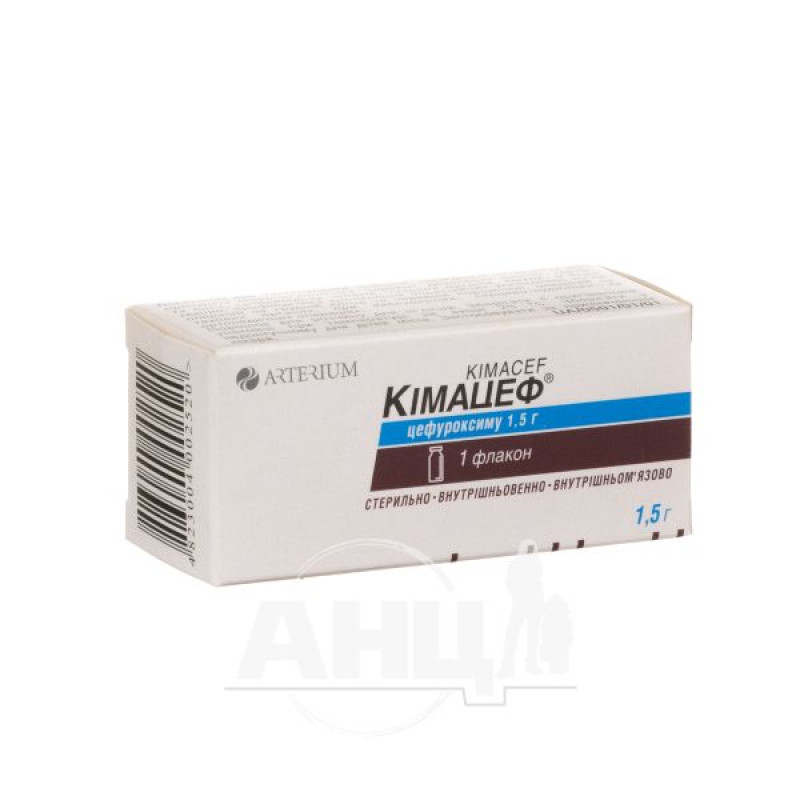
Pharmacological properties
Pharmacodynamics. Cefuroxime is a bactericidal cephalosporin antibiotic with high activity against a wide range of gram-positive and gram-negative bacteria, including strains that produce β-lactamases. Cefuroxime is resistant to the action of β-lactamases and therefore, accordingly, is active against many ampicillin- or amoxicillin-resistant strains. The main mechanism of bactericidal action is the disruption of bacterial cell wall synthesis.
Acquired antibiotic resistance varies between regions and can change over time, and for individual strains it can vary significantly. It is advisable to consult local antibiotic susceptibility data, especially when treating severe infections.
The drug has high activity against Staphylococcus aureus, including strains resistant to penicillin (but not to single strains resistant to methicillin), Staphylococcus epidermidis, Haemophilus influenza, Klebsiella spp., Enterobacter spp., Streptococcus pyogenes, Escherichia coli, Streptococcus mitis (viridians group), Clostridium spp., Proteus mitabilis, Proteus rettgeri, Salmonella typhi, Salmonella typhimurium and other strains of Salmonella, Shigella spp., Neisseria spp. (including strains of N. gonorrhea that produce β-lactamases), Bordetella pertussis. The drug shows moderate sensitivity against Proteus vulgaris, Morganella morganii (Proteus morganii) and Bacterides fragilis.
Microorganisms insensitive to cefuroxime: Clostridium difficile, Pseudomonas spp., Campylobacter spp., Acinetobacter calcoaceticus, Legionella spp., Methicillin strains of Staphylococcus aureus and Staphylococcus epidermidis.
Strains that have also been shown to be insensitive to cefuroxime include Streptococcus faecalis, Morganella morganii, Proteus vulgaris, Enterobacter spp., Citrobacter spp., Serratia spp., and Bacteroides fragilis.
In vitro, cefuroxime in combination with aminoglycoside antibiotics has at least an additive effect, sometimes with signs of synergy.
Pharmacokinetics. C max of cefuroxime in blood serum is observed 30-45 min after i / m administration. T ½ of cefuroxime with i / v and i / m administration is about 70 min. Simultaneous administration of probenecid slows down the elimination of cefuroxime and causes an increase in its concentration in blood plasma.
Binding to plasma proteins ranges from 33 to 50%.
Within 24 hours from the moment of administration, the drug is almost completely (85-90%) excreted unchanged in the urine, most of the drug in the first 6 hours. Cefuroxime is not metabolized and is excreted by glomerular filtration and tubular secretion.
The level of cefuroxime in blood plasma is reduced by dialysis.
Cefuroxime concentrations exceeding the minimum inhibitory concentration for most common pathogens are achieved in bone tissue, synovial and intraocular fluids. Cefuroxime penetrates the blood-brain barrier in inflammation of the meninges.
Indication
Treatment of infections caused by microorganisms sensitive to cefuroxime, or treatment of infections until the causative agent of the infectious disease is identified.
Infectious diseases of the respiratory tract: acute and chronic bronchitis, infected bronchiectasis, bacterial pneumonia, lung abscess, postoperative infections of the chest organs.
Infectious diseases of the throat and nose: sinusitis, tonsillitis, pharyngitis.
Infectious diseases of the urinary tract: acute and chronic pyelonephritis, cystitis, asymptomatic bacteriuria.
Infectious diseases of soft tissues: cellulitis, erysipeloid, wound infections.
Infectious diseases of bones and joints: osteomyelitis, septic arthritis.
Infections in obstetrics and gynecology: pelvic inflammatory diseases.
Gonorrhea, especially in cases where penicillin is contraindicated.
Other infectious diseases, including septicemia and meningitis.
Prevention of infectious complications after operations on the chest and abdominal cavity, on the pelvic organs, during vascular, cardiovascular and orthopedic surgical interventions.
In most cases, Kimacef monotherapy is effective, but if necessary, the drug can be used in combination with aminoglycoside antibiotics or with metronidazole (orally, in suppositories or by injection).
In the case of an existing or expected mixed aerobic and anaerobic infection (e.g. peritonitis, aspiration pneumonia, lung, pelvic and brain abscess) and a high probability of such infection (e.g. during operations on the large intestine and in gynecological surgery), the use of Kimacef in combination with metronidazole is acceptable.
In the treatment of pneumonia and exacerbation of chronic bronchitis, Kimacef can be administered before oral cefuroxime axetil when necessary.
Application
Before starting therapy with cefuroxime, it is necessary to exclude the patient's intolerance to the drug by performing a skin test. Sensitivity to Kimacef varies in different regions and may change over time. If necessary, local data on antibiotic sensitivity should be consulted.
Kimacef injections are intended for intravenous or intramuscular administration only.
Since cefuroxime is also available as cefuroxime axetil for oral administration, it is possible to switch from parenteral Kimacef therapy to oral therapy sequentially when clinically appropriate.
Adults. For many infections, 750 mg 3 times a day i.v. or i.v. is sufficient. For more severe infections, the dose is increased to 1.5 g 3 times a day i.v. If necessary, the frequency of administration can be increased to 4 times a day (injection interval - 6 hours), the total daily dose is increased to 3-6 g. If necessary, for some infections, treatment can be carried out according to the following scheme: 750 mg or 1.5 g 2 times a day (i.v. or i.v.) followed by oral cefuroxime.
Children: 30-100 mg/kg/day, divided into 3-4 injections. For most infections, the optimal dose is 60 mg/kg/day.
In newborns, 30-100 mg/kg/day is used, divided into 2-3 injections. It should be borne in mind that T½ of cefuroxime in the first weeks of life may be 3-5 times longer than in adults.
Gonorrhea. 1.5 g by 1 injection or 750 mg as 2 injections i / m in both buttocks.
Meningitis. Kimacef is used as monotherapy for bacterial meningitis if it is caused by sensitive strains.
Adults: 3 g IV every 8 hours.
Children: 200-240 mg/kg/day IV in 3 or 4 divided doses. This dose may be reduced to 100 mg/kg/day IV after 3 days of use or upon clinical improvement.
For newborns, the initial dose should be 100 mg/kg/day intravenously. The dose may be reduced to 50 mg/kg/day if clinical improvement occurs.
Prevention. The usual dose is 1.5 g IV during induction of anesthesia for abdominal, pelvic, and orthopedic surgery. This dose may be supplemented by 750 mg IM 8 and 16 hours later.
For operations on the heart, lungs, esophagus and blood vessels, the usual dose is 1.5 g IV, which is administered at the stage of induction of anesthesia and then supplemented with an IM injection of 750 mg 3 times a day for the next 24-48 hours.
For total joint replacement, 1.5 g of cefuroxime powder is mixed with one packet of methyl methacrylate polymer cement before adding the liquid monomer.
sequential therapy
Pneumonia: 1.5 g of Kimacef 2-3 times a day (in / m or in / in) for 48-72 hours, then you should switch to oral administration of 500 mg of cefuroxime 2 times a day for 7-10 days.
Exacerbation of chronic bronchitis: 750 mg of Kimacef 2-3 times a day (in / m or in / in) for 48-72 hours, then you should switch to oral administration of 500 mg of cefuroxime 2 times a day for 7 days.
The duration of both parenteral and oral therapy is determined by the severity of the infection and the clinical condition of the patient.
Renal impairment. Cefuroxime is excreted by the kidneys. Therefore, as with other similar antibiotics, patients with impaired renal function are recommended to reduce the dose of Kimacef to compensate for the slower excretion of the drug. There is no need to reduce the standard dose (750 mg-1.5 g 3 times a day) if the creatinine clearance level is 20 ml/min. Adults with severe renal impairment (creatinine clearance 10-20 ml/min) are recommended a dose of 750 mg 2 times a day, in more severe cases (creatinine clearance 10 ml/min) - 750 mg 1 time a day.
In hemodialysis, 750 mg should be administered intravenously or intramuscularly at the end of each dialysis session. In addition to parenteral administration, cefuroxime can be added to the peritoneal dialysis fluid (usually 250 mg for every 2 liters of dialysis fluid). For patients undergoing programmed hemodialysis or high-flux hemofiltration in intensive care units, the recommended dose is 750 mg 2 times a day. Patients undergoing low-flux hemofiltration should follow the dosing regimen for treatment of impaired renal function.
Features of drug administration. For i/m administration, add 3 ml of water for injection to 750 mg of Kimacef. Shake gently until an opaque suspension is formed.
For intravenous administration, dissolve 750 mg of Kimacef in at least 6 ml of water for injection, 1.5 g in 15 ml. For infusions lasting no more than 30 minutes, 1.5 g of cefuroxime can be dissolved in 50-100 ml of water for injection. The resulting solutions can be administered directly into a vein or into a dropper tube during infusion therapy.
Children. Used in children from the first days of life.
Contraindication
Hypersensitivity to cefuroxime or any of the excipients. Hypersensitivity to cephalosporin antibiotics. History of severe hypersensitivity (e.g. anaphylactic reactions) to other β-lactam antibiotics (penicillins, monobactams and carbapenems).
Side effects
Side effects are rare (1/10,000) and are mild and reversible. The frequency of their occurrence given below is approximate, since for most reactions there is insufficient data to make a detailed calculation. In addition, the frequency of side effects varies depending on the indications.
Criteria for assessing the frequency of side effects: very common (≥1/10); common (≥1/100 and 1/10); uncommon (≥1/1000 and 1/100); rare (≥1/10,000 and 1/1000); very rare (1/10,000).
Infections and infestations: rarely - overgrowth of non-susceptible microorganisms, e.g. Candida.
From the blood and lymphatic system: often - neutropenia, eosinophilia; infrequently - leukopenia, decreased hemoglobin level, positive Coombs test; rarely - thrombocytopenia; very rarely - hemolytic anemia.
On the part of the immune system: hypersensitivity reactions, including: infrequently - skin rash, urticaria and itching; rarely - drug fever; very rarely - interstitial nephritis, anaphylaxis, cutaneous vasculitis.
On the part of the gastrointestinal tract: infrequently - discomfort in the gastrointestinal tract; very rarely - pseudomembranous colitis (see Features of use).
Hepatobiliary reactions: often - transient increase in liver enzymes; infrequently - temporary increase in bilirubin levels.
Transient increases in liver enzymes or bilirubin occurred mainly in patients with pre-existing liver disease, but there is no evidence of hepatotoxicity.
Skin and subcutaneous tissue disorders: very rarely - erythema multiforme, Stevens-Johnson syndrome and toxic epidermal necrolysis.
From the urinary system: very rarely - increased plasma creatinine levels, blood urea nitrogen and decreased creatinine clearance.
General disorders and administration site conditions: Common: Injection site reactions including pain and thrombophlebitis.
The occurrence of pain at the site of intramuscular injection is more likely when using the drug in higher doses, but this should not be a reason for discontinuation of treatment.
Special instructions
As with other β-lactam antibiotics, severe and sometimes fatal hypersensitivity reactions have been reported. If severe hypersensitivity reactions occur, treatment with cefuroxime should be discontinued immediately and appropriate emergency measures should be taken.
Before starting treatment, the patient should be evaluated for a history of severe hypersensitivity reactions to cefuroxime, cephalosporin antibiotics, or other β-lactam antibiotics. Use with caution in patients who have had hypersensitivity reactions to other β-lactam antibiotics.
High doses of cephalosporin antibiotics should be administered with caution to patients receiving treatment with potent diuretics such as furosemide or aminoglycoside antibiotics, as adverse effects on renal function have been reported with this combination of drugs. Renal function should be monitored in these patients, as in elderly patients, and in patients with renal insufficiency (see Dosage and Administration).
As with other meningitis treatment regimens, moderate to severe hearing loss has been reported in a few pediatric patients treated with cefuroxime.
As with other antibiotics, cultures of Haemophilus influenzae have been detected in the cerebrospinal fluid 18 to 36 hours after cefuroxime injection. However, the clinical significance of this finding is unknown.
As with other antibiotics, prolonged use of cefuroxime may result in overgrowth of non-susceptible organisms (such as Candida, Enterococci, Clostridium difficile), which may necessitate discontinuation of treatment.
Pseudomembranous colitis has been reported with antibiotic use and can range in severity from mild to life-threatening. Therefore, it is important to consider this diagnosis in patients who develop diarrhea during or after antibiotic use. In the event of prolonged and severe diarrhea or if the patient develops abdominal cramps, treatment should be discontinued immediately and further evaluation should be performed.
When using Kimacef in the sequential therapy regimen, the time of transition to oral cefuroxime is determined by the severity of the infection, the clinical condition of the patient and the susceptibility of the microorganism. In the absence of clinical improvement within 72 hours, parenteral administration of the drug should be continued. Before using the oral drug, the instructions for use of this drug should be read.
Use during pregnancy and breastfeeding. No data on the embryotoxic and teratogenic effects of cefuroxime have been heard, however, as with the use of other drugs, it should be prescribed with caution in the first months of pregnancy.
Cefuroxime passes into breast milk, so breastfeeding should be discontinued during use of the drug.
Ability to influence the reaction rate when driving vehicles or other mechanisms. There are no reports of the drug's effect on the reaction rate when driving vehicles or other mechanisms.
Interactions
Like other antibiotics, cefuroxime may affect the intestinal microflora, leading to reduced estrogen reabsorption and reduced efficacy of combined oral contraceptives.
In patients taking Kimacef, it is recommended to use the glucose oxidase or hexokinase method to determine blood glucose levels. Cefuroxime does not affect the results of enzymatic methods for determining glycosuria.
Cefuroxime may slightly affect the results of copper reduction methods (Benedict, Fehling, Clinitest), but this does not lead to false-positive results, as with some other cephalosporins.
Incompatibility. Cefuroxime should not be mixed in the same syringe with aminoglycoside antibiotics. The pH of 2.74% sodium bicarbonate solution for injection significantly affects the color of the solution, so it is not recommended for use for diluting cefuroxime. However, if necessary, if the patient receives sodium bicarbonate solution by intravenous infusion, cefuroxime can be administered directly into the dropper tube.
1.5 g of cefuroxime dissolved in 15 ml of water for injection can be used together with metronidazole injection (500 mg/100 ml), both drugs retain their activity for 24 hours at temperatures below 25 °C.
1.5 g of cefuroxime are compatible with 1 g (in 15 ml of solvent) or 5 g (in 50 ml of solvent) of azlocillin for 24 h at 4 °C and 6 h at 25 °C.
Cefuroxime (5 mg/ml) can be stored for 24 hours at 25°C in 5% or 10% p-rexylitol for injection.
Cefuroxime is compatible with solutions containing up to 1% lidocaine hydrochloride.
Cefuroxime is compatible with most commonly used solutions for intravenous injection. It retains its properties for 24 hours at room temperature in the following solutions: 0.9% sodium chloride solution for injection; 5% glucose solution for injection; 0.18% sodium chloride solution with 4% glucose solution for injection; 5% glucose solution with 0.9% sodium chloride solution for injection; 5% glucose solution with 0.45% sodium chloride solution for injection; 5% glucose solution with 0.225% sodium chloride solution for injection; 10% glucose solution for injection; 10% inverted glucose solution in water for injection; Ringer's solution; Ringer's lactate solution; M / 6 sodium lactate solution; Hartmann's solution.
The stability of cefuroxime in 0.9% sodium chloride injection with 5% glucose solution is not altered in the presence of hydrocortisone sodium phosphate.
Cefuroxime is also compatible for 24 hours at room temperature when diluted in an infusion solution:
with heparin (10 or 50 U/ml) in 0.9% sodium chloride solution for injection; with potassium chloride solution (10 or 40 mEq/l) in 0.9% sodium chloride solution for injection.
Overdose
Overdose of cephalosporin antibiotics may lead to symptoms of brain irritation, which may result in convulsions. Serum cefuroxime concentrations may be reduced by hemodialysis or peritoneal dialysis.
Storage conditions
In the original packaging at a temperature not exceeding 25 °C. After dilution for IV or IM injection, the drug can be stored for up to 48 hours in a refrigerator (4 °C) or up to 5 hours at a temperature not exceeding 25 °C.