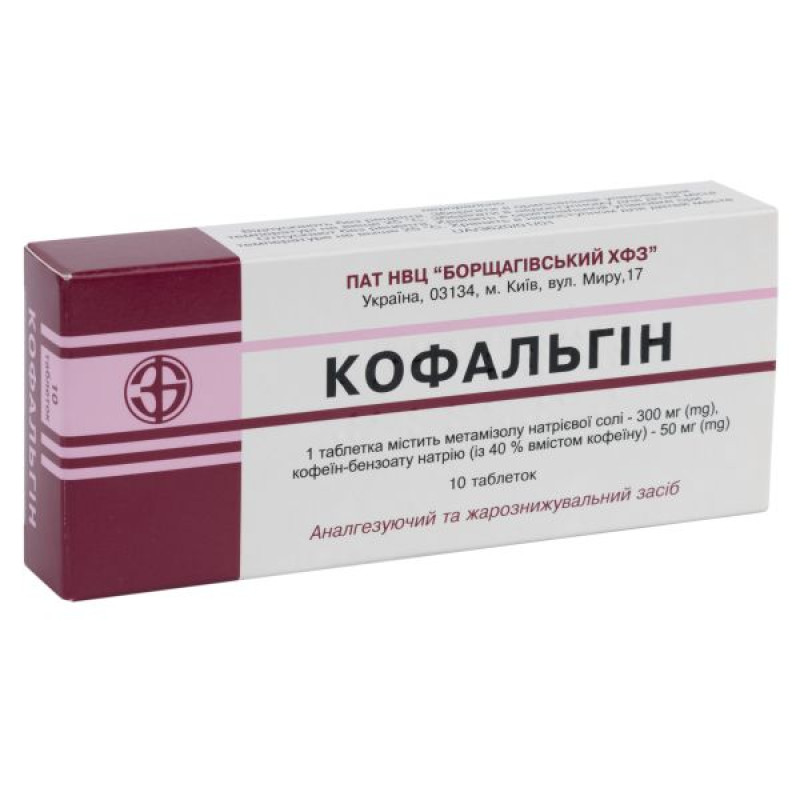
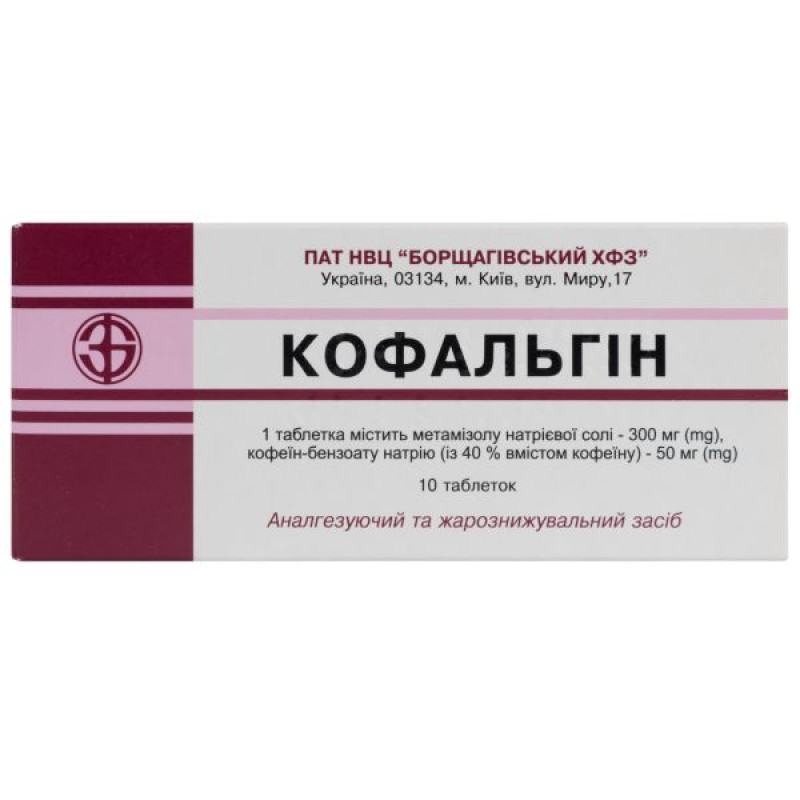
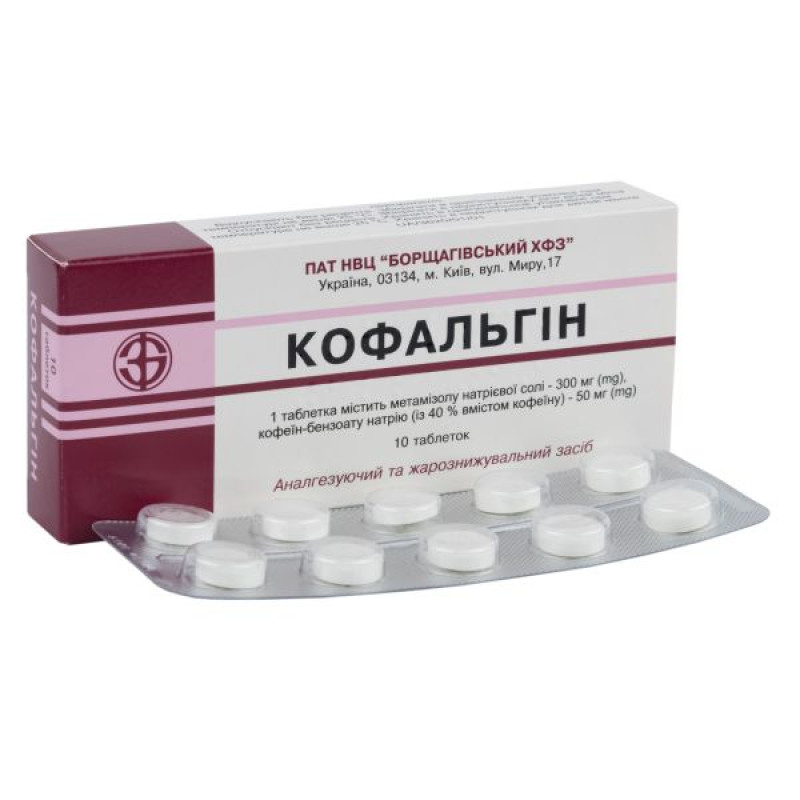
Instructions for use Kofalgin tablets blister pack No. 10
Composition
active ingredients: 1 tablet contains metamizole sodium salt (calculated on 100% dry matter) – 300 mg, caffeine sodium benzoate (with 40% caffeine content) (calculated on 100% dry matter) – 50 mg;
excipients: microcrystalline cellulose, povidone, magnesium stearate.
Dosage form
Pills.
Main physicochemical properties: round tablets, white or yellowish-white in color, with beveled edges (with a chamfer) and a score.
Pharmacotherapeutic group
Analgesics and antipyretics. Metamizole sodium, combinations without psycholeptics. ATX code N02B B52.
Pharmacological properties
Pharmacodynamics
Kofalgin is a combined drug, the effect of which is due to the properties of the components that make up its composition.
Metamizole sodium is an analgesic-antipyretic, a pyrazolone derivative, which has analgesic, antipyretic and weak anti-inflammatory effects, the mechanism of which is associated with the inhibition of prostaglandin synthesis, mainly in the central nervous system.
Caffeine is a methylxanthine derivative that stimulates the psychomotor centers of the brain, has an analeptic effect, enhances the effect of metamizole sodium, eliminates drowsiness and fatigue, and increases physical and mental performance.
Pharmacokinetics
Didn't study.
Indication
Moderately expressed pain syndrome, headache, neuralgia, arthritis, myositis, rheumatism; as an antipyretic for fever of various origins.
Contraindication
Hypersensitivity to any of the components of the drug; hypersensitivity to pyrazolone derivatives, other xanthine derivatives (theophylline, euphylline, theobromine); arterial hypertension; glaucoma; increased excitability; sleep disorders; severe liver and kidney dysfunction; inhibition of hematopoiesis, blood diseases: anemia of any etiology, cytostatic or infectious neutropenia, agranulocytosis, leukopenia; bronchial asthma; suspicion of acute surgical pathology; organic diseases of the cardiovascular system (including acute myocardial infarction, severe atherosclerosis, uncompensated heart failure, paroxysmal tachycardia); prostatic hypertrophy with urinary retention; glucose-6-phosphate dehydrogenase deficiency; elderly age; children under 14 years of age.
Do not use with monoamine oxidase inhibitors (MAOIs) and within 2 weeks of discontinuing MAOIs.
Interaction with other medicinal products and other types of interactions
Barbiturates, codeine, paracetamol, H2-blockers of histamine receptors, anaprilin: enhancement of their effects.
Sarcolysin, mercazolil, thiamazole, drugs that suppress bone marrow activity, including gold preparations: increased likelihood of hematotoxicity, including the development of leukopenia.
Ketoconazole, disulfiram, ciprofloxacin, norfloxacin, enoxacin, pipemidic acid: possible slowing of caffeine excretion and increase in its concentration in the blood.
Oral antidiabetic agents: increased hypoglycemic activity.
Alcohol: increased sedative effect.
Cyclosporine: decreased plasma concentration.
Ergotamine: caffeine may enhance its effects.
Fluvoxamine: increased levels of caffeine in blood plasma.
Mexiletine: 50% reduction in caffeine excretion.
Nicotine: increases the rate of caffeine elimination.
Methoxsalen: reduced elimination of caffeine from the body with possible increased effect and development of toxic effects.
Clozapine: increased plasma concentrations of clozapine.
Theophylline and other xanthines: decreased clearance of these drugs, increased risk of additive pharmacodynamic and toxic effects.
Lithium: increased urinary excretion of lithium.
Other drugs whose effects may be altered by interaction with caffeine: hydrocylamide, phenylpropanolamine, phenytoin, pentobarbital, diazepam.
MAO inhibitors, furazolidone, procarbazine and selegiline: dangerous increase in blood pressure is possible.
Analgesics-antipyretics: caffeine enhances their effect (improves bioavailability).
Psychostimulants, α- and β-adrenomimetics: potentiation of their effects.
Cimetidine, hormonal contraceptives, isoniazid: increased effects of caffeine.
Opioid analgesics, anxiolytics, hypnotics and sedatives: caffeine reduces their effect.
Caffeine is an antagonist of anesthetics and other drugs that depress the central nervous system (CNS), a competitive antagonist of adenosine drugs, adenosine triphosphoric acid (ATP).
Thyroid-stimulating agents: increased thyroid effect.
Beverages and medications containing caffeine, when used together with the drug, may lead to excessive stimulation of the central nervous system. High doses of caffeine may cause tremors and palpitations. Patients should avoid excessive consumption of coffee or tea.
Interactions that may be due to the presence of metamizole sodium
When used concomitantly with drugs that suppress bone marrow function (drugs containing gold salts, antitumor drugs, chloramphenicol, etc.), there is a possibility of leukocyte damage.
Chlorpromazine or other phenothiazine derivatives: severe hypothermia may develop.
Radiocontrast agents, colloidal blood substitutes and penicillin: should not be used during treatment with metamizole sodium.
Indirect anticoagulants, glucocorticosteroids and indomethacin: metamizole sodium increases the activity of these drugs by displacing them from protein binding.
Phenylbutazone, other hepatoinducers: reduced effectiveness of metamizole sodium.
Tricyclic antidepressants, hormonal contraceptives and allopurinol: possible increase in the toxicity of metamizole sodium.
Sedatives and tranquilizers (sibazon, trioxazine), valocordin: increased analgesic effect of metamizole sodium.
Non-narcotic analgesics, other non-steroidal anti-inflammatory drugs (NSAIDs): their analgesic and antipyretic effects are potentiated and the likelihood of additive undesirable side effects increases.
Methotrexate: metamizole in high doses may lead to an increase in the concentration of methotrexate in the blood plasma and an increase in its toxic effects (primarily on the digestive tract and the hematopoietic system).
Sulfonylamide oral hypoglycemic drugs: their hypoglycemic effect may be enhanced when used together with NSAIDs, including metamizole sodium.
Diuretics (furosemide): possible reduction of the diuretic effect.
Application features
Long-term use is not recommended. Do not use the drug to relieve acute abdominal pain (until the cause is determined).
Since metamizole sodium has anti-inflammatory and analgesic properties, it can mask signs of infection, symptoms of non-infectious diseases and complications with pain syndrome, which can make their diagnosis difficult.
The drug should be prescribed with caution to patients with hyperthyroidism, epilepsy, chronic respiratory tract infection, impaired renal function, a history of kidney disease (pyelonephritis, glomerulonephritis), inflammatory bowel diseases, including ulcerative colitis and Crohn's disease; with severe arterial hypotension, cardiovascular failure, hypersensitivity to analgesics and NSAIDs, with allergic reactions (including hay fever) or a previous history of these diseases (the risk of allergic reactions increases), with simultaneous use of cytostatic drugs (only under the supervision of a doctor), with alcoholism.
With prolonged use of the drug (more than 7 days), it is necessary to monitor the composition of peripheral blood (due to the myelotoxicity of metamizole), kidney and liver function.
When taking the drug, urine may turn red due to the excretion of the metabolite metamizole sodium.
When using the drug, excessive consumption of coffee, strong tea, other tonic drinks, alcohol and medications containing caffeine should be avoided.
In case of prolonged use of the drug, the development of mental dependence is possible. Abrupt cessation of treatment leads to increased inhibition of the central nervous system (drowsiness, depression).
Caffeine can cause a false increase in uric acid in the blood, as determined by the Bittner method.
Caffeine may increase levels of 5-hydroxyindoleacetic acid (5-HIAA), vanillylmandelic acid (VMA), and catecholamines in urine, which may cause false-positive results in the diagnosis of pheochromocytoma and neuroblastoma.
The drug should be used with caution in patients with a history of peptic ulcer disease.
Patients should be warned before starting treatment that if unmotivated chills, fever, sore throat, difficulty swallowing, bleeding gums, pale skin, asthenia, vaginitis or proctitis develop, the drug should be immediately discontinued. Also, the drug should be discontinued at the first rash on the skin and mucous membranes. If these symptoms appear, you should immediately consult a doctor.
Do not use the drug for longer than the prescribed period without consulting a doctor!
Ability to influence reaction speed when driving vehicles or other mechanisms
There is no data on the effect of the drug on the reaction speed when driving vehicles or other mechanisms, but the possibility of dizziness should be taken into account.
Use during pregnancy or breastfeeding
The use of the drug during pregnancy is contraindicated.
If necessary, use of the drug should be discontinued.
Method of administration and doses
Cofalgin is prescribed to adults and children over 14 years of age, 1 tablet 2-3 times a day. Do not chew the tablets, drink them with a small amount of water. The maximum daily dose is 3 tablets.
The duration of treatment is no longer than 3 days.
If the symptoms of the disease do not disappear within 3 days, you should consult a doctor about further use of the drug.
Children
The drug should not be prescribed to children under 14 years of age.
Overdose
hypothermia, palpitations, tremor, pronounced decrease in blood pressure, tachycardia, dysphagia, shortness of breath, tinnitus, nausea, vomiting, gastralgia/gastritis, weakness, drowsiness, delirium, impaired consciousness, convulsive syndrome; possible development of acute agranulocytosis, hemorrhagic syndrome, oliguria, anuria, acute renal and hepatic failure, paralysis of the respiratory muscles.
Caffeine overdose:
gastralgia, anxiety, agitation, nervousness, dizziness, insomnia, irritability, state of affect, facial flushing, psychomotor agitation, confusion, delirium, dehydration, tachycardia, arrhythmias, hyperthermia, increased frequency of urination, increased respiratory rate, headache, increased tactile or pain sensitivity, tremor or muscle twitching; nausea and vomiting, sometimes with blood, pain in the epigastric region; tinnitus, convulsive seizures (in acute overdose - tonic-clonic seizures).
Treatment: gastric lavage, forced diuresis, administration of enterosorbents, support of pulmonary ventilation and oxygenation; in case of convulsive attacks - intravenous diazepam, phenobarbital or phenytoin; maintenance of fluid and salt balance. In severe cases, hemodialysis, hemoperfusion, peritoneal dialysis are possible. Symptomatic therapy is aimed at supporting vital functions.
Adverse reactions
Immune system: possible manifestations of hypersensitivity reactions, including skin and mucous membrane rashes, conjunctivitis, itching, urticaria, angioedema (Quincke's edema), bronchospasm, anaphylactic shock, Stevens-Johnson syndrome, Lyell's syndrome.
Digestive system: loss of appetite, nausea, vomiting, epigastric pain, exacerbation of peptic ulcer disease, exacerbation of gastritis.
Cardiovascular system: feeling of pressure in the chest, feeling of heartbeat, tachycardia, palpitations, arrhythmias, increase/decrease in blood pressure.
Nervous system: dizziness, anxiety, increased excitability, tremor, restlessness, headache, sleep disturbances, muscle twitching, convulsions, increased reflexes, tachypnea; with sudden withdrawal - increased inhibition of the central nervous system with the appearance of a feeling of increased fatigue, drowsiness, muscle tension, depression.
Urinary system: usually in patients with impaired renal function and/or when using excessive doses, the development of acute renal failure, transient oliguria, anuria, interstitial nephritis, proteinuria, increased creatinine clearance, increased excretion of sodium and calcium. Red coloration of urine is possible.
Hepatobiliary system: hepatitis, cholestasis, jaundice, liver dysfunction.
Hematopoietic system: with prolonged use, leukopenia, thrombocytopenia, hemolytic anemia, granulocytopenia/agranulocytosis, transient purpura are possible.
Laboratory indicators: possible false increase in blood uric acid, determined by the Bittner method, hypoglycemia/hyperglycemia, slight increase in 5-hydroxyindoleacetic acid (5-HIAA), vanillylmandelic acid (VMA) and catecholamines in urine.
Others: nasal congestion, with prolonged use - a decrease in the effect of caffeine, which is associated with the formation of new adenosine receptors, drug dependence.
Expiration date
2 years.
Storage conditions
Store in original packaging at a temperature not exceeding 25 ºС.
Keep out of reach of children.
Packaging
10 tablets in a blister, 1 blister in a pack.
Vacation category
Without a prescription
Producer
Public Joint Stock Company "Research and Production Center "Borshchagov Chemical and Pharmaceutical Plant". LLC "Agropharm".
Location of the manufacturer and its business address
Ukraine, 03134, Kyiv, Myru St., 17.
Ukraine, 08200, Irpin, Centralna St., 113-A.