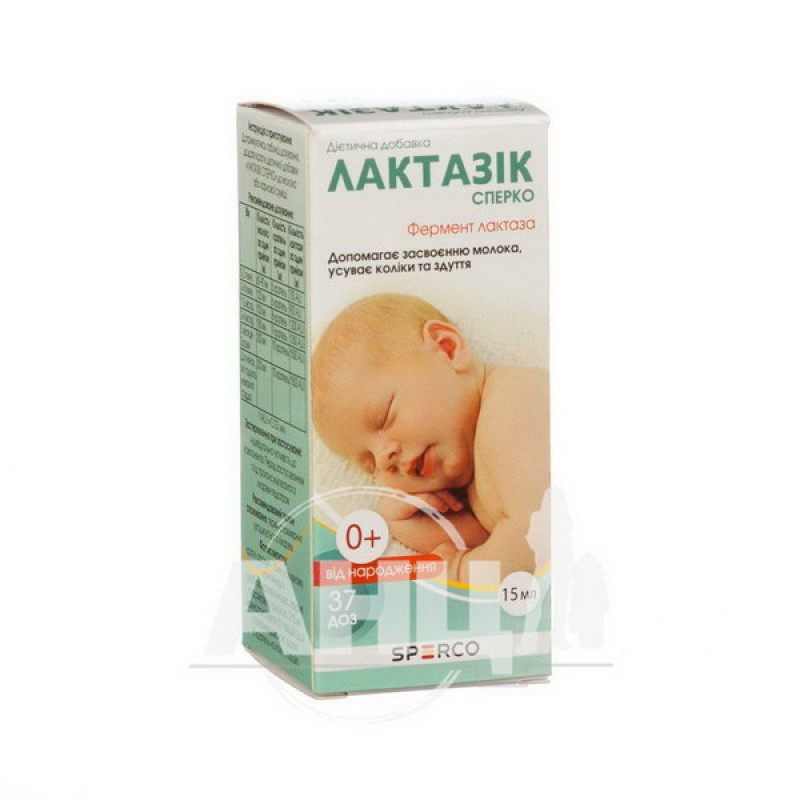
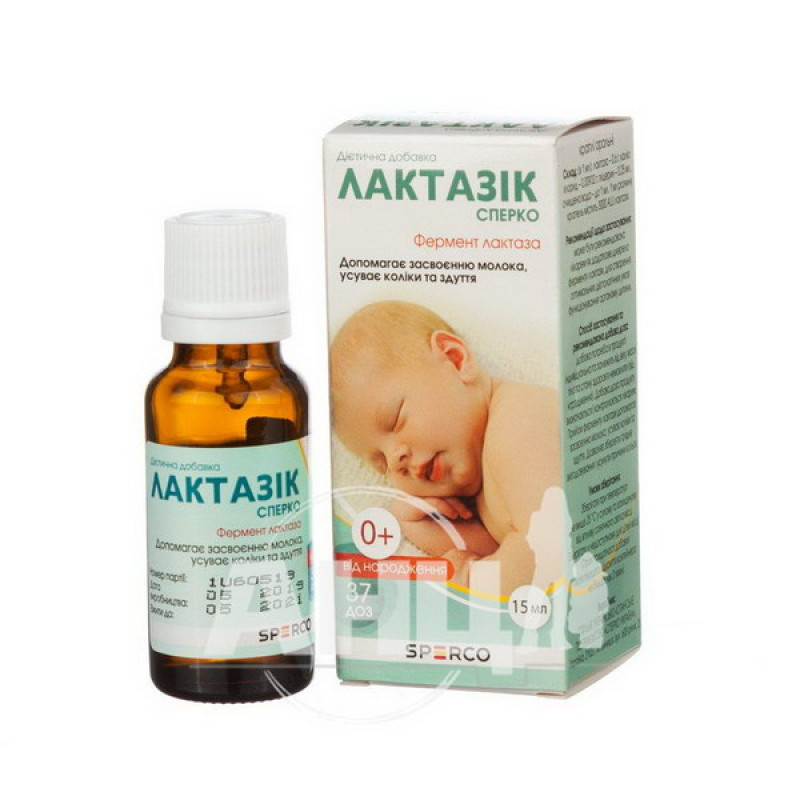
In 1 ml: lactase – 0.6 g, potassium chloride – 0.00932 g, glycerin – 0.25 ml, purified water – up to 1 ml.
1 ml of drop solution contains 3000 ALU lactase.
Properties
INFANT INTESTINAL COLIC
All babies cry, but if a baby cries for more than three hours a day, three or more days a week, the baby most likely has intestinal colic.
When a baby cries for hours due to colic and nothing can calm him down, this situation becomes extremely unpleasant for parents and completely changes the usual family life.
DIAGNOSTICS
Colic begins to bother babies at 3-4 weeks of age and lasts up to 3-4 months. The baby cries, as a rule, for 2-3 hours and cannot be soothed. The baby pulls his legs under him and clenches his fists. As a rule, there is bloating of the intestines, sometimes the child may have constipation.
CAUSES OF THE DISEASE
Most often, the cause of colic in infants is the "immaturity" of the intestinal enzymatic systems, insufficient production of the enzyme lactase. Other causes may be the absorption of air during feeding, the mother's consumption of certain types of food, discomfort and stress.
LACTOSE INTOLERANCE
Lactose (milk sugar) is the main carbohydrate in all types of human and animal milk, and is made up of two molecules: glucose and galactose. In order for these molecules to be absorbed in the intestines, they must first be split (hydrolyzed) by an enzyme called lactase, which is produced by the intestinal villi.
When this enzyme is absent or its production is insufficient, lactose is not hydrolyzed, leading to its intolerance.
Lactose intolerance is a common and usually temporary problem in infants, due to insufficient lactase production during the first few months of life.
Over time, the baby's body begins to produce enough lactase to more effectively digest the necessary amount of lactose, but this usually happens 3-4 months after birth.
In the first weeks after birth, the baby's body produces insufficient lactase, which leads to the indigestibility of milk sugar (lactose) and under the influence of existing bacteria in the intestines, the fermentation process begins, resulting in increased gas formation in the child's intestines. This leads to flatulence and bloating. Excess enzymatic activity of bacteria can cause disturbances in gastrointestinal peristalsis, as a result of which the child suffers from cramps.
The pressure created by the excess undigested lactose causes secretion (water influx), which manifests as diarrhea. Changes in osmotic pressure in the intestines lead to water loss. If this loss is not compensated, the child's body may become dehydrated.
HOW TO SOLVE THE PROBLEM?
If a mother is breastfeeding, she should reduce her intake or even avoid certain foods that can trigger or worsen colic in the baby.
The mother should breastfeed her baby correctly, in a calm and comfortable environment.
If colic occurs due to reduced production of the lactase enzyme, the feeling of discomfort in the infant disappears or is significantly reduced after the use of the aforementioned enzyme in milk.
Premature and low birth weight babies are more likely to develop this type of colic. These babies take longer to digest lactose, as this process depends largely on the development of the intestines and their normal microflora.
It should be noted that lactase deficiency in some cases can occur not only in children under one year old, but also in older people, as well as in adults. It happens that lactase deficiency develops after an intestinal infection, sometimes it occurs under the influence of certain medications and under the influence of some other factors.
Method of application
The daily requirement for the product is individual and depends on the age, body weight and health status of the infant (from birth). The daily dose of the product is determined and monitored by a doctor.
COOKING INSTRUCTIONS
Following the dosage table, add drops of lactase enzyme to milk or formula.
Age
Amount of milk per meal
Number of drops per meal
Amount of lactase per meal
0-2 weeks
60-90 ml
5 drops
750 ALU
3-4 weeks
120 ml
6 drops
900 ALU
1-2 months
150 ml
8 drops
1200 ALU
3-4 months
180 ml
9 drops
1350 ALU
5 months-3 years
200 ml
10 drops
1500 ALU
For women who are breastfeeding
200 ml
10 drops
1500 ALU
Reservation
Individual sensitivity to the components of the dietary supplement. Before use, consult a pediatrician. The duration of use is agreed with the doctor.
Storage conditions
Store at a temperature not exceeding 25 °C in a dry place protected from sunlight. Keep out of the reach of children. The shelf life of the supplement after first opening the container is no more than 3 weeks.
Release form
Oral drops - 15 ml in a glass container with a dropper stopper, closed with a plastic lid. 15 ml can be used to prepare 37 servings (doses) with a recommended dose of 8 drops per serving.
Specifications
Characteristics
Country of manufacture
Ukraine
For children
Can
Form
Drops
Method of application
Inside, liquid
Pregnant
It is impossible.
Producer
Sperko Ukraine JV LLC
Quantity per package
15 ml
Trade name
Lactazik
Vacation conditions
Without a prescription
Reviews
There are no reviews for this product.
Write a review
There are no reviews for this product, be the first to leave your review.
Answers & questions
Add your question and we will answer as soon as possible.
Ask a question
Add your question and we will answer as soon as possible.
No questions about this product, be the first and ask your question.