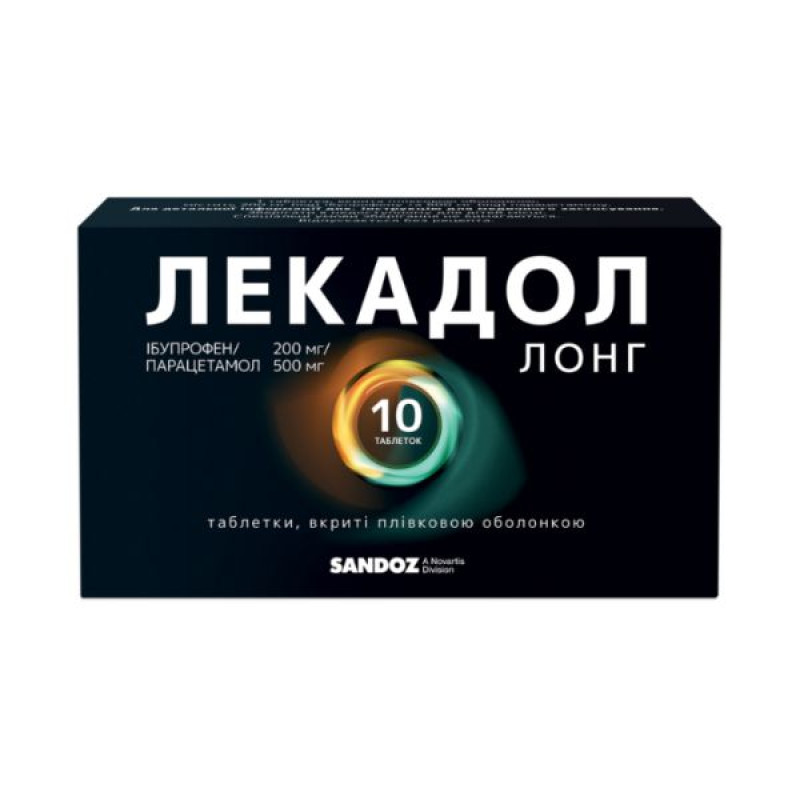
Lekadol Long is a nonsteroidal anti-inflammatory and antirheumatic drug.
It is used for the symptomatic treatment of back and muscle pain, rheumatic pain, pain in mild forms of arthritis, headache, including migraine, toothache, dysmenorrhea, symptoms of colds, flu, and fever.
Warehouse
1 film-coated tablet contains 200.00 mg of ibuprofen and 500.00 mg of paracetamol; excipients: corn starch, crospovidone (E 1202), colloidal anhydrous silica (E 551), povidone (E 1201), pregelatinized starch, talc (E 553b), stearic acid; coating: polyvinyl alcohol (E 1203), talc (E 553b), macrogol 3350 (E 1521), titanium dioxide (E 171).
Contraindication
patients with individual hypersensitivity to ibuprofen, paracetamol or other components of the drug; patients with a history of hypersensitivity reactions (e.g. bronchospasm, angioedema, bronchial asthma, rhinitis or urticaria) after taking ibuprofen, aspirin or other non-steroidal anti-inflammatory drugs (NSAIDs); with gastric and duodenal ulcer/bleeding in active form or with a history of relapses (two or more severe episodes of ulcer or bleeding);
Method of application
Adults should take 1 tablet up to 3 times a day with an interval of at least 6 hours between doses. Swallow the tablets with water.
If 1 tablet does not relieve the symptoms of the disease, 2 tablets should be taken at a time, but not more than 3 times a day. The interval between doses should be at least 6 hours. Do not take more than 6 tablets (3000 mg of paracetamol, 1200 mg of ibuprofen) per day.
Application features
Paracetamol should be administered with caution to patients with severe renal and hepatic impairment. The risk of paracetamol overdose is higher in patients with non-cirrhotic alcoholic liver disease. In case of overdose, immediate medical attention should be sought, even if the patient feels well, due to the risk of delayed serious liver damage.
Pregnant women
The use of this medicine is not recommended during the first six months of pregnancy and is contraindicated during the last three months of pregnancy.
Children
Should not be used in children under 18 years of age.
Drivers
The drug has a minor influence on the ability to drive or use machines. After taking NSAIDs, side effects such as dizziness, drowsiness, fatigue and visual disturbances may occur. Patients who experience such reactions should refrain from driving or using machines.
Overdose
Paracetamol
Symptoms of paracetamol overdose within the first 24 hours are pallor, nausea, vomiting, aversion to food and abdominal pain. Liver damage may occur 12–48 hours after overdose, manifested by abnormal liver function tests. Impaired glucose metabolism and metabolic acidosis may occur.
Ibuprofen.
Most patients who have taken clinically significant amounts of nonsteroidal anti-inflammatory drugs may experience only nausea, vomiting, epigastric pain, or very rarely diarrhea. Tinnitus, headache, and gastrointestinal bleeding may also occur. In more severe poisoning, toxic effects on the central nervous system may occur in the form of drowsiness, sometimes with nervous excitement and disorientation or coma.
Side effects
From the blood and lymphatic system: disorders of the hematopoietic system (agranulocytosis, anemia, aplastic anemia, hemolytic anemia, leukopenia, neutropenia, pancytopenia and thrombocytopenia).
Immune system disorders: hypersensitivity reactions including urticaria and pruritus, severe hypersensitivity reactions.
Psychiatric: confusion, depression, and hallucinations.
From the nervous system: headache, dizziness, paresthesia, optic neuritis and drowsiness, aseptic meningitis.
On the part of the organs of vision: visual impairment.
Storage conditions
No special storage conditions are required. Keep out of the reach of children.