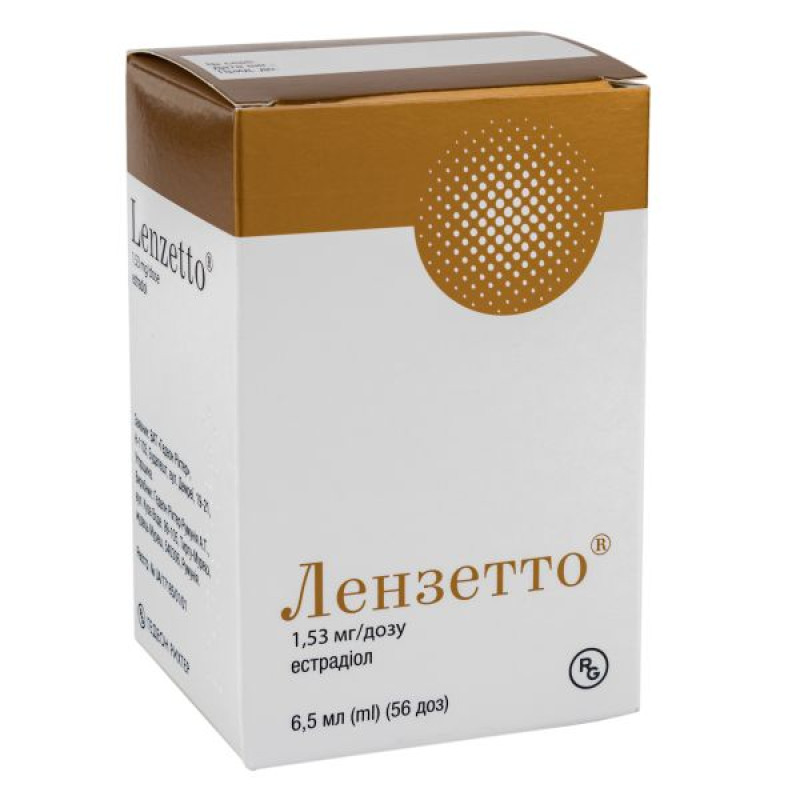
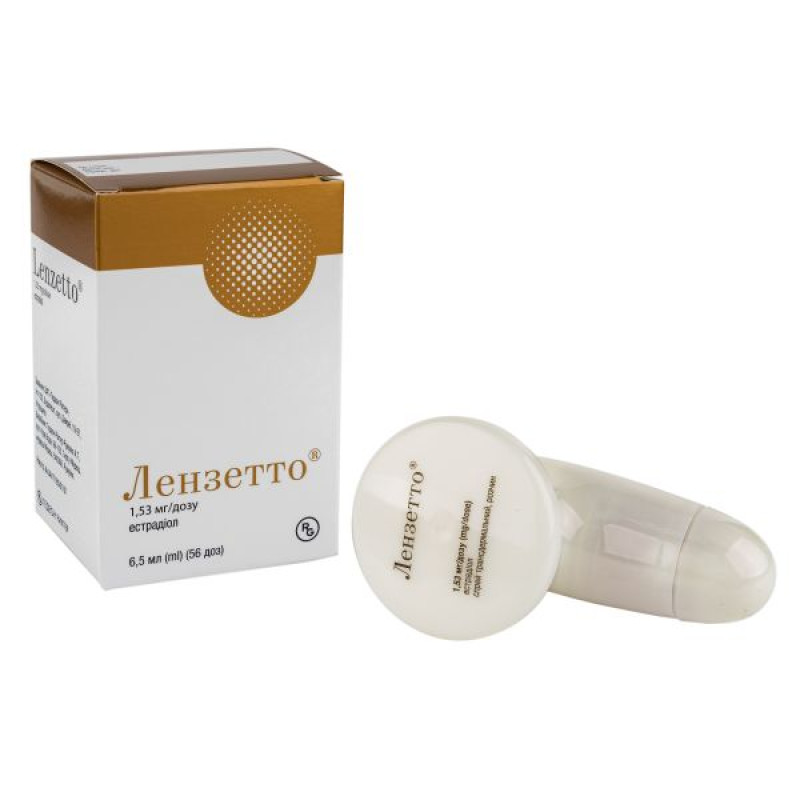
Instructions Lenzetto transdermal spray 1.53 mg/dose glass bottle 8.1 ml 56 doses
Composition
active ingredient: estradiol;
1 dose of spray (90 μl) contains 1.53 mg of estradiol (as 1.58 mg of estradiol hemihydrate);
excipients: octisalate (2-ethylhexyl salicylate), ethanol 96%.
Dosage form
Transdermal spray, solution.
Main physicochemical properties: transparent, colorless or light yellow solution.
Pharmacotherapeutic group
Hormones of the sex glands and drugs used in pathologies of the genital area. Estrogens. Simple natural and semi-synthetic estrogens. Estradiol.
ATX code G0ZS A03.
Pharmacological properties
Pharmacodynamics.
Lenzetto® is a drug for systemic estrogen replacement therapy, which releases estradiol, the main estrogen secreted by the ovaries. The active substance, synthetic 17β-estradiol, is chemically and biologically identical to endogenous human estradiol. It replaces estrogen deficiency in postmenopausal women and alleviates menopausal symptoms.
Pharmacokinetics.
Absorption
When Lenzetto® is sprayed onto the skin, the mean drying time is 90 seconds (median 67 seconds). In a multiple-dose study of Lenzetto®, postmenopausal women were treated for 14 days with one, two, or three irrigations (90 μL each) to the skin of the inner forearm. Serum estradiol concentrations reached steady state after 7 to 8 days of Lenzetto® administration.
After morning administration in the therapeutic dose range, blood concentrations remained relatively stable for 24 hours with peak values between 2 am and 6 am.
In a clinical study, postmenopausal women were treated with Lenzetto® for 12 weeks as single, double and triple irrigations (90 μl) to the skin of the inner forearm. Blood estradiol concentrations were determined at weeks 4, 8 and 12. Estradiol exposure increased with increasing dose (single, double and triple irrigations, respectively), but the increase in exposure was slightly less than dose-proportional.
The pharmacokinetic parameters of estradiol and estrone after single, double and triple irrigation with Lenzetto® (90 μl each) were further studied in a clinical study. The results are presented in Table 1.
Table 1. Pharmacokinetic parameters values on day 14 of administration (not adjusted for baseline value)
| Pharmacokinetic parameter1 | Number of daily sprays of the drug Lenzetto® |
| 1 spray (N = 24) | 2 sprays (N = 23) | 3 sprays (N = 24) |
| Estradiol (pg/ml) | | | |
| Cmax Cmin Cavg | 31.2 10.3 17.8 | 46.1 16.4 28.2 | 48.4 18.9 29.5 |
| Estrone (pg/ml) | | | |
| Cmax Cmin Cavg | 47.1 29.0 35.5 | 58.4 39.0 48.7 | 67.4 44.1 54.8 |
| 1All values are presented as geometric means. |
In a second pharmacokinetic study, serum estradiol concentrations were assessed in 20 postmenopausal women who received three doses (90 μl) of Lenzetto® to the skin of the inner forearm over 18 days. In this study, sunscreen application one hour prior to Lenzetto® application had no significant effect on the extent of estradiol absorption. Applying sunscreen one hour after Lenzetto® application reduced estradiol absorption by approximately 10% (see section 4.4).
The results of studies of the degree of absorption of the drug depending on the site of application show that the absorption of estradiol when applying the drug Lenzetto® to the skin of the thighs is comparable to the degree of absorption from the skin surface of the forearms, but it is lower than when applying the drug to the skin of the abdomen.
Assessment of estradiol tolerance when using the drug Lenzetto®
In a clinical study, 20 postmenopausal women were treated with estradiol in the form of a transdermal spray by applying 90 μl (1.53 mg/dose) to the skin of the inner forearm three times a day. This study assessed the risk of estradiol transfer due to the contact of their forearms for 5 minutes with the inner forearm of men one hour after application. No significant transfer of estradiol was detected during the study. There is no information on the severity of estradiol transfer within one hour after application of the drug (see section "Special instructions").
In a comparative bioavailability study, the effect of ambient temperature on the extent of estradiol absorption was assessed in 24 postmenopausal women after two sprays of the drug onto the skin of the inner forearm. In this study, when the ambient temperature was raised to 35 °C for 4 hours, the rate and extent of estradiol absorption were comparable (within 10% difference) to those obtained at room temperature.
Overweight and obese women
A comparative bioavailability study was conducted to assess the effect of obesity on the extent of absorption after a single dose. The study was conducted to compare the rate and extent of absorption of estradiol spray 1.53 mg/dose (90 μL) in obese and normal weight women at room temperature after two sprays on the skin of the inner forearm. Based on point estimates of baseline-adjusted unconjugated estradiol and unconjugated estrone levels, the extent and rate of absorption were approximately 33-38% and 15-17% lower, respectively, while the median maximum absorption was reached 12-14 hours earlier. Based on baseline-adjusted total estrone levels, the extent of absorption was approximately 7% lower and the rate was approximately 22% higher in obese postmenopausal women. Tmax was 6 hours longer in obese postmenopausal women.
Distribution
Estrogens in the blood are predominantly bound to sex hormone binding globulin (SHBG) and albumin.
Biotransformation
Estradiol is reversibly converted to estrone, and both compounds can be converted to estriol (the main metabolite excreted in the urine). Estrogens also undergo enterohepatic recycling by sulfation and conjugation with glucuronic acid in the liver, secretion of conjugates with bile into the small intestine with subsequent hydrolysis in the intestine and reabsorption. In postmenopausal women, a significant portion of circulating estrogens is represented by sulfate conjugates, in particular estrone sulfate, which are a circulating reservoir for the formation of more active estrogens.
Breeding
Estradiol, estrone and estriol are excreted in the urine as sulfate and glucuronic acid conjugates. Serum concentrations of estradiol, estrone and estrone sulfate return to baseline levels within more than one week after drug withdrawal, when steady state has been reached.
Indication
Use for hormone replacement therapy (HRT) in the presence of symptoms of estrogen deficiency in postmenopausal women (in women with no menstrual bleeding for at least 6 months or women with surgical menopause with a preserved or removed uterus).
Experience in treating women over 65 years of age is limited.
Contraindication
Diagnosed or suspected breast cancer or a history of this disease;
established or suspected estrogen-dependent malignant tumor or history of this disease (including endometrial cancer);
vaginal bleeding of unknown etiology;
untreated endometrial hyperplasia;
venous thromboembolic diseases in history or at present (deep vein thrombosis, pulmonary embolism);
diagnosed thrombophilic disorders (e.g. protein C, protein S or antithrombin deficiency, see section "Special warnings and precautions for use");
arterial thromboembolic diseases in history or at present (including angina pectoris, myocardial infarction);
acute liver disease or a history of liver disease if liver function tests have not returned to normal;
porphyria;
hypersensitivity to the active substance or to any of the excipients (see section "Composition").
Interaction with other medicinal products and other types of interactions
Estrogen metabolism may be increased by concomitant use of substances that are inducers of drug metabolism enzymes, particularly cytochrome P450 enzymes, such as antiepileptics (e.g. phenobarbital, phenytoin, carbamazepine) and antibiotics (e.g. rifampicin, rifabutin, nevirapine, efavirenz).
Ritonavir and nelfinavir, although known as potent inhibitors, have been shown to have inducing properties when co-administered with steroid hormones. Herbal preparations containing St. John's wort (Hypericum perforatum) may stimulate the metabolism of estrogens (and progestogens).
Since there is no first-pass effect through the liver when administered transdermally, estrogens (and progestogens) administered in this way in hormone replacement therapy (HRT) are less exposed to enzyme inducers than when administered orally.
Clinically increased metabolism of estrogens and progestogens may lead to a decrease in the effectiveness of the drug and a change in the pattern of uterine bleeding.
In clinical trials of the combination regimen of ombitasvir/paritaprevir/ritonavir with or without dasabuvir for the treatment of hepatitis C virus (HCV), alanine aminotransaminase (ALT) elevations to values greater than 5 times the upper limit of normal (ULN) were significantly more frequent in women using ethinylestradiol-containing medicinal products, such as combined hormonal contraceptives (CHCs). In women using medicinal products containing estrogens other than ethinylestradiol, such as estradiol, the incidence of ALT elevations was similar to that in women not taking any estrogens. However, due to the limited number of women taking estrogens other than ethinyl estradiol, caution should be exercised when co-administering the combination regimen of ombitasvir/paritaprevir/ritonavir with or without dasabuvir, and glecaprevir/pibrentasvir (see section 4.4).
Drug interaction studies with Lenzetto® have not been conducted.
Application features
For the treatment of postmenopausal symptoms, HRT should only be prescribed when the symptoms significantly affect the woman's quality of life. In all cases, a careful risk-benefit assessment is necessary at least once a year. HRT should be continued as long as the benefits of use outweigh the risks.
There are limited data on the risks associated with HRT in the treatment of early menopause. As the absolute risk is lower in younger women, the benefit-risk ratio may be more favourable for them than for older women.
Medical examination / dynamic observation
Before starting or reinstituting HRT, a complete medical and family history should be taken and a physical examination (including pelvic and breast examination) should be performed to identify possible contraindications and conditions requiring precautions. Periodic check-ups are recommended during treatment, the frequency and nature of which should be individualised for each patient. Women should report any changes in the mammary glands to their doctor (see section “Breast cancer” below). Special examinations, including mammography, should be performed in accordance with accepted screening standards, taking into account individual clinical indications.
Conditions requiring observation
Patients should be closely monitored by a physician if they have, or have had, any of the following conditions, and if they have been aggravated during pregnancy or previous hormonal therapy. It should be noted that these conditions may recur or become more severe during treatment with Lenzetto®, especially:
leiomyoma (uterine fibroids) or endometriosis;
risk factors for the development of thromboembolic diseases (see below);
risk factors for estrogen-dependent tumors, such as breast cancer in first-degree relatives;
arterial hypertension;
liver disease (including hepatocellular adenoma);
diabetes mellitus with or without angiopathy;
gallstone disease;
migraine or (severe) headaches;
systemic lupus erythematosus;
history of endometrial hyperplasia (see below);
epilepsy;
bronchial asthma;
otosclerosis.
Reasons for immediate discontinuation of therapy
Therapy should be discontinued if contraindications are identified and in the following conditions:
jaundice or liver dysfunction;
significant increase in blood pressure;
the appearance of a migraine-like headache;
pregnancy.
Endometrial hyperplasia and cancer
In women with a preserved uterus, the risk of endometrial hyperplasia and cancer increases with prolonged use of estrogens as monotherapy. Depending on the duration of treatment and estrogen dose, the risk of endometrial cancer increases by 2-12 times compared with that in women who did not receive hormones (see section "Adverse reactions"). After discontinuation of therapy, the risk may remain elevated for at least 10 years.
The addition of progestogens cyclically for at least 12 days per month/28-day cycle or continuous combined estrogen and progestogen therapy in women with a preserved uterus prevents the increased risk associated with estrogen-only HRT.
The reduction in the risk of endometrial damage with the additional administration of progestogens while using the drug Lenzetto® has not been studied.
Breakthrough bleeding and spotting are sometimes observed in the first few months of treatment. If breakthrough bleeding and spotting occur some time after starting therapy or continue after stopping treatment, an investigation should be carried out to determine the cause, which may include endometrial biopsy to exclude endometrial malignancy.
Estrogen stimulation in monotherapy may lead to premalignant or malignant transformation of remaining endometriosis. Therefore, the need for additional inclusion of progestogens in estrogen replacement therapy regimens should be considered for women who have undergone hysterectomy for endometriosis if there are residual endometriosis foci.
Breast cancer
It is known that women taking estrogen in combination with progestogen or estrogen alone for HRT have an increased risk of breast cancer, which depends on the duration of HRT.
The results of the randomized placebo-controlled WHI trial (Women's Health Initiative) and a meta-analysis of prospective epidemiological studies have shown an increased risk of breast cancer in women taking combined estrogen-progestogen HRT. The significant increase in risk was observed approximately 3 (1-4) years after starting treatment (see section "Adverse reactions").
Use of estrogens as monotherapy
The WHI trial did not show an increased risk of breast cancer in hysterectomised women taking oestrogen-only HRT. Most observational studies have shown a small increased risk of breast cancer, which was lower than in women taking oestrogen-progestagen therapy (see section 4.8).
The results of a large meta-analysis showed that after stopping treatment, the increased risk decreases over time, and the time taken to return to baseline depends on the duration of previous HRT use. If HRT was used for more than 5 years, the risk may persist for 10 years or more.
With HRT, especially with the combined use of estrogen and progestogen, there is an increase in mammographic density on images, which can complicate the radiological diagnosis of breast cancer.
Ovarian cancer
The incidence of ovarian cancer is much lower than that of breast cancer.
Epidemiological data from a large meta-analysis have shown a slightly increased risk in women taking estrogen-only or combined estrogen-progestogen HRT. This risk increases within 5 years of use and gradually decreases after stopping treatment.
Some other studies, including the WHI, suggest that long-term use of combined HRT may be associated with the same or slightly lower risk (see section 4.8).
Venous thromboembolism
HRT increases the risk of developing venous thromboembolism (VTE), i.e. deep vein thrombosis or pulmonary embolism, by 1.3-3 times. The probability of this complication in the first year of HRT is higher than in subsequent years (see section "Adverse reactions").
Patients with known thrombophilic states are at increased risk of VTE. HRT may increase this risk. Therefore, HRT is contraindicated in this group of patients (see section "Contraindications").
Generally recognized risk factors for VTE include estrogen use, older age, major surgery, prolonged immobilization, obesity (body mass index > 30 kg/m2), pregnancy/postpartum period, systemic lupus erythematosus (SLE), and cancer. There is no consensus on the possible role of varicose veins in the development of VTE.
Measures to prevent VTE should be taken in all patients in the postoperative period. If prolonged immobilization is expected after elective surgery, it is recommended to temporarily stop HRT 4-6 weeks before surgery. Treatment should not be resumed until full physical activity has been restored.
Women who have no personal history of VTE but first-degree relatives with a history of thrombosis at a young age should be offered screening after detailed consultation regarding its limitations (screening detects only a portion of thrombophilic disorders).
HRT is contraindicated if a thrombophilic disorder not associated with thrombosis has been identified in other family members or if it is a severe disorder (e.g. antithrombin deficiency, protein S deficiency, protein C deficiency, or a combination of disorders).
When deciding whether to prescribe HRT, a careful assessment of the benefit/risk ratio is required in women who are continuously receiving anticoagulant therapy.
If VTE develops after starting treatment, the drug should be discontinued. At the first possible symptoms of thromboembolism (e.g. painful swelling of the lower extremities, sudden chest pain, shortness of breath), the patient should immediately consult a doctor.
Coronary heart disease (CHD)
There is no evidence in randomized controlled trials that HRT (estrogen alone or in combination with progestogens) protects against myocardial infarction in women with or without coronary artery disease.
Combined estrogen-progestogen therapy
The relative risk of CHD during treatment with combined HRT is slightly increased. Since the baseline absolute risk of CHD is largely dependent on the patient's age, the incidence of additional CHD in women taking combined HRT is very low in a group of healthy women close to the onset of menopause, but increases with age.
Use of estrogens as monotherapy
Randomized controlled trials have not shown an increased risk of CHD in women after hysterectomy who receive estrogen-only HRT.
Ischemic stroke
The risk of ischemic stroke with combined estrogen-progestogen therapy is 1.5 times higher than with estrogen alone. The relative risk does not depend on the patient's age or the duration of menopause. However, it is known that the baseline risk of stroke is largely age-dependent, so the overall risk of stroke in women taking HRT increases with age (see section "Adverse reactions").
Cases of retinal vascular thrombosis have been described in women receiving estrogen therapy. The drug should be discontinued immediately if, on objective examination, sudden complete or partial loss of vision or sudden development of proptosis, diplopia or migraine is detected. If optic disc edema or retinal vascular damage is detected, estrogen therapy should be completely discontinued.
Elevated ALT levels
In clinical trials in patients treated with hepatitis C virus (HCV) medicines containing ombitasvir/paritaprevir/ritonavir with or without dasabuvir, alanine aminotransaminase (ALT) elevations greater than 5-fold were observed. This occurred at a significantly higher rate in women taking ethinylestradiol-containing medicines, such as combined oral contraceptives. In addition, ALT elevations were also observed in patients taking antiviral medicines containing glecaprevir/pibrentasvir when these patients were also taking ethinylestradiol-containing medicines, such as combined oral contraceptives. In women taking medicines containing oestrogens other than ethinylestradiol, such as estradiol, the incidence of ALT elevations was similar to that in those not taking any oestrogens. However, due to the limited number of women taking estrogens other than ethinylestradiol, caution should be exercised when co-administering the combination regimen of ombitasvir/paritaprevir/ritonavir with or without dasabuvir, and glecaprevir/pibrentasvir (see section 4.5).
Other states
Estrogens contribute to fluid retention, so patients with heart or kidney failure require close monitoring.
Exogenous estrogens may induce or exacerbate symptoms of hereditary and acquired angioedema.
Women with hypertriglyceridemia require careful monitoring during estrogen replacement therapy or combined HRT, since isolated cases of significant increases in plasma triglyceride levels with subsequent development of pancreatitis have been observed when estrogens were used for hypertriglyceridemia.
Estrogens increase thyroxine-binding globulin (TBG), which leads to an increase in total blood thyroid hormone levels, which are measured by protein-bound iodine, T4 (by column chromatography or radioimmunoassay), or TS (by radioimmunoassay). A decrease in the intensity of TS capture by the resin reflects an increase in TSH levels. Free T4 and free TS concentrations are not changed. Other plasma binding proteins, such as corticosteroid-binding globulin (CBG) and sex hormone-binding globulin (SHBG), may be increased, leading to an increase in circulating corticosteroid and sex hormone levels, respectively. Free or biologically active hormone concentrations are not changed. Levels of other plasma proteins (angiotensin/renin substrate, alpha-1-antitrypsin, ceruloplasmin) may be increased.
HRT does not improve cognitive function. There is some evidence of an increased risk of dementia in women who start continuous combined or oestrogen-only HRT after the age of 65.
Applying sunscreen to the skin
Applying sunscreen to the skin approximately one hour after application of Lenzetto® may reduce the absorption of estradiol by 10%. Applying sunscreen to the skin approximately one hour before application of Lenzetto® had no effect on the absorption of estradiol (see section 5.2).
Increased skin temperature
The effect of increased ambient temperature on the use of Lenzetto® was studied, and a difference of 10% was recorded for the extent of estradiol absorption. This effect was not clinically significant when Lenzetto® was used daily (see section "Pharmacokinetics"). However, Lenzetto® should be used with caution at elevated ambient temperatures (sauna, sunbathing).
Children
Potential exposure of estradiol to children
Spray containing estradiol can accidentally enter the child's body through contact with the area of skin on which it was sprayed.
In the post-marketing period, cases of breast enlargement in prepubertal girls and precocious puberty and gynecomastia in prepubertal boys have been reported following inadvertent secondary exposure to estradiol-containing spray. In most cases, the condition resolved after cessation of estradiol exposure.
Patients should be instructed about the need to:
prevent contact of other people, especially children, with exposed skin and, if necessary, cover the area of application with clothing. In case of contact with the child's skin, wash it with soap and water as soon as possible;
In case of unintended secondary exposure to Lenzetto®, the doctor should determine the causes of the abnormal sexual development of the child. In case of detection of changes in the mammary glands resulting from unintended exposure to Lenzetto®, the doctor should additionally advise the woman on the rules for the use and handling of Lenzetto® in contact with children. If it is not possible to ensure the safety of the use of Lenzetto®, its cancellation should be considered.
Excipients
This medicinal product contains 65.47 mg of ethyl alcohol (ethanol 96%) per dose, equivalent to 72.74% w/v. This may cause a burning sensation on the affected skin area.
Liquids containing ethyl alcohol are flammable. When using the spray, avoid contact with fire, open flames, do not smoke and do not use devices such as a hair dryer until the spray dose has completely dried on the skin.
Use during pregnancy or breastfeeding
Pregnancy: Lenzetto® is not indicated for use during pregnancy. If pregnancy occurs during Lenzetto® therapy, treatment should be discontinued immediately.
The results of most epidemiological studies conducted to date, relating to the accidental exposure of estrogens to the fetus, indicate the absence of teratogenic and fetotoxic effects.
Breastfeeding. Lenzetto® is not indicated for use during breastfeeding.
Ability to influence reaction speed when driving vehicles or other mechanisms
Studies on the effect of the drug on the ability to drive or operate other mechanisms have not been conducted.
Method of administration and doses
Doses
Lenzetto® is used once daily as monotherapy or in a continuous sequential regimen (in combination with a progestogen).
One fixed dose of the spray is applied once a day (initial dose) to dry and intact skin of the forearm. The dose can be increased to two applications per day to the forearm depending on the severity of the patient's clinical response. The dose increase should be based on the severity of postmenopausal symptoms, and this is possible after at least 4 weeks of continuous treatment with Lenzetto®. The maximum daily dose is 3 applications (4.59 mg/day) to the forearm. The decision to increase the dose is made by the doctor. For patients who experience difficulty in applying the prescribed dose to individual areas of the forearm without overlapping them, Lenzetto® can be applied to areas of the skin of the other forearm or to areas of the skin of the inner thigh. The prescribed total number of applications (doses) of the drug should be applied daily at the same time.
For the initiation and continuation of treatment of postmenopausal symptoms, the lowest effective dose should be prescribed for the shortest duration (see section "Special warnings and precautions for use").
If postmenopausal symptoms do not improve after increasing the dose, the patient should return to the previous dose.
Patients should undergo periodic clinical evaluation (e.g. every 3 or 6 months) to determine the appropriateness of continued treatment (see section "Special warnings and precautions for use").
If an estrogen-containing product is prescribed, postmenopausal women with a retained uterus should also be started on a progestogen approved for combined estrogen-progestogen therapy to reduce the risk of endometrial cancer. Only progestogens that are approved for combined estrogen-progestogen therapy should be prescribed.
Women with a preserved uterus
In women with an intact uterus, the drug should be prescribed in combination with a progestogen that is approved for estrogen-progestogen therapy in a continuous sequential treatment regimen with continuous estrogen. The progestogen is used for at least 12-14 days during each 28-day cycle in a sequential dosing regimen.
Patients who have not previously received hormone replacement therapy, as well as patients switching from other types of HRT (cyclic, continuous or permanent combined), should be given advice on the correct start of treatment.
During the period of use of estrogen in combination with progestogen, breakthrough bleeding may occur. A new 28-day treatment cycle is started without a break in the use of drugs.
Women with a removed uterus
If a woman has not previously been diagnosed with endometriosis, the additional use of progestogen is not recommended for women with a removed uterus.
Overweight and obesity
There is limited evidence that the extent of absorption of Lenzetto® may be reduced in overweight and obese women. During treatment, it may be necessary to adjust the dose of Lenzetto®. Any changes in dose should be discussed with your doctor.
In case of surgery
In case of surgery, the patient should inform the surgeon that she is using Lenzetto®. Lenzetto® should be stopped approximately 4-6 weeks before surgery to reduce the risk of thrombosis. Lenzetto® can be restarted with the doctor’s permission.
If a woman forgets to use the drug at the usual time, she should use the spray as soon as she remembers, and then continue using the drug as usual the next day. If it is almost time for the next dose, the missed dose should not be applied, but wait until the next dose is due and apply it at the usual time. If one or more doses are missed, one spray should be applied to the skin without removing the cap from the applicator. If the patient forgets to use the drug, this increases the risk of breakthrough bleeding and spotting.
Method of application
The bottle contains 56 doses of the drug. 1 dose of spray is 90 μl of solution. It is recommended to note the number of sprays used in the table on the cardboard packaging. The bottle should be disposed of after using 56 doses of the drug, even if there is solution left in it.
Daily dose - 1 fixed dose spray on the inner surface of the forearm. If the prescribed daily dose is two or three fixed doses, they should be applied to adjacent areas of dry and healthy skin on the inner surface of the arm between the elbow and wrist (one after the other, without overlapping them) with an area of about 20 cm2. You should wait about 2 minutes for the solution to dry completely. Lenzetto® should not be applied to injured or damaged skin. Do not massage or rub Lenzetto® into the skin.
Increased skin temperature
The effect of increased ambient temperature on the use of Lenzetto® has been studied, but no clinically significant differences in the extent of absorption of Lenzetto® have been identified. However, Lenzetto® should be used with caution in elevated ambient temperatures (sauna, sunbathing).
Applying sunscreen to the skin
Applying sunscreen to the application site approximately one hour after application of Lenzetto® may reduce the absorption of estradiol by 10%. No effect on Lenzetto® absorption was observed in women using sunscreen within one hour of application of Lenzetto® (see section 5.2).
How to use Lenzetto®
Before using a new applicator for the first time, you must press the button (activator) three times, spraying the solution into the cap without removing it from the applicator: the container should be held in an upright position. Press the applicator button three times with your thumb or index finger. The spray is ready for use.
DO NOT prime the applicator before each use. Do this only when starting a new bottle. If you miss one or more doses, prime the applicator as described in the “Missed Dose” section.
Make sure you spray the product on healthy, dry and clean skin.
How to use the daily dose
To spray the daily dose, remove the cap from the applicator and, holding the container in an upright position, direct the special conical dome opening towards the treated area of skin.
You may need to move your hand or press the special conical dome hole more tightly so that there is no free space between it and the skin.
Press the applicator button once. The button should always be pressed all the way in and held before releasing.
If re-spraying is necessary, move the conical dome opening of the bottle along your arm so that it is next to the area of skin that has already been treated. Press the applicator button once.
If a third spray is needed, move the conical dome opening of the bottle along your arm again and press the applicator button once.
If, after the second or third application of the spray, it is not possible to apply the preparation to the inner surface of the forearm of one hand, you can spray it to the inner surface of the other forearm.