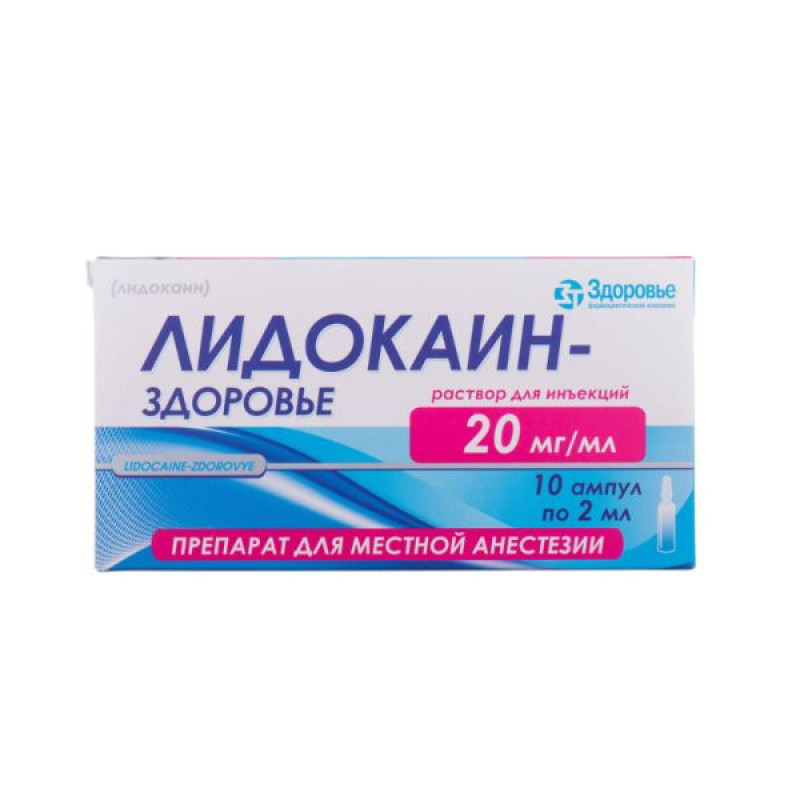
Lidocaine-Zdorovye injection solution is indicated for local anesthesia (terminal, infiltration, conduction) in surgery, ophthalmology, dentistry, otorhinolaryngology; blockade of peripheral nerves and nerve plexuses for various pain syndromes.
Composition
Active ingredient: lidocaine;
1 ml of solution contains 20 mg of lidocaine hydrochloride;
Excipients: sodium chloride, sodium hydroxide, water for injections.
Contraindication
individual hypersensitivity to the components of the drug, as well as to other amide local anesthetic drugs; history of epileptiform seizures associated with the administration of lidocaine hydrochloride; AV block II and III degree, complete transverse heart block; sick sinus syndrome; Wolff-Parkinson-White syndrome, Adams-Stokes syndrome; severe forms of heart failure (II-III degree); severe arterial hypotension; severe bradycardia; cardiogenic shock; complete transverse heart block; myasthenia gravis; hypovolemia; porphyria; severe renal and / or hepatic failure; retrobulbar administration to patients with glaucoma; blood clotting disorders, anticoagulant therapy; infections at the injection site; non-contact patients.
Method of application
Before using lidocaine hydrochloride, a skin test for hypersensitivity to the drug is mandatory, as evidenced by swelling and redness at the injection site.
For local anesthesia, use by injection (subcutaneously, intramuscularly) and topically on mucous membranes. Intravascular administration of the drug should be avoided.
Application features
Pregnant women
Contraindicated.
Children
The drug is not used in children under 12 years of age.
Drivers
After using the drug, you should not engage in activities that require speed of psychomotor reactions.
Overdose
The main symptoms are associated with depression of the central nervous system and cardiovascular system: general weakness, drowsiness, depression, dizziness, disorientation, tonic-clonic convulsions, coma, tremor, visual impairment, tinnitus, atrioventricular block, asphyxia, nausea, vomiting, euphoria, psychomotor agitation, asthenia, apnea, bradycardia, decreased blood pressure, collapse. The first symptoms of overdose in healthy people occur when the concentration of lidocaine hydrochloride in the blood exceeds 0.006 mg/kg; convulsions - at 0.01 mg/kg.
Side effects
from the cardiovascular system: decreased blood pressure, tachycardia - when administered with a vasoconstrictor, bradycardia, peripheral vasodilation, collapse, tachycardia, palpitations, chest pain, heart pain, arrhythmia, slowing of cardiac conduction, transverse heart block, ventricular fibrillation, cardiac arrest; very rarely - arterial hypertension; from the central and peripheral nervous system: excitation of the central nervous system (when used in high doses), anxiety, dizziness, confusion, drowsiness, sleep disorders, headache, weakness, motor restlessness, euphoria, nystagmus, loss of consciousness, sensory disturbances, paresthesia, numbness of the tongue and lips (when used in dentistry); in patients with increased sensitivity - euphoria, tremor, trismus, muscle twitching, motor anxiety, convulsions (the risk of their development increases against the background of hypercapnia and acidosis); persistent anesthesia, paresis or elegy of the lower extremities and loss of sphincter control (for example, cauda equina syndrome) - causes more often than other local anesthetics, motor and sensory block, dysarthria, dysphagia, coma; from the organs of vision: visual impairment, blurred vision, diplopia, nystagmus, flashing "flies" before the eyes, dilated pupils, photophobia, reversible blindness, conjunctivitis; from the organs of hearing: hearing impairment, tinnitus, hyperacusis; mental disorders: anorexia, irritability, restlessness, hallucinations, depression, feelings of anxiety, sleep disturbances, a state of excitement; from the respiratory system, chest and mediastinal organs: rhinitis, shortness of breath, difficulty breathing, feeling of suffocation, respiratory depression, bronchospasm, paralysis of respiratory muscles, respiratory paralysis (more often develops during subarachnoid anesthesia), respiratory arrest; from the digestive tract: nausea, vomiting, involuntary defecation, abdominal pain; from the urinary system: involuntary urination; from the skin and subcutaneous tissue: hyperemia, itching, rash, urticaria; from the reproductive system: decreased libido and / or potency; from the immune system: hypersensitivity reactions, including angioedema, generalized exfoliative dermatitis, anaphylactic shock, anaphylactic reaction, suppression of the immune system.
Interaction
Chlorpromazine, pethidine, bupivacaine, quinidine, disopyramide, amitriptyline, imipramine, nortriptyline - when used in combination with lidocaine, the concentration of the latter in the blood plasma decreases. Anticonvulsants, barbiturates (phenytoin) - when used in combination with lidocaine, acceleration of lidocaine metabolism in the liver, decrease in blood concentration, and increase in cardiodepressive effect are possible. Isadrin, glucagon - when used in combination with lidocaine, the clearance of lidocaine increases. Norepinephrine, mexiletine - when used in combination with lidocaine, the clearance of the latter decreases (toxicity increases); hepatic blood flow decreases. Acetazolamide, thiazide and loop diuretics - when used in combination with lidocaine, as a result of creating hypokalemia, they reduce the effect of the latter.
Storage conditions
Store at a temperature not exceeding 25 °C out of the reach of children.
Shelf life - 3 years.