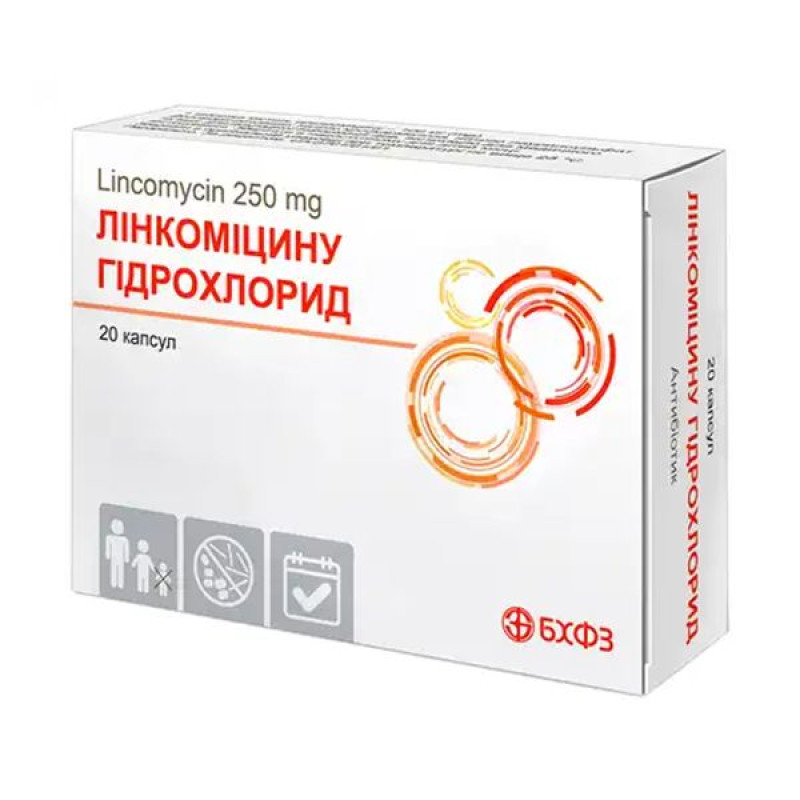
Instructions for Lincomycin hydrochloride capsules 250 mg blister No. 20
Composition
active ingredient: lincomycin hydrochloride;
1 capsule contains lincomycin hydrochloride in terms of 100% lincomycin – 250 mg;
excipients: pregelatinized starch, calcium stearate;
composition of gelatin capsule No. 1
cap: sunset yellow FCF (E 110), quinoline yellow (E 104), titanium dioxide (E 171), gelatin;
shell: titanium dioxide (E 171), gelatin.
Dosage form
Capsules.
Main physicochemical properties: hard capsules with a white body and a yellow cap. The contents of the capsules are white powder.
Pharmacotherapeutic group
Antibacterials for systemic use. Macrolides, lincosamides and streptogramins. Lincosamides. ATX code J01F F02.
Pharmacological properties
Pharmacodynamics
Lincomycin is an antibiotic produced by Streptomyces lincolnensis or other actinomycetes and belongs to the group of lincosamides. The mechanism of action is associated with the inhibition of protein synthesis of microorganisms due to the formation of an irreversible bond with the 50S subunits of ribosomes and the disruption of peptidyltransferase activity and inhibition of translocation and transpeptidization reactions. Lincomycin hydrochloride has a bacteriostatic and/or bactericidal effect depending on the concentration of the drug and the sensitivity of the microorganism. Effective against anaerobic non-spore-forming gram-positive bacteria, including Actinomyces spp.; Propionibacterium spp. and Eubacterium spp.; anaerobic and microaerophilic cocci, including Peptococcus spp., Peptostreptococcus spp. and microaerophilic streptococci; aerobic gram-positive cocci, including Staphylococcus spp.; Streptococcus spp. (except S. faecalis), including Streptococcus pneumoniae.
The following microorganisms are moderately sensitive to the drug: anaerobic non-spore-forming Gram-negative bacteria, including Bacteroides spp., Fusobacterium spp.; anaerobic sporogenic Gram-positive bacteria, including Clostridium spp.
The following microorganisms are resistant or have low sensitivity to the drug: Streptococcus faecalis, Neisseria spp., most strains of Haemophilus influenzae, Pseudomonas spp. and other gram-negative microorganisms. Due to the low absorption of lincomycin from the digestive tract and the creation of a high inhibitory concentration, the drug has proven to be very effective in bacterial dysentery caused by Shigella.
Pharmacokinetics
After oral administration, lincomycin is rapidly absorbed from the digestive tract (about 20-33% of the dose taken) and enters various organs and tissues, including bone tissue. The maximum concentration in the blood is reached after 2-4 hours. If the antibiotic is used after a meal, adsorption is reduced by 50%. In fetal blood, peritoneal and pleural fluids, concentrations are created that are approximately 25-50% of the level in the blood, in breast milk - 50-100%, in bone tissue - about 40%, in soft tissues - 75%. The drug penetrates poorly through the blood-brain barrier, but permeability increases in meningitis (40% of that in the blood). The drug penetrates well through the placenta. The metabolism of lincomycin hydrochloride occurs in the liver. Excretion of the drug depends on the route of administration. When taken orally, approximately 4% is excreted in the urine and approximately 33% in the feces. The concentration of the drug in bile is 10 times higher than that in the blood. The half-life is 5.4 hours. Liver and kidney diseases significantly affect the excretion of the drug.
Indication
Lincomycin is indicated for the treatment of serious infections caused by lincomycin-susceptible strains of gram-positive aerobic microorganisms such as streptococci, pneumococci and staphylococci, or by drug-susceptible anaerobic bacteria:
Upper respiratory tract infections: chronic sinusitis caused by anaerobic strains. Lincomycin can be used to treat isolated cases of purulent otitis media or as an adjunct to an antibiotic effective against aerobic gram-negative pathogens. Infections caused by H. influenzae are not an indication for the use of the drug (see section "Pharmacodynamics"). Lower respiratory tract infections, including infectious exacerbations of chronic bronchitis and infectious pneumonia. Serious skin and soft tissue infections caused by susceptible microorganisms, in cases where the use of penicillin antibiotics is not indicated. Bone and joint infections, including osteomyelitis and septic arthritis. Septicemia and endocarditis. In isolated cases of septicemia and/or endocarditis, due to lincomycin-susceptible pathogens, a pronounced response to lincomycin treatment has been observed. However, bactericidal agents are often preferred for the treatment of such infections.
Contraindication
Hypersensitivity to lincomycin, clindamycin, or to any of the components of the drug; myasthenia gravis; colitis in the acute stage; meningitis.
Interaction with other medicinal products and other types of interactions
Since antagonism has been demonstrated in vitro between lincosamides and erythromycin, as well as macrolide compounds chemically related to erythromycin, clinically significant interactions are possible. Therefore, the concomitant use of macrolides or streptogramins with lincomycin is not recommended.
Aminoglycosides: possible synergism of action.
Kaolin-pectin mixtures, antidiarrheal drugs: the bioavailability of lincomycin is reduced by 90%, so these agents should be taken 2 hours or 3-4 hours after taking lincomycin.
Neostigmine, pyridostigmine: Lincosamides antagonize the effects of these anticholinesterase drugs.
Muscle relaxants (including suxamethonium), inhalation anesthetics, opioid analgesics: lincosamides exhibit neuromuscular blocking properties, therefore they can enhance neuromuscular blockade up to the development of apnea.
Estrogens: Possible reduction in the contraceptive effect of estrogens. Although the risk is small, additional methods of contraception are recommended during use and for 7 days after discontinuation of lincosamides.
Oral typhoid vaccine: antibacterial drugs, including lincosamides, may reduce its therapeutic effect.
Taking antidiarrheal drugs reduces the effect of lincomycin.
There is absolute cross-resistance of microorganisms to lincomycin and clindamycin.
Kanamycin, novobiocin, ampicillin, barbiturates, theophylline, calcium gluconate, heparin and magnesium sulfate are pharmaceutically incompatible with lincomycin (this applies to parenteral forms of lincomycin).
Application features
Microbiological studies should be performed to identify the pathogens and their sensitivity to lincomycin.
The effectiveness of lincomycin in the treatment of staphylococcal infections resistant to other antibiotics and sensitive to lincomycin has been demonstrated. Lincomycin-resistant strains of staphylococci have been identified, therefore, in combination with lincomycin therapy, bacteriological cultures and sensitivity testing of pathogens are necessary. In the case of macrolides, partial cross-resistance is possible. If indicated, the drug can be used simultaneously with other antibacterial drugs.
In order to reduce the rate of development of drug-resistant bacteria and maintain the effectiveness of lincomycin and other antibacterial drugs, lincomycin should be used only to treat or prevent infections that are proven or highly probable to be caused by susceptible bacteria. When information on the results of bacteriological cultures and susceptibility testing is available, it should be taken into account when selecting or changing antibacterial therapy. In the absence of such data, local epidemiological data and local susceptibility patterns may influence the empirical choice of therapy.
Lincomycin is not indicated for the treatment of minor bacterial infections or viral infections. Prescribing lincomycin in the absence of a confirmed or highly suspected bacterial infection is unlikely to benefit the patient and increases the risk of the development of drug-resistant bacteria.
Due to the risk of pseudomembranous colitis, before prescribing lincomycin, the physician should analyze the nature of the infection and assess the feasibility of using less toxic alternative drugs (e.g., erythromycin).
Diarrhea and pseudomembranous colitis associated with C. difficile toxins A and B (CDAD) have been reported with nearly all antibacterial agents, including lincosamides. The severity of the symptoms can range from mild diarrhea to fatal colitis. Antibacterial therapy suppresses the normal flora of the colon, which may lead to overgrowth of C. difficile.
C. difficile-associated diarrhea may be mild with watery, loose stools, but may also progress to severe persistent diarrhea, leukocytosis, fever, severe abdominal cramps, and mucus and/or blood in the stool. In mild pseudomembranous colitis, discontinuation of the drug is usually sufficient. In moderate to severe pseudomembranous colitis, treatment should include fluids, electrolytes, protein, and antibiotics effective against C. difficile in the colitis.
Once the initial diagnosis of pseudomembranous colitis is made, treatment should be initiated. The diagnosis is usually made on the basis of clinical symptoms, but endoscopy or the detection of C. difficile and its toxins in the patient's stool can also be used to confirm the diagnosis. Drugs that inhibit intestinal motility should not be administered during treatment.
The possibility of CDAD should be considered in all patients who develop diarrhea during or after antibiotic therapy. It should be noted that CDAD can occur up to 2 months after the end of antibacterial therapy. Colitis is most likely to develop in severe disease, in elderly patients, and in debilitated patients. If lincomycin is used in such patients, changes in bowel habit should be carefully monitored.
C. difficile strains that produce excess toxins increase morbidity and mortality, as such infections may be resistant to antibacterial therapy and often require colectomy.
Lincomycin should be administered with caution to patients with gastrointestinal diseases, especially those with a history of colitis.
The use of antibacterial agents may lead to overgrowth of non-susceptible organisms, particularly fungi, and the development of superinfection, which requires appropriate measures based on the specific clinical situation. If lincomycin treatment is required in patients with pre-existing fungal infections, concomitant antifungal therapy should be administered.
Serious hypersensitivity reactions, including anaphylactic reactions and severe cutaneous adverse reactions such as Stevens-Johnson syndrome, toxic epidermal necrolysis, acute generalised exanthematous pustulosis and erythema multiforme, have been reported in patients treated with lincomycin. If an anaphylactic reaction or serious skin reaction occurs, the drug should be discontinued and appropriate treatment should be initiated. Serious anaphylactoid reactions require immediate intensive treatment with adrenaline, oxygen therapy and intravenous steroids. If indicated, the airway should also be established, if necessary by intubation.
Although lincomycin penetrates the blood-brain barrier, its level in the cerebrospinal fluid may not be sufficient to treat meningitis. Therefore, the drug should not be prescribed in such cases.
In some cases, septicemia and/or endocarditis caused by susceptible microorganisms respond well to lincomycin therapy. However, in these diseases, the use of bactericidal drugs is preferred.
Lincomycin should be used with caution in patients with severe hepatic/renal impairment accompanied by serious metabolic disorders. For such patients, the dose of the drug should be adjusted (see section "Dosage and Administration"), and during high-dose therapy, serum lincomycin levels should be monitored, since the half-life of the drug in these categories of patients may be prolonged by 2-3 times.
During long-term antibiotic therapy with lincomycin, liver and kidney function, as well as blood count, should be monitored.
Lincomycin should be administered with caution to patients with bronchial asthma and other significant allergic manifestations in history.
Lincomycin is capable of blocking neuromuscular transmission and may therefore potentiate the effects of other neuromuscular blocking agents. Therefore, lincomycin should be used with caution in patients taking drugs of this class.
Due to the presence of the dye sunset yellow FCF (E 110) in the composition of the drug, its use may cause allergic reactions, including bronchial asthma. The risk of allergy is higher in patients with hypersensitivity to acetylsalicylic acid.
Ability to influence reaction speed when driving vehicles or other mechanisms
The drug has no effect on the reaction rate when driving or using other mechanisms, but cases of dizziness have been reported.
Use during pregnancy or breastfeeding
In humans, lincomycin crosses the blood-placental barrier and is detected in cord serum at 25% of the maternal serum level. There is no significant accumulation of the drug in amniotic fluid. The safety of lincomycin in pregnant women has not been established. In 302 children born to women treated with lincomycin at various stages of pregnancy, there was no increase in the incidence of congenital anomalies or growth retardation compared with the control group during the first 7 years of life. Lincomycin should not be used during pregnancy unless clearly necessary. Lincomycin is excreted in breast milk at concentrations of 0.5 to 2.4 μg/ml; therefore, given the potential for severe reactions to lincomycin in breastfed infants, a decision should be made to discontinue breast-feeding or discontinue the drug, taking into account the importance of the drug to the mother.
Method of administration and doses
The dosage and route of administration should be determined based on the severity of the infection, the patient's condition, and the sensitivity of the bacterial pathogen. The duration of treatment is determined individually by the doctor.
It is advisable to take the drug 1-2 hours before or 1-2 hours after meals. The capsules should be washed down with sufficient water.
Adults
500 mg 3-4 times a day.
Children (from 6 years old)
30-60 mg/kg/day, divided into 3 or 4 dose levels.
If it is necessary to use lincomycin to treat patients with severe renal and/or hepatic impairment, the appropriate dose is 25-30% of the dose recommended for patients with normal renal/hepatic function.
Children
The drug in this dosage form should not be used in children under 6 years of age.
Overdose
Symptoms: possible gastrointestinal disorders, including abdominal pain, nausea, vomiting, diarrhea.
Treatment: induce vomiting or, if indicated, gastric lavage, symptomatic and supportive therapy. There is no specific antidote. Hemodialysis and peritoneal dialysis are ineffective.
Adverse reactions
Digestive tract: nausea, vomiting, abdominal discomfort/pain, glossitis, stomatitis, heartburn, esophagitis/esophageal ulcers, persistent diarrhea, antibiotic-associated colitis, including pseudomembranous colitis, which may occur during and 2-3 weeks after antibiotic treatment (see section "Special warnings and precautions for use").
Immune system: hypersensitivity reactions, including angioedema, serum sickness, anaphylaxis, e.g. anaphylactic shock; some of these have occurred in patients with penicillin hypersensitivity. Blood and lymphatic system: neutropenia, leukopenia, eosinophilia, agranulocytosis, thrombocytopenia/thrombocytopenic purpura; isolated cases of aplastic anemia and pancytopenia, in which the role of lincomycin as a causal factor cannot be excluded.
Skin and mucous membranes: rash, including maculopapular, skin hyperemia, urticaria, itching, vaginitis. In isolated cases - erythema multiforme, sometimes resembling Stevens-Johnson syndrome and associated with the administration of lincomycin, Stevens-Johnson syndrome, exfoliative and vesiculobullous dermatitis, toxic epidermal necrolysis, acute generalized exanthematous pustulosis (see section "Special instructions").
Hepatobiliary system: changes in liver function tests (including increased transaminase levels), jaundice. Urinary system: in isolated cases - impaired renal function, as evidenced by azotemia, oliguria and/or proteinuria, although a direct relationship between lincomycin and kidney damage has not been established. Effects due to biological action: with prolonged use in high doses, the development of superinfection, including fungal (e.g. candidiasis), is possible. Other: dysgeusia, itching in the anus, tinnitus, weakness, dizziness, polyarthritis.
Expiration date
3 years.
Do not use after the expiry date stated on the packaging.
Storage conditions
In the original packaging at a temperature not exceeding 25 °C.
Keep out of reach of children.
Packaging
10 capsules in a blister, 2 blisters in a pack.
Vacation category
According to the recipe.
Producer
Public Joint Stock Company "Research and Production Center "Borshchagov Chemical and Pharmaceutical Plant".
Location of the manufacturer and its business address
Ukraine, 03134, Kyiv, Myru St., 17.