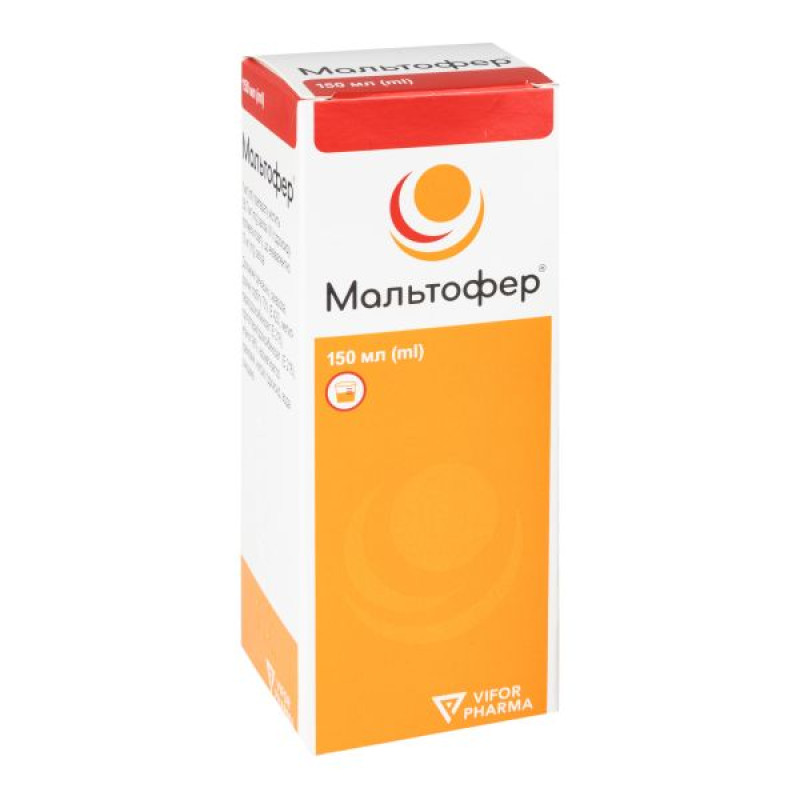
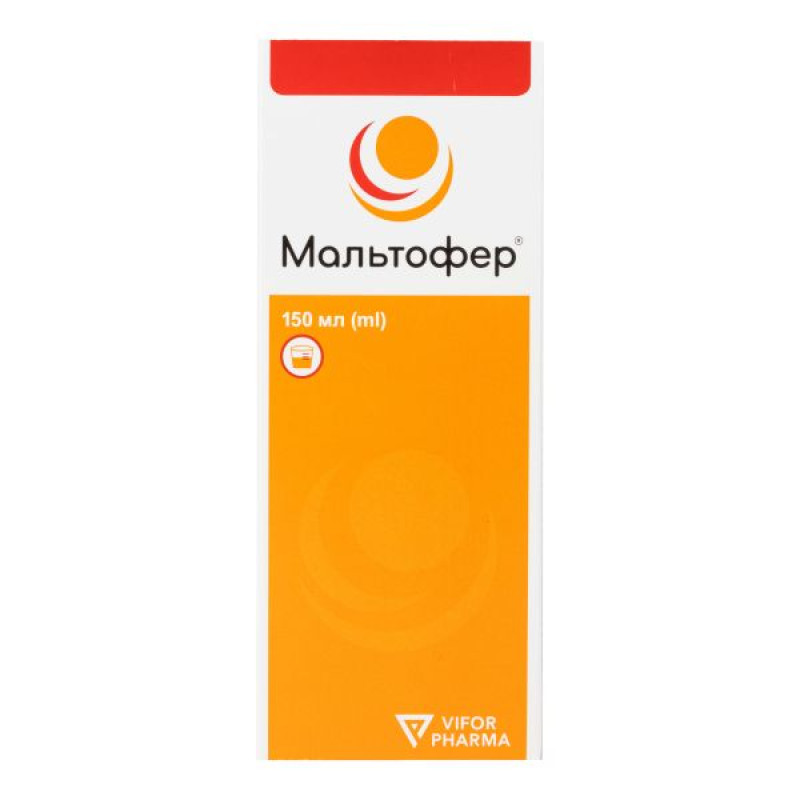
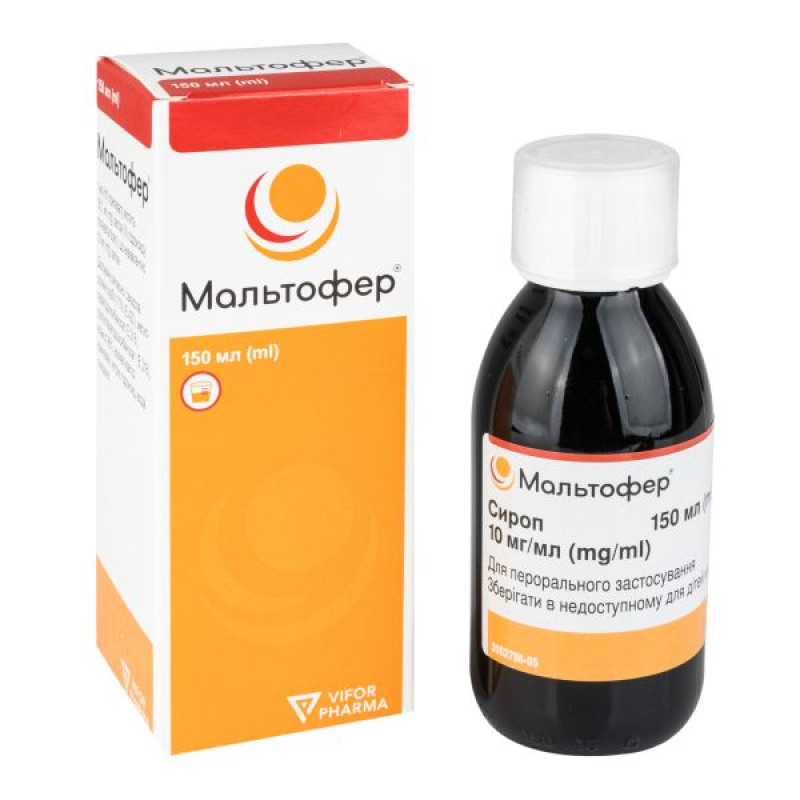
Instructions Maltofer syrup 10 mg/ml bottle 150 ml
Composition
active ingredient: 1 ml of the drug contains: 35.7 mg of iron (III) hydroxide polymaltozate, which is equivalent to 10 mg of iron;
excipients: sucrose, sorbitol solution 70% (E 420), methyl parahydroxybenzoate (E 218), propyl parahydroxybenzoate (E 216), ethanol 96%, cream flavoring, sodium hydroxide, purified water.
Dosage form
Syrup.
Main physicochemical properties: dark brown solution.
Pharmacotherapeutic group
Antianemic agents. Iron (III) preparations for oral administration.
ATX code B0ZA B05.
Pharmacological properties
Pharmacodynamics.
The surface of the polynuclear iron(III) hydroxide base in the iron hydroxide polymaltose complex is surrounded by non-covalently bound polymaltose molecules, which results in an average total molecular weight of about 50 kDa. The structure of the polynuclear iron(III) hydroxide base in the iron–polymaltose complex is similar to the structure of ferritin, a physiological protein depot of iron. The iron hydroxide polymaltose complex is stable and does not release iron in large quantities under normal physiological conditions. Due to its size, the diffusion of the iron hydroxide polymaltose complex through the mucosa is approximately 40 times less than the diffusion of most water-soluble iron(II) salts, which are presented in aqueous solutions as the hexaaqua-iron(II) complex. Iron from the polymaltose complex is absorbed in the intestine with the involvement of active mechanisms.
Absorbed iron binds to transferrin and is used for hemoglobin synthesis in the bone marrow or is deposited mainly in the liver in a ferritin-bound form.
Clinical efficacy.
The effectiveness of Maltofer® in normalizing hemoglobin levels and restoring iron stores compared to placebo or similar iron preparations in various dosage forms has been demonstrated in many clinical studies conducted in infants, children, adolescents and adults. Both solid and liquid dosage forms of iron polymaltose complex were used in these studies. The primary goal of oral iron replacement therapy is to maintain the body's own iron stores within normal limits (for the prevention of iron deficiency, for example, in cases of increased need), replenish iron stores or correct existing iron deficiency anemia.
Clinical studies conducted in adults.
A total of 11 controlled clinical trials of monotherapy with iron (III) hydroxide polymaltose complex compared with placebo and/or oral iron (II) preparations were conducted.
Over 900 patients were enrolled in these studies, approximately 500 of whom received monotherapy with polymaltose iron(III) hydroxide complex. In the study population, no significant difference was demonstrated in hematological parameters and iron parameters (hemoglobin (Hb), mean corpuscular volume (MCV), serum ferritin) at baseline. Oral replacement therapy with polymaltose iron(III) hydroxide complex at a dose of 100–200 mg iron/day for several weeks, up to a maximum of six months, provided a clinically significant increase in iron and hematological parameters at the end of therapy compared with baseline. The improvement in hematological parameters (Hb, MCV, serum ferritin) after a 12-week course of therapy with polymaltose iron(III) complex was comparable to that with ferrous sulfate.
The efficacy of iron polymaltose complex in the treatment of adult patients with iron deficiency anemia was compared with that of ferrous sulfate (II) in a meta-analysis of six prospective randomized clinical trials. The total number of patients included in the meta-analysis was 557; 319 of them received iron polymaltose complex hydroxide and 238 patients received ferrous sulfate (II). The mean total hemoglobin at baseline was 10.35 ± 0.92 g/dL (in the iron polymaltose complex group) and 10.20 ± 0.93 g/dL (in the ferrous sulfate group). After a treatment period of a mean duration of 8–13 weeks with equivalent doses, the mean hemoglobin level was 12.13 ± 1.19 g/dL (in the iron polymaltose complex group) and 11.94 ± 1.84 g/dL (in the ferrous sulfate (II) group), p = 0.93, the increase in hemoglobin level was greater after longer use for both drugs.
Clinical trials involving children and adolescents.
The use of Maltofer® in the treatment of children and adolescents (up to 18 years of age) has been studied in numerous clinical trials involving over 1000 patients. The effectiveness of Maltofer® in improving iron levels has been confirmed in comparison with placebo or other iron preparations.
Absorption and distribution. A study with radiolabeled polymaltose ferric hydroxide complex showed a good correlation between iron absorption and iron accumulation in hemoglobin. There is a correlation between the degree of iron deficiency and the relative amount of iron absorbed (the higher the level of iron deficiency, the better the absorption). It was found that food, unlike iron (II) salts, does not negatively affect the bioavailability of iron from Maltofer®: a clinical study demonstrated that the bioavailability of iron significantly increases when taken with food, while three other studies demonstrated only a positive trend, and not a significant clinical effect.
Breeding.
Iron that is not absorbed is excreted in the feces.
Indication
Treatment of iron deficiency without anemia and iron deficiency.
Iron deficiency and its severity must be confirmed by appropriate laboratory tests.
Contraindication
There is hypersensitivity or intolerance to the active substance or any component of the drug;
excessive iron content in the body (for example, hemochromatosis, hemosiderosis);
disorder of iron excretion mechanisms (lead anemia, sideroachrestic anemia, thalassemia);
anemias not caused by iron deficiency (e.g., hemolytic anemia, megaloblastic anemia caused by vitamin B12 deficiency).
Interaction with other medicinal products and other types of interactions
Studies in rats using tetracycline, aluminum hydroxide, acetylsalicylic acid, sulfasalazine, calcium carbonate, calcium acetate, calcium phosphate in combination with vitamin D3, bromazepam, magnesium aspartate, D-penicillamine, methyldopa, paracetamol, and auranofin did not reveal any interactions with iron(III) hydroxide polymaltose complex.
In vitro studies have shown no interaction of iron(III) hydroxide polymaltose complex with food components such as phytic acid, oxalic acid, tannin, sodium alginate, choline and choline salts, vitamin A, vitamin D3 and vitamin E, soybean oil and soybean flour. The results of the study indicate that iron(III) hydroxide polymaltose complex can be taken with or immediately after meals.
The interaction of polymaltose iron(III) hydroxide complex with tetracycline or aluminum hydroxide was investigated in three clinical studies (cross-over studies involving 22 patients for each study). No significant reduction in tetracycline absorption was observed. The plasma concentration of tetracycline did not fall below the level required for bacteriostatic action. The use of aluminum hydroxide and tetracycline did not reduce the absorption of iron from polymaltose iron(III) hydroxide complex. Therefore, polymaltose iron(III) hydroxide complex can be used simultaneously with tetracyclines, other phenolic compounds and aluminum hydroxide.
The concomitant use of parenteral iron preparations and Maltofer® is not recommended, as such use will inhibit the absorption of oral iron preparations. Parenteral iron preparations may only be used if treatment with oral preparations is not appropriate.
The use of the drug does not affect the results of the test for detecting occult blood (sensitive to hemoglobin), so there is no need to stop treatment with the drug.
Application features
Treatment of anemia should always be carried out under the supervision of a physician. If there is no improvement in hematological parameters (an increase in hemoglobin level of approximately 20-30 g/l 3 weeks after the start of treatment), the treatment regimen should be reviewed.
Caution should be exercised in patients receiving repeated blood transfusions, as red blood cells already contain iron stores and administration of the drug may lead to iron overload. Infections and tumors can cause anemia. Oral iron preparations may be administered after the underlying disease has been treated, taking into account the benefit/risk ratio.
Maltofer®, syrup, contains a small amount of ethanol (alcohol), less than 100 mg in 30 ml of solution (maximum daily dose).
When prescribing the drug to patients with diabetes, it should be taken into account that 1 ml of syrup contains 0.04 bread units.
Patients with rare hereditary problems of fructose intolerance, glucose-galactose malabsorption or sucrose-isomaltose malabsorption should not take this medicine, as Maltofer® syrup contains sucrose and sorbitol.
Iron preparations are used with caution in patients with the following diseases: leukemia, chronic liver and kidney diseases, inflammatory diseases of the gastrointestinal tract, gastric and duodenal ulcers, intestinal diseases (enteritis, ulcerative colitis, Crohn's disease).
When using iron polymaltose complex, a dark color of feces is possible, but this is of no clinical significance.
1 ml of Maltofer® syrup contains 0.28 g of sorbitol. Sorbitol may cause gastrointestinal upset and a mild laxative effect. Patients with hereditary fructose intolerance should not take this medicine.
1 ml of Maltofer® syrup contains 200 mg of sucrose. This should be taken into account by patients with diabetes. Sucrose can be harmful to teeth.
Maltofer® contains methyl parahydroxybenzoate (E 218) and propyl parahydroxybenzoate (E 216), which may cause allergic reactions (possibly delayed).
Use during pregnancy or breastfeeding
Data on use in the first trimester of pregnancy do not indicate an undesirable effect on pregnancy or the health of the fetus or newborn. Data from epidemiological studies are not available. Animal studies do not indicate direct or indirect harmful effects on pregnancy, embryonal or fetal development. However, the drug should be used with caution during pregnancy.
Human breast milk contains iron bound to lactoferrin. It is not known how much iron from iron(III) hydroxide polymaltose complex passes into breast milk. It is unlikely that Maltofer® will have any adverse effects on a breastfed infant.
The use of Maltofer® during pregnancy or breastfeeding is recommended only after consulting a doctor. It is recommended to assess the benefit/risk ratio.
Ability to influence reaction speed when driving vehicles or other mechanisms
No relevant studies have been conducted. It is unlikely that Maltofer® affects the speed of reactions when driving or operating complex mechanisms.
Method of administration and doses
The dose and duration of treatment with the drug depend on the degree of iron deficiency.
The daily dose of the drug can be taken at once or divided into several doses.
Maltofer® should be taken during or immediately after meals.
The measuring cap included in the Maltofer® syrup package allows you to measure the exact dose of the drug. Maltofer® syrup can be mixed with fruit and vegetable juices or with infant formula. A slight change in the color of the mixture does not affect the effectiveness of the drug or the taste of the mixture.
The duration of treatment for iron deficiency anemia until hemoglobin levels normalize is an average of 3-5 months. After that, the drug should be continued in the appropriate dosage for the treatment of iron deficiency without anemia to restore iron stores. The duration of treatment for iron deficiency without anemia is 1-2 months.
Daily dose of iron.
| Patient category | Iron deficiency anemia | Iron deficiency without anemia |
Infants of age up to 1 year | 2.5‒5 ml (25‒50 mg) | 1.5‒2.5 ml (15*‒25 mg) |
Children aged from 1 year to 12 years | 5‒10 ml (50‒100 mg) | 2.5‒5 ml (25‒50 mg) |
| Adolescents aged 12 years and over and adults | 10‒30 ml (100‒300 mg) | 5‒10 ml (50‒100 mg) |
*This dosage can be achieved using Maltofer®, oral drops, 50 mg/ml.
Children. The drug is used in children from birth. Due to the need to prescribe very small doses of the drug to premature children, it is recommended to use Maltofer®, oral drops.
Overdose
In case of overdose, intoxication or iron accumulation is unlikely due to the low toxicity of iron(III) hydroxide polymaltose complex (for mice and rats, the dose causing death in 50% of animals (LD50) is > 2000 mg iron/kg body weight), saturation of iron absorption is expected. No cases of unintentional overdose with fatal outcome have been reported.
Side effects
Adverse reactions are classified according to the following frequency: very common (> 1/10), common (< 1/10, ≥ 1/100), uncommon (< 1/100, ≥ 1/1000), rare (< 1/1000).
The safety and tolerability of Maltofer® were assessed based on a meta-analysis of 24 publications and clinical trial reports involving 1473 patients. The most significant adverse drug reactions reported in these trials were related to four system organ classes (see below).
Faecal discoloration is a well-known adverse reaction to oral iron supplements, but this phenomenon is of no clinical significance and is often underreported. Other common adverse events were gastrointestinal disturbances (nausea, constipation, diarrhoea and abdominal pain).
From the immune system.
Very rare: allergic reactions.
From the digestive tract.
Very common: change in stool color*.
Common: diarrhea, nausea, abdominal pain (including abdominal pain, dyspepsia, epigastric discomfort, abdominal bloating), constipation.
Uncommon: vomiting (including retching, eructation), tooth enamel discolouration, gastritis.
On the skin and subcutaneous tissue.
Uncommon: pruritus, rash (including rash, macular rash, bullous rash**, urticaria**, erythema**).
From the nervous system.
Uncommon: headache.
Rare: muscle spasms (including involuntary muscle contractions, tremor), myalgia.
*The incidence of stool discoloration in the meta-analysis is lower, although it is a well-known adverse event with oral iron supplements. Therefore, stool discoloration was classified as a very common adverse event.
**Information on these events was obtained from spontaneous post-marketing reports; the frequency is estimated to be < 1/491 (upper limit of the 95% confidence interval).
Maltofer® syrup contains parahydroxybenzoate as a preservative, which may cause allergic reactions (possibly delayed).
Expiration date
3 years.
Storage conditions
Store in a place protected from light at a temperature not exceeding 25 ° C. Keep out of the reach of children!
Packaging
150 ml in a bottle; 1 bottle with a measuring cap in a cardboard box.
Vacation category
According to the recipe.
Producer
Vifor (International) Inc., Switzerland.
Address
Rechenstrasse 37, 9014 St. Gallen, Switzerland/ Rechenstrasse 37, 9014 St. Gallen, Switzerland.