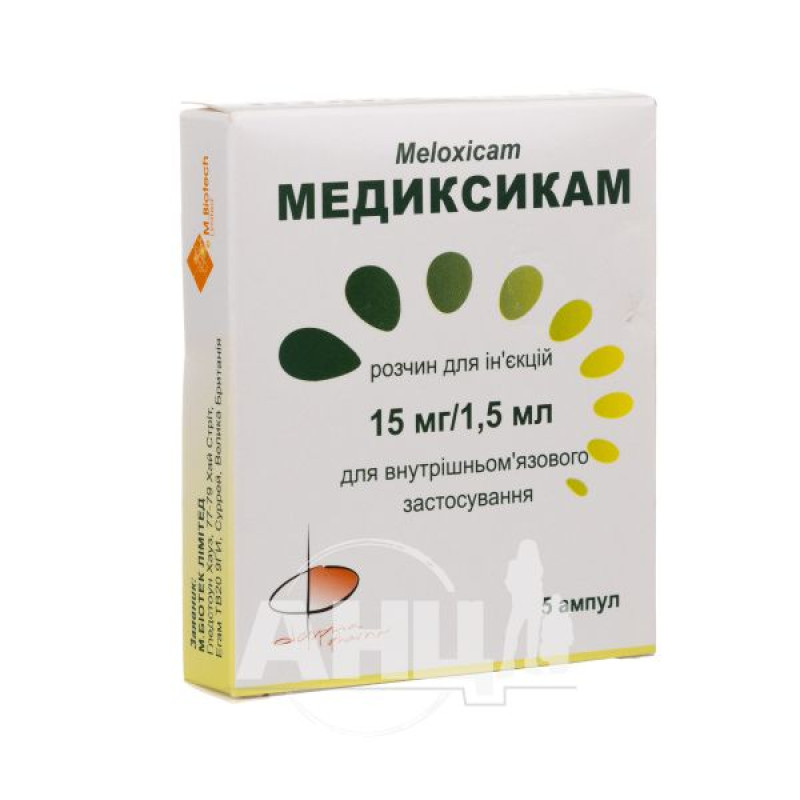
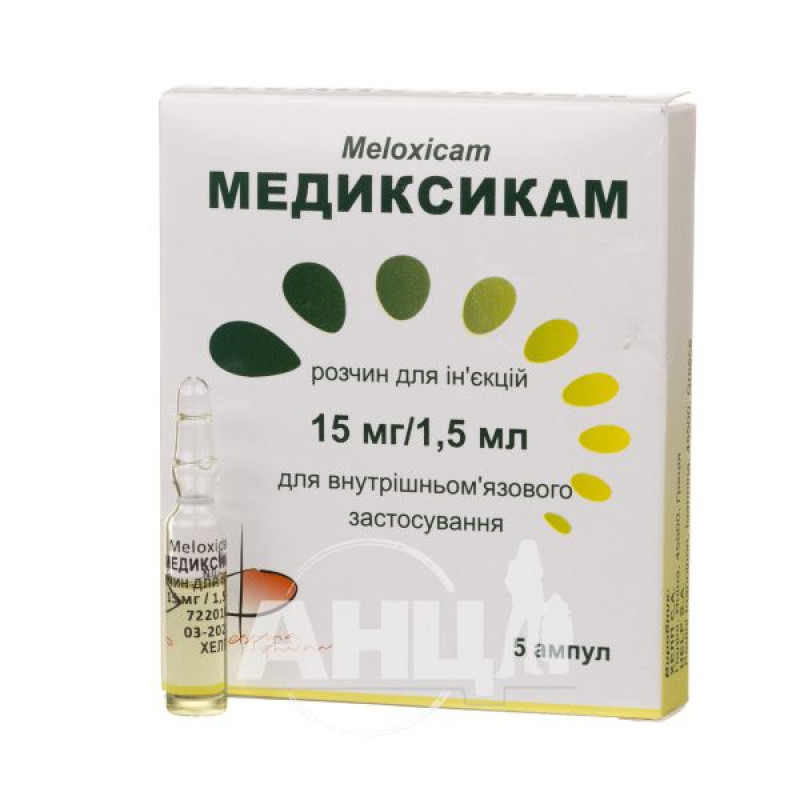
Medixikam injection solution is used for short-term symptomatic treatment of acute attacks of rheumatoid arthritis and ankylosing spondylitis when oral and rectal routes of administration cannot be used.
Composition
Active ingredient: meloxicam;
1 ampoule contains 15 mg of meloxicam;
Excipients: meglumine, glycofurol, poloxamer 188, sodium chloride, glycine, sodium hydroxide, water for injections.
Contraindication
III trimester of pregnancy; patient's age up to 18 years; hypersensitivity to meloxicam or other components of the drug, or to active substances with a similar effect, such as non-steroidal anti-inflammatory drugs, aspirin (should not be prescribed to patients who have experienced asthma symptoms, nasal polyps, angioedema or urticaria after taking aspirin or other non-steroidal anti-inflammatory drugs); gastrointestinal bleeding or perforation associated with previous NSAID therapy in history; active or recurrent ulcer / bleeding in history (two or more separate confirmed cases of ulcer or bleeding); severe hepatic failure; severe renal failure, without dialysis; gastrointestinal bleeding, cerebrovascular bleeding in history or other blood clotting disorders; hemostasis disorders or simultaneous use of anticoagulants (contraindications related to the route of administration); severe heart failure; treatment of perioperative pain in coronary artery bypass grafting.
Method of application
The drug should be administered slowly, by deep injection into the upper outer quadrant of the buttock, observing strict aseptic technique. In case of repeated administration, it is recommended to change the injection site, alternating the left and right buttock. Before injection, it is important to check that the needle tip is not in a vessel.
The injection should be stopped immediately if severe pain occurs during the injection.
In the case of a hip prosthesis, the injection should be given in the other buttock.
Application features
Pregnant women
During the first and second trimesters of pregnancy, meloxicam should not be used unless clearly necessary. If a woman attempting to conceive or during the first and second trimesters of pregnancy uses meloxicam, the dosage and duration of treatment should be kept to the minimum. Meloxicam is contraindicated during the third trimester of pregnancy.
Children
Contraindicated in children (under 18 years of age).
Drivers
It is recommended to refrain from driving or operating other machinery.
Overdose
Symptoms of acute NSAID overdose are usually limited to lethargy, drowsiness, nausea, vomiting and epigastric pain, which are generally reversible with supportive therapy. Gastrointestinal bleeding may occur. Severe poisoning may result in hypertension, acute renal failure, hepatic dysfunction, respiratory depression, coma, convulsions, cardiovascular failure and cardiac arrest. Anaphylactoid reactions have been reported with therapeutic use of NSAIDs, which may also occur with overdose. Symptomatic and supportive measures are recommended for patients with NSAID overdose. Studies have shown accelerated elimination of meloxicam with 4 oral doses of cholestyramine 3 times a day.
Side effects
Clinical and epidemiological data suggest that the use of some NSAIDs (especially at high doses and in long-term treatment) may be associated with a small increased risk of vascular thrombotic events (such as myocardial infarction or stroke). Edema, hypertension and heart failure have been observed with the use of NSAIDs.
Most of the side effects observed are of gastrointestinal origin. Ulceration, perforation or gastrointestinal bleeding may occur, sometimes fatal, especially in elderly patients. Nausea, vomiting, diarrhea, flatulence, constipation, dyspepsia, abdominal pain, melena, haematemesis, ulcerative stomatitis, exacerbation of colitis and Crohn's disease have been observed after use. Gastritis has been observed less frequently. Severe skin lesions have been reported: Stevens-Johnson syndrome and toxic epidermal necrolysis.
Interaction
Combination with other NSAIDs, including acetylsalicylic acid at a dose of ≥ 500 mg per dose or ≥ 3 g daily dose, is not recommended.
Concomitant use with corticosteroids requires caution due to the increased risk of bleeding or ulceration in the gastrointestinal tract.
The risk of bleeding is significantly increased due to inhibition of platelet function and damage to the gastroduodenal mucosa. NSAIDs may enhance the effects of anticoagulants such as warfarin. The concomitant use of NSAIDs and anticoagulants or heparin is not recommended in geriatric practice or at therapeutic doses.
In other cases, heparin should be used with caution due to the increased risk of bleeding. Careful monitoring of the INR (international normalized ratio) is necessary if it is proven impossible to avoid this combination.
Cholestyramine: Cholestyramine accelerates the elimination of meloxicam due to impaired intrahepatic circulation, so the clearance of meloxicam increases by 50% and the half-life decreases to 13 ± 3 hours. This interaction is clinically significant.
Storage conditions
Store in the original packaging at a temperature not exceeding 25 °C, out of the reach of children.
Shelf life - 5 years.