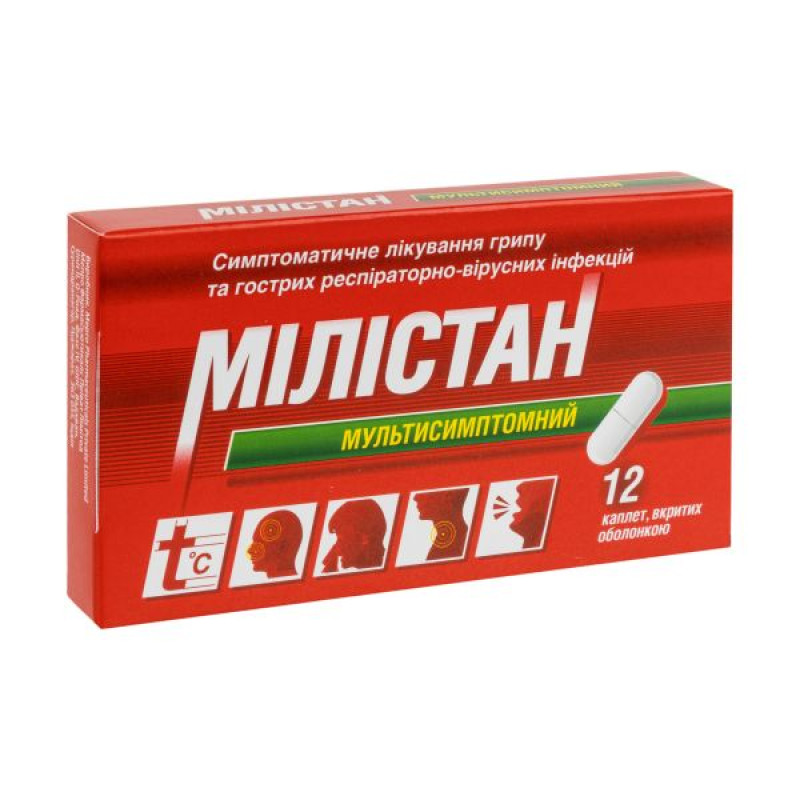
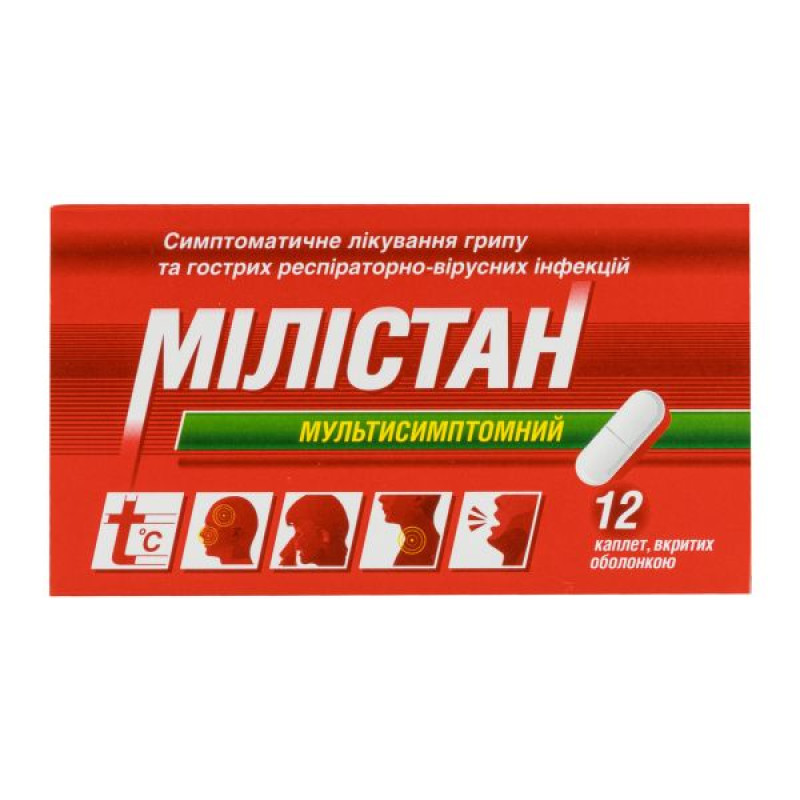
Instructions for use Milistan multisymptom film-coated caplets blister pack No. 12
Composition
active ingredients: 1 caplet contains paracetamol 325 mg, cetirizine hydrochloride 10 mg, chlorpheniramine maleate 2 mg, dextromethorphan hydrobromide 15 mg;
excipients: corn starch, microcrystalline cellulose, methylparaben (E 218), propylparaben (E 216), magnesium stearate, talc, colloidal anhydrous silica, sodium lauryl sulfate, sodium starch glycolate (type A), hypromellose, propylene glycol, polyethylene glycol 4000, titanium dioxide (E 171).
Dosage form
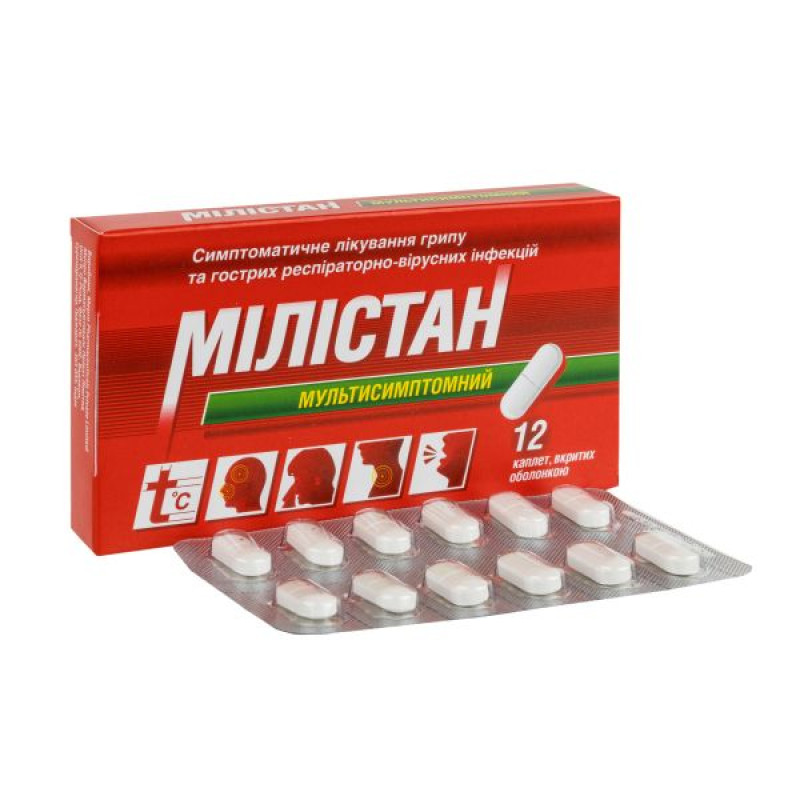
Coated caplets.
Main physicochemical properties: white or almost white oval-shaped, biconvex caplets, coated with a shell, with a break line on one side.
Pharmacotherapeutic group
Analgesics and antipyretics. Paracetamol in combination with other drugs (except psycholeptics). ATX code N02B E51.
Pharmacological properties
Pharmacodynamics
Paracetamol has analgesic, antipyretic, anti-inflammatory properties. The mechanism of the analgesic effect of paracetamol is associated with the inhibition of prostaglandin biosynthesis. By inhibiting cyclogenase, it prevents the formation of prostaglandins E2 and F2, which play an important role in the perception of pain stimuli by nociceptors and the transmission of excitation in the CNS. Paracetamol more effectively inhibits cyclooxygenase in CNS cells and much weaker in peripheral tissues. The lack of effect of paracetamol on the synthesis of prostaglandins in peripheral tissues determines the absence of its negative effect on water-salt metabolism and the mucous membrane of the gastrointestinal tract. The antipyretic effect of paracetamol is explained by the inhibition of prostaglandin biosynthesis directly in the hypothalamus, which are mediators of the thermoregulation center.
Cetirizine hydrochloride is a selective antagonist of peripheral H1-histamine receptors, a metabolite of hydroxyzine. Prevents the development and alleviates the course of allergic reactions, has antipruritic and antiexudative effects. Causes antiallergic effects due to inhibition of the late phase of migration of cells involved in the inflammatory reaction (mainly eosinophils); also reduces the expression of adhesion molecules such as ICAM-1 and VCAM-1, which are markers of allergic inflammation. Inhibits the action of other mediators and inducers of histamine secretion, such as PAF (platelet-activating factor) and substance P. Has practically no anticholinergic and antiserotonin effects. Reduces capillary permeability, prevents the development of tissue edema, relieves smooth muscle spasm. Has practically no anticholinergic and antiserotonin effects. In therapeutic doses, has no sedative effect.
Dextromethorphan hydrobromide is an antitussive agent, effective in unproductive bronchial cough. The mechanism of action is associated with the suppression of afferent impulses from the mucous membrane of the respiratory tract, increasing the sensitivity threshold of the cough center in the medulla oblongata. In therapeutic doses, dextromethorphan does not cause analgesic and sedative effects, and does not depress breathing, does not cause addiction, and does not suppress the activity of the ciliated epithelium.
Chlorpheniramine maleate is an antiallergic agent, a histamine H1 receptor blocker that has an antiallergic effect, reduces capillary permeability, constricts blood vessels, eliminates swelling and hyperemia of the nasal mucosa, nasopharynx and paranasal sinuses; reduces local exudative manifestations, suppresses symptoms of allergic rhinitis (sneezing, rhinorrhea, itching of the eyes, nose, throat). Causes a moderately pronounced sedative effect.
Pharmacodynamics
Absorption. After internal administration, the drug is rapidly and almost completely absorbed from the digestive tract.
Elimination: The half-life of paracetamol is 1-4 hours. In patients with cirrhosis of the liver, the half-life is prolonged. Plasma protein binding is variable.
Renal clearance of paracetamol is 5%. It is excreted in the urine mainly as glucuronide and sulfate conjugates.
After a single oral administration of cetirizine hydrochloride, the elimination half-life is approximately 10 hours, 2/3 of the drug is excreted unchanged by the kidneys and about 10% - with feces. Systemic clearance is 53 ml/min.
The half-life of dextromethorphan hydrobromide is approximately 4 hours, the drug is excreted by the kidneys in an unchanged state and in the form of demethylated metabolites (including dextrorphan). The active substances of the drug penetrate the placenta and into breast milk.
Indication
Symptomatic treatment of influenza and other acute respiratory viral infections accompanied by dry irritating cough, fever, muscle and joint pain, headache, nasal congestion, runny nose, lacrimation; including those accompanied by allergies.
Contraindication
Hypersensitivity to the components of the drug, to hydroxyzine or to any piperazine derivative, other antihistamines.
Severe renal dysfunction.
Severe liver dysfunction, congenital hyperbilirubinemia, alcoholism, Gilbert's syndrome.
Blood diseases, glucose-6-phosphate dehydrogenase deficiency, severe anemia, leukopenia, hypocoagulation.
Risk of urinary retention due to urethral and prostate diseases, bladder neck obstruction.
Pyloroduodenal stenosis, intestinal obstruction.
Severe hypertension, coronary artery disease, arrhythmias. Diabetes mellitus, hyperthyroidism.
Epilepsy.
Patients at risk of respiratory failure.
Do not use together with monoamine oxidase inhibitors (MAOIs) and within 2 weeks after discontinuing the use of MAOIs, antidepressants with serotonin reuptake inhibitors (fluoxetine, paroxetine).
Interaction with other medicinal products and other types of interactions
The simultaneous use of the drug with other medications containing paracetamol or other active ingredients that are part of the drug Milistan Multisymptomny should be avoided.
The interaction features of the drug are due to the properties of its components.
Paracetamol.
The rate of absorption of paracetamol may be increased by metoclopramide and domperidone and decreased by cholestyramine. The anticoagulant effect of warfarin and other coumarins with an increased risk of bleeding may be enhanced by concomitant long-term use of paracetamol. Intermittent administration has no significant effect. Barbiturates reduce the antipyretic effect of paracetamol.
Anticonvulsants (including phenytoin, barbiturates, carbamazepine), which stimulate the activity of liver microsomal enzymes, may enhance the toxic effect of paracetamol on the liver due to an increase in the degree of conversion of the drug to hepatotoxic metabolites. With the simultaneous use of paracetamol with hepatotoxic drugs, the toxic effect of the drugs on the liver increases. The simultaneous use of high doses of paracetamol with isoniazid increases the risk of developing hepatotoxic syndrome.
Paracetamol reduces the effectiveness of diuretics. Do not use simultaneously with alcohol.
Caffeine may potentiate the analgesic effect of paracetamol.
Caution should be exercised when using paracetamol with flucloxacillin, as such co-administration is associated with high anion gap metabolic acidosis, especially in patients with risk factors (see section "Special warnings and precautions for use").
Cetirizine hydrochloride
In a study of multiple administration of theophylline (400 mg once daily) and cetirizine, a slight (16%) decrease in cetirizine clearance was observed, while theophylline disposition was not increased by concomitant administration of cetirizine.
In a multiple-dose study of ritonavir (600 mg twice daily) and cetirizine (10 mg daily), the duration of exposure to cetirizine increased by approximately 40%, while ritonavir disposition was slightly impaired (-11%) when co-administered with cetirizine.
There is no evidence of an increase in the effect of sedatives when cetirizine is used in therapeutic doses. However, the use of sedatives should be avoided while taking cetirizine.
The extent of absorption of cetirizine is not reduced by food intake, although the absorption rate is reduced by 1 hour.
Concomitant use of the drug with alcohol or other central nervous system depressants may cause additional impairment of attention and impaired performance, although cetirizine does not potentiate the effect of alcohol (at blood alcohol levels of 0.5 g/l).
Chlorpheniramine maleate
Alcoholic beverages or drugs that depress the central nervous system may enhance the depressant effects of similar or antihistamine drugs such as chlorpheniramine, which may cause symptoms of overdose.
Chlorpheniramine inhibits the metabolism of phenytoin and may lead to phenytoin toxicity.
Contraindicated with MAO inhibitors. Monoamine oxidase inhibitors (MAOIs), including furazolidone (an antibacterial drug) and procarbazine (an antineoplastic drug): Concomitant use is not recommended as the anticholinergic effects and central nervous system depression inherent to antihistamines may be prolonged and increased.
Tricyclic antidepressants or maprotiline (a tetracyclic antidepressant) and other anticholinergic drugs: the anticholinergic effect of these drugs or antihistamines such as chlorpheniramine may be enhanced. In case of gastrointestinal side effects, patients should consult a doctor as soon as possible, as this may lead to paralytic ileus.
Ototoxic drugs can mask symptoms of ototoxicity such as ringing in the ears, dizziness, and fainting.
Photosensitizing drugs may cause additional photosensitizing effects.
The drug should not be used simultaneously with antitussives that suppress the cough reflex (e.g. codeine), especially before bedtime. Such combined use of drugs makes expectoration difficult.
Dextromethorphan hydrobromide
When dextromethorphan, which is part of the drug, is used simultaneously with other drugs, the following interactions are possible:
with amiodarone, quinidine – increased plasma concentrations of dextromethorphan.
Alcohol can increase the side effects of dextromethorphan.
Application features
Do not exceed the recommended dose.
Keep the drug out of sight and reach of children.
If erythrocyte hemolysis or drug-induced hemolytic anemia occurs during the use of Milistan Multisymptomatic, the drug should be discontinued immediately.
If skin rashes occur, the use of the drug should be discontinued.
With prolonged use, it is necessary to monitor the function of the liver, kidneys, and the state of the hematopoietic system. If the symptoms persist, you should consult a doctor.
If the disease is caused by a bacterial infection, parallel treatment with antibiotics is recommended.
It is forbidden to drink alcohol while using the drug!
Related to paracetamol.
If you have liver or kidney disease, you should consult a doctor before using the drug.
Before using the drug, you should consult a doctor if the patient is taking warfarin or similar drugs that have an anticoagulant effect. It should be borne in mind that in patients with alcoholic non-cirrhotic liver damage, the risk of hepatotoxic effects of paracetamol increases; the drug may affect the results of laboratory tests for blood glucose and uric acid. Patients who take analgesics every day for mild arthritis should consult a doctor. In patients with severe infections, such as sepsis, which are accompanied by a decrease in glutathione levels, the risk of metabolic acidosis increases when taking paracetamol. Symptoms of metabolic acidosis are deep, rapid or difficult breathing, nausea, vomiting, loss of appetite. You should immediately consult a doctor if these symptoms occur.
Caution is advised when paracetamol is used concomitantly with flucloxacillin due to the increased risk of high anion gap metabolic acidosis, especially in patients with severe renal insufficiency, sepsis, malnutrition and other causes of glutathione deficiency (e.g. chronic alcoholism), and when maximum daily doses of paracetamol are used. Close monitoring, including measurement of urinary 5-oxoproline, is recommended.
Do not take the drug simultaneously with other products containing paracetamol.
If symptoms persist, you should consult a doctor.
If the headache becomes persistent, you should see a doctor.
Related to cetirizine hydrochloride.
No clinically significant interactions with alcohol were observed at therapeutic doses (at blood alcohol levels of 0.5 g/l). However, it is recommended to avoid simultaneous use of the drug with alcohol. It is recommended to prescribe the drug with caution to patients with epilepsy and patients at risk of seizures,
Use with caution in patients prone to urinary retention (spinal injury, prostatic hyperplasia), as cetirizine may increase the risk of developing urinary retention.
Antihistamines suppress the skin allergy test, so before conducting it, the drug must be stopped 3 days before the test (withdrawal period).
Related to chlorpheniramine maleate
Chlorphenamine, like other drugs with anticholinergic effects, should be used with caution in epilepsy; high intraocular pressure, including glaucoma; prostatic hypertrophy; severe hypertension or cardiovascular disease; bronchitis, bronchiectasis or asthma; hepatic insufficiency and renal insufficiency. In children and elderly patients, adverse reactions from the nervous system such as anticholinergic effects and paradoxical excitation (increased energy, restlessness, nervousness) may occur more often during chlorpheniramine therapy.
The anticholinergic properties of chlorphenamine may cause drowsiness, dizziness, blurred vision and impaired psychomotor reactions in some patients, which may seriously affect the ability to drive and use machines.
The simultaneous use of chlorpheniramine with alcohol should be avoided, as the effect of the latter is enhanced.
Chlorpheniramine should not be used with other antihistamines.
Related to dextromethorphan hydrobromide
Patients with chronic cough caused by smoking or bronchial asthma or cough due to an acute asthma attack should consult a doctor before using dextromethorphan hydrochloride. Patients whose cough is accompanied by excessive sputum production should also consult a doctor before using the drug.
If the cough lasts more than 7 days or is accompanied by fever, rash, or headache, the patient should be properly evaluated to identify the underlying disease.
Dextromethorphan is metabolized in the liver by cytochrome P450 2D6. The activity of this enzyme is genetically determined. Approximately 10% of the general population are poor metabolizers of the CYP2D6 enzyme. Such individuals, as well as patients receiving therapy with CYP2D6 inhibitors, may experience signs of overdose and/or prolonged exposure to dextromethorphan. Therefore, caution should be exercised when using the drug in patients who are poor metabolizers of CYP2D6 or are using CYP2D6 inhibitors.
Excipients.
The drug contains methylparaben (E 218) and propylparaben (E 216), therefore it may cause allergic reactions (possibly delayed).
Use during pregnancy or breastfeeding
Pregnancy
The drug should not be used during pregnancy.
Breast-feeding
It is advisable to refrain from using the drug during breastfeeding or to decide whether to discontinue breastfeeding if the drug becomes necessary.
Data on paracetamol:
There are no standard studies using currently accepted standards for assessing reproductive and ontogenetic toxicity.
A large amount of data on pregnant women indicate neither malformative nor feto/neonatal toxicity. Epidemiological studies on the development of the nervous system in children exposed to paracetamol in utero have not yielded conclusive results.
The ability to influence the reaction speed when driving or working with other mechanisms
In case of neurological disorders (drowsiness, dizziness, visual disturbances), it is necessary to refrain from driving or working with other mechanisms.
Method of administration and doses
Adults and children over 12 years of age should take 1 caplet orally once a day. The maximum duration of treatment is 5-7 days.
The maximum period of use for children without consulting a doctor is 3 days.
Patients with moderately severe renal failure should use the drug at half the dose.
For elderly patients with normal renal function, dose adjustment is not required.
Children
Contraindicated for children under 12 years of age.
Overdose
Symptoms.
Signs and symptoms of overdose of individual components of the drug Milistan Multisymptom can be divided as follows:
Related to paracetamol.
Liver damage is possible in adults who have taken 10 g or more of paracetamol, and in children who have taken more than 150 mg/kg of body weight. In patients with risk factors (long-term use of carbamazepine, phenobarbitone, phenytoin, primidone, rifampicin, St. John's wort or other drugs that induce liver enzymes; alcohol abuse; insufficiency of the glutathione system, for example: digestive disorders, HIV infection, starvation, cystic fibrosis, cachexia) taking 5 g or more of paracetamol can lead to liver damage.
Symptoms of overdose in the first 24 hours: pallor, nausea, vomiting, loss of appetite and abdominal pain. Liver damage may become apparent 12-48 hours after overdose. Glucose metabolism disorders and metabolic acidosis may occur. In severe poisoning, liver failure may progress to encephalopathy, hemorrhage, hypoglycemia, coma and be fatal. Acute renal failure with acute tubular necrosis may present with severe lumbar pain, hematuria, proteinuria and may develop even in the absence of severe liver damage. Cardiac arrhythmia and pancreatitis have also been reported.
With prolonged use of the drug in high doses, aplastic anemia, pancytopenia, agranulocytosis, neutropenia, leukopenia, thrombocytopenia may develop from the hematopoietic system. When taking large doses, dizziness, psychomotor agitation and disorientation are possible from the central nervous system; nephrotoxicity (renal colic, interstitial nephritis, capillary necrosis) is possible from the urinary system.
Related to cetirizine hydrochloride.
Overdoses of cetirizine are mainly associated with CNS effects or effects that may indicate anticholinergic activity. Adverse reactions reported after doses exceeding at least 5 times the recommended daily dose include: confusion, diarrhea, dizziness, fatigue, headache, malaise, mydriasis, pruritus, restlessness, sedation, drowsiness, stupor, tachycardia, tremor, and urinary retention.
Related to chlorpheniramine maleate.
The estimated lethal dose of chlorphenamine is 25 to 50 mg/kg body weight. In case of overdose, the condition may vary from depressed to excited (restlessness and convulsions). Atropine-like symptoms may occur, including mydriasis, photophobia, dry skin and mucous membranes, fever, intestinal atony; CNS depression is accompanied by respiratory and cardiovascular disorders.
Related to dextromethorphan hydrobromide
Symptoms of dextromethorphan hydrobromide overdose: nausea and vomiting, CNS depression, dizziness, dysarthria, ataxia, blurred vision, myoclonus, nystagmus, drowsiness, tremor, agitation, hyperactivity, confusion, psychotic disorders (psychosis) and respiratory depression.
In case of overdose, urgent medical attention is required. The patient should be taken to hospital immediately, even if there are no early symptoms of overdose. Symptoms may be limited to nausea and vomiting or may not reflect the severity of the overdose or the risk of organ damage. Treatment with activated charcoal should be considered if the overdose was taken within 1 hour. The concentration of paracetamol in the blood plasma should be measured 4 hours or later after ingestion (earlier concentrations are unreliable). Treatment with N-acetylcysteine can be used within 24 hours of ingestion, but the maximum protective effect occurs when it is used within 8 hours of ingestion.
The effectiveness of the antidote decreases sharply after this time. If necessary, the patient should be given intravenous N-acetylcysteine, according to current recommendations. In the absence of vomiting, oral methionine may be used as a suitable alternative in remote areas outside the hospital.
In addition to the above, symptomatic or supportive therapy is recommended.
Adverse reactions
Skin and subcutaneous tissue disorders: skin rashes, including generalized, maculopapular, erythematous; urticaria, mucosal rashes, hyperemia, pruritus, angioedema, erythema multiforme exudative, Stevens-Johnson syndrome, toxic epidermal necrolysis, persistent drug-induced erythema, angioedema, exfoliative dermatitis, photosensitivity.
On the part of the immune system: hypersensitivity reactions, including allergic reactions, anaphylaxis, anaphylactic reactions, anaphylactic shock, skin itching, rashes on the skin and mucous membranes (usually generalized rashes, erythematous, urticaria), angioedema, erythema multiforme exudative (including Stevens-Johnson syndrome), toxic epidermal necrolysis (Lyell's syndrome).
On the part of the digestive tract: dyspeptic disorders, gastrointestinal disorders, nausea, vomiting, epigastric pain, abdominal pain, dry mouth, diarrhea, gastritis, heartburn, diarrhea, constipation, flatulence.
From the hepatobiliary system: impaired liver function, increased activity of "liver" enzymes (transaminases, alkaline phosphatase, GGTP), usually without the development of jaundice, hyperbilirubinemia, hepatitis, jaundice. With prolonged use, especially in high doses, hepatotoxic effects are not excluded.
On the part of the endocrine system: hypoglycemia, up to hypoglycemic coma.
Metabolism: increased appetite, anorexia.
From the blood and lymphatic system: anemia, sulfhemoglobinemia and methemoglobinemia (cyanosis, shortness of breath, heart pain), aplastic anemia, hemolytic anemia; agranulocytosis, thrombocytopenia, leukopenia, bruising or bleeding, pathological changes in the blood.
On the part of the respiratory system: pharyngitis, rhinitis, bronchospasm in patients sensitive to acetylsalicylic acid and other NSAIDs, nasal congestion, thickening of the bronchial wall due to increased bronchial secretion.
From the nervous system: dizziness, headache, possible paradoxical stimulation of the CNS, agitation, sedative effect, paresthesia, convulsions, movement disorders, dysgeusia, fainting, syncope, tremor, tone disorders (dystonia), dyskinesia, coordination disorders, increased fatigue, confusion, anxiety, nervousness, tremor, irritability, insomnia, euphoria, paresthesia, neurosis, neuritis, convulsions; drowsiness, coma, behavioral changes, memory impairment, amnesia, attention impairment.
From the organs of hearing and balance: vertigo, dizziness, impaired coordination, ringing in the ears, tinnitus, acute labyrinthitis.
On the part of the urinary system: difficulty and delay in urination (see section "Special instructions"), dysuria, enuresis.
On the part of the organs of vision: impaired accommodation of the eye, blurred vision, decreased visual acuity, involuntary movements of the eyeballs, blurring, double vision, increased intraocular pressure, mydriasis, photophobia.
Mental disorders: nervous excitement, confusion, irritability, anxiety, aggression, confusion, depression, suicidal thoughts, hallucinations, insomnia, drowsiness, nightmares, nervous tic.
Cardiovascular system: tachycardia, arrhythmia, feeling of rapid heartbeat, blood pressure fluctuations, hypotension.
Musculoskeletal and connective tissue disorders: muscle twitching, muscle weakness.
General disorders: asthenia, fatigue, malaise, edema, chest tightness.
Laboratory studies: weight gain.
From the reproductive system: menstrual disorders; impotence.
Others: dry mucous membranes, increased sweating, increased fatigue.
Expiration date
3 years.
Storage conditions
Store at a temperature not exceeding 25 °C in the original packaging, out of the reach of children.
Packaging
12 caplets in a blister in a cardboard box.
Vacation category
Without a prescription.
Producer
Mepro Pharmaceuticals Private Limited.
Location of the manufacturer and its business address
Unit II, Q-Road, Phase IV, GIDC, Wadhwan, Surendranagar, Gujarat, 363 035, India.
or
Producer
Location of the manufacturer and its business address
E-1223, Phase-I, Extn. (Ghatal) RIICO Industrial Area, Bhiwadi, Dist. Alwar (Rajasthan), India.
Applicant
Milli Healthcare Limited.
Applicant's location
2nd Floor, Office Space, 4 Chartfield House, Castle Street, Taunton, Somerset, England, TA1 4AS, United Kingdom.