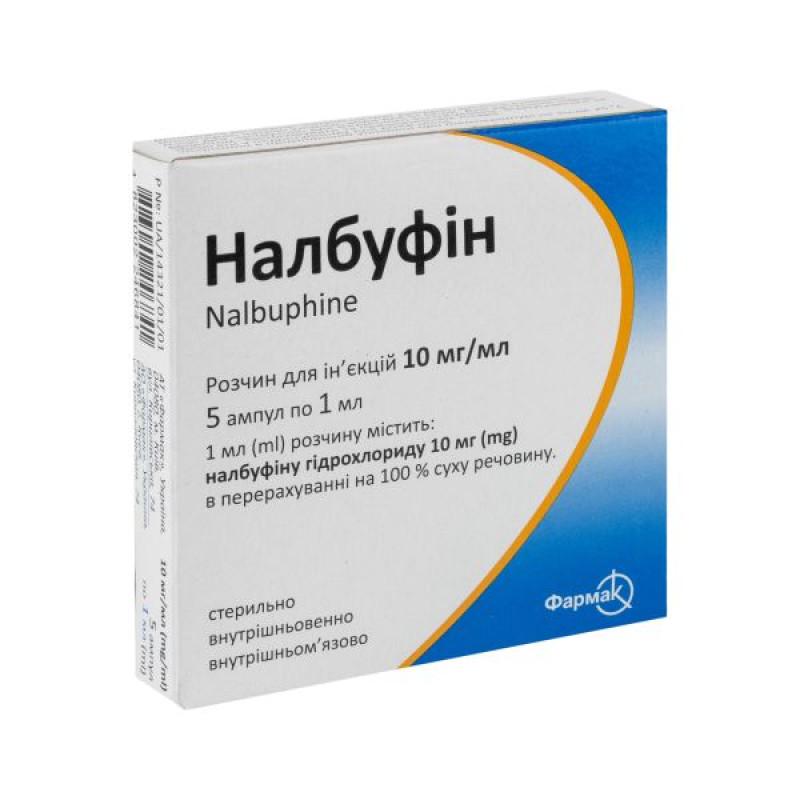
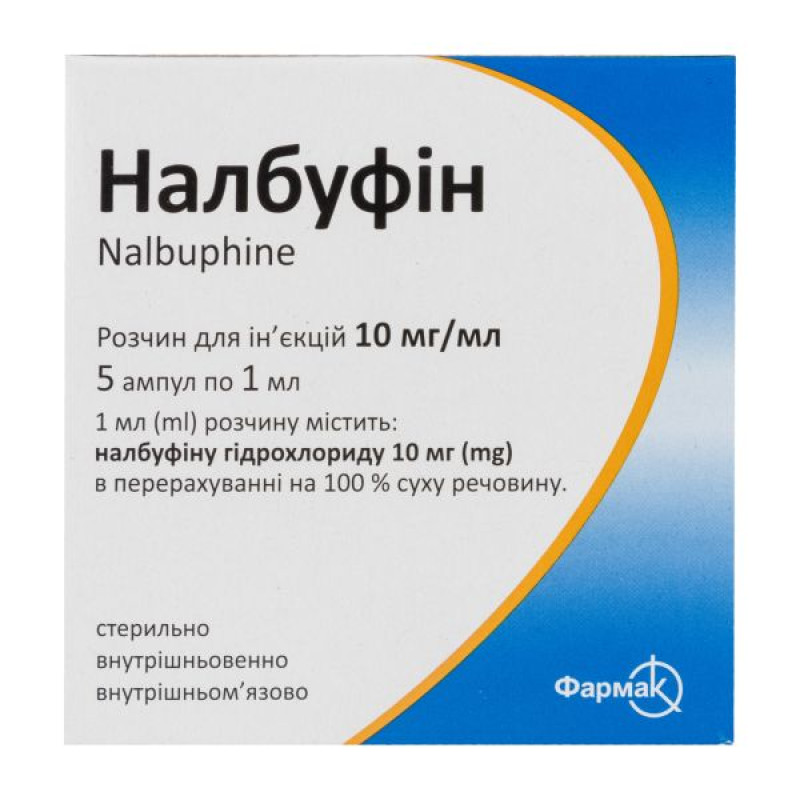
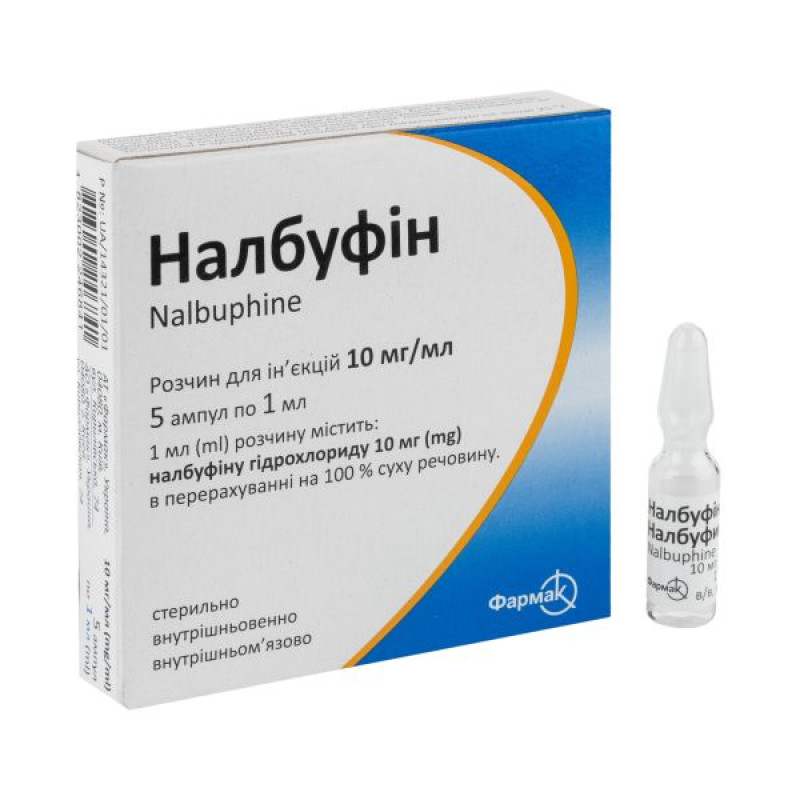
Instructions Nalbuphine solution for injection 10mg/ml 1ml No. 5
Composition
active ingredient: nalbuphine;
1 ml of solution contains nalbuphine hydrochloride, calculated as 100% dry matter, 10 mg;
Excipients: sodium citrate dihydrate, citric acid monohydrate, sodium chloride, water for injections.
Dosage form
Solution for injection.
Main physicochemical properties: clear solution from colorless to pale yellow.
Pharmacotherapeutic group
Analgesics. Opioids. Morphine derivatives. ATX code N02A F02.
Pharmacological properties
Pharmacodynamics
Nalbuphine is an opioid analgesic from the group of opiate receptor agonist-antagonists from the phenanthrene series. It is an agonist of kappa receptors and an antagonist of mu receptors, disrupts the interneuronal transmission of pain impulses at different levels of the central nervous system (CNS), affecting the higher parts of the brain. Nalbuphine has an analgesic effect equivalent to that of morphine. It inhibits conditioned reflexes, has a sedative effect, causes dysphoria, miosis, and stimulates the vomiting center.
To a lesser extent than morphine, promedol, fentanyl, it disrupts the respiratory center and affects the motility of the gastrointestinal tract. The use of nalbuphine does not lead to significant changes in the parameters of the cardiovascular system and motility of the gastrointestinal tract. Nalbuphine does not have a spasmolytic effect on the level of smooth muscles. When using the drug in therapeutic doses, respiratory depression is moderate and does not increase when the dose of 0.3 mg/kg is exceeded (marginal effect). Does not affect hemodynamics. The risk of addiction and opioid dependence with controlled use is significantly lower than with the use of opioid antagonists.
Adults
With intravenous administration, the effect develops after 2–3 minutes, with intramuscular administration – after 10–15 minutes. The maximum effect is achieved after 30–60 minutes, the duration of action is 3–6 hours.
Pharmacokinetics
The drug has a rapid analgesic effect. The time to reach maximum concentration in blood plasma after intramuscular administration is 0.5–1 hour. Metabolized in the liver. Excreted as metabolites in bile, in small quantities in urine. Passes through the placental barrier, during childbirth may cause respiratory depression in the newborn. Excreted in breast milk. The half-life of the drug from blood plasma is 2–3 hours.
Indication
Pain syndrome of severe and moderate intensity. Used as an additional agent during anesthesia, to reduce pain in the pre- and postoperative period, and for pain relief during childbirth.
Contraindication
Hypersensitivity to nalbuphine hydrochloride or to any of the ingredients of the drug. Children under 18 years of age.
Nalbuphine should not be used in respiratory depression or severe CNS depression, increased intracranial pressure, head injury, acute alcohol intoxication, alcoholic psychosis, hepatic and renal failure.
The combined use of the drug with pure morphinomimetic agonists is not recommended.
It is not recommended to use the drug without appropriate diagnosis for surgical abdominal syndrome, as nalbuphine may mask its manifestations.
Nalbuphine should not be used by women during breastfeeding (except for use during labor).
Interaction with other medicinal products and other types of interactions
The drug should be used under close supervision and in reduced doses against the background of the action of anesthetics, hypnotics, anxiolytics, antidepressants and neuroleptics to prevent excessive CNS depression and inhibition of the respiratory center. Alcohol also enhances the CNS depressant effect of nalbuphine. The drug should not be used together with other narcotic analgesics due to the risk of weakening the analgesic effect and the possibility of provoking withdrawal syndrome in patients with opioid dependence.
Combination with phenothiazine derivatives and penicillin drugs may increase nausea and vomiting.
Concomitant use is contraindicated. Alfentanil, codeine, dextroproxephen, dihydrocodeine, fentanyl, methadone, morphine, oxycodone, pethidine, sufentanil, tramadol - there is a decrease in the analgesic effect due to receptor blockade with the risk of withdrawal syndrome.
Concomitant use is not recommended. Alcohol – increases the sedative effect of morphine analgesics. Impaired attention may be dangerous when driving or operating other mechanisms. Alcoholic beverages and medications containing ethanol should be avoided.
Use with caution:
with other CNS depressants: other morphine analgesics, barbiturates, benzodiazepines, anxiolytics (except benzodiazepines), sedative antidepressants (amitriptyline, doxepin, mianserin, mirtazapine, trimipramine), antihistamines (H1), hypnotics, centrally acting antihypertensives, neuroleptics, thalidomide, baclofen - CNS depression increases.
Application features
In patients suffering from drug addiction, the drug may cause an acute withdrawal attack.
The risk of overuse is low due to the significant antagonistic properties of nalbuphine. Abrupt cessation of long-term use may cause withdrawal syndrome.
It is not recommended to use Nalbuphine in an outpatient setting due to the risk of daytime drowsiness.
During labor, Nalbuphine should be used under strict medical supervision in women with a cervical dilation of no more than 4 cm. In this case, intravenous administration should be avoided.
Nalbuphine has a moderate ability to cause respiratory depression, so its use may provoke the development of respiratory failure.
Since the drug is metabolized in the liver and excreted by the kidneys, it is recommended to reduce the dose of the drug in case of hepatic or renal insufficiency.
In morphine-dependent individuals or patients who have undergone a course of morphine therapy, a withdrawal syndrome may occur due to the antagonistic properties of nalbuphine.
This medicinal product contains 1.39 mg (0.06 mmol) sodium per ml, i.e. essentially sodium-free.
Use during pregnancy or breastfeeding
Due to the lack of research, the drug should not be used during pregnancy and breastfeeding.
Pregnancy
Animal studies have not revealed any signs of teratogenic effects. Due to the lack of teratogenic effects in animals, congenital malformations in humans are not expected. Currently, substances responsible for malformations in humans have been shown to be teratogenic in two animal species in appropriately conducted studies.
In clinical practice, there is currently insufficient evidence to assess the possible malformative effect of nalbuphine when used during the first trimester of pregnancy.
Therefore, as a precautionary measure, it is best not to use nalbuphine during pregnancy.
As with any morphine-type drug, prolonged use of the drug in a pregnant woman, especially in late pregnancy, regardless of the dose, may lead to the development of neonatal withdrawal syndrome. The use of high doses of the drug in a woman in late pregnancy, even with short-term treatment, may lead to respiratory depression in the child.
Respiratory depression (even with delay) has been observed in neonates when nalbuphine is used during labor. Therefore, the maximum dose should not exceed 20 mg intramuscularly. Monitoring of the neonate, including respiratory function, should be considered.
Nalbuphine should be avoided during high-risk pregnancies, particularly in cases of preterm labor or twin birth.
Breast-feeding
Nalbuphine passes into breast milk; several cases of hypotension and respiratory arrest in infants have been described after maternal use of morphine derivatives in doses exceeding therapeutic levels.
Therefore, breastfeeding is contraindicated during long-term treatment with this drug.
Breastfeeding is possible when using the drug in obstetric practice.
Ability to influence reaction speed when driving vehicles or other mechanisms
During the treatment period, you should refrain from driving or working with other mechanisms.
Method of administration and doses
Nalbuphine is used for intravenous and intramuscular administration.
The dosage should be calculated according to the intensity of pain, the patient's physical condition and take into account the interaction with other concomitantly used drugs. Usually, for pain syndrome, 0.15 to 0.3 mg of the drug per 1 kg of the patient's body weight is administered intravenously or intramuscularly; a single dose of the drug is administered every 3–6 hours if necessary.
The maximum single dose for adults is 0.3 mg per 1 kg of body weight; the maximum daily dose is 2.4 mg per 1 kg of body weight.
In myocardial infarction, 20 mg of the drug, administered slowly into a vein, is often sufficient, but it may be necessary to increase the dose to 30 mg. In the absence of clear positive dynamics of the pain syndrome, 20 mg is repeated after 30 minutes.
For premedication: 100–200 mcg/kg body weight.
When performing intravenous anesthesia: for induction of anesthesia - 0.3–1 mg/kg over a period of 10–15 minutes, for maintenance of anesthesia - 250–500 mcg/kg every 30 minutes.
The drug is prescribed with caution to elderly patients, with general exhaustion, and insufficient respiratory function.
Children
Do not apply.
Overdose
In case of overdose, the following symptoms are possible: respiratory depression, hypotension, circulatory failure, deepening coma, convulsions, rhabdomyolysis, progressing to renal failure.
in the early stages, patients who are conscious should be given activated charcoal orally;
supportive therapy (oxygen, intravenous fluid replacement, drugs that increase blood pressure);
intravenous administration of naloxone (specific antidote).
Side effects
In patients treated with Nalbuphine, drowsiness was most commonly observed.
From the side of the cardiac system: increase or decrease in blood pressure, orthostatic hypotension, bradycardia, tachycardia, feeling of palpitations.
On the part of the organs of vision: blurred or impaired vision, miosis.
On the part of the digestive tract: constipation, nausea, vomiting, dry mouth, abdominal cramps.
General disorders and administration site reactions: hypothermia, local pain, swelling, redness, burning and feeling of warmth, hot flashes, increased sweating may occur.
From the hepatobiliary system: impaired liver function, spasm of the biliary tract.
Immune system disorders: anaphylactic reactions.
From the nervous system: dizziness, headache, muscle rigidity, increased intracranial pressure.
Mental disorders: drug addiction, psychomimetic reactions, neurotic reactions, drowsiness, depression, confusion, dysphoria, speech disorders, mood changes, anxiety, nervousness (restlessness), hallucinations, euphoria.
The possibility of physical and psychological dependence, as well as tolerance during long-term treatment, is the same as for other morphine derivatives.
From the kidneys and urinary tract: antidiuretic effect, spasm of the urinary tract.
From the reproductive system and mammary glands: decreased libido or potency.
Skin and subcutaneous tissue disorders: urticaria, itching.
When using the drug in obstetric practice, respiratory depression in newborns, which may be long-lasting or with circulatory arrest, has been reported.
Reporting of suspected adverse reactions
Reporting suspected adverse reactions after a medicinal product has been authorised is important. This allows for continuous monitoring of the benefit/risk balance of the medicinal product. Healthcare professionals report any suspected adverse reactions via the national reporting system.
Expiration date
2 years.
Do not use the drug after the expiration date indicated on the package.
Storage conditions
Store in the original packaging at a temperature not exceeding 25 ºС.
Keep out of reach of children.
Incompatibility
Do not mix in the same syringe with other injection solutions.
Nalbuphine is compatible with 0.9% sodium chloride solution, 5% glucose solution, and Hartmann's solution.
Packaging
1 ml or 2 ml in an ampoule; 5 ampoules in a pack.
1 ml or 2 ml in an ampoule; 5 ampoules in a blister; 1 or 2 blisters in a pack.
1 ml in a syringe; 1 syringe with a needle in a blister; 1 or 2 blisters in a pack.
1 ml in a syringe; 1 syringe with a needle in a tube; 1 or 10 tubes in a pack.
1 ml in a syringe; 1 syringe in a blister and 1 needle in a blister in a set; 1 or 2 sets in a pack.
Vacation category
According to the recipe.
Producer
JSC "Farmak".
Address
Ukraine, 04080, Kyiv, Kyrylivska St., 74.