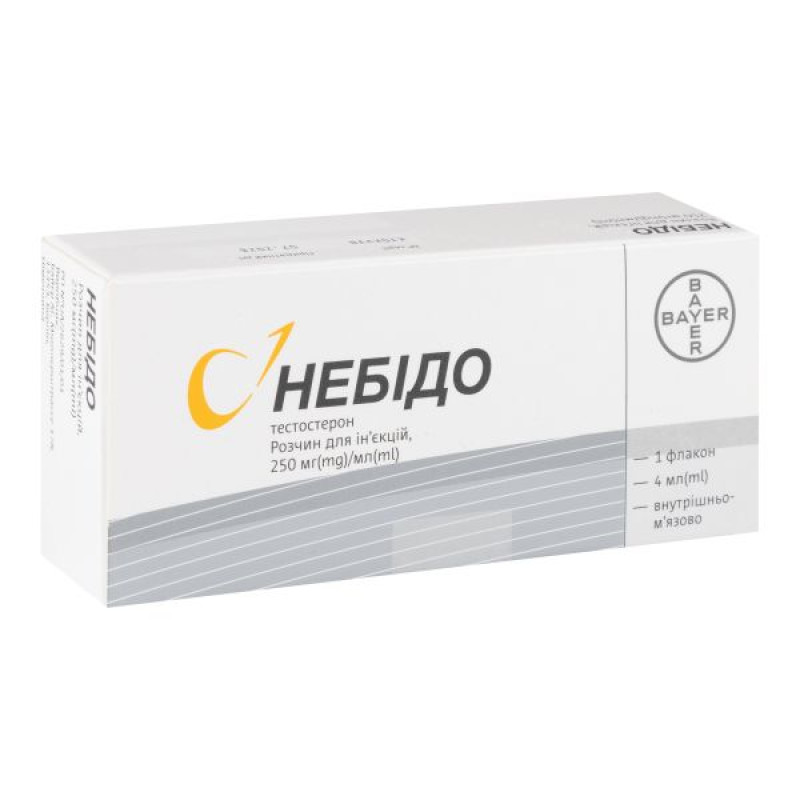
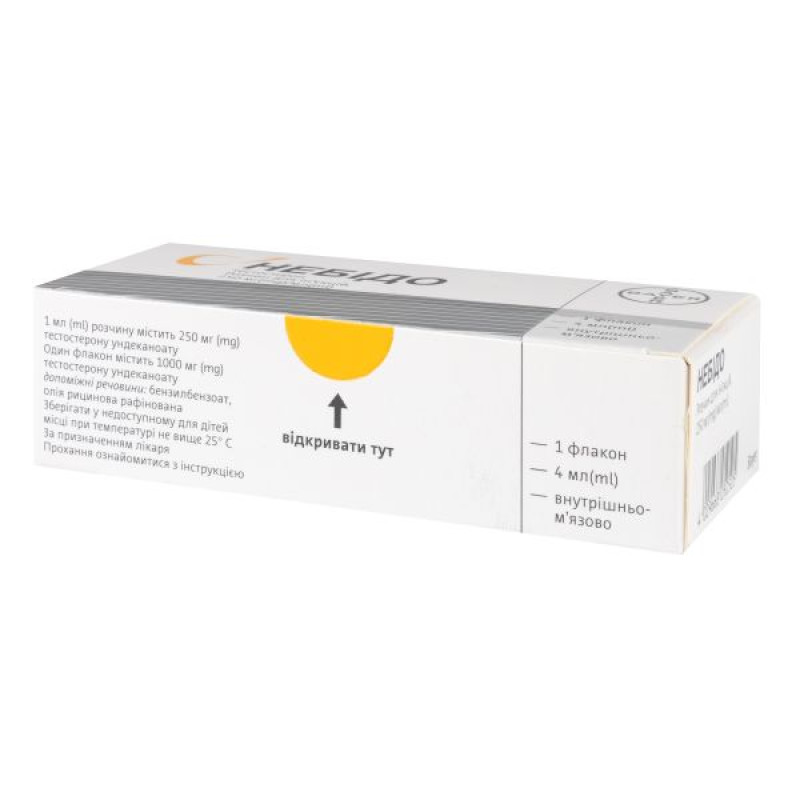
Instructions Nebido solution for injection 250 mg/ml vial 4 ml No. 1
Composition
active ingredient: testosterone undecanoate;
1 vial contains 1000 mg of testosterone undecanoate in 4 ml of solution for injection (250 mg of testosterone undecanoate/ml, corresponding to 157.9 mg of testosterone);
excipients: benzyl benzoate, refined castor oil.
Dosage form
Solution for injection.
Main physicochemical properties: clear, particle-free solution.
Pharmacotherapeutic group
Hormones and their analogues. Androgens.
ATX code G03B A03.
Pharmacological properties
Pharmacodynamics.
Testosterone undecanoate is an ester of the natural androgen testosterone. The active form, testosterone, is formed by cleavage of the side chain.
Testosterone is the most important androgen in the male body and is synthesized mainly in the testicles and, to a lesser extent, in the adrenal cortex.
Testosterone is responsible for the formation of male sexual characteristics during fetal development, early childhood, and puberty, and later for the maintenance of the male phenotype and androgen-dependent functions (e.g., spermatogenesis, accessory sex gland function). Testosterone also performs other functions, including in the skin, musculoskeletal tissues, kidneys, liver, bone marrow, and central nervous system.
Depending on the target organ, the action of testosterone is mainly androgenic (e.g. prostate, seminal vesicles, epididymis) or protein-anabolic (muscle, bone, hematopoietic system, kidneys, liver).
The action of testosterone in some organs is manifested after its conversion in peripheral tissues to estradiol, which then binds to estrogen receptors in the nuclei of target cells (e.g., pituitary, adipose tissue, brain, bone, and testicular Leydig cells).
Pharmacokinetics.
Absorption
Nebido is a depot preparation administered intramuscularly and containing testosterone undecanoate; as a result, there is no first-pass effect. After intramuscular injection of testosterone undecanoate in the form of an oil solution, this compound is gradually released from the depot and is almost completely cleaved by serum esterases into testosterone and undecanoic acid. An increase in serum testosterone concentration relative to basal values can be detected as early as the next day after injection.
Equilibrium concentration
In hypogonadal men, a mean Cmax of 38 nmol/L (11 ng/mL) was achieved 7 days after the first intramuscular injection of 1000 mg testosterone undecanoate. A second injection was given 6 weeks after the first, with a peak testosterone concentration of 50 nmol/L (15 ng/mL). The next three injections were given at a constant dosing interval of 10 weeks. Steady-state conditions were reached between the third and fifth injections. Mean steady-state testosterone Cmax and Cmin were approximately 37 nmol/L (11 ng/mL) and 16 nmol/L (5 ng/mL), respectively. The mean intra- and interindividual variability (coefficient of variation, expressed as %) of Cmin values was 22% (variability range: 9–28%) and 34% (variability range: 25–48%), respectively.
Distribution
In male serum, approximately 98% of circulating testosterone is bound to sex hormone binding globulin (SHBG) and albumin. Only the free fraction of testosterone is considered biologically active. Following intravenous infusion of testosterone in elderly men, the expected volume of distribution was determined to be approximately 1 L/kg.
Metabolism
Testosterone, which is formed by the cleavage of the testosterone ester undecanoate, is metabolized and excreted by the body in the same ways as endogenous testosterone. Undecanoic acid is metabolized by β-oxidation in the same way as other aliphatic carboxylic acids. The main active metabolites of testosterone are estradiol and dihydrotestosterone.
Excretion from the body
Testosterone undergoes extensive metabolism in and outside the liver. After administration of labeled testosterone, approximately 90% of the radioactivity is recovered in the urine as glucuronide and sulfate acid conjugates, and 6% is recovered in the feces after intrahepatic circulation. The products recovered in the urine include androsterone and etiocholanolone. After intramuscular administration of Nebido, the elimination half-life is 90 ± 40 days.
Preclinical safety data
Toxicity studies did not reveal any effects other than those that can be explained by the hormonal profile of Nebido.
In vitro studies have shown that testosterone is not mutagenic using the reverse mutation assay (Ames test) and the hamster ovary cell assay. Experimental animal studies have shown a relationship between androgen therapy and the development of certain types of cancer. Experimental data from rat studies have shown an increased incidence of prostate cancer after testosterone treatment.
Reproductive studies in rodents and primates have shown that testosterone therapy can dose-dependently impair fertility due to inhibition of spermatogenesis.
Indication
Testosterone replacement therapy for hypogonadism in men with confirmed testosterone deficiency clinically and by laboratory test results.
Contraindication
Androgen-dependent carcinoma of the prostate or breast cancer in men; liver tumors at present or in history; hypersensitivity to the active substance or to any auxiliary component of the drug. Hypercalcemia accompanying malignant tumors.
Do not use in women.
Special safety precautions
The properties of the oil solution may temporarily change at low storage temperatures (e.g. higher viscosity, turbidity). When stored at low temperatures, the medicinal product should be warmed to room or body temperature before use.
The solution for intramuscular injection should be visually inspected prior to use. Only clear solutions free from visible particles should be used. The vial with the medicinal product is intended for single use only. Any unused product should be disposed of in accordance with local requirements.
The contents of the vial should be injected intramuscularly immediately after drawing into the syringe. After removing the plastic cap (A), do not remove the metal ring (B) or the crimp cap (C).
Interaction with other medicinal products and other types of interactions
Oral anticoagulants
Testosterone and its derivatives have been reported to enhance the activity of oral coumarin anticoagulants. Therefore, patients taking oral anticoagulants should be closely monitored, especially at the beginning and after the end of androgen therapy. More frequent monitoring of prothrombin time and international normalized ratio (INR) is recommended.
Other types of interactions
Concomitant use of testosterone with adrenocorticotropic hormone or corticosteroids may provoke the development of edema. Therefore, these drugs should be used with caution as concomitant therapy, especially in patients with cardiac or hepatic pathology or patients with a predisposition to edema formation.
Impact on laboratory test results
Androgens can reduce the level of thyroxine-binding globulin, and, accordingly, lead to a decrease in total thyroxine levels and increased uptake of triiodothyronine and thyroxine. However, the concentration of free fractions of thyroid hormones remains unchanged. There are no clinical signs of deterioration of thyroid function.
Application features
Nebido is not recommended for use in children and adolescents.
Nebido should only be used in cases of confirmed (hypo- or hypergonadotropic) hypogonadism and only after other potential causes of the symptoms have been ruled out. Testosterone deficiency should be clearly manifested clinically (reduction in secondary sexual characteristics, changes in body composition, asthenia, decreased libido, erectile dysfunction) and confirmed by two separate blood testosterone measurements.
Elderly patients
Data on the safety and efficacy of Nebido in patients aged 65 years and older are limited. There is currently no consensus on age-related testosterone levels. However, it should be noted that physiological serum testosterone levels decrease with age.
Medical examinations and laboratory tests
Medical examinations
Before starting testosterone therapy, all patients should undergo a thorough medical examination to exclude pre-existing prostate cancer. In patients receiving testosterone therapy, regular and detailed prostate and breast examinations using standard methods (digital rectal examination; serum prostate-specific antigen (PSA) monitoring) should be performed at least once a year, or twice a year in elderly patients and in special patient groups (with clinical or hereditary risk factors). Local guidelines for monitoring the safety of testosterone replacement therapy should be followed.
Laboratory tests
Testosterone levels should be monitored at the beginning and at regular intervals during therapy. The dosage should be adjusted individually by the treating physician to ensure maintenance of testosterone levels. In patients undergoing long-term androgen therapy, the following parameters should also be regularly determined: hemoglobin and hematocrit, liver function tests and lipid profile (see section "Adverse reactions").
Due to the variability of laboratory values, it is recommended that all testosterone level measurements be performed in the same laboratory.
Tumors
Androgens can accelerate the development of subclinical prostate cancer and benign prostatic hyperplasia.
Benign and malignant liver tumors have been reported in patients receiving hormonal agents, particularly androgenic compounds. If a man receiving Nebido develops severe upper abdominal pain, liver enlargement, or signs of intra-abdominal bleeding, a liver tumor should be excluded from the differential diagnosis.
Heart, liver and kidney failure
In patients with severe cardiac, hepatic or renal insufficiency or ischemic heart disease, testosterone therapy may cause severe complications characterized by edema, which may or may not be accompanied by congestive heart failure. In such cases, therapy should be discontinued immediately.
Hepatic or renal insufficiency. Studies of the efficacy and safety of the drug in patients with impaired renal or hepatic function have not been conducted. Accordingly, testosterone replacement therapy should be used with caution in such patients.
Heart failure: Caution should be exercised in patients with a predisposition to edema, for example, in case of severe cardiac, hepatic or renal insufficiency or ischemic heart disease, since treatment with androgens may lead to increased sodium and water retention. In case of severe complications characterized by edema with or without congestive heart failure, treatment should be discontinued immediately (see section "Adverse reactions").
Testosterone can cause an increase in blood pressure, so Nebido should be used with caution in men with hypertension.
Blood clotting disorders
According to the basic rules, it is necessary to follow the rules for performing intramuscular injections in patients with acquired or congenital blood clotting disorders.
Testosterone and its derivatives have been reported to enhance the activity of oral anticoagulants, coumarin derivatives (see also section “Interaction with other medicinal products and other types of interactions”).
Testosterone should be used with caution in patients with thrombophilia or risk factors for venous thromboembolism (VTE) as post-marketing studies have reported thrombotic events (e.g. deep vein thrombosis, pulmonary embolism, ocular thrombosis) in this patient population during testosterone therapy. In patients with thrombophilia, VTE has been reported even with antithrombotic therapy, and continued testosterone treatment after the first thrombotic event should be carefully evaluated. If treatment is continued, further measures should be taken to minimize the individual risk of VTE.
Other states
Testosterone should be used with extreme caution in patients with epilepsy or migraine, as it may worsen the course of these diseases.
In patients receiving androgens and who have achieved normal plasma testosterone levels after testosterone replacement therapy, increased insulin sensitivity may occur.
Certain clinical symptoms such as irritability, nervousness, weight gain, persistent or frequent erections may indicate androgen overdose and require dose adjustment.
Existing sleep apnea syndrome may worsen.
Athletes receiving testosterone replacement therapy for primary and secondary hypogonadism should be warned that the active substance of the medicinal product may give a positive reaction in a doping test.
Androgens are not suitable for use to increase muscle mass in healthy individuals or to enhance physical performance.
If symptoms of hyperandrogenism persist or recur during therapy at recommended doses, Nebido should be temporarily discontinued.
Drug abuse and drug dependence
Testosterone is commonly abused at doses exceeding those recommended for use in its registered indications and in combination with other anabolic androgenic steroids. Abuse of testosterone and other anabolic androgenic steroids can lead to serious adverse reactions, such as cardiovascular complications (in some cases fatal), liver complications and/or psychiatric disorders. Abuse of testosterone can lead to drug dependence and withdrawal syndrome after significant dose reduction or abrupt cessation of use. Abuse of testosterone and other anabolic androgenic steroids is associated with serious health risks and should be discouraged.
As with all oil solutions, Nebido should be injected accurately and very slowly (over 2 minutes) intramuscularly. In rare cases, pulmonary microembolism may develop with the administration of oil solutions, which may lead to symptoms such as cough, anxiety, dyspnoea, malaise, hyperhidrosis, chest pain, dizziness, paraesthesia or syncope. These reactions may occur during or immediately after the injection and are reversible. Therefore, the patient should be monitored during and after the injection in order to detect symptoms of oil microembolism in time. Supportive therapy, such as supplemental oxygen therapy, should usually be used.
Cases of anaphylactic reactions have been reported following Nebido injections.
This medicine contains castor oil as an excipient, which may cause severe allergic reactions.
Information on excipients
This medicinal product contains 2000 mg of benzyl benzoate in each 4 ml vial, equivalent to 500 mg/ml.
Use during pregnancy or breastfeeding
The drug is not intended for women and should not be used in pregnant or breastfeeding women (see section "Contraindications").
Effects on reproductive function: Testosterone replacement therapy may inhibit spermatogenesis, but this inhibition is reversible (see sections 4.8 and 5.1).
Ability to influence reaction speed when driving vehicles or other mechanisms
Nebido does not affect the ability to drive or use machines.
Method of administration and doses
Nebido injection (1 vial contains 1000 mg of testosterone undecanoate) should be administered once every 10–14 weeks. This frequency of injections ensures that sufficient testosterone levels are maintained and the drug does not accumulate.
Starting treatment
Serum testosterone levels should be determined before and at the start of treatment. Depending on serum testosterone levels and clinical symptoms, the interval between the first injections may be shorter than the recommended 10–14 weeks for maintenance therapy, and should be at least 6 weeks. Steady-state concentrations are achieved rapidly with this loading dose.
Individual treatment adjustment
The recommended injection interval of 10 to 14 weeks should be observed. During maintenance therapy, serum testosterone levels should be closely monitored. At the end of the injection interval, it is recommended to measure serum testosterone levels regularly, taking into account clinical symptoms. Serum testosterone levels should be within the lower third of the normal range. If this level is lower than normal, this may indicate the need to shorten the injection interval. In the case of high concentrations, the feasibility of extending this interval should be considered.
Special patient groups
Elderly patients
Limited data suggest that no dose adjustment is necessary for this category of patients (see section 4.4).
Patients with hepatic insufficiency
Nebido has not been studied in patients with hepatic impairment. It is contraindicated in men with a current or history of liver tumours (see section 4.3).
Patients with renal insufficiency
No studies have been conducted on the use of Nebido in patients with renal insufficiency.
Method of application
It is used intramuscularly.
The injection should be given very slowly (over 2 minutes). The drug is intended for intramuscular injection only. Care should be taken to ensure that Nebido is injected deep into the gluteal muscle, following the rules for intramuscular injection. Intravascular injection should be avoided (see section "Special precautions for use"). Intramuscular injections should be given immediately after opening the vial (for handling instructions, see section "Special precautions").
Children.
Nebido is not indicated for use in children. There are no clinically relevant data on use in children (under 18 years of age) (see section 4.4).
Overdose
In case of overdose, no specific therapy is required. It may be necessary to interrupt drug therapy or reduce the dose.
Side effects
For undesirable effects associated with the use of androgens, see the section "Special precautions for use".
In rare cases, pulmonary microembolism may develop following the administration of oily solutions, accompanied by symptoms such as cough, shortness of breath, anxiety, hyperhidrosis, chest pain, dizziness, paresthesia or loss of consciousness. These reactions may occur during or immediately after the injection and are reversible. Cases of suspected pulmonary microembolism following the administration of oily solutions have occasionally been reported, both during clinical trials (with a frequency of ≥1/10,000 and <1/1,000 injections) and during post-marketing use (see section 4.4).
Cases of suspected anaphylactic reactions have been reported following Nebido injections.
Androgens can accelerate the development of asymptomatic prostate cancer and benign prostatic hyperplasia.
The table below lists the adverse reactions associated with the use of Nebido by system organ class (according to MedDRA SOCs, version 11.0). The following adverse reactions reported in clinical trials with the drug are presented by frequency of occurrence according to the following gradation: common (≥1/100, <1/10), uncommon (≥1/1000, <1/100) and rare (≥1/10000, <1/1000). Adverse reactions were observed in 6 clinical trials (N= 422) and were considered at least as likely to be causally related to Nebido.
Relative frequency of adverse reactions in men based on pooled data from 6 clinical trials (N=422 (100.0%)), of which 302 men with hypogonadism received intramuscular injections of 4 ml of testosterone undecanoate 250 mg/ml and 120 men received injections of 3 ml of testosterone undecanoate 250 mg/ml.
| Organ system classes | Often | Infrequently | Rarely |
| From the lymphatic system and blood system | Polycythemia, increased hematocrit, increased red blood cell count*, increased hemoglobin* | | |
| On the part of the immune system | | Increased sensitivity | |
| Nutritional and metabolic | Weight gain | Increased appetite, increased glycosylated hemoglobin, hypercholesterolemia, increased blood triglycerides, increased blood cholesterol | |
| From the psyche | | Depression, emotional upset, insomnia, anxiety, aggression, irritability | |
| From the nervous system | | Headache, migraine, tremor | |
| From the vascular system | Tides | Cardiovascular disorders, hypertension, dizziness | |
| Respiratory, mediastinal disorders, chest pathology | | Bronchitis, sinusitis, cough, dyspnea, snoring, dysphonia | |
| Gastrointestinal tract | | Diarrhea, nausea | |
| Hepatobiliary disorders | | Abnormal liver function tests, increased aspartate aminotransferase activity | |
| Skin and subcutaneous tissue disorders | Acne | Alopecia, erythema, rash1, pruritus, dry skin | |
| Musculoskeletal and connective tissue disorders | | Arthralgia, pain in extremity, muscle disorder2, muscle tension, blood creatine phosphokinase increased | |
| Renal and urinary disorders | | Decreased urine output, urinary retention, urinary tract disorder, nocturia, dysuria | |
| Reproductive system and breast disorders | Increased prostate-specific antigen, abnormal prostate exam, benign prostatic hyperplasia | Prostatic intraepithelial neoplasia, prostate enlargement, prostatitis, prostate disorder, libido changes, testicular pain, breast enlargement, breast pain, gynaecomastia, estradiol increased, testosterone increased | |
| General disorders and administration site conditions | Different types of injection site reactions3 | Fatigue, weakness, hyperhidrosis4 | |
| Injuries and procedural complications | | | Pulmonary microembolism due to the administration of oily solutions** |
*This frequency has been observed with testosterone-containing medicines.
**Frequency is based on number of injections.
The most appropriate MedDRA term is used to describe an individual adverse reaction. Synonyms and related conditions are not listed, but should also be considered.
1 Skin rash, including nodular.
2 Muscle disorders: muscle cramps, muscle tension and myalgia.
3 Different types of injection site reactions: pain, discomfort, itching, erythema, hematoma, irritation, injection site reactions.
4 Hyperhidrosis: hyperhidrosis and night sweats.
In isolated cases, pulmonary microembolism with the oil solution may lead to symptoms such as cough, dyspnoea, malaise, hyperhidrosis, chest pain, dizziness, anxiety, paraesthesia or syncope. These reactions may occur during or immediately after injection and are reversible. Cases reported by the company or investigators that could be considered pulmonary microembolism have been rarely identified both in clinical trials (≥1/10,000 to <1/1,000 injections) and during post-marketing surveillance (see section 4.4).
Adverse reactions such as cholestatic jaundice, hepatitis; urinary tract obstruction; disturbances in the metabolism of sodium, chlorine, potassium and calcium and inorganic phosphates; impaired glucose tolerance; edema, gastrointestinal bleeding have also been reported.
In addition to the above adverse reactions, states of nervousness, hostility, sleep apnea, various skin reactions, including seborrhea, increased hair growth, increased frequency of erections and, in rare cases, jaundice have been observed during treatment with testosterone-containing drugs.
Treatment with high-dose testosterone drugs often reversibly interrupts or reduces spermatogenesis, resulting in a decrease in testicular size. Testosterone replacement therapy for hypogonadism can occasionally lead to persistent, painful erections (priapism). High doses or long-term administration of testosterone can occasionally lead to fluid retention and edema.
Reporting of suspected adverse reactions
Reporting suspected adverse reactions during post-marketing surveillance is very important. This allows monitoring of the benefit/risk balance of medicinal products. Healthcare professionals should report suspected adverse reactions.
Expiration date
5 years.
Storage conditions
Store out of the reach of children at a temperature not exceeding 25 oC.
Incompatibility
Since compatibility studies have not been conducted, this medicinal product should not be mixed with other medicinal products in the same container.
Packaging
4 ml in a bottle; 1 bottle in a cardboard box.
Vacation category
According to the recipe.
Producer
Bayer AG.