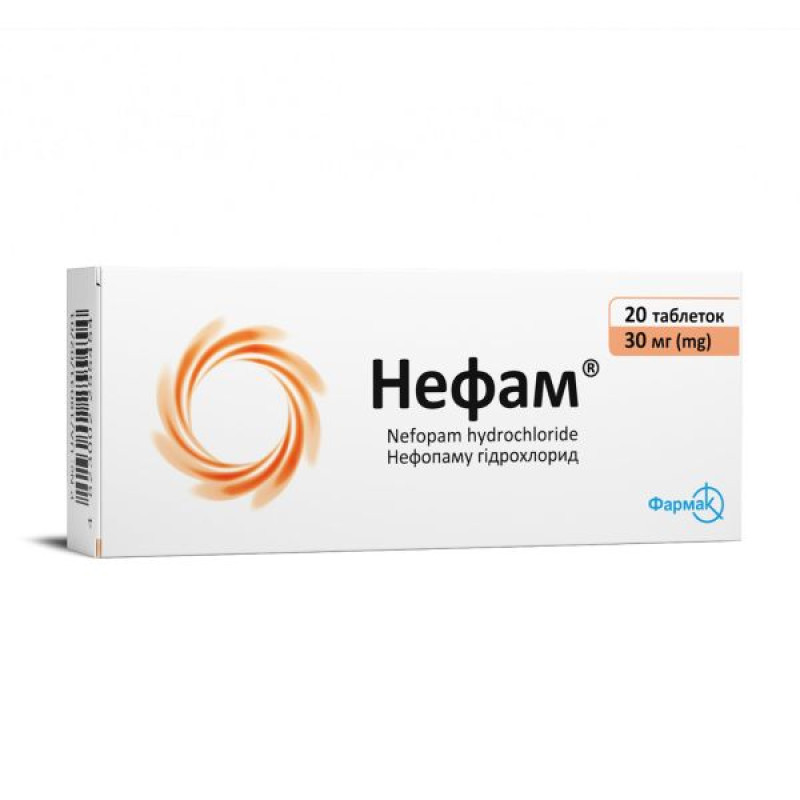
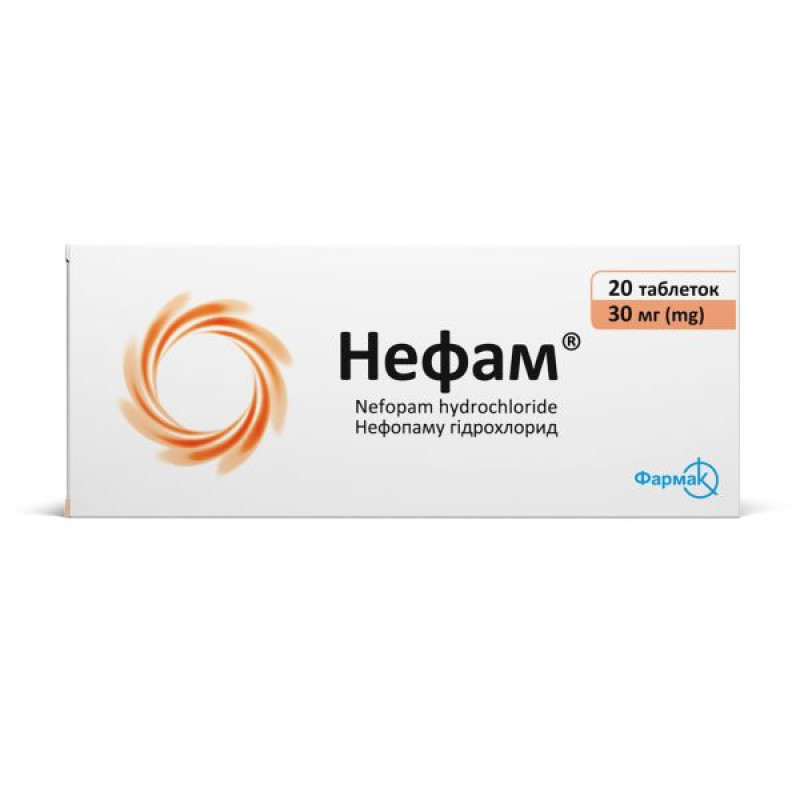
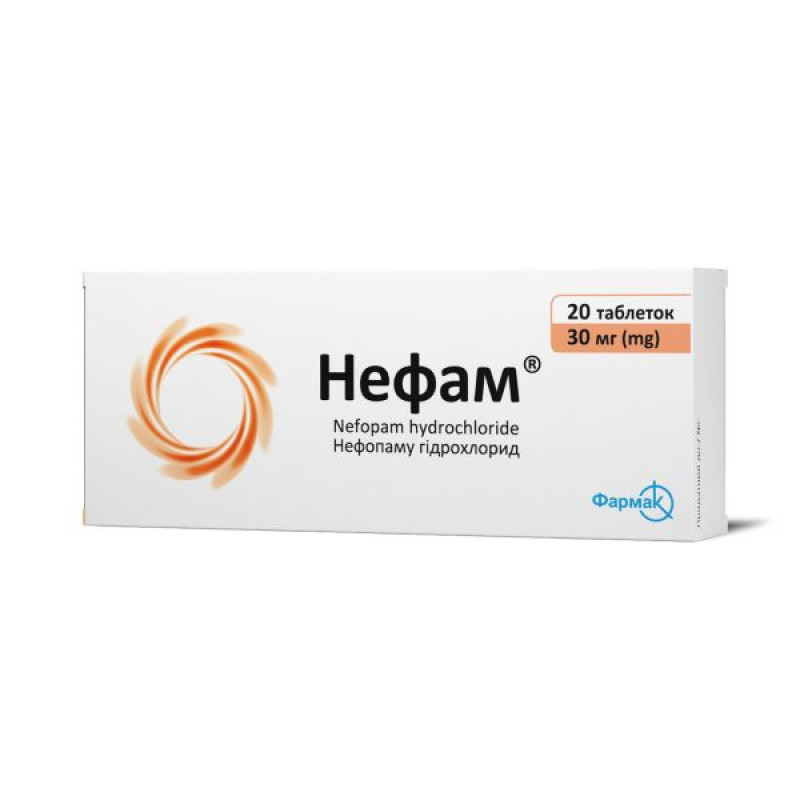
Instructions for Nefam film-coated tablets 30 mg No. 20
Composition
active ingredient: nefopam hydrochloride;
1 film-coated tablet contains nefopam hydrochloride 30 mg;
excipients: calcium hydrogen phosphate dihydrate, silicified microcrystalline cellulose, pregelatinized starch, hydrogenated vegetable oil, magnesium stearate, colloidal anhydrous silicon dioxide;
excipients for film coating: Opadry 03F180011 white (hypromellose, titanium dioxide (E 171), macrogol).
Dosage form
Film-coated tablets
Main physicochemical properties: round tablets with a biconvex surface, film-coated, white to yellowish-white in color.
Pharmacotherapeutic group
Analgesics and antipyretics. ATX code N02B G06.
Pharmacological properties
Pharmacodynamics.
Chemically, nefopam hydrochloride is derived from diphenhydramine: nefopam is synthesized by cyclization of orphenadrine. Therefore, nefopam hydrochloride, like its two predecessors, has anticholinergic properties.
Mechanism of action
There is little information about the mechanism of action. The studied pharmacological properties do not allow for a precise description of its action.
Pharmacodynamic effects
Nefam® is an analgesic. Nefopam hydrochloride stimulates serotonergic descending pathways that regulate/modulate pain. It inhibits the reuptake of synaptosomal noradrenaline, dopamine, 5-hydroxytryptophan, and gamma-aminobutyric acid (GABA); it stimulates the release of dopamine and GABA in the brain.
Nefopam hydrochloride is fundamentally different from other centrally acting analgesics such as morphine, codeine, pentazocine and propoxyphene. It does not bind to opioid analgesic receptors and is not inhibited by naloxone. Unlike narcotics, nefopam hydrochloride does not cause respiratory depression. Some cases of addiction have been reported. Nefopam hydrochloride has no antipyretic or anti-inflammatory properties and does not inhibit prostaglandin synthesis in vitro.
Pharmacokinetics.
Absorption
After a 90 mg oral dose, the time to reach peak plasma concentrations of 73 to 154 ng/mL is 1 to 3 hours, and peak plasma concentrations of 29 to 67 ng/mL are reached approximately 2 hours after a 60 mg oral dose. Plasma protein binding is 73%.
Biotransformation
The biotransformation of nefopam is very extensive: only a small amount of unmetabolized nefopam was detected in the urine, and 7 metabolites were identified, including desmethyl nefopam, glucuronide and nefopam N-oxide. At the same time, the enzyme responsible for this biotransformation is unknown.
Breeding
Metabolites and a small unchanged fraction are rapidly excreted by the kidneys. Therefore, most of the administered dose is recovered in the urine. After intravenous administration of 20 mg of radioactive nefopam to 4 volunteers, less than 5% of the administered dose was recovered unchanged in the urine. After 5 days, 87% of the administered radioactivity was recovered in the urine and 8% in the feces. The half-life of nefopam in healthy volunteers is 4 hours (with a tolerance of 3-8 hours).
Indication
The drug Nefam® is indicated in adults for the symptomatic treatment of moderate to severe pain, including postoperative pain, toothache, myalgia, arthralgia, and pain in cancer patients.
Contraindication
Hypersensitivity to nefopam or to other components of the drug.
The drug Nefam® should not be prescribed to patients with a history of seizures and patients taking monoamine oxidase inhibitors (MAOIs).
Nefam® should not be prescribed to patients with hepatic or renal insufficiency. Due to its anticholinergic properties, Nefam® should be used with caution in patients with glaucoma, prostatic hypertrophy or urinary retention and, if necessary, the drug should be discontinued.
Interaction with other medicinal products and other types of interactions
The side effects of nefopam may be enhanced by concomitant use of other drugs that have anticholinergic or sympathomimetic effects. It should be taken into account that a significant number of drugs can increase the depression of the nervous system due to the additive effect and reduce alertness: opiates (analgesics, antitussives, substitution drugs for the treatment of drug addiction), neuroleptics, barbiturates, benzodiazepines, non-benzodiazepine tranquilizers (meprobamate), hypnotics, antidepressants with sedative effects (amitriptyline, doxepin, mianserin, mirtazapine, trimipramine), sedative H1-histamine receptor blockers, centrally acting hypotensive agents, baclofen.
In patients taking the drug Nefam®, false-positive results are possible when testing for benzodiazepines and opioids.
Nefopam hydrochloride is extensively metabolized, but the enzyme responsible for the biotransformation of nefopam is unknown. Potential interactions with CYP inhibitors/inducers cannot be ruled out. Caution should be exercised when administering nefopam hydrochloride with one of the CYP inhibitors/inducers.
In studies in dogs, high hepatotoxicity was observed when paracetamol and nefopam hydrochloride were administered concomitantly at high doses. Oral doses of 236 mg/kg/day paracetamol and 24 mg/kg/day nefopam hydrochloride potentiated the hepatotoxicity of paracetamol, approximately 6 to 8 times the average human dose. Doses equivalent to 3 to 4 times the human dose did not potentiate hepatotoxicity.
Application features
Pediatric population: Nefam® is not recommended for children.
Use with caution in patients with symptoms of anxiety, glaucoma, prostatic hypertrophy, urinary retention due to the moderate central adrenergic action and anticholinergic effect of the drug Nefam®.
Caution should be exercised when prescribing this drug to patients with a history of cardiovascular disease (symptomatic tachycardia, myocardial infarction, heart failure), as tachycardia may occur. In any case, before starting treatment, a cardiologist should be consulted to assess the risk/benefit ratio in treating patients with cardiovascular disease.
Hepatic and/or renal insufficiency may interfere with the metabolism and excretion of nefopam.
Elderly patients may require a dose reduction due to slower metabolism. It is recommended to limit the initial dose to 1 tablet 3 times a day, as elderly patients are more sensitive to undesirable effects from the central nervous system (some cases of hallucinations and confusion have been reported in this group of patients).
Use during pregnancy or breastfeeding
Pregnancy.
There are no clinical data on the use of the drug in pregnant women. Animal studies do not indicate direct or indirect harmful effects with respect to reproductive function. For safety reasons, Nefam® should not be used during pregnancy.
Breastfeeding period
Nefopam hydrochloride is excreted in breast milk. The maximum amount that enters the child's body is 0.05 mg/kg/day. The drug Nefam® should not be used during breastfeeding.
Ability to influence reaction speed when driving vehicles or other mechanisms
The risk of drowsiness when using Nefam® should be taken into account, which may affect the ability to drive or operate other mechanisms.
Method of administration and doses
Adults:
The initial dose is 2 tablets (60 mg), then 1 tablet 3 times a day. If the intensity of the pain requires it, the dose can be increased to 2 tablets 3 times a day.
It is recommended to reduce the dose for elderly patients because their metabolism is slower. It is recommended to limit the initial dose to 1 tablet 3 times a day because elderly patients are more sensitive to adverse reactions related to the central nervous system.
Kidney failure
In patients with end-stage renal disease, the maximum serum concentration may increase during the use of Nefam®. From this point on, it is recommended to reduce the daily dose not only for elderly patients, but also for patients with end-stage renal failure.
Children
The medicine should not be used in children.
Overdose
Symptoms of anticholinergic origin: tachycardia, coma, convulsions, hallucinations.
Adults
The first signs of toxicity, i.e. tachycardia, appear after taking 30 tablets of the drug Nefam® (15 mg/kg). In this case, hospitalization is necessary.
Treatment
General supportive care. If the drug was ingested at least 1 hour ago, it should be removed by gastric lavage or emesis. Oral administration of activated charcoal may be useful to prevent absorption. Convulsions and hallucinations should be treated, for example, with intravenous or rectal diazepam. Beta-blockers may help to control cardiovascular complications.
Side effects
Reported adverse reactions are classified by system organ class and frequency: very common (≥ 1/10), common (≥ 1/100, < 1/10), uncommon (≥ 1/1,000, < 1/100), rare (≥ 1/10,000, < 1/1,000), very rare (< 1/10,000), frequency unknown (frequency cannot be estimated from the available data).
From the side of the central nervous system: very often - drowsiness; often - vertigo*, dizziness, paresthesia, tremor; rarely - convulsions*, confusion, postoperative confusion (disorientation), insomnia, headache; frequency unknown - coma.
Cardiac disorders: often – tachycardia*, palpitations*, hypotension.
On the part of the kidneys and urinary system: often - urinary retention; rarely - decreased renal function, harmless pink color of urine.
Immune system, skin and subcutaneous tissue disorders: very common - hyperhidrosis*; common - allergic reactions; rare - hypersensitivity reactions in the postoperative period (including Quincke's edema, anaphylactic shock), itching, erythema, urticaria, malaise.
Psychiatric disorders: rare – neurosis*, irritability*, hallucinations, abuse, drug dependence; frequency unknown – confusion.
On the part of the organs of vision: rarely - visual impairment.
*Other atropine-like reactions may occur, even if they have never been reported.
Reporting of suspected adverse reactions
Reporting adverse reactions after the registration of a medicinal product is important. This allows monitoring of the benefit/risk ratio when using this medicinal product. Medical and pharmaceutical professionals, as well as patients or their legal representatives, should report all cases of suspected adverse reactions and lack of efficacy of the medicinal product via the Automated Pharmacovigilance Information System at the link: https//aisf.dec.gov.ua.
Expiration date
2 years.
Do not use the drug after the expiration date indicated on the package.
Storage conditions
Store at a temperature not exceeding 25 °C.
Keep out of reach of children.
Packaging
10 tablets in a blister. 2 or 6 blisters in a pack.
Vacation category
According to the recipe.
Producer
JSC "Farmak".
Location of the manufacturer and its business address
Ukraine, 04080, Kyiv, Kyrylivska St., 74.