Translation of the instructions can be
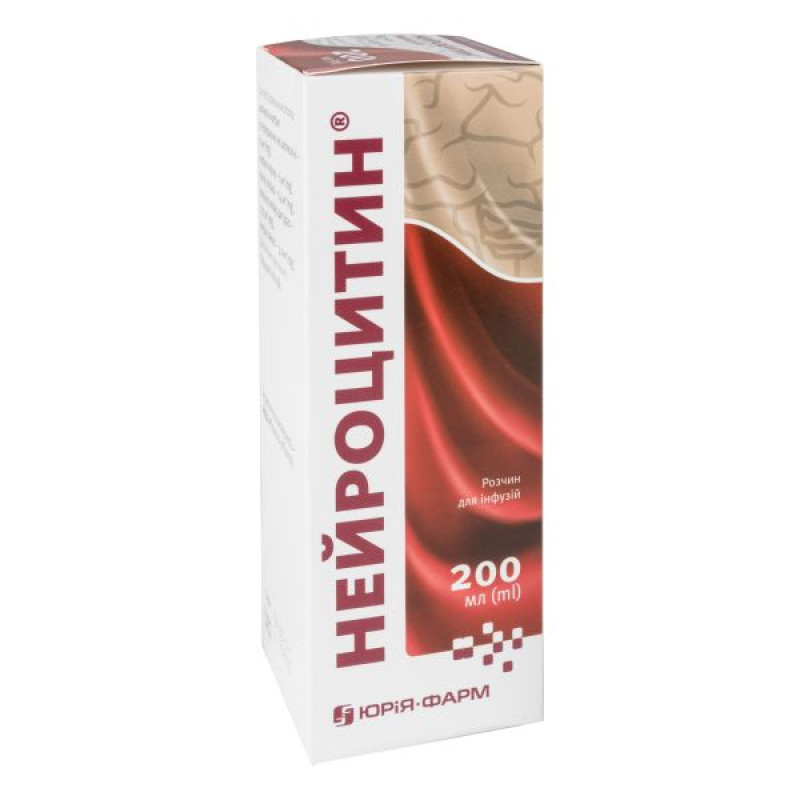
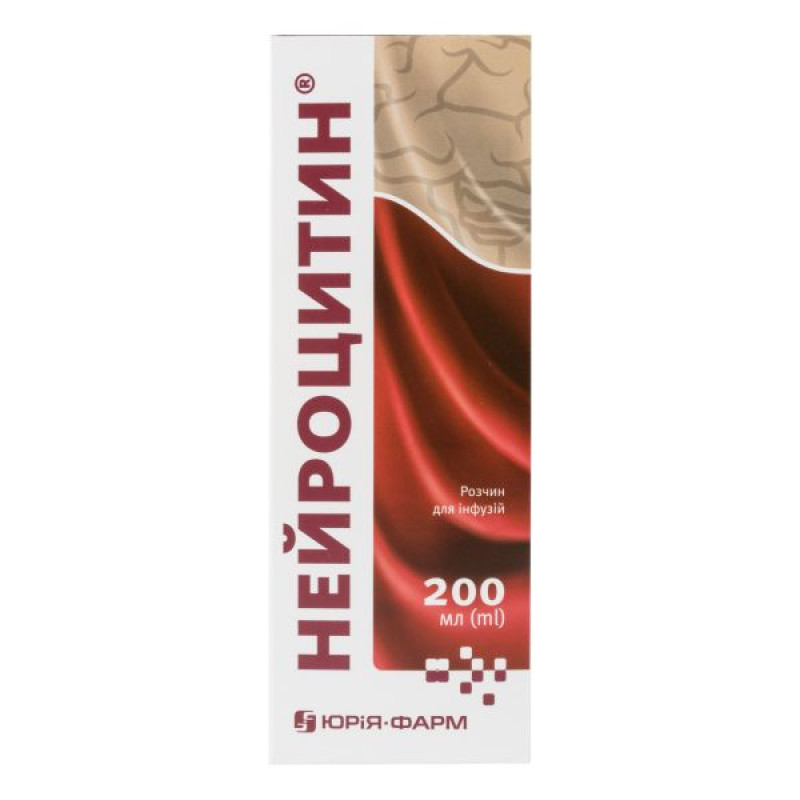
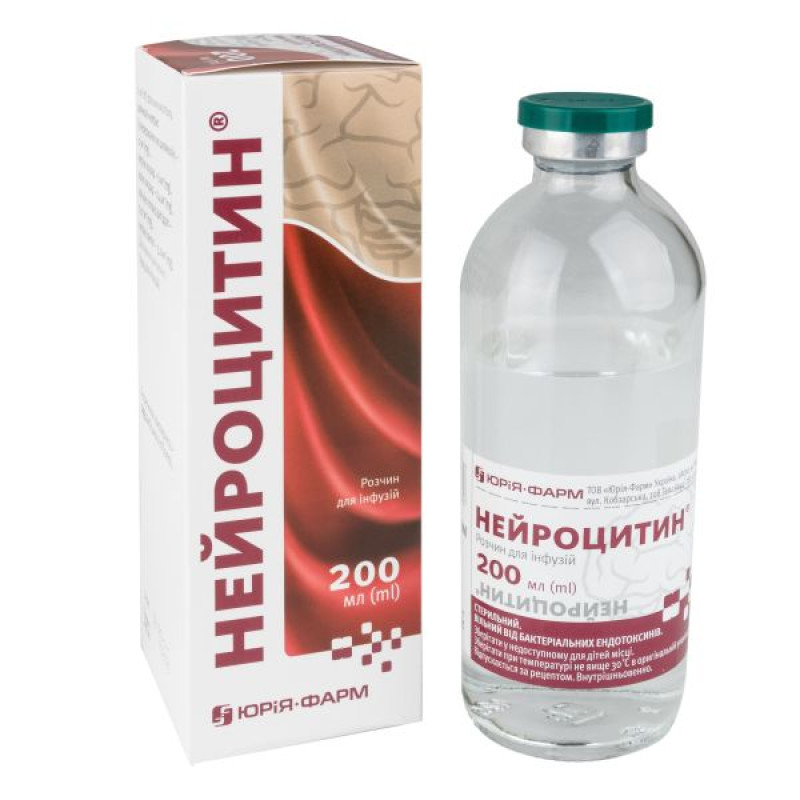
NEUROCYTIN® solution for infusion
Instruction
For medical use of the medicinal product
Neurocytin®
Composition:
Active ingredients:
1 ml of solution contains: citicoline sodium (calculated as citicoline) - 10 mg, sodium chloride - 6 mg, potassium chloride - 0.4 mg, calcium chloride dihydrate - 0.27 mg, sodium lactate - 3.2 mg. Theoretical osmolarity - 288.3 mOsmol;
excipients: water for injections.
Dosage form.
Solution for infusion.
Main physicochemical properties: clear colorless or slightly yellowish liquid.
Pharmacological group.
Solutions for intravenous use. Electrolytes in combination with other agents. ATC code B05B B04.
Pharmacological properties.
Pharmacodynamics.
Neurocytin is a saline solution with a balanced content of electrolytes and citicoline.
Citicoline stimulates the biosynthesis of structural phospholipids in the membrane of neurons, helps to improve membrane functions, including the functioning of ion-exchange pumps and neuroreceptors. Due to its stabilizing effect on the membrane, citicoline has anti-edematous properties, therefore it reduces brain edema. Research results have shown that citicoline inhibits the activity of some phospholipases, prevents the residual occurrence of free radicals, prevents damage to membrane systems and ensures the preservation of the protective antioxidant system.
Citicoline reduces the volume of damaged tissue, preventing cell death by influencing apoptosis mechanisms, and improves cholinergic transmission. Citicoline also has a preventive neuroprotective effect in focal brain strokes.
Citicoline promotes rapid functional rehabilitation of patients with acute cerebrovascular accidents, reducing ischemic damage to brain tissue, which is confirmed by the results of X-ray studies. In case of traumatic brain injuries, citicoline shortens the duration of the recovery period and reduces the intensity of post-traumatic syndrome. Citicoline helps to increase the level of brain activity, reduces the level of amnesia, and improves the condition of cognitive, sensitive and motor disorders observed in cerebral ischemia.
The drug replenishes the deficit of circulating blood volume. Lactate, which is part of the drug, as a result of metabolic processes is converted into bicarbonate anions, which slightly changes the blood reaction to the alkaline side. The solution also has a detoxification effect due to a decrease in the concentration of toxic products in the blood and activation of diuresis.
Pharmacokinetics.
Citicoline is well absorbed after oral, intramuscular and intravenous administration. After administration of the drug, a significant increase in plasma choline levels is observed. Studies have shown that the bioavailability after oral and parenteral administration is almost the same.
The drug is metabolized in the intestines and liver to form choline and cytidine. After administration, citicoline is absorbed by brain tissues, while choline acts on phospholipids, cytidine - on cytidine nucleoids and nucleic acids. Citicoline quickly reaches brain tissues and is actively incorporated into cell membranes, cytoplasm and mitochondria, activating the activity of phospholipids.
Only a small amount of the administered dose is excreted in the urine and feces (less than 3%). Approximately 12% of the administered dose is excreted through the respiratory tract. The excretion of the drug with urine and through the respiratory tract has two phases: the first phase is rapid excretion (with urine - during the first 36 hours, through the respiratory tract - during the first 15 hours), the second phase is slow excretion. The main part of the citicoline dose is involved in metabolic processes.
Other components of the drug (anions, cations) are excreted in the urine.
Clinical characteristics.
Indication.
- acute phase of cerebrovascular disorders, complications and consequences of cerebrovascular disorders.
- Traumatic brain injury and its consequences.
- Neurological disorders (cognitive, sensitive, motor) caused by cerebral pathology of degenerative and vascular origin.
Contraindication.
- hypersensitivity to the components of the drug;
- Increased tone of the parasympathetic nervous system;
- Hypervolemia, hypernatremia, hyperkalemia, hyperchloremia, alkalosis, lactic acidosis;
- Severe arterial hypertension, decompensated heart failure;
- Oliguria, anuria;
- Liver failure (due to reduced formation of bicarbonate from lactate);
- Acute renal failure;
- Hypercalcemia;
- Extracellular hyperhydration;
- Pulmonary edema, cerebral edema.
Interaction with other drugs and other types of interactions.
The drug is incompatible with cefamandole, amphotericin, ethyl alcohol, thiopental, aminocaproic acid, metaraminol, ampicillin, vibramycin and monocycline. Increased sodium retention in the body is possible with the simultaneous use of the following drugs: nonsteroidal anti-inflammatory drugs, androgens, anabolic hormones, estrogens, corticotropin, mineralocorticoids, vasodilators or ganglioblockers.
Due to the presence of lactate, which alkalizes the pH, caution should be exercised when using Neurocytin® with drugs whose renal elimination depends on pH. Renal clearance of salicylates, barbiturates, lithium may be reduced, and sympathomimetics and stimulants (such as dexamfetamine sulfate, fenfluramine hydrochloride) may be increased.
Application features.
In case of persistent intracranial hemorrhage, the dose should not exceed 100 ml per day and the infusion rate should not exceed 30 drops per minute.
Blood electrolytes, pH and pCO2, lactate should be monitored. The use of intravenous solutions may cause fluid and/or solute overload, hyperhydration, congestion and pulmonary edema. The risk of dilution is inversely proportional to electrolyte concentration. The risk of solute overload, which causes congestion with peripheral edema and pulmonary edema, is directly proportional to electrolyte concentration.
If any signs of a hypersensitivity reaction appear, immediately discontinue the administration of the solution and provide the necessary treatment.
Since the drug contains sodium lactate, it should be used with special caution in patients prone to hypernatremia (for example, adrenocortical insufficiency, diabetes insipidus or massive tissue damage) and in patients with heart disease; due to the content of sodium ions, the solution should be used with caution in elderly patients, patients with arterial hypertension, renal and cardiovascular failure, congestive heart failure, especially in the postoperative period, patients with hypoxia and hepatic failure, as well as patients with clinical conditions accompanied by sodium retention and edema, patients receiving corticosteroids or corticotropin.
Due to the potassium content, caution is required when using the solution in patients with heart disease and clinical conditions associated with potassium retention. When prescribing calcium, cardiac function should be monitored by ECG, especially in patients receiving digitalis. Serum calcium levels do not always reflect tissue calcium levels.
In patients with reduced renal function, administration of the solution may lead to sodium or potassium retention.
Due to the presence of calcium ions in the composition of the drug, caution is required when administering it simultaneously with blood products due to the possibility of developing coagulation. Calcium should be administered parenterally to patients receiving cardiac glycosides with particular caution.
Lactate is a substrate for gluconeogenesis, so blood glucose levels should be carefully monitored in patients with type 2 diabetes.
Use during pregnancy or breastfeeding.
There are no data on the use of Neurocytin in pregnant women. Data on the excretion of the drug into breast milk and its effect on the fetus are unknown. Therefore, during pregnancy and breastfeeding, the drug is prescribed only when the expected benefit to the mother outweighs the potential risk to the fetus.
The ability to influence the reaction speed when driving vehicles or other mechanisms.
In some cases, some adverse reactions from the central nervous system may affect the ability to drive or operate complex machinery.
Method of administration and doses.
For intravenous administration.
The recommended dose for adults is 50 ml to 200 ml per day in the form of a drip infusion (40-60 drops per minute).
Treatment: the first 2 weeks, 50-100 ml 2 times a day. The maximum daily dose is 200 ml.
In acute and emergency conditions, the maximum therapeutic effect is achieved if the drug is used in the first 24 hours.
The dosage of the drug and the duration of treatment depend on the severity of the brain lesions and are set individually.
Elderly patients do not require dose adjustment.
Children.
There is insufficient data on the use of the drug in children.
Overdose.
Overdose or too rapid administration of the solution may lead to disruption of water and electrolyte balance, alkalosis, cardiopulmonary decompensation. In this case, the administration of the drug should be stopped immediately. Symptomatic therapy should be carried out.
The introduction of excessive amounts of lactate can lead to the development of metabolic alkalosis, which, in turn, may be accompanied by hypokalemia.
Symptoms: mood swings, fatigue, shortness of breath, muscle weakness, polydipsia, polyuria, impaired thinking, arrhythmia. Muscle hypertonicity, twitching, and tetanic convulsions may develop in patients with hypocalcemia.
Adverse reactions.
Mental disorders: hallucinations.
From the nervous system: severe headache, dizziness.
From the cardiovascular system: arterial hypertension, arterial hypotension, tachycardia.
From the respiratory system: dyspnea.
Electrolyte imbalance: changes in the level of electrolytes (potassium, calcium, sodium, chlorine) in the blood serum, metabolic alkalosis, chloride acidosis.
General disorders: hypervolemia.
On the part of the immune system: chills, edema, allergic reactions, including: rash, purpura, itching, angioedema, anaphylactic shock; increased body temperature, increased sweating, cough, sneezing, difficulty breathing, localized or generalized urticaria.
Infusion site changes: inflammation, swelling, rash, itching, erythema, pain, burning, numbness at the infusion site.
Mental disorders: panic attack.
In case of adverse reactions, the administration of the solution should be stopped, the patient's condition should be assessed and appropriate assistance should be provided.
Expiration date.
2 years.
Storage conditions.
Store at a temperature not exceeding 30 °C in the original packaging. Keep out of the reach of children.
Incompatibility.
The drug should not be mixed with other medications in the same container, including phosphate- and carbonate-containing solutions.
Packaging.
50 ml, 100 ml, 200 ml in a bottle; 1 bottle in a pack; 100 ml or 200 ml in containers.
Vacation category.
According to the recipe.
Producer.
LLC "Yurya-Pharm"
Location of production and its address of place of business.
Ukraine, 18030, Cherkasy, Verbovetskogo St., 108.