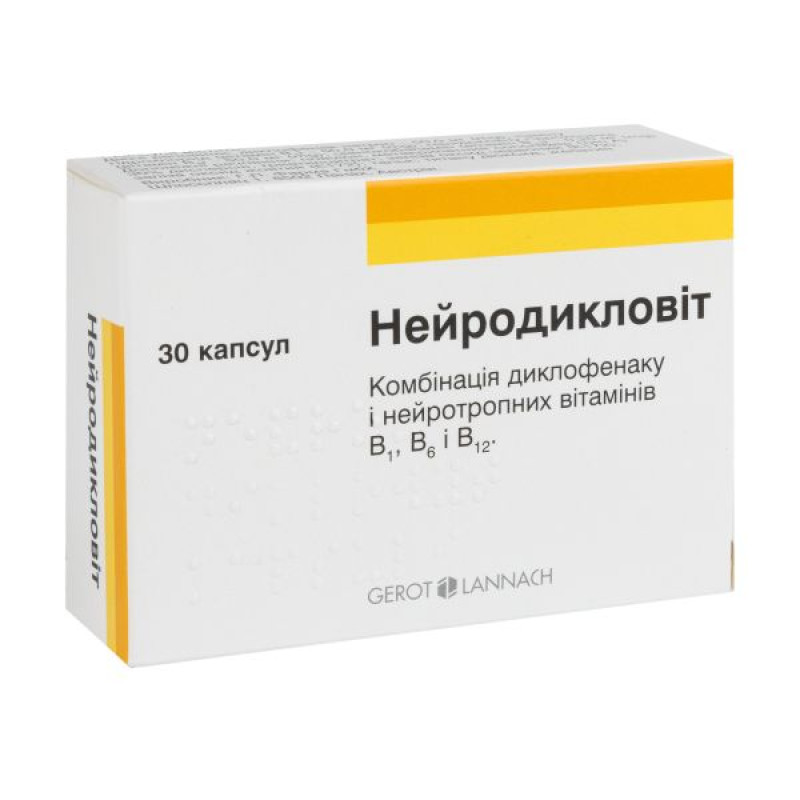
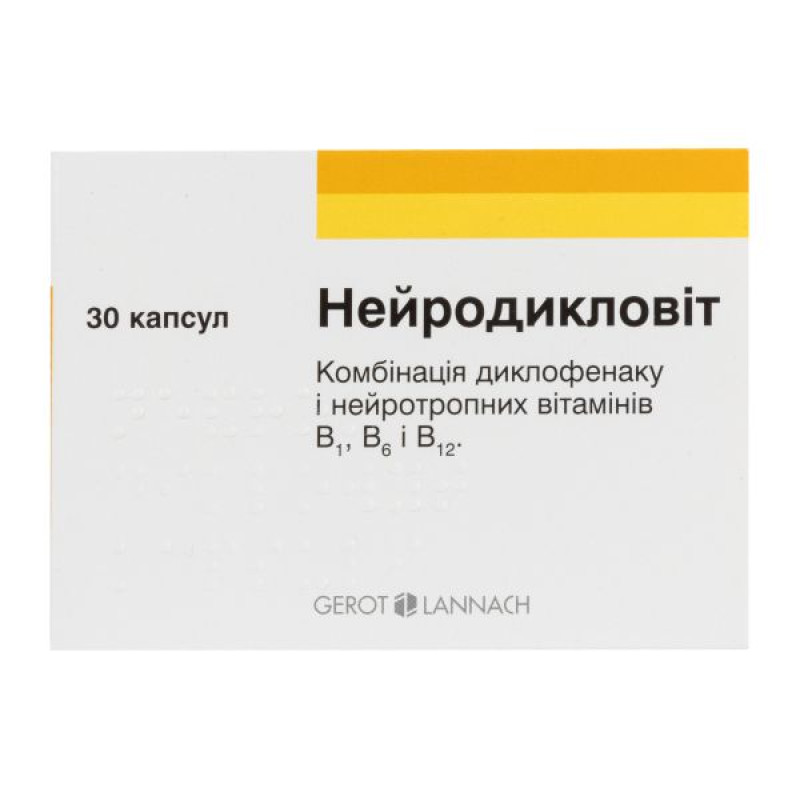
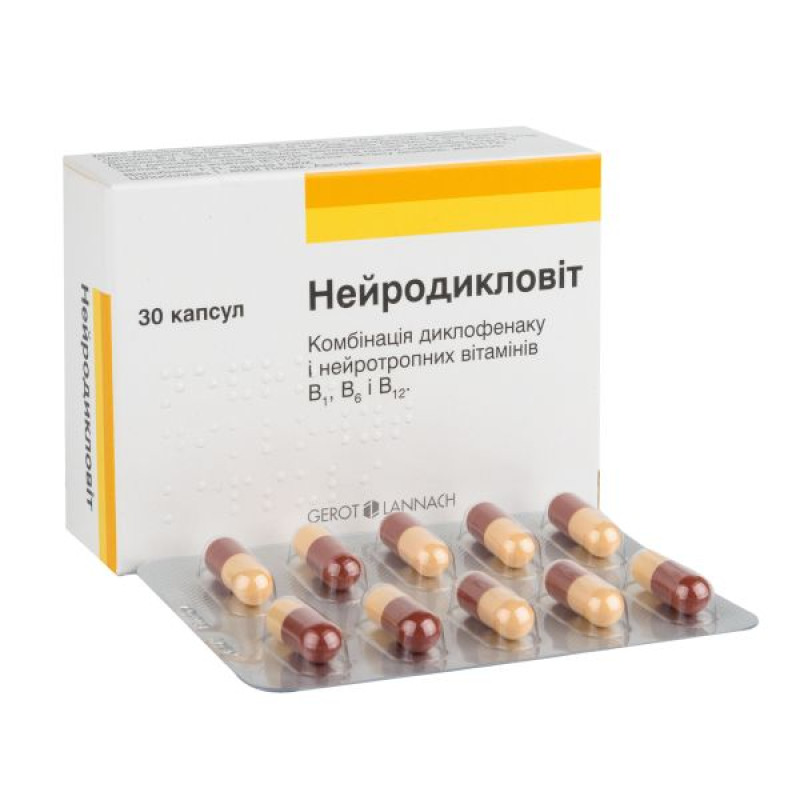
Instructions Neurodiclovit capsules blister No. 30
Composition
active ingredient: 1 capsule contains diclofenac sodium 50 mg, thiamine hydrochloride (vitamin B1) 50 mg, pyridoxine hydrochloride (vitamin B6) 50 mg, cyanocobalamin (vitamin B12) 0.25 mg;
Excipients: povidone, methacrylate copolymer (type A) 30% dispersion, triethyl citrate, talc, red iron oxide (E 172), yellow iron oxide (E 172); titanium dioxide, gelatin.
Dosage form
Capsules.
Main physicochemical properties: beige hard gelatin capsules, size No. 1, containing a mixture of pink powder and white granules; red-brown cap.
Pharmacotherapeutic group
Diclofenac, combinations. ATX code M01A B55.
Pharmacological properties
Pharmacodynamics. Neurodiclovit is a combination of diclofenac and neurotropic vitamins B1, B6 and B12. Like other nonsteroidal anti-inflammatory drugs, diclofenac inhibits the enzyme cyclooxygenase, which converts arachidonic acid into prostaglandins. Diclofenac also inhibits the enzyme lipoxygenase. The analgesic, anti-inflammatory and antipyretic effects of diclofenac are due to inhibition of prostaglandin synthesis.
B vitamins function as coenzymes in metabolism and in particular in neurology, which has a positive effect on the analgesic effect of diclofenac sodium.
Pharmacokinetics. After oral administration, diclofenac is well and completely absorbed from the gastrointestinal tract. Bioavailability is independent of food intake. Maximum plasma concentration is reached 1-2 hours after administration (fasting faster than after eating). Vitamins contained in the drug are absorbed in the intestine by active and passive mechanisms. Distribution and excretion are similar to vitamins taken with food. After oral administration of diclofenac, half of the drug concentration was detected in plasma, which was detected after parenteral administration of the same dose. Therapeutic plasma concentration of the drug is approximately
0.7-2.0 mg/l. Almost 99% of diclofenac binds to serum proteins, mainly albumin.
About 60% of the dose of the drug is excreted by the kidneys in the form of active metabolites, less than 1% of diclofenac is excreted unchanged. About 30% of the dose of the drug is excreted in the form of metabolites through the bile, with feces. The half-life of diclofenac from plasma is approximately 2 hours. The total systemic clearance of diclofenac from plasma is almost 250 ml/min.
Impaired renal function does not cause accumulation of the active substance due to increased biliary excretion. Absorption, metabolism and excretion of the drug are independent of age.
Indication
Inflammatory and degenerative forms of rheumatic diseases:
- chronic polyarthritis;
- ankylosing spondylitis (Bechterew's disease);
- arthrosis;
- spondyloarthritis;
- acute gouty arthritis;
- extra-articular rheumatism of soft tissues;
- neuritis and neuralgias, such as cervical syndrome, lumbago, sciatica.
Contraindication
- Hypersensitivity to the components of the drug.
- Stomach or duodenal ulcer.
- Porphyria, hemorrhagic diathesis, hematopoietic disorders.
- Crohn's disease, ulcerative colitis.
- Severe heart failure.
- The drug is contraindicated in patients whose asthma attacks, skin reactions or acute rhinitis are provoked by taking acetylsalicylic acid or other drugs that inhibit prostaglandin synthesis.
- Severe renal and hepatic insufficiency.
- Gastrointestinal bleeding or perforation.
- Erythremia, erythrocytosis, thromboembolism.
- Allergic diseases.
- Congestive heart failure (NYHA II-IV).
- Ischemic heart disease in patients who have angina pectoris and have had a myocardial infarction.
- Cerebrovascular disease in patients who have had a stroke or have episodes of transient ischemic attacks.
- Peripheral artery disease.
- Treatment of perioperative pain during coronary artery bypass grafting (or the use of a cardiopulmonary bypass machine).
Interaction with other medicinal products and other types of interactions
Concomitant administration of Neurodiclovit and other medications may cause an increase or decrease in effectiveness.
Magnification:
- blood plasma lithium and digoxin levels,
- risk of gastrointestinal bleeding during concomitant therapy with glucocorticoids,
- side effects of other nonsteroidal anti-inflammatory drugs,
- effectiveness of potassium-sparing diuretics (control of potassium levels),
- the effectiveness of drugs that inhibit platelet aggregation,
- methotrexate levels and toxicity. Nonsteroidal anti-inflammatory drugs should be avoided less than 24 hours before or after methotrexate treatment.
Reduction:
- the effectiveness of diclofenac with furosemide and other loop diuretics,
- the effectiveness of diclofenac as an antihypertensive agent,
- mutual reduction of diclofenac and acetylsalicylic acid concentrations in blood serum,
- absorption of vitamin B12 when used concomitantly with colchicine, PAS, neomycin and biguanide-type antidiabetic agents.
As with other NSAIDs, concomitant use with diuretics or antihypertensive drugs (e.g. beta-blockers of calcium channels, inhibitors of angiotensin-converting enzyme) may reduce their antihypertensive effect. Therefore, the combination of such drugs should be prescribed with caution, and patients (especially elderly) should have their blood pressure periodically monitored. Patients should drink enough water, and after starting and after stopping concomitant therapy, renal function should be periodically monitored, especially when using diuretics and ACE inhibitors due to the increased risk of nephrotoxicity. The simultaneous use of systemic NSAIDs and selective serotonin reuptake inhibitors may increase the risk of gastrointestinal bleeding.
It is possible to use diclofenac and antidiabetic drugs simultaneously, while the effectiveness of the latter does not change. However, there are isolated reports of the development in such cases of both hypoglycemia and hyperglycemia, which necessitated the need to change the dose of sugar-lowering drugs during the use of diclofenac. For this reason, it is recommended to monitor blood glucose levels during therapy. Simultaneous use of diclofenac and colestipol or cholestyramine reduces the absorption of diclofenac by approximately 30% and 60%, respectively. The drugs should be taken with an interval of several hours. Enzyme-inducing drugs, such as rifampicin, carbamazepine, phenytoin, St. John's wort (Hypericum perforatum) and others, are theoretically capable of reducing diclofenac plasma concentrations. The effect of NSAIDs on prostaglandin synthesis in the kidneys may increase the nephrotoxicity of cyclosporine. There are isolated reports of seizures in patients who used quinolone derivatives and NSAIDs simultaneously.
The action of thiamine is inactivated by 5-fluorouracil, as the latter competitively inhibits the phosphorylation of thiamine to thiamine pyrophosphate.
Antacids reduce thiamine absorption. Loop diuretics, such as furosemide, which inhibit tubular reabsorption, may increase thiamine excretion during long-term therapy and thus reduce thiamine levels.
Concomitant use with pyridoxine antagonists (e.g. isoniazid, hydralazine, penicillamine or cycloserine) or oral contraceptives may increase the need for vitamin B6.
Application features
The occurrence of side effects can be reduced by using the lowest effective dose for the shortest time necessary to control the symptom.
The drug should be used with caution in patients with asthma, hay fever, swelling of the nasal mucosa (nasal polyps) or chronic infectious diseases of the respiratory tract.
Appropriate supervision and advice are required in patients with a history of high blood pressure and/or heart failure, as fluid retention and oedema have been reported with NSAID treatment.
Patients with insufficiently controlled hypertension, decompensated heart failure, pre-existing ischemic heart disease, peripheral arterial vascular disease and/or cerebrovascular disease should be treated with diclofenac only after careful consideration. Similar factors should also be considered before starting treatment if the patient has a predisposition to cardiovascular disease (e.g. hypertension, hyperlipidemia, diabetes mellitus, smoking).
Clinical studies and epidemiological data show that the use of diclofenac, especially in high doses (150 mg per day) and for a long period, may be associated with a small increased risk of arterial thrombotic complications (myocardial infarction or stroke).
During long-term treatment with Neurodiclovit, it is recommended to monitor peripheral blood parameters, liver and kidney function.
Patients with gastric and duodenal ulcers, a history of dyspeptic symptoms, and patients with severe liver or kidney disease, heart failure, or hypertension require close medical supervision.
All NSAIDs are associated with adverse reactions such as gastrointestinal bleeding, ulceration and perforation, which can be fatal and occur during treatment, with or without warning symptoms, and in patients with a history of serious gastrointestinal events. In general, these events are most dangerous in elderly patients. In isolated cases where patients taking diclofenac develop these complications, the drug should be discontinued.
Severe, even fatal, skin reactions, including exfoliative dermatitis, Stevens-Johnson syndrome and toxic epidermal necrolysis, have been reported very rarely in association with the use of NSAIDs, including diclofenac. The risk of these reactions is highest at the beginning of therapy, and the development of these reactions is noted in most cases in the first month of treatment. The drug should be discontinued at the first appearance of skin rash, mucosal ulceration or any other signs of hypersensitivity.
When vitamin B12 is administered, the clinical picture, as well as laboratory tests in funicular myelosis or pernicious anemia, may lose their specificity.
Alcohol and black tea intake reduce thiamine absorption. Consumption of beverages containing sulfites (e.g. wine) increases thiamine degradation.
Patients with neoplasms, except for cases accompanied by megaloblastic anemia and vitamin B12 deficiency, should not use the drug.
The drug is not used for angina pectoris.
Diclofenac should only be prescribed to patients with significant risk factors for cardiovascular events (e.g. hypertension, hyperlipidemia, diabetes mellitus, smoking) after careful clinical evaluation. Since the cardiovascular risks of diclofenac may increase with increasing dose and duration of treatment, it should be used for the shortest possible period and at the lowest effective dose. The patient's need for diclofenac should be periodically reviewed to assess the relief of symptoms and the response to therapy. Use with caution in patients over 65 years of age.
Ability to influence reaction speed when driving vehicles or other mechanisms
Although no negative effect on the ability to drive or operate complex mechanisms was observed, it cannot be excluded that reactivity may deteriorate due to the undesirable effects of diclofenac on the central nervous system (dizziness, fatigue).
Use during pregnancy or breastfeeding
Due to the lack of clinical data, the simultaneous use of vitamins B1, B6 and B12 is not recommended during pregnancy or breastfeeding.
Method of administration and doses
The capsules should be swallowed whole with sufficient liquid during meals.
Depending on the severity of the disease, the recommended dose of the drug is 1-3 capsules per day, which is equivalent to 50-150 mg of diclofenac, respectively.
Adults. For initial therapy, the dose of the drug is 2-3 capsules per day. Maintenance dose is 1 capsule 1-2 times a day. The maximum daily dose should not exceed 3 capsules.
Children over 14 years old. Maximum daily dose – 1 capsule 2 times a day.
The duration of treatment with the drug is determined by the doctor.
Elderly patients: Although the pharmacokinetics of diclofenac are not age-dependent, the dose should be selected with caution in elderly patients.
The drug should be used in the lowest effective doses for the shortest period of time, taking into account the goal of treatment for each individual patient.
Children
Not recommended for the treatment of children under 14 years of age due to the high content of the active substance in the capsule.
Overdose
Symptoms of diclofenac overdose and intoxication are an increase in the frequency of side effects from the gastrointestinal tract and central nervous system. Therapy is symptomatic.
In case of severe diclofenac poisoning, acute renal failure and liver damage may develop.
Vitamin B1: has a wide therapeutic range. No symptoms have been observed after oral administration. Very high doses (over 10 g) exhibit a curare-like effect, inhibiting the conduction of nerve impulses.
Vitamin B6: shows very low toxicity. Long-term administration (over 6-12 months) of doses greater than 50 mg of vitamin B6 daily may lead to peripheral sensory neuropathy. Excessive use of vitamin B6 in doses greater than 1 g per day for several months may lead to neurotoxic effects. Neuropathies with ataxia and sensory disorders, cerebral convulsions with EEG changes, and in isolated cases, hypochromic anemia and seborrheic dermatitis have been described after administration of more than 2 g per day.
Vitamin B12: after parenteral administration (in rare cases - after oral administration) above the recommended doses of the drug, allergic reactions, eczematous skin disorders and benign acne have been observed. With prolonged use in high doses, liver enzyme activity disorders, pain in the heart area, hypercoagulation are possible.
Adverse reactions
Cardiovascular system: heart failure, hypertension, edema, tachycardia, palpitations, chest pain, myocardial infarction, vasculitis.
From the blood system: hematopoietic disorders (leukopenia, thrombocytopenia, aplastic anemia, panmyelopathy, purpura, agranulocytosis, hemolytic anemia).
From the nervous system: headache, nausea, drowsiness, convulsions, dizziness, paresthesia, memory impairment, anxiety, tremor, aseptic meningitis, taste disturbance (distortion), cerebral circulation disorders, tactile sensation disorders.
Visual disturbances: visual disturbances (blurry vision, double vision).
Hearing impairment: tinnitus, hearing impairment.
Renal and urinary disorders: renal failure, nephrotic syndrome, hematuria, acute renal failure, interstitial nephritis, papillary necrosis, proteinuria.
Skin and subcutaneous tissue disorders: rash, redness, itching, alopecia, erythema of various types, exfoliative dermatitis, photosensitivity reactions.
On the part of the immune system: allergic reactions such as bronchospasm, urticaria, anaphylactic/anaphylactoid reactions, Stevens-Johnson syndrome, Lyell's syndrome, angioedema.
Hepatobiliary system: hepatitis, including fulminant hepatitis, jaundice, increased transaminase levels, in isolated cases acute.
Mental disorders: insomnia, hyperarousal, irritability, disorientation, depression, nightmares, psychotic disorders, malaise.
General disorders: sodium and water retention in the body, peripheral edema, increased sweating, asthma, pneumonitis.
Clinical trial data and epidemiological data suggest an increased risk of thrombotic complications (e.g. myocardial infarction or stroke) associated with the use of diclofenac, particularly at high therapeutic doses (150 mg per day) and for long periods.
Expiration date
2 years.
Storage conditions
Store in a dry, dark place out of reach of children at a temperature up to 25°C.
Packaging
10 capsules in a blister; 3 or 5 blisters in a pack.
Vacation category
According to the recipe.
Producer
GL Pharma GmbH.
GL Pharma GmbH.
Location of the manufacturer and its business address
Industristrasse 1, 8502 Lanach, Austria.
Industriestrasse 1, 8502 Lannach, Austria.
Schlossplatz 1, 8502 Lanach, Austria.
Schlossplatz 1, 8502 Lannach, Austria.