Translation of the instructions can be
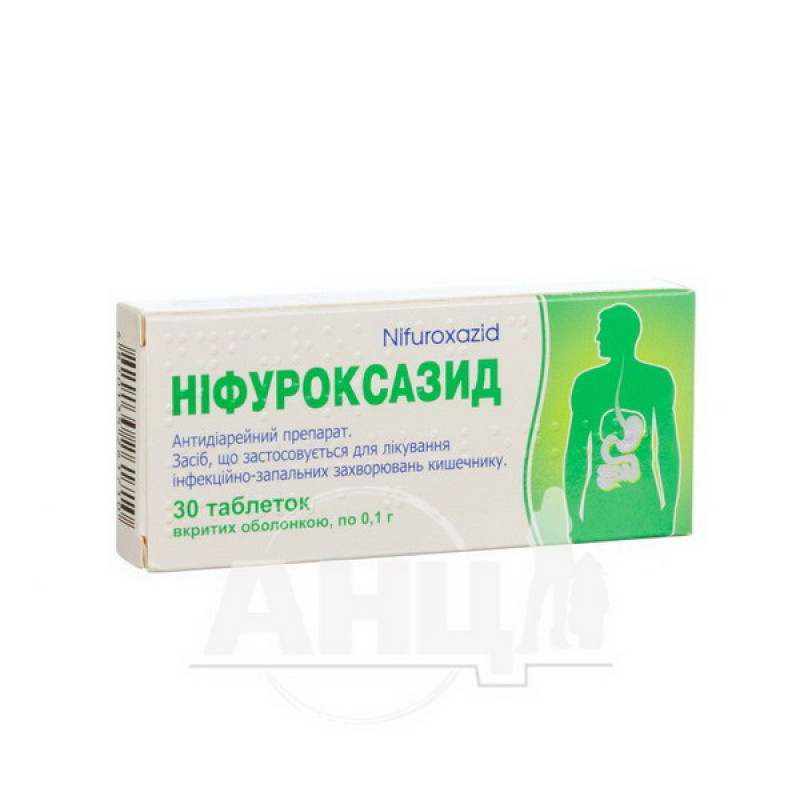
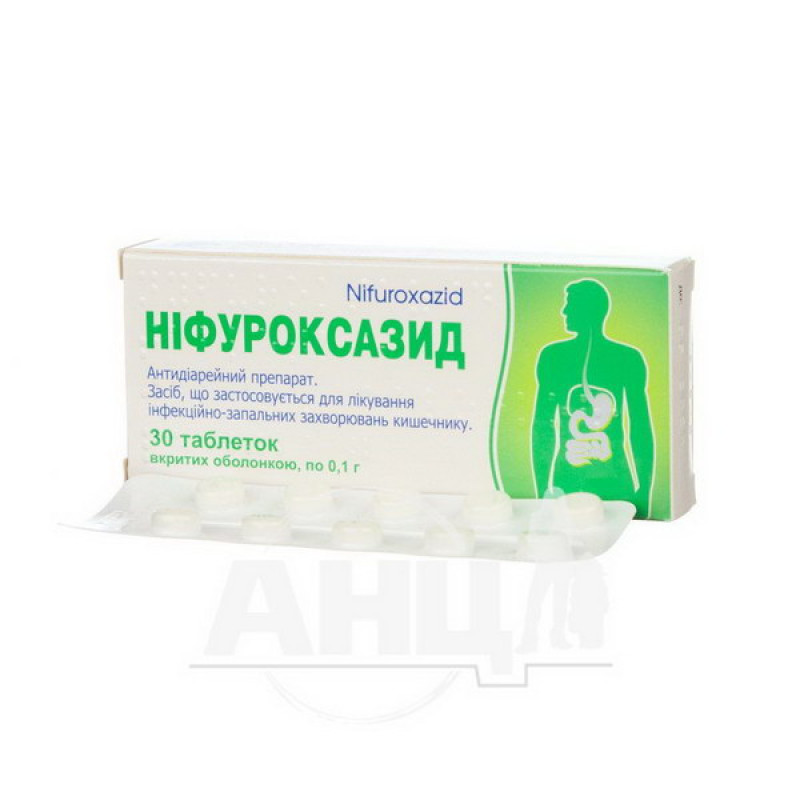
Nifuroxazide film-coated tablets 0.1 g
Instruction
For medical use of the medicinal product
Nifuroxazide
(Nifuroxazide)
Composition:
Active ingredient: nifuroxazide; 1 tablet contains nifuroxazide 0.1 g; potato starch, colloidal silicon dioxide, talc, magnesium stearate
hypromellose (hydroxypropylmethylcellulose), titanium dioxide (E 171), polyethylene glycol (macrogol), quinoline yellow (E 104).
Dosage form.
The pills are coated.
Main physicochemical properties:
Round tablets with a biconvex surface, coated with a yellow coating.
Pharmacological group.
Antidiarrheal drugs; drugs used to treat infectious and inflammatory bowel diseases.
Antimicrobial agents used for intestinal infections. Nifuroxazide.
PBX code A07A X03.
Pharmacological properties.
Nifuroxazide is an intestinal antiseptic, a derivative of nitrofuran; active against most pathogens of intestinal infections (including mutant strains resistant to other antimicrobial agents). It has a local antibacterial effect in the lumen of the intestine against some types of gram-positive bacteria from the family of staphylococcus and some types of gram-negative bacteria from the family of enterobacteriaceae: yersinia sp., escherichia sp., citobacter sp., enterobacter sp., klebsiella sp., salmonella sp. Nifuroxazide does not have an antibacterial effect on bacteria of the species proteus vulgaris, proteus mirabilis and pseudomonas aeruginosa. It is assumed that nifuroxazide inhibits the activity of dehydrogenases and disrupts protein synthesis in pathogenic bacteria. In average therapeutic doses, it has bacteriostatic activity, and in higher doses, it has a bactericidal effect. The effect is manifested from the first hours of treatment. In therapeutic doses, it does not disrupt the balance of saprophytic bacterial flora of the large intestine, does not cause the development of resistant strains of pathogenic microorganisms and cross-resistance of bacteria to other antimicrobial agents, which allows, if necessary, to prescribe it in complex therapy with systemic antibacterial drugs for generalized infections. In intestinal infections of viral genesis, it prevents the development of bacterial superinfection. The effectiveness of the drug does not depend on the pH in the lumen of the intestine.
Pharmacokinetics.
After administration, it is practically not absorbed from the digestive tract, creating a high concentration of the active substance in the intestine. Due to its pharmacokinetic features, the drug exhibits exclusively enteral antiseptic action, has no systemic antibacterial activity, does not cause general toxic effects, and is excreted from the body unchanged with feces.
Clinical characteristics.
Indication.
Acute and chronic diarrhea of infectious origin.
Contraindication.
Hypersensitivity to nifuroxazide and other nitrofuran derivatives or to any of the excipients.
Special safety measures.
Nifuroxazide is not recommended for use for more than 7 days. In case of diarrhea lasting more than 3 days from the start of treatment, we require enhanced diagnostics to determine the cause of the symptoms. Antibiotic therapy may be necessary. The drug is not prescribed as monotherapy for the treatment of intestinal infections complicated by septicemia. In case of severe invasive diarrhea, an antibiotic should be administered, because nifuroxazide is not absorbed from the gastrointestinal tract. In case of hypersensitivity reactions (shortness of breath, skin rashes, itching), nifuroxazide should be discontinued. During treatment, a certain diet should be followed: exclude juices, fresh vegetables and fruits, spicy and difficult-to-digest foods. Depending on the intensity of diarrhea, concomitant rehydration therapy (oral or intravenous) is necessary.
Interaction with other drugs and other types of interactions.
During treatment with Nifuroxazide, alcoholic beverages and drugs containing alcohol should not be consumed due to the possibility of developing a disulfiram-like reaction, which is manifested by exacerbation of diarrhea, vomiting, abdominal pain, feeling of heat, skin hyperemia, tinnitus, difficulty breathing, tachycardia, feeling of fear. Simultaneous administration of other oral medications should be avoided due to the strong adsorption properties of nifuroxazide.
Application features.
Use during pregnancy or breastfeeding.
Pregnancy period.
There are no clinical data on the use of nifuroxazide during pregnancy. Animal studies do not indicate any direct or indirect effects on the course of pregnancy, embryonal or fetal development, or the course of labor. The physician should carefully assess the benefit/risk ratio when prescribing nifuroxazide to pregnant women.
Breastfeeding period.
Nifuroxazide is not absorbed from the gastrointestinal tract. However, due to the lack of sufficient clinical data, caution should be exercised when prescribing nifuroxazide during breastfeeding.
The ability to influence the reaction speed when driving vehicles or other mechanisms.
Nifuroxazide does not affect the reaction rate when driving vehicles or other mechanisms.
Adults and children over 7 years of age should take 2 tablets 4 times a day (every 6 hours). The drug is taken orally, washed down with a small amount of water, regardless of meals. Duration of treatment - no more than 7 days. During the treatment of acute diarrhea, constant oral or intravenous replenishment of fluid deficiency in the body is mandatory, depending on the general condition of the patient.
Children.
Nifuroxazide, film-coated tablets, 0.1 g, is prescribed to children aged 7 years and older. Children under 7 years of age use nifuroxazide in the form of a suspension.
Overdose.
Symptoms of overdose are unknown. In case of overdose, gastric lavage and symptomatic treatment are recommended.
Adverse reactions.
Adverse reactions may occasionally occur.
Blood and lymphatic system disorders: granulocytopenia.
On the part of the digestive system: individual hypersensitivity reactions to nifuroxazide are manifested by abdominal pain, nausea, vomiting and exacerbation of diarrhea. In the event of such symptoms of minor intensity, there is no need to use special therapy or discontinue the use of nifuroxazide, since the symptoms disappear quickly. If the exacerbation is severe, nifuroxazide should be discontinued. In the future, the patient should avoid taking nifuroxazide and other nitrofuran derivatives.
Skin: Rarely, skin reactions in the form of a skin rash appear. One case of pustulosis in an elderly person and one case of nodular pruritus in the presence of contact allergy to nifuroxazide have been described. In rare cases, shortness of breath, severe hypersensitivity reactions, including angioedema and anaphylactic shock, may occur.
Expiration date.
2 years.
Storage conditions.
Store in the original packaging at a temperature not exceeding 25 °C.
Keep out of reach of children.
Packaging.
No. 10 No. 30 (10'3) in a blister.
Vacation category.
According to the recipe.
Manufacturer location
Ukraine, 46010, Ternopil, Fabrychna St., 4.
Tel. / Fax: (0352) 521-444, http://www.ternopharm.com.ua
Nifuroxazide oral suspension 200 mg/5 ml
Instruction
For medical use of the medicinal product
Nifuroxazide
(Nifuroxazide)
Composition:
Active ingredient: nifuroxazide; 5 ml of suspension contains nifuroxazide 200 mg;
excipients: sucrose, carbomer, citric acid, sodium hydroxide, methylparaben (E 218), food flavoring (banana), ethanol 96%, purified water.
The ethanol content in 1 ml of suspension is 2%.
Dosage form.
Oral suspension.
Pharmacotherapeutic group.
Antidiarrheal drugs; drugs used to treat infectious and inflammatory bowel diseases. nifuroxazide.
PBX code 07A X 03
Pharmacological properties.
Nifuroxazide is an intestinal antiseptic, a derivative of 5-nitrofuran; active against most pathogens of intestinal infections (including mutant strains resistant to other antimicrobial agents): gram-positive (staphylococcus family) and gram-negative (enterobacteriaceae family: escherichia, citrobacter, enterobacter, klebsiella, salmonella, shigella, proteus, yersinia), as well as vibrio cholerae. not active against bacteria of the genus pseudomonas and the genus proteus (species proteus inconstans), as well as strains of subgroup a of the species providentia alcalifaciens.
It is assumed that the drug inhibits the activity of dehydrogenases and disrupts protein synthesis in pathogenic bacteria. In medium therapeutic doses, it exhibits bacteriostatic activity, and in higher doses, it has a bactericidal effect. The effect is manifested from the first hours of treatment. In therapeutic doses, it practically does not disrupt the balance of intestinal microflora; it does not lead to the development of resistant strains of pathogenic microorganisms and cross-resistance of bacteria to other antimicrobial agents, which allows, if necessary, to prescribe it in complex therapy with systemic drugs for generalized infections. In intestinal infections of viral genesis, it prevents the development of bacterial superinfection.
Pharmacokinetics. After administration, it is practically not absorbed from the gastrointestinal tract, creating a high concentration of the active substance in the intestine. Due to such pharmacokinetic features, the drug exhibits exclusively enteral antiseptic action, has no systemic antibacterial activity, does not cause general toxic effects; is excreted from the body with feces. The drug does not affect clinical and biochemical blood parameters.
Pharmaceutical characteristics.
Main physicochemical properties:
Yellow suspension with a fruity odor.
Application features.
In the treatment of acute diarrhea, replacement therapy should be carried out (oral or parenteral, depending on the patient's condition). One should not be limited to the use of Nifuroxazide alone in the treatment of diarrhea complicated by sepsis, since the drug is not absorbed in the intestines and does not enter the bloodstream. During treatment with Nifuroxazide, alcohol is contraindicated (possible development of a disulfiram-like reaction (skin hyperemia, feeling of heat, tinnitus, difficulty breathing, tachycardia, feeling of fear)). Nifuroxazide contains sucrose, which should be taken into account when prescribing the drug to patients with diabetes. Before prescribing the suspension to infants, it is necessary to exclude a deficiency of enzymes that break down sucrose.
There is no data on the adverse effects on the fetus when using nifuroxazide during pregnancy, but its use should be avoided if possible. If necessary, under the supervision of a physician, the drug can be prescribed to women who are breastfeeding.
The ability to influence the reaction speed when driving or working with other mechanisms.
Does not affect.
Interaction with other drugs and other types of interactions.
Nifuroxazide is not recommended for use simultaneously with sorbents, as well as with drugs that contain ethanol.
Nifuroxazide is taken orally, regardless of meals, at regular intervals. Before use, the suspension must be shaken. For dosing, a measuring spoon (capacity 5 ml), graduated in 2.5 ml, is used, which is included in the package.
Children aged 1 to 6 months: 2.5 ml of suspension 2-3 times a day.
Children aged 7 months to 2 years: 2.5 ml of suspension 4 times a day.
Children aged 3 to 7 years: 5 ml of suspension 3 times a day.
Children over 7 years of age and adults: 5 ml of suspension 4 times a day.
The course of treatment is 5-7 days. The duration of therapy should not exceed 7 days.
Children.
Do not use in children under 1 month of age.
Adverse reactions.
Rarely - abdominal pain, nausea, increased diarrhea. These symptoms do not require discontinuation of treatment. In rare cases, individual hypersensitivity to the drug is possible (shortness of breath, skin rashes, itching), which requires discontinuation of the drug and symptomatic therapy.
Overdose.
Cases of overdose have not been described. In case of overdose, gastric lavage and symptomatic treatment are recommended.
Expiration date.
2 years.
Storage conditions.
Store in a place protected from light and out of reach of children, at a temperature not exceeding 25 ºС.
Packaging. 90 ml in polymer bottles or jars, placed in a pack with a 5 ml measuring spoon, which has a division of 2.5 ml.
Vacation category.
According to the recipe.
Producer.
"Ternofarm" LLC.
Location.
Ukraine, 46010, Ternopil, Fabrychna St., 4.