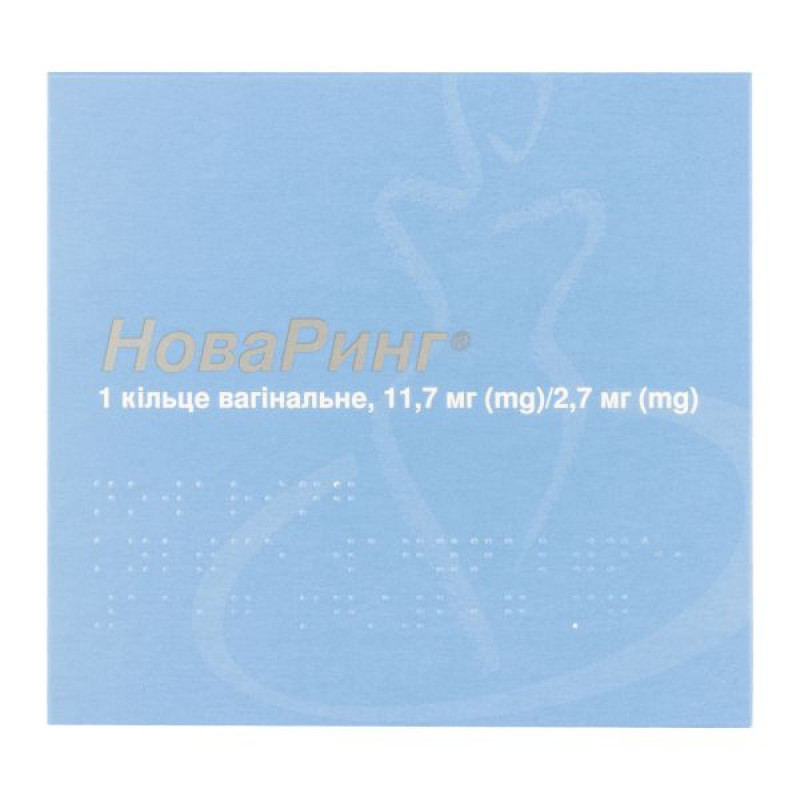
Instructions for NovaRing vaginal ring sachet No. 1
Composition
active ingredients: etonogestrel, ethinylestradiol;
1 ring contains 11.7 mg of etonogestrel and 2.7 mg of ethinyl estradiol;
excipients: ethylene vinyl acetate copolymer (28% vinyl acetate), ethylene vinyl acetate copolymer (9% vinyl acetate), magnesium stearate.
Dosage form
Vaginal ring.
Main physicochemical properties: smooth, transparent ring without major visible damage with a transparent to almost transparent area, colorless or almost colorless.
Pharmacotherapeutic group
Contraceptives for local use. Vaginal ring with progestogen and estrogen.
ATX code G02B B01.
Pharmacological properties
Pharmacodynamics.
Mechanism of action
NovaRing® contains etonogestrel and ethinyl estradiol.
Etonogestrel is a progestogen, a derivative of 19-nortestosterone, which binds with high affinity to progesterone receptors in target organs.
Ethinylestradiol is an estrogen that is widely used in contraceptives. The contraceptive effect of NovaRing® is based on various mechanisms, the most important of which is the inhibition of ovulation.
Efficiency and safety
Clinical trials were conducted in various countries around the world (USA, European Union countries and Brazil) in women aged 18 to 40. Contraceptive efficacy was at least comparable to that of combined oral contraceptives.
Table 1 shows the Pearl index (number of pregnancies per 100 women-years of use) obtained during clinical studies of the drug NovaRing®.
Table 1
| Analysis method | Pearl Index | 95% CI | Number of cycles |
| ITT (users + failures) | 0.96 | 0.64 – 1.39 | 37,977 |
| PP (method inefficiency) | 0.64 | 0.35 – 1.07 | 28,723 |
Higher doses of combined oral contraceptives (0.05 mg ethinylestradiol) appear to reduce the risk of endometrial and ovarian cancer. It remains to be determined whether these benefits can also be extended to low-dose hormonal contraceptives such as NuvaRing®.
Bleeding pattern
According to the data of a comparative clinical study of the effect of the drug NovaRing® (n = 512) on the pattern of menstrual bleeding over 13 cycles, the incidence of breakthrough bleeding or bleeding in the group using the drug NovaRing® (2.0-6.4%) was significantly lower than in the combined oral contraceptive (COC) 150/30 mcg levonorgestrel/ethinyl estradiol (n = 518). In the majority of women (58.8-72.8%), vaginal bleeding was limited to the period when NovaRing® was not used.
Effect on bone mineral density
The effect of NovaRing® (n=76) on bone mineral density was studied in comparison with that of a non-hormonal intrauterine device (n=31) in women over a two-year period. No adverse effects on bone tissue were reported with NovaRing®.
Children
The safety and efficacy of NovaRing® in adolescent girls (under 18 years of age) have not been studied.
Pharmacokinetics.
Etonogestrel
Absorption. Etonogestrel released from the NuvaRing® ring is rapidly absorbed by the vaginal mucosa. The maximum concentration of etonogestrel in the blood plasma (about 1700 pg/ml) is reached approximately one week after insertion of the ring. This concentration in serum varies slightly and slowly decreases to 1600 pg/ml after 1 week, to 1500 pg/ml after 2 weeks and to 1400 pg/ml after 3 weeks. Absolute bioavailability is approximately 100% and is higher than when using oral contraceptives. The levels of etonogestrel in the cervix and inside the uterus when using NuvaRing® were similar to the levels of etonogestrel when taking an oral contraceptive containing 0.150 mg desogestrel and 0.020 mg ethinylestradiol.
Distribution: Etonogestrel binds to serum albumin and sex hormone binding globulin. The volume of distribution of etonogestrel is 2.3 l/kg.
Metabolism: Etonogestrel is metabolized by known steroid metabolism pathways. The rate of elimination of metabolites from plasma is approximately 3.5 l/h. No interaction of etonogestrel with concomitantly administered ethinylestradiol has been identified.
Elimination. The concentration of etonogestrel in the blood plasma decreases in two stages. The last stage of elimination is characterized by a half-life of about 29 hours. Etonogestrel and its metabolites are excreted in the urine and bile in a ratio of approximately 1.7:1. The half-life of the metabolites is approximately 6 days.
Absorption. Ethinylestradiol released from the NuvaRing® ring is rapidly absorbed by the vaginal mucosa. The maximum serum concentration (approximately 35 pg/ml) is reached within approximately 3 days after insertion of the ring and decreases to 19 pg/ml after 1 week, 18 pg/ml after 2 weeks and 18 pg/ml after 3 weeks of use. The monthly systemic exposure (AUC0-∞) of ethinylestradiol from NuvaRing® is 10.9 ng.g/ml. Absolute bioavailability is approximately 56%, which corresponds to the bioavailability of ethinylestradiol after oral administration. The levels of ethinyl estradiol in the cervix and inside the uterus when using NovaRing® were similar to the levels of ethinyl estradiol when taking an oral contraceptive containing 0.150 mg desogestrel and 0.020 mg ethinyl estradiol.
Distribution: Ethinylestradiol binds nonspecifically to serum albumin. The volume of distribution is about 15 l/kg.
Metabolism: Ethinylestradiol is primarily metabolized by aromatic hydroxylation to form various hydroxylated and methylated metabolites. These metabolites are present both in the free state and as glucuronide and sulfate conjugates. The effective clearance is approximately 35 l/h.
Elimination. The level of ethinylestradiol in the blood plasma decreases in two stages. The last stage of elimination is characterized by significant differences in individual values of the half-life; the average half-life is approximately 34 hours. Ethinylestradiol is not excreted unchanged; the excretion of ethinylestradiol metabolites occurs together with urine and bile in a ratio of 1.3:1. The half-life of metabolites is approximately 1.5 days.
Special populations
Children
The pharmacokinetics of NuvaRing® in healthy adolescent girls under 18 years of age who have started menstruating have not been studied.
Kidney dysfunction
Studies of the effect of kidney disease on the pharmacokinetics of NovaRing® have not been conducted.
Liver dysfunction
The effect of liver disease on the pharmacokinetics of NovaRing® has not been studied. However, it should be noted that the metabolism of steroid hormones may be altered in cases of impaired liver function.
Ethnic groups
Formal studies to evaluate pharmacokinetics in ethnic groups have not been conducted.
Indication
Pregnancy prevention (contraception).
The drug NovaRing® is indicated for use in women of childbearing age. Safety and efficacy have been established in women aged 18 to 40 years.
When considering the use of NovaRing®, the individual risks of each individual woman should be taken into account, especially the risk of venous thromboembolism (VTE), and the risk of VTE with NovaRing® and other combined hormonal contraceptives should be considered (see sections “Contraindications” and “Special Precautions”).
Contraindication
Combined hormonal contraceptives (CHCs) should not be used if any of the conditions listed below are present.
Presence or risk of venous thromboembolism (VTE).
Venous thromboembolism – the presence of VTE currently (on anticoagulant treatment) or in history (for example, deep vein thrombosis (DVT) or pulmonary embolism (PE).
There are known acquired or hereditary risk factors for the development of venous thromboembolism, such as resistance to activated protein C (including factor V Leiden), antithrombin III deficiency, protein C deficiency, protein S deficiency.
Extensive surgery with prolonged immobilization (see section "Special instructions").
High risk of venous thromboembolism due to the presence of multiple risk factors (see section "Special warnings and precautions for use").
Presence or risk of arterial thromboembolism (ATE).
Arterial thromboembolism – the presence of arterial thromboembolism currently or in history (e.g. myocardial infarction) or a prodromal state (e.g. angina pectoris).
Cerebrovascular disease – presence of stroke, history of stroke or prodromal state (e.g. transient ischemic attack).
There is a known hereditary or acquired predisposition to the development of arterial thromboembolism, for example hyperhomocysteinemia and antiphospholipid antibodies (anticardiolipin antibodies, lupus anticoagulant).
History of migraine with focal neurological symptoms.
High risk of arterial thromboembolism due to the presence of multiple risk factors or one serious risk factor (see section "Special warnings and precautions for use"):
diabetes mellitus with vascular complications;
severe form of arterial hypertension;
severe form of dyslipoproteinemia.
Pancreatitis or a history of pancreatitis accompanied by high hypertriglyceridemia.
Severe liver disease (until liver function tests return to normal).
Presence of benign or malignant liver tumors at present or in history.
Established or suspected hormone-dependent malignant tumors of the genital organs or mammary glands.
Vaginal bleeding of unknown etiology.
NovaRing® is contraindicated for use with a combination regimen for hepatitis C virus treatment that includes ombitasvir/paritaprevir/ritonavir with or without dasabuvir, or with drugs that include glecaprevir/pibrentasvir (see sections “Special warnings and precautions for use” and “Interaction with other medicinal products and other types of interactions”).
Interaction with other medicinal products and other types of interactions
Note: The prescribing information for the concomitant medication should be carefully read to identify possible interactions. Interactions between contraceptives and other drugs that induce microsomal enzymes may result in increased clearance of sex hormones and serious bleeding and/or contraceptive failure.
Progress control
Enzyme induction may occur after a few days of treatment. Maximum enzyme induction is usually observed within a few weeks. After discontinuation of the drug, enzyme induction may persist for approximately 4 weeks.
Short-term treatment
Women taking any of the drugs or herbal remedies that induce liver enzymes should be aware that the effectiveness of NovaRing® may be reduced. Note: NovaRing® should not be used with a diaphragm, cervical cap or female condom.
A barrier method of contraception should be used in addition to NuvaRing® during concomitant liver enzyme treatment and for 28 days after stopping such treatment. If the concomitant drug is continued after 3 weeks of ring use, the next ring should be started without the usual break.
Long-term treatment
In women on long-term treatment with hepatic enzyme-inducing active substances, it is recommended to use another reliable non-hormonal method of contraception.
These interactions are reported in publications.
Substances that enhance the elimination of combined hormonal contraceptives.
Interactions may occur with drugs or herbal products that induce microsomal enzymes, particularly P450 (CYP) enzymes, leading to increased clearance of sex hormones and may reduce the efficacy of combined oral contraceptives, including NuvaRing®. These drugs include phenytoin, phenobarbital, primidone, bosentan, carbamazepine, rifampicin and possibly oxcarbazepine, topiramate, felbamate, griseofulvin, some HIV protease inhibitors (e.g. ritonavir) and non-nucleoside reverse transcriptase inhibitors (e.g. efavirenz) and preparations containing the herbal component St. John's wort.
Substances with different effects on the elimination of combined hormonal contraceptives.
When used concomitantly with hormonal contraceptives, many combinations of HIV protease inhibitors (e.g. nelfinavir) and non-nucleoside reverse transcriptase inhibitors (e.g. nevirapine) and/or combinations with hepatitis C virus (HCV) drugs (e.g. boceprevir, telaprevir) may increase or decrease plasma concentrations of progestins, including etonogestrel or estrogen. The effect of these changes may be clinically significant in some cases.
Substances that reduce the excretion of combined hormonal contraceptives
The clinical significance of potential interactions with enzyme inhibitors remains unknown.
Concomitant use with potent (such as ketoconazole, itraconazole, clarithromycin) or moderate (such as fluconazole, diltiazem, erythromycin) CYP3A4 inhibitors may lead to increased serum concentrations of estrogens and progestins, including etonogestrel.
There have been reports of ring rupture when used concomitantly with intravaginal medications, including antifungals, antibiotics and lubricants (see section "Special warnings and precautions for use").
Based on pharmacokinetic data, antifungal agents and spermicides administered intravaginally are unlikely to affect the contraceptive efficacy and safety of NovaRing®.
Hormonal contraceptives may affect the metabolism of other drugs. Accordingly, the concentrations of such drugs may increase (e.g., cyclosporine) or decrease (e.g., lamotrigine) in plasma and tissues.
Pharmacodynamic interaction
Concomitant use with medicinal products containing ombitasvir/paritaprevir/ritonavir and dasabuvir with or without ribavirin, or glecaprevir/pibrentasvir may increase the risk of ALT elevations (see sections 4.3 and 4.4). Therefore, patients should consider using an alternative method of contraception (e.g. progestogen-only contraception or non-hormonal methods of contraception) before starting this combination therapy. NuvaRing® should be restarted approximately 2 weeks after completing the combination therapy.
The use of contraceptive steroids may affect the results of certain laboratory tests, including biochemical indicators of liver, thyroid, adrenal and renal function, plasma protein levels (e.g. levels of corticosteroid-binding globulin and sex hormone-binding globulin), lipid and lipoprotein fractions, indicators of carbohydrate metabolism, coagulation and fibrinolysis. Such changes usually remain within the normal range of laboratory values.
Interaction with tampons
Pharmacokinetic data show that the use of tampons does not affect the systemic absorption of hormones released by NovaRing®. In isolated cases, NovaRing® may be removed when removing a tampon (see section "Special instructions").
Application features
If any of the following conditions/risk factors are present, the benefits and risks for each woman should be weighed against each other and discussed with the patient before she decides to use the drug. If any of these conditions worsen, worsen or appear for the first time, the woman should consult a doctor. The doctor will determine whether it is necessary to stop taking NovaRing®.
Circulatory disorders.
Risk of developing venous thromboembolism (VTE)
The use of any CHC increases the risk of venous thromboembolism (compared to the risk when CHCs are not used). Preparations containing levonorgestrel, norgestimate or norethisterone are associated with a minimal risk of VTE. Other preparations, such as NovaRing®, may increase the risk by 2 times. The decision to use any contraceptive that is not a preparation with a minimal risk of VTE should be made only after discussing with the woman and informing her about the risks of VTE when using NovaRing®, how her individual risk factors will affect this risk, and that the risk of VTE is highest during the first year of use. The risk also increases when CHCs are restarted after a break of 4 weeks or more.
Among women who are not using CHCs and are not pregnant, about two in 10,000 will develop a VTE in one year. However, the risk for each individual woman may be much higher, depending on the underlying risk factors.
It has been estimated that 61 out of 10,000 women using a low-dose levonorgestrel-containing CHC will develop VTE over 1 year. There have been conflicting results regarding the incidence of VTE with NovaRing® compared with levonorgestrel-containing CHCs (the relative risk is estimated to be no increased risk, HR = 0.96 to a 2-fold increased risk, HR = 1.90), with data suggesting 6 to 12 cases of VTE per year per 10,000 women using NovaRing®.
In both of the above cases, the number of VTE cases per year is less than the expected number in women during pregnancy and the postpartum period.
VTE can be fatal in 1–2% of cases.
1A median range of 5 to 7 per 10,000 women-years was estimated for the relative risk when using levonorgestrel-containing CHCs compared to a range of 2.3 to 3.6 when not using the drug.
Number of VTE cases per 10,000 women in 1 year
Thrombosis occurring in other blood vessels, such as hepatic, mesenteric, renal, cerebral or retinal veins and arteries, has been reported very rarely in women using CHCs.
Risk factors for developing VTE
When using CHCs, the risk of VTE complications may be significantly increased in women with additional risk factors, especially in the presence of multiple risks (see Table 2).
NuvaRing® is contraindicated in women with multiple risk factors for venous thrombosis (see section 4.3). If a woman has more than one risk factor, the increased risk may be greater than the sum of the individual factors. In this case, the woman's overall risk of VTE should be assessed. If the benefit-risk ratio is negative, CHCs should not be used (see section 4.3).
Table 2
Risk factors for VTE
| Risk factor | Comment |
| Obesity (body mass index (BMI) more than 30 kg/m2). | The risk increases significantly with increasing BMI. It is especially important to consider the presence of other risk factors. |
Prolonged immobilization, major surgery, any surgery on the legs or pelvic organs, neurosurgery, major trauma. Note: Temporary immobilization, including air travel lasting more than 4 hours, may also be a risk factor for VTE, especially in women with other risk factors. | In such situations, it is recommended to stop using the patch/pill/ring (in the case of elective surgery - at least 4 weeks before it) and not resume earlier than 2 weeks after full recovery of mobility. Other contraceptive methods should be used to prevent pregnancy. Antithrombotic therapy should be considered if NovaRing® has not been discontinued in advance. |
| If a genetic predisposition is suspected, the woman should be referred for specialist advice before deciding to use CHCs. |
| Other medical conditions that are accompanied by VTE. | Cancer, systemic lupus erythematosus, hemolytic uremic syndrome, chronic inflammatory bowel disease (Crohn's disease or ulcerative colitis), and sickle cell anemia. |
| Age | Especially after 35 years. |
There is no consensus on the possible role of varicose veins and superficial thrombophlebitis in the onset or progression of venous thrombosis.
The increased risk of thromboembolism during pregnancy, especially during the 6 weeks after delivery, should be taken into account (see section “Use during pregnancy or breastfeeding”).
Symptoms of VTE (deep vein thrombosis and pulmonary embolism)
If symptoms occur, a woman should seek medical attention immediately, informing the doctor that she is taking CHCs.
Symptoms of deep vein thrombosis (DVT), such as:
unilateral swelling of the leg and/or foot or swelling along the vein;
pain or tenderness in the leg that is felt only when standing or walking;
The affected limb is warmer to the touch; redness or discoloration of the skin on the leg.
Symptoms of pulmonary embolism (PE), such as:
sudden shortness of breath or rapid breathing;
sudden cough, which may be accompanied by hemoptysis;
acute chest pain;
severe dizziness or lightheadedness;
fast or irregular heartbeat.
Some of these symptoms (e.g., shortness of breath, cough) are nonspecific and may be misinterpreted as common or less severe (e.g., respiratory tract infection).
Other signs of vascular occlusion may include: sudden pain, swelling, and a slightly bluish tinge to the skin of the limb.
If occlusion of the vessels of the eye occurs, symptoms can range from painful blurred vision to vision loss. Sometimes the loss of vision can be almost immediate.
Risk of arterial thromboembolism (ATE)
Epidemiological studies have associated the use of CHCs with an increased risk of arterial thromboembolism (myocardial infarction) or cerebrovascular accidents (e.g. transient ischemic attack, stroke). Arterial thromboembolic reactions can be fatal.
Risk factors for developing ATE
The risk of arterial thromboembolic complications or cerebrovascular accidents with CHC use is increased in women with risk factors (see Table 3). NuvaRing® is contraindicated in women with one serious or multiple risk factors for ATE that put them at high risk of arterial thrombosis (see Contraindications). If a woman has more than one risk factor, the increased risk may be greater than the sum of the individual factors. In this case, the overall risk to the woman should be assessed. If the benefit-risk balance is considered to be negative, CHCs should not be used (see Contraindications).
Table 3
Risk factors for developing ATE
| Risk factor | Comment |
| Age | Especially after 35 years. |
| Smoking | When using CHCs, a woman is advised to stop smoking. Women over the age of 35 who continue to smoke are strongly advised to use another method of contraception. |
| Arterial hypertension. | |
| Obesity (body mass index more than 30 kg/m2). | The risk increases significantly with increasing BMI. It is especially important to consider the presence of other risk factors. |
| Positive family history (arterial thromboembolism in a sibling or parent, especially at a relatively early age, i.e. under 50 years of age). | If a congenital predisposition is suspected, the woman should be referred for specialist advice before deciding to use CHCs. |
| Migraine | An increase in the frequency or severity of migraine during CHC use (which may be a prodromal symptom of cerebrovascular accident) may be a reason for immediate discontinuation of the drug. |
| Other medical conditions that are accompanied by adverse vascular reactions. | Diabetes mellitus, hyperhomocysteinemia, heart valve disease, atrial fibrillation, dyslipoproteinemia, and systemic lupus erythematosus. |
Symptoms of ATE
If symptoms occur, a woman should seek medical attention immediately, informing the doctor that she is taking CHCs.
Symptoms of a stroke may include:
sudden numbness or weakness in the face, arm, or leg, especially on one side of the body;
sudden gait disturbance, dizziness, loss of balance or coordination;
sudden confusion, impaired speech or understanding;
sudden vision loss in one or both eyes;
sudden intense or prolonged headache that occurs without a specific cause;
loss of consciousness or fainting with/without seizures.
Temporary symptoms indicate a transient ischemic attack.
Symptoms of a myocardial infarction may include:
pain, discomfort, a feeling of pressure, heaviness, squeezing, or fullness in the chest, arm, or below the breastbone;
discomfort with irradiation to the back, jaw, throat, arm, stomach;
sweating, nausea, vomiting, or dizziness;
extreme weakness, anxiety, or shortness of breath;
rapid and irregular heartbeat.
If VTE or ATE is suspected or confirmed, CHCs should be discontinued. Adequate contraception is prescribed due to the teratogenicity of anticoagulant therapy (coumarins).
Tumors
Epidemiological studies have shown that long-term use of COCs is associated with an increased risk of cervical cancer in women with human papillomavirus (HPV) infection, but there is still uncertainty about the extent to which this risk is due to concomitant effects, such as the number of sexual partners or the use of barrier contraceptives. There are no epidemiological data on the risk of cervical cancer in users of NuvaRing® (see below "Medical examination/consultation").
A meta-analysis of 54 epidemiological studies has shown a slightly increased relative risk (RR = 1.24) of having breast cancer diagnosed in women who are currently using COCs. This risk gradually disappears within 10 years after stopping COCs. Since breast cancer is rarely diagnosed in women under 40 years of age, the excess incidence of breast cancer diagnoses in women who are currently or recently using COCs is small compared with the overall risk of developing breast cancer. Breast cancer diagnosed in women who have ever used COCs is generally less common than clinically diagnosed cases of cancer in women who have never used COCs.
Another epidemiological study of 1.8 million Danish women followed for an average of 10.9 years reported that the relative risk (RR) of breast cancer among COC users increased with continued use compared with never-users (overall RR = 1.19; RR ranged from 1.17 for 1 to 5 years of COC use to 1.46 for >10 years of COC use). The known absolute difference in RR (number of breast cancer cases in never-users compared with current or recent COC users) was small: 13 per 100,000 patient-years.
Epidemiological studies do not provide evidence of causality in these findings. The observed pattern of increased risk may be due to earlier diagnosis of breast cancer in COC users, the biological effects of COCs, or a combination of both.
In rare cases, benign liver tumors and even more rarely, malignant liver tumors have been reported in users of COCs. In some cases, these tumors have led to life-threatening intra-abdominal bleeding. Therefore, liver tumors should be considered in the differential diagnosis if women using NovaRing® complain of severe upper abdominal pain, liver enlargement, or signs of intra-abdominal hemorrhage.
Hypersensitivity reactions
Hypersensitivity reactions, including angioedema and anaphylaxis, have been reported with the use of NovaRing®. If angioedema and/or anaphylaxis are suspected, NovaRing® should be discontinued and appropriate treatment initiated.
Elevated ALT levels
In clinical trials of the combination regimen of ombitasvir/paritaprevir/ritonavir with or without dasabuvir for the treatment of hepatitis C virus, ALT elevations greater than 5 times the upper limit of normal (ULN) were significantly more common in women taking ethinyl estradiol (EE)-containing products. ALT elevations were also observed in women taking ethinyl estradiol (EE)-containing products when co-administered with glecaprevir/pibrentasvir.
Other diseases
Women with hypertriglyceridemia or a family history of it may be at increased risk of developing pancreatitis when using hormonal contraceptives.
Although a slight increase in blood pressure has been observed in many women using hormonal contraceptives, clinically significant increases in blood pressure are rare. A definitive relationship between the use of hormonal contraception and clinical hypertension has not been established. However, if persistent clinically significant hypertension occurs during the use of NovaRing®, the doctor should consider discontinuing the ring and prescribing antihypertensive treatment. If appropriate, the use of NovaRing® can be resumed if blood pressure can be normalized with antihypertensive therapy.
The following conditions have been reported to occur or worsen with both pregnancy and hormonal contraceptive use, but there is no conclusive evidence of an association with hormonal contraceptive use: jaundice and/or pruritus associated with cholestasis; gallstones; porphyria; systemic lupus erythematosus; hemolytic uremic syndrome; Sydenham's chorea; herpes gestationis; hearing loss secondary to otosclerosis.
Acute or chronic liver dysfunction may require discontinuation of NuvaRing® until liver function tests return to normal. Recurrence of cholestatic jaundice and/or pruritus associated with cholestasis, first observed during pregnancy or previous use of sex hormones, requires discontinuation of the ring.
Although estrogens and progestogens may affect peripheral insulin resistance and glucose tolerance, there is no evidence that a change in the therapeutic regimen is necessary in diabetics using hormonal contraception. However, women with diabetes should be closely monitored while using NuvaRing®, especially in the first months of use.
Crohn's disease and ulcerative colitis have been reported in association with the use of hormonal contraceptives.
Chloasma may occasionally occur, especially in women with a history of chloasma during pregnancy. Women with a tendency to chloasma should avoid exposure to the sun or ultraviolet radiation while using NovaRing®.
If a woman has any of the following conditions, she may not be able to insert NuvaRing® correctly or may actually lose the ring: cervical prolapse, cystocele and/or rectocele, severe or chronic constipation.
Accidental insertion of NuvaRing® into the urethra and possibly the bladder has been reported very rarely. Therefore, the possibility of ring misplacement should be considered in the differential diagnosis of symptoms of cystitis.
Women may experience vaginitis occasionally while using NovaRing®. There is no evidence that the treatment of vaginitis affects the effectiveness of NovaRing®, nor is there any evidence that NovaRing® affects the treatment of vaginitis (see section “Interaction with other medicinal products and other forms of interaction”).
Occasionally, the ring has been reported to become embedded in the vaginal tissue, requiring medical intervention. In some cases, where the ring has been observed to become embedded in the vaginal tissue, removal has been achieved by cutting the ring without cutting the tissue.
Some women may experience amenorrhea or oligomenorrhea after stopping CHCs, especially if the disease was present in the past.
Some women using NovaRing® have reported the development of toxic shock syndrome (TSS). TSS is associated with the use of tampons and certain barrier contraceptives. In particular, in some cases, women using NovaRing® also used tampons. A causal relationship between the use of NovaRing® and TSS has not been established. If the patient develops signs or symptoms of TSS, consider the possibility of this diagnosis and initiate appropriate medical evaluation and treatment.
Women with a history of depression should discontinue use of the drug if a complication of depression is noted.
Medical examination/consultation
Before initiating or reinstituting the use of NovaRing®, the physician should carefully review the woman's medical history (including family history) and exclude pregnancy. Blood pressure should be measured and a physical examination should be performed, taking into account the contraindications and warnings (see sections "Contraindications" and "Special Instructions for Use"). The woman should be provided with information on venous and arterial thrombosis, including data on the risks of using NovaRing® compared with other CHCs, symptoms of VTE and ATE, known risk factors and actions to take in case of suspected thrombosis.
Women are advised to read the instructions carefully and follow the recommendations. The frequency and nature of follow-up examinations should be based on established clinical practice and adapted to the individual.
Women should be informed that NovaRing® does not protect against HIV infections (AIDS) and other sexually transmitted diseases.
Decreased efficiency
The effectiveness of NovaRing® may be reduced if the application regimen is not followed (see section “Method of administration and dosage”) or if drugs that reduce the concentration of ethinylestradiol and/or etonogestrel in the blood plasma are taken simultaneously (see section “Interaction with other medicinal products and other forms of interaction”).